


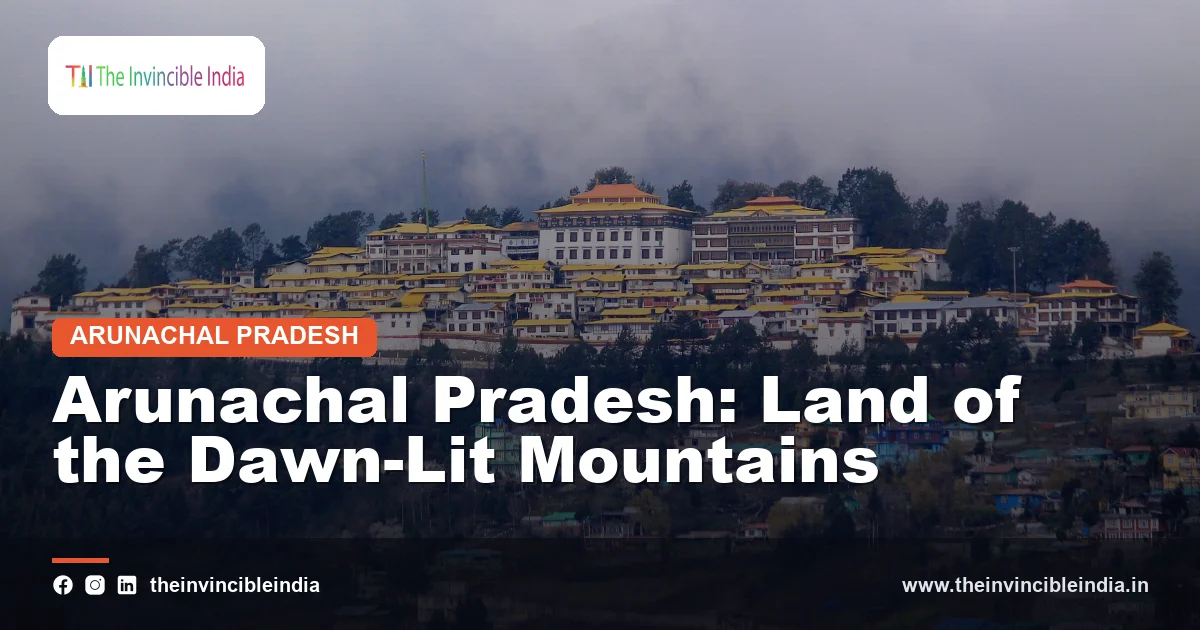
Arunachal Pradesh, the “Land of the Dawn-Lit Mountains”, is India’s northeasternmost state and one of its most breathtaking and unspoilt frontiers. Where the first rays of the Indian sun touch the country each morning, this vast Himalayan land of snow-capped peaks, deep valleys, rushing rivers and ancient monasteries is home to an astonishing diversity of tribes and cultures. From the magnificent Tawang Monastery to the pristine landscapes of the Ziro Valley, Arunachal offers an adventure into some of the most remote and beautiful terrain in India. This guide explores its wonders and how to experience them.
Quick Facts: Arunachal Pradesh
| Detail | Information |
|---|---|
| Capital | Itanagar |
| Meaning | “Land of the Dawn-Lit Mountains” |
| Famous for | Tawang Monastery, tribes, Himalayan scenery |
| Permit needed | Inner Line Permit (ILP) for Indian visitors |
| Number of tribes | Over 25 major tribes and many sub-tribes |
| Best time to visit | October to April |
Tawang: Monasteries and Mountains
The jewel of Arunachal Pradesh is Tawang, a stunning high-altitude town near the borders with Bhutan and Tibet. It is home to the magnificent Tawang Monastery, the largest monastery in India and one of the largest in the world, founded in the 17th century. Perched dramatically on a mountainside, this important centre of Tibetan Buddhism houses a towering golden Buddha statue and priceless ancient manuscripts. The journey to Tawang, over the high Sela Pass with its serene lake, is itself unforgettable, winding through some of the most spectacular Himalayan scenery in the country.
Ziro Valley and the Apatani
The picturesque Ziro Valley, a UNESCO World Heritage tentative site, is famed for its gently rolling landscapes of vivid green rice fields and pine-covered hills. It is the home of the Apatani tribe, renowned for their unique and highly sustainable system of wet-rice and fish cultivation, and for their distinctive traditional culture. Ziro also hosts the popular Ziro Festival of Music, which draws visitors from across the country. The valley offers a wonderful glimpse into a harmonious way of life deeply connected to the land.
The Diverse Tribes and Cultures
Arunachal Pradesh is one of the most culturally diverse regions in the world, home to more than 25 major tribes and over a hundred sub-tribes, each with its own language, customs, attire, festivals and beliefs. From the Monpa of Tawang to the Adi, Nyishi, Apatani, Galo and many others, this extraordinary human tapestry is one of the state’s greatest treasures. Colourful festivals such as Losar, Mopin, Solung and Nyokum are celebrated throughout the year, offering vibrant displays of dance, music and tradition.
Nature and Adventure
For nature lovers and adventurers, Arunachal is a paradise. Namdapha National Park, in the far east, is one of the largest protected areas in India and a biodiversity hotspot, home to rare species and lush tropical rainforest. The state offers superb opportunities for trekking, river rafting, angling and birdwatching, with its pristine rivers, dense forests and towering mountains providing a dramatic backdrop. The remoteness and unspoilt beauty of the landscape make every journey an adventure.
The Sela Pass and Journey to Tawang
The journey to Tawang is one of the most spectacular road trips in India, crossing the high-altitude Sela Pass at over 4,000 metres. Near the top lies the serene and sacred Sela Lake, often frozen in winter and surrounded by snow-clad peaks, a sight of breathtaking beauty. The route also passes the poignant Jaswant Garh War Memorial, honouring an Indian soldier of the 1962 war, and offers panoramic views of valleys, waterfalls and mountains at every turn. Though the journey is long and the roads challenging, the ever-changing landscape, from lush valleys to alpine heights, makes it an unforgettable part of any visit to the region.
Buddhism in Arunachal Pradesh
Tibetan Buddhism is a defining feature of the culture of western Arunachal Pradesh, particularly among the Monpa people of the Tawang region. The great Tawang Monastery, founded in the 17th century, is the spiritual heart of this tradition and is closely associated with the birthplace of the sixth Dalai Lama. Beyond Tawang, numerous smaller monasteries and nunneries dot the hillsides, their fluttering prayer flags, spinning prayer wheels and the chanting of monks lending a deep sense of peace to the mountains. This living Buddhist heritage, set amid the grandeur of the Himalayas, gives the region a uniquely serene and spiritual atmosphere.
Wildlife and Biodiversity
Arunachal Pradesh is one of the most biodiverse regions on earth, its forests ranging from tropical rainforest in the lowlands to alpine meadows in the high mountains. Namdapha National Park, the third-largest national park in India, is a remarkable biodiversity hotspot and one of the few places in the world where four big cat species, the tiger, leopard, clouded leopard and snow leopard, may all be found. The state is also a birdwatcher’s paradise, home to hundreds of species, and shelters rare mammals, orchids and plants. For nature lovers, its pristine and largely unexplored wilderness offers extraordinary rewards.
Festivals of the Tribes
The festivals of Arunachal Pradesh are vibrant expressions of the beliefs and agricultural rhythms of its many tribes. The Monpa celebrate Losar, the Tibetan New Year, with prayers and festivities; the Adi observe Solung, a harvest festival; the Nyishi celebrate Nyokum; the Apatani hold Dree, a festival for a good harvest; and the Galo celebrate Mopin, marked by dancing and the smearing of rice flour for prosperity. These colourful celebrations, filled with traditional dance, music, feasting and rituals, offer visitors a wonderful opportunity to witness the living cultures of the state and are highlights of the travel calendar.
Planning Your Arunachal Trip
Planning a trip to Arunachal Pradesh requires some preparation. Indian citizens need an Inner Line Permit (ILP), while foreign nationals require a Protected Area Permit (PAP), both obtainable through official channels. The nearest major airports and railheads are in Assam, at Guwahati, Tezpur, Dibrugarh and the newer Donyi Polo Airport at Itanagar, from where travel continues by road. Given the mountainous terrain, journeys can be long, so it is wise to allow ample time and travel with a reliable local operator. The best season is from October to April, and warm clothing is essential for the higher regions, where the beauty of the dawn-lit mountains awaits.
Bomdila and the Western Circuit
On the scenic route to Tawang lies Bomdila, a charming hill town offering spectacular panoramic views of the Himalayan ranges, including snow-capped peaks on clear days. Home to beautiful Buddhist monasteries and vibrant apple orchards, Bomdila makes a pleasant stop for acclimatisation and exploration. Nearby, the Dirang valley is known for its hot springs, orchards and pleasant climate, while the Nechiphu and other passes offer breathtaking vistas. This western circuit, combining Bomdila, Dirang, Sela Pass and Tawang, is the most popular route for visitors and showcases some of the most beautiful and accessible scenery in the state.
The Rivers and Valleys of the East
Eastern Arunachal Pradesh is a land of mighty rivers and lush valleys. The Siang River, as the Brahmaputra is known in this region, carves through dramatic gorges and offers some of the finest white-water rafting in India. The valleys of the Adi, Idu Mishmi and other tribes are dotted with traditional villages and offer superb opportunities for trekking, angling and immersion in tribal life. Pasighat, one of the oldest towns in the state, serves as a gateway to this region, while the remote areas towards the far east, including the biodiversity-rich Namdapha, reward the most adventurous travellers with pristine wilderness.
Responsible and Sustainable Travel
As a fragile and culturally sensitive region, Arunachal Pradesh calls for responsible and respectful travel. Visitors can make a positive difference by respecting local customs and beliefs, always seeking permission before photographing people or entering sacred spaces, and dressing modestly, particularly at monasteries. Supporting local homestays, guides and artisans ensures that the benefits of tourism reach the communities themselves, while minimising plastic waste and treading lightly helps protect the pristine environment. By travelling thoughtfully, visitors help preserve both the extraordinary natural beauty and the rich cultural heritage of this remarkable frontier land for generations to come.
The People and Way of Life
The greatest treasure of Arunachal Pradesh is its people, whose warmth, resilience and rich traditions leave a lasting impression on every visitor. Living in harmony with their mountainous environment, the many tribes of the state have developed distinctive ways of life, from the terraced rice and fish farming of the Apatani to the yak-herding and Buddhist traditions of the Monpa. Traditional bamboo houses, communal institutions, colourful attire and skilled handicrafts such as weaving, cane and bamboo work reflect a deep connection to the land and community. Engaging respectfully with local people and, where possible, staying in village homestays offers an authentic and deeply rewarding glimpse into these remarkable cultures.
Why Visit Arunachal Pradesh
Arunachal Pradesh offers an experience unlike anywhere else in India, a journey to a pristine Himalayan frontier where towering snow-clad peaks, deep forested valleys, ancient monasteries and an extraordinary diversity of tribal cultures come together in breathtaking harmony. For those seeking adventure, spiritual serenity, cultural discovery and unspoilt natural beauty far from the crowds, this “Land of the Dawn-Lit Mountains” is a truly special destination. Though it requires effort and planning to reach, the rewards, from the grandeur of Tawang to the tranquil beauty of Ziro and the warmth of its people, make Arunachal one of the most memorable journeys a traveller can undertake.
Best Time to Visit Arunachal Pradesh
The best time to visit Arunachal Pradesh is generally from October to April, when the skies are clear and the weather is pleasant across most of the state. Autumn and early winter offer crisp air and stunning mountain views, while spring brings blooming rhododendrons and orchids to the hills. The higher regions, such as Tawang and the Sela Pass, experience heavy snowfall in the depths of winter, which can occasionally disrupt travel but adds to the scenic beauty. The monsoon months, from June to September, bring heavy rain and the risk of landslides, making travel more difficult, so it is best avoided for a comfortable journey.
A Frontier of Wonder
Arunachal Pradesh stands as one of India’s last great frontiers of unspoilt beauty and living culture, a land where each dawn breaks first over the country’s easternmost mountains. Its monasteries, valleys, rivers and remarkable tribes together create a destination of rare magic, offering the adventurous traveller memories that last a lifetime and a profound sense of having journeyed somewhere truly extraordinary.
Frequently Asked Questions
What is Arunachal Pradesh famous for?
Arunachal Pradesh is famous for the magnificent Tawang Monastery, its stunning Himalayan landscapes, the scenic Ziro Valley, and its remarkable diversity of tribes and cultures.
Do I need a permit to visit Arunachal Pradesh?
Yes, Indian citizens require an Inner Line Permit (ILP) to visit Arunachal Pradesh, while foreign nationals need a Protected Area Permit (PAP). These can be obtained through official channels.
What is the best time to visit Arunachal Pradesh?
The best time is from October to April, when the weather is clear and pleasant. Tawang and the higher areas can experience heavy snow in deep winter.
How do I reach Tawang?
Tawang is reached by a scenic mountain road from Tezpur or Guwahati in Assam, crossing the high Sela Pass. The journey is long but spectacular; a helicopter service also operates to Tawang.