


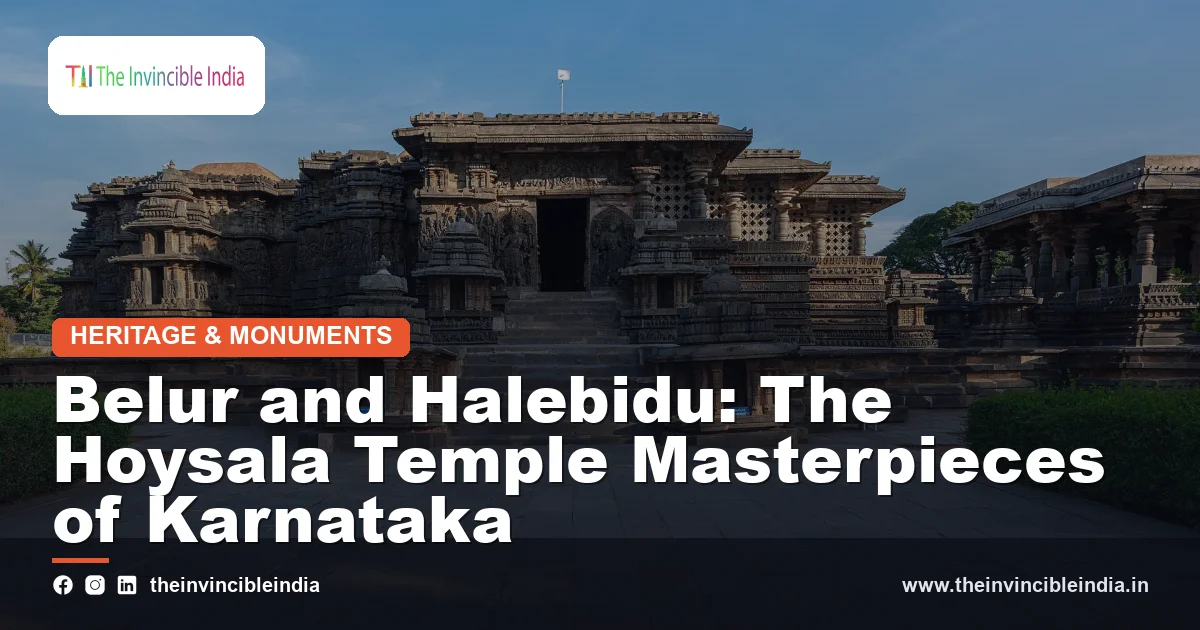
Tucked away in the rolling countryside of Karnataka lie two of the most astonishing temples in all of India: the Chennakeshava Temple at Belur and the Hoysaleswara Temple at Halebidu. Built nearly nine centuries ago by the Hoysala dynasty, these temples are celebrated the world over for their breathtakingly intricate soapstone carvings, considered among the finest examples of sculptural art ever created. In 2023, the sacred ensembles of the Hoysalas were inscribed as a UNESCO World Heritage Site, confirming their place among humanity’s greatest artistic achievements. This guide explores the history, architecture and dazzling artistry of Belur and Halebidu, and how to experience them.
Quick Facts: Belur and Halebidu
| Detail | Information |
|---|---|
| Location | Hassan district, Karnataka |
| Built by | The Hoysala dynasty (12th century CE) |
| Belur temple | Chennakeshava Temple (dedicated to Vishnu) |
| Halebidu temple | Hoysaleswara Temple (dedicated to Shiva) |
| Material | Chloritic schist (soapstone) |
| UNESCO status | Sacred Ensembles of the Hoysalas (2023) |
| Distance apart | About 16 km |
The Hoysala Dynasty
The Hoysalas rose to power in the Deccan region of southern India between the 11th and 14th centuries, ruling much of present-day Karnataka from their capitals at Belur and later Halebidu (then known as Dwarasamudra). Renowned as great patrons of art and architecture, the Hoysala kings commissioned scores of temples across their realm, developing a distinctive style that fused elements of earlier South Indian traditions into something entirely their own. Their reign, though eventually cut short by invasions from the north, left behind an artistic legacy of extraordinary richness that continues to astonish visitors today.
The Chennakeshava Temple at Belur
The Chennakeshava Temple at Belur, dedicated to Lord Vishnu, was commissioned by King Vishnuvardhana and reportedly took over a hundred years to complete. Standing on a star-shaped platform, the temple is a marvel of design, its walls covered from base to roofline in an almost unbelievable profusion of carvings. Rows of elephants, horsemen, mythical creatures, scenes from the epics, dancers and musicians adorn every surface, each rendered with astonishing detail. The temple remains an active place of worship, and its living traditions add to the powerful atmosphere of this remarkable monument.
The Madanikas: Celestial Beauties
Among the most celebrated features of the Belur temple are the madanikas, or celestial maidens, sculpted brackets depicting graceful female figures in various poses. These exquisite sculptures show women dancing, playing music, applying makeup, holding a mirror, or engaged in everyday activities, each captured with remarkable delicacy and lifelike expression. Widely regarded as some of the finest sculptures in Indian art, the madanikas reveal the extraordinary skill of the Hoysala artisans, who worked the soft soapstone into forms of almost jewel-like intricacy, complete with detailed ornaments and flowing garments.
The Hoysaleswara Temple at Halebidu
About sixteen kilometres from Belur stands the Hoysaleswara Temple at Halebidu, dedicated to Lord Shiva and considered by many to be the very pinnacle of Hoysala art. A twin temple with two shrines side by side, it is famous for the sheer density and quality of its carvings, which cover the exterior walls in continuous friezes. Despite suffering damage during invasions in the 14th century, which left it incomplete, the temple’s surviving sculptures are breathtaking in their detail and number, depicting an entire universe of gods, demons, animals and stories carved in stone.
The Art of Soapstone Carving
The secret behind the incredible detail of the Hoysala temples lies in their material: chloritic schist, commonly known as soapstone. This stone is relatively soft when freshly quarried, allowing sculptors to carve it with extraordinary precision and fine detail, and it hardens over time on exposure to air. Hoysala artisans exploited this quality to create carvings of almost unbelievable intricacy, from the delicate jewellery worn by figures to the individual strands of a horse’s mane. Many sculptures even bear the signatures of the master craftsmen who made them, a rare practice that testifies to the pride and status of these artists.
The Friezes and Their Stories
The exterior walls of the temples are wrapped in horizontal bands of carved friezes, each telling its own story. The lowest bands typically depict rows of elephants, symbolising strength and stability, followed by lions representing courage, horses for speed, and floral scrollwork for beauty. Above these run friezes depicting scenes from the great Hindu epics, the Ramayana and the Mahabharata, as well as the life of Krishna and various mythological episodes. Reading these friezes is like walking through an illustrated encyclopaedia of Hindu mythology, carved with a narrative richness and detail found in few other places.
Somanathapura and the Wider Hoysala Legacy
Belur and Halebidu are the most famous, but the Hoysalas built many other temples, and the UNESCO World Heritage inscription of 2023 recognised a group of these sacred ensembles. Among them is the Keshava Temple at Somanathapura, a later and more compact Hoysala masterpiece, remarkably complete and beautifully proportioned, with its own stunning array of carvings. Together, these temples represent the full flowering of the Hoysala style and offer visitors the chance to trace the development of one of India’s most distinctive and accomplished schools of temple architecture and sculpture.
Architecture and Design
Hoysala temples are instantly recognisable for their distinctive features. Many are built on raised, star-shaped (stellate) platforms that give the structures a complex, many-angled outline and provide a raised walkway for circumambulation. The temples tend to be relatively low and horizontal rather than soaring, allowing the emphasis to fall on the intricately carved walls. Inside, lathe-turned pillars, polished to a shine, and richly decorated ceilings display the same obsessive attention to detail. This unique combination of design and ornamentation sets the Hoysala temples apart from all others in India.
Planning Your Visit
Belur and Halebidu lie in Karnataka’s Hassan district and are usually visited together as a day trip, being only about sixteen kilometres apart. The nearest major cities are Hassan and Mysuru, and the area is well connected by road from Bengaluru, roughly a four to five hour drive away. The best time to visit is during the cooler months from October to March. Hiring a knowledgeable guide greatly enriches the experience, as the sheer density of the carvings means that much of their meaning and detail would otherwise be missed. Comfortable footwear and a little time are all that is needed to appreciate these wonders.
Comparing Belur and Halebidu
Though built by the same dynasty in a similar style, the temples of Belur and Halebidu each have their own distinct character, and seeing both allows visitors to appreciate the full range of Hoysala art. The Chennakeshava Temple at Belur, dedicated to Vishnu, is complete and remains an active place of worship, celebrated above all for its exquisite madanika bracket figures and its beautifully finished interior. The Hoysaleswara Temple at Halebidu, dedicated to Shiva, is a larger twin-shrine temple famed for the sheer density of its wall carvings, though it was left unfinished after invasions. Together they complement one another perfectly, one prized for refinement and completeness, the other for its overwhelming abundance of sculptural detail, and viewing them on the same day makes for a deeply rewarding comparison.
Restoration and UNESCO Recognition
For centuries after the fall of the Hoysalas, the temples endured neglect and the ravages of time, yet their remarkable carvings survived largely intact thanks to the durable soapstone from which they were made. In modern times, they have been carefully protected and conserved by the Archaeological Survey of India, which maintains the monuments and their surroundings. In 2023, the sacred ensembles of the Hoysalas, including Belur, Halebidu and Somanathapura, were formally inscribed on the UNESCO World Heritage List, giving these masterpieces the international recognition they have long deserved and helping to ensure their preservation and appreciation for generations to come.
Nearby Attractions
The region around Belur and Halebidu offers several other worthwhile destinations that combine well into a rewarding itinerary. Close by is Shravanabelagola, one of the most important Jain pilgrimage centres in India, famous for the colossal monolithic statue of Bahubali (Gomateshwara), which draws pilgrims from across the country. The temple town of Somanathapura, with its beautifully preserved Keshava Temple, completes the trio of great Hoysala monuments. The nearby hill station of Chikmagalur, with its coffee plantations and scenic landscapes, and the historic city of Mysuru, are also within reach, allowing visitors to blend heritage, spirituality and nature in a single trip.
Why the Hoysala Temples Are Unique
The temples of Belur and Halebidu occupy a special place in the story of Indian art and architecture. Unlike the towering, soaring temples found elsewhere in India, the Hoysala temples emphasise breadth and intricate ornamentation over height, transforming their walls into vast canvases of stone sculpture. The softness of soapstone allowed a level of detail unmatched almost anywhere in the world, from delicate jewellery to the finest facial expressions. This unique combination of stellate design, lathe-turned pillars and obsessively detailed carving makes the Hoysala style instantly recognisable and utterly distinctive, and it is this singular artistic vision that continues to draw admirers from around the globe.
Tips for Visiting the Hoysala Temples
To make the most of a visit to Belur and Halebidu, it helps to arrive early in the day, when the light is soft and the crowds are thinner, allowing time to absorb the extraordinary detail of the carvings. Wear comfortable footwear, as the temples are active places of worship where shoes must be removed, and carry water and sun protection. Above all, hire a knowledgeable local guide: the sheer density of the sculpture means that countless stories, symbols and hidden details would otherwise go unnoticed, and a good guide transforms the visit from a simple walk into a fascinating journey through mythology and history. Allow at least two to three hours to explore both temples properly, and consider adding Somanathapura to complete the Hoysala trail.
A Testament to Timeless Craft
Belur and Halebidu endure as a breathtaking testament to the skill, devotion and artistic vision of the Hoysala craftsmen. Nearly nine centuries after they were carved, their soapstone walls still astonish every visitor with their beauty and intricacy, offering a glimpse into a golden age of Indian art. For lovers of history, architecture and sculpture, these temples are an unmissable treasure and a proud jewel of Karnataka’s rich cultural heritage.
Frequently Asked Questions
What are the Belur and Halebidu temples famous for?
They are famous for their extraordinarily intricate soapstone carvings, considered among the finest sculptural art in the world, and as the crowning masterpieces of Hoysala architecture, now a UNESCO World Heritage Site.
Who built the Belur and Halebidu temples?
They were built by the Hoysala dynasty in the 12th century, with the Chennakeshava Temple at Belur commissioned by King Vishnuvardhana and the Hoysaleswara Temple at Halebidu built during the same era.
How far are Belur and Halebidu from each other?
The two temple towns are about sixteen kilometres apart in Karnataka’s Hassan district, and are typically visited together on the same day.
What is the best time to visit Belur and Halebidu?
The best time is during the cool, dry season from October to March, when the weather is pleasant for exploring the open temple complexes.