


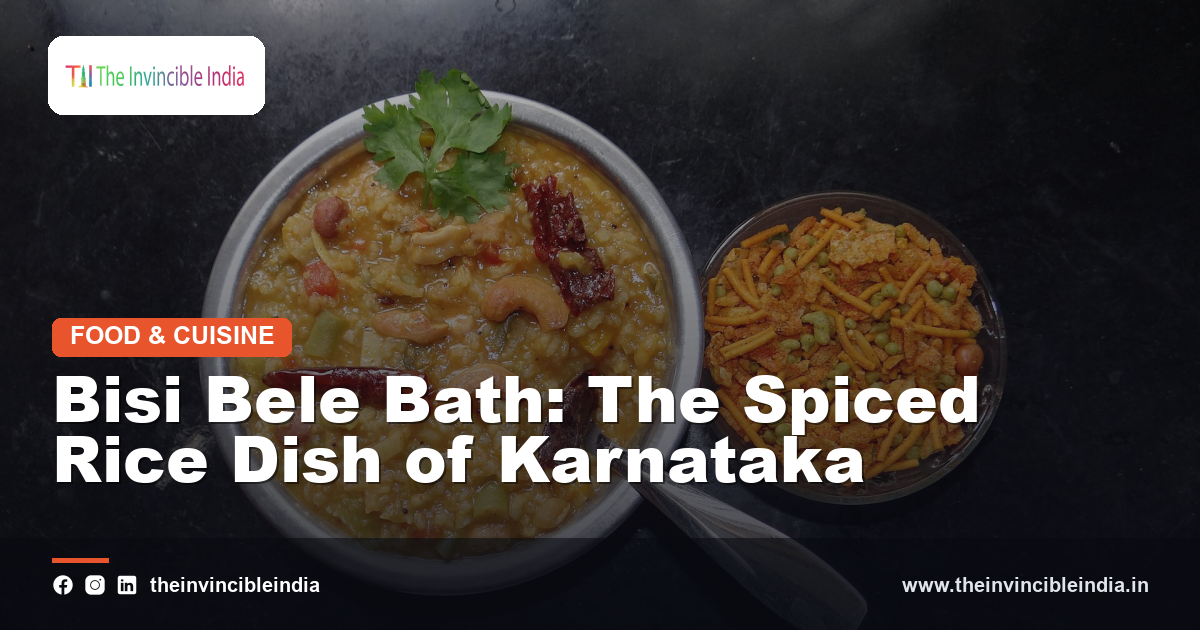
Bisi bele bath is one of the great comfort dishes of Karnataka, a thick, steaming, one-pot preparation of rice, lentils, vegetables and a distinctive blend of ground spices. Its name in Kannada describes it plainly as hot lentil rice, and it is served piping hot with a spoonful of ghee melting on top. It has a proud place in the wider tradition described in our guide to Karnataka cuisine, where rice, lentils and aromatic spice mixes define everyday meals. This guide explains the name, ingredients, method, serving customs and cultural importance of bisi bele bath, along with the ways it is enjoyed today.
Quick Facts
| Detail | Information |
|---|---|
| Dish type | One-pot spiced rice and lentil dish |
| Origin | Karnataka, southern India |
| Name meaning | Hot lentil rice in Kannada |
| Key ingredients | Rice, toor dal, vegetables, tamarind, spice powder |
| Finishing touch | Ghee, boondi, cashews and curry leaves |
| Typical pairing | Papad, potato chips and cool raita |
What Is Bisi Bele Bath?
Bisi bele bath is a hearty, porridge-like dish in which rice and split pigeon peas are cooked together with vegetables, tamarind and a special ground spice blend. The result is a thick, richly flavoured mixture that is tangy, mildly spicy and deeply aromatic. It is generally served hot, finished with ghee and a tempering of mustard seeds, curry leaves and cashew nuts.
Unlike many rice dishes where the grains stay separate, bisi bele bath is cooked until soft and well blended, with a consistency somewhere between a pilaf and a thick stew. It is considered a complete meal in a single bowl, offering grain, lentils and vegetables together. This combination explains why it is treasured as a nourishing, satisfying and comforting dish in homes and eateries across the state.
The Meaning of the Name
The name is drawn directly from the Kannada language. Bisi means hot, bele means lentil and bath is a word for cooked rice dishes, so the phrase can be understood as hot lentil rice. The description refers both to the temperature at which the dish is ideally eaten and to the combination of lentils and rice at its core.
In English spellings the final word appears variously as bath or bhath, but the pronunciation in Kannada is the same. The word bath in this context has nothing to do with washing, a point that often amuses newcomers to the cuisine. The name is an example of how Kannada food terms convey the nature of a dish in simple, descriptive language, making the identity of the preparation clear at once.
Karnataka and Its Food Culture
Karnataka has a varied culinary landscape, shaped by coastal, plains and hill regions. Rice is a staple in much of the state, eaten with lentil preparations such as sambar and saaru, while finger millet, known as ragi, forms the base of a number of traditional meals in the interior. Coconut, tamarind, jaggery and a wide range of spices feature prominently.
Within this setting bisi bele bath stands out as a distinctive creation. It combines the state’s love of rice and lentils with a carefully balanced spice mix that is particular to Kannada kitchens. It is among the dishes most strongly associated with Karnataka in the minds of visitors, and it appears on breakfast, lunch and festive menus alike. The dish reflects the state’s practical, flavourful and nourishing cooking tradition.
The Signature Spice Powder
The character of bisi bele bath comes largely from its spice powder, often called bisi bele bath masala. It is made by dry roasting a range of ingredients such as dried red chillies, coriander seeds, cumin, fenugreek, cinnamon, cloves, lentils and grated dried coconut, and then grinding them into a fragrant powder. Every family and every commercial brand has its own proportions.
The roasting step is important, for it deepens the flavour and releases the essential oils of the spices. A well-made powder smells warm, earthy and slightly sweet, and it gives the dish its unmistakable aroma. Because the blend can be prepared in advance and stored for several weeks, many households keep a jar ready. The spice powder is therefore the real signature of the dish, the element that distinguishes it from other rice and lentil preparations.
Main Ingredients
The foundation of the dish is rice, usually a medium-grained variety that softens easily, along with split pigeon peas, known as toor dal. Together they are cooked until they are tender and can be mashed gently. Tamarind pulp brings a pleasant sourness, and a small piece of jaggery is often added to balance the tang and the heat.
Vegetables form the third element, and they vary with the season and the cook. Carrots, green peas, beans, potatoes, brinjal, drumstick and capsicum are all common choices, and each lends its own flavour and texture. Ghee, curry leaves, mustard seeds, asafoetida and cashew nuts are used for the final tempering. The ingredient list is generous but entirely practical, drawing on items that most Kannada kitchens keep close at hand.
How It Is Cooked
The preparation begins by cooking the rice and lentils together until they are very soft, often in a pressure cooker or a heavy vessel. In a separate pot, the vegetables are simmered with tamarind water, salt and the spice powder until they are tender and the raw smell of the spices has disappeared. The cooked rice and lentil mixture is then stirred into the vegetable base.
Hot water is added as needed to reach the right consistency, and the pot is simmered for several minutes so that the flavours combine. A tempering of ghee, mustard seeds, curry leaves and cashews is poured over the top just before serving. The dish should be thick yet flowing, able to spread slowly on the plate. The slow blending of grains, lentils and spices is what gives the dish its depth.
Getting the Consistency Right
Consistency is a point of pride for cooks of bisi bele bath. The ideal dish is moist and soft, neither stiff like a pilaf nor watery like a soup. Because it thickens as it cools, it is usually kept a little looser on the stove than the final desired texture, and hot water is stirred in when it is served to restore the flowing quality.
Some cooks aim for a rustic, slightly grainy finish where the rice grains can still be identified, while others prefer a smooth and creamy blend. Both approaches are accepted and depend largely on family custom. The dish is best eaten soon after cooking, when it is at its hottest and softest. Good consistency reflects the cook’s understanding of how the rice and lentils absorb liquid and time.
Accompaniments
Bisi bele bath is traditionally accompanied by items that contrast with its soft, warm richness. Crisp papad or potato chips provide crunch, while a bowl of cool cucumber or onion raita offsets the spice and heat. Boondi, the small fried gram flour pearls, is often scattered on top for a crisp, slightly salty finish.
A spoonful of ghee poured over the hot dish adds fragrance and richness, and a slice of lemon or a little pickle occasionally completes the plate. Some families serve it with a side of mixed vegetable salad. These accompaniments are not merely decorative but purposeful, each one adding a different texture or temperature. Together they turn a single-bowl meal into a well-rounded and satisfying eating experience.
Regional and Household Variations
Although bisi bele bath is strongly identified with Karnataka, it varies within the state. The Mysuru style is often described as mild and aromatic, using generous amounts of coconut and a gentler spice level, while versions from other parts of the state may be spicier or more tangy. Hotel and temple kitchens have their own signature recipes.
Household variations include the choice of vegetables, the use of peanuts or cashews and the amount of tamarind and jaggery. Some cooks add a little grated coconut to the spice powder, while others prefer to omit it. Healthy adaptations replace part of the rice with millets or add extra vegetables. The dish is flexible, and its essential identity lies in the combination of rice, lentils and the aromatic powder, not in a single rigid recipe.
Bisi Bele Bath in Temples and Festivals
Rice-based preparations hold an important place in the food offered at temples and festivals across southern India, and bisi bele bath is often prepared in large quantities for community meals. Its hearty nature makes it ideal for feeding many people, and its long-lasting warmth keeps it pleasant to eat.
At festivals, family gatherings and celebrations, it is frequently served as part of a larger meal, along with payasa, the sweet milk pudding, and other traditional dishes. It is also popular at weddings and community functions. The presence of the dish in such settings shows how closely it is tied to hospitality and shared eating, and how easily a simple one-pot meal can serve both ordinary days and moments of celebration.
Nutrition and Wholesomeness
Bisi bele bath is often praised as a balanced meal because it combines carbohydrate from rice, protein from lentils and vitamins and fibre from vegetables. The spices, including coriander, cumin and fenugreek, are traditionally valued for their digestive qualities, and the tamarind adds natural acidity that brightens the flavour.
The dish is cooked in a single pot with a modest amount of ghee, which makes it easy to manage and easy to digest. Because it is soft and warm, it is also regarded as a gentle meal for children and the elderly. The exact nutritional profile depends on the quantity of ghee and vegetables used, but the dish remains a well-rounded and nourishing choice that fits comfortably into an everyday diet.
Tips for Making It at Home
Home cooks suggest a few habits that improve the dish. Dry roasting the spice ingredients slowly, without letting them darken too much, gives the best aroma, and grinding them fresh produces a livelier flavour than an old powder. Cooking the lentils until they are completely soft ensures a creamy base.
Adding the tamarind only after the vegetables have softened prevents them from staying firm, and stirring the rice and lentils into the vegetable base gently keeps the texture even. A final tempering in good ghee lifts the dish considerably. Finally, extra hot water should be kept nearby to loosen the dish as it thickens. These small practices, learned through repetition, separate an ordinary pot of rice from a truly memorable bisi bele bath.
Ready Mixes and Restaurants
Bisi bele bath is widely available outside the home. Restaurants and small eateries throughout Karnataka serve it at breakfast and lunch, and it is a regular item on the menus of South Indian restaurants across the country. It is often served in steel bowls or on banana leaves as part of a combination meal.
Packaged spice powders and instant mixes have also made the dish accessible to people far from Karnataka, allowing cooks to prepare a reasonable version in a short time. Many travellers carry a packet home as a souvenir of the state. The availability of the dish in such varied forms shows its popularity and its ability to adapt to modern lifestyles while retaining its core flavour and identity.
Bisi Bele Bath Beyond Karnataka
As people from Karnataka moved to other cities and countries, bisi bele bath travelled with them. It is now well known in Bengaluru’s cosmopolitan food scene, in other Indian cities and in Indian restaurants overseas. In many places it has become one of the first Kannada dishes that visitors try.
Elsewhere, cooks sometimes adapt the dish to local ingredients, using different vegetables or adjusting the heat of the spices. Even with such changes, the combination of rice, lentils and the aromatic powder remains recognisable. The dish has become an ambassador for Karnataka cuisine, introducing the flavours of the state to a wide audience and demonstrating that regional food can earn a place far from its homeland.
Bisi Bele Bath Today
Today bisi bele bath remains a beloved symbol of Karnataka’s culinary heritage. It is cooked in home kitchens on weekends, served at celebrations and enjoyed in restaurants, and it continues to inspire new interpretations that use millets, brown rice and extra vegetables. The traditional version, however, still holds pride of place.
Its enduring popularity speaks to the strength of a dish built on simple, wholesome ingredients and a well-balanced spice blend. A bowl of bisi bele bath offers warmth, aroma and comfort, and it carries the character of the region within it. As tastes change and food culture evolves, this spiced rice dish will remain a cherished part of Kannada identity and a favourite on the Indian table.
Sources & Further Reading
- Ministry of Culture, Government of India (indiaculture.gov.in).
- Karnataka Tourism, Government of Karnataka (karnatakatourism.org).
Frequently Asked Questions
What does bisi bele bath mean?
In Kannada, bisi means hot, bele means lentil and bath refers to a cooked rice dish, so the name means hot lentil rice. It describes both the serving temperature and the main ingredients.
What is bisi bele bath made of?
It is made from rice and toor dal cooked with vegetables, tamarind, jaggery and a special roasted spice powder. It is finished with ghee and a tempering of mustard seeds, curry leaves and cashews.
Which region is bisi bele bath from?
Bisi bele bath is a signature dish of Karnataka in southern India. It is especially associated with Mysuru and Bengaluru, though it is enjoyed throughout the state.
What is served with bisi bele bath?
It is commonly served with papad or potato chips, boondi, raita and a spoonful of ghee. A little pickle or a slice of lemon may also be offered alongside.
Is bisi bele bath a complete meal?
It is generally regarded as a balanced one-pot meal because it combines rice, lentils and vegetables. It is often eaten on its own for lunch or dinner, sometimes with a simple side dish.