


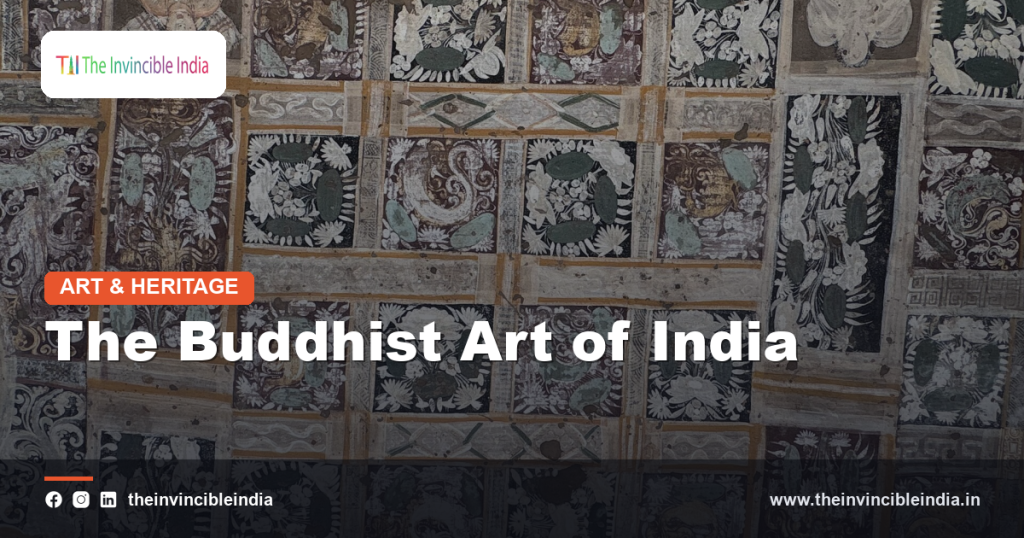
The Buddhist art of India is one of the great artistic legacies of the ancient world, a vast body of stupas, rock-cut caves, sculpture and painting created over many centuries to honour the Buddha and his teaching. From the solemn dome of the Sanchi Stupa to the glowing murals of the cave paintings at Ajanta, this art gave visible and lasting form to the ideals of compassion, renunciation and enlightenment at the heart of Buddhism. Spreading far beyond India along the routes of trade and pilgrimage, Buddhist art shaped the artistic traditions of much of Asia. This guide explores its origins, its great monuments and schools, and its enduring heritage.
Quick Facts
| Detail | Information |
|---|---|
| Type | The sacred art of Buddhism in India |
| Forms | Stupas, rock-cut caves, sculpture and mural painting |
| Famous examples | Sanchi Stupa and the Ajanta Caves |
| Schools | Gandhara and Mathura schools of sculpture |
| Themes | The life of the Buddha and Buddhist teaching |
| Heritage | A foundation of art across much of Asia |
The Art of the Buddhist Heritage
The Buddhist art of India is one of the richest and most influential artistic legacies of the ancient world, a vast body of stupas, caves, sculpture and painting created to honour the Buddha and to express his teaching in visible form. Emerging in the centuries after the Buddha’s life and flourishing under the patronage of great dynasties, this art combined religious devotion with extraordinary craftsmanship, producing monuments and images that continue to inspire awe and reverence today. Its influence long outlasted its original patrons. As the sacred art created to honour the Buddha and his teaching, the Buddhist art of India occupies a foundational place in the history of world art and remains one of the great treasures of the country’s heritage.
Origins in the Life of the Buddha
Buddhist art has its origins in the desire to commemorate the life and teaching of the Buddha, and its earliest monuments were built at the sites associated with the key events of his life, such as his birth, enlightenment, first teaching and passing. These sites became places of pilgrimage, and the monuments raised there, along with images and reliefs depicting scenes from his life, formed the earliest expressions of Buddhist art. Devotion to the Buddha’s memory thus drove the art from its beginning. This origin of Buddhist art in the commemoration of the Buddha’s life and teaching gave the tradition its enduring devotional purpose and shaped the themes that would recur across many centuries of Buddhist artistic creation.
The Stupa as Sacred Form
The stupa, a solid dome-shaped monument, is the oldest and most characteristic form of Buddhist architecture, built originally to enshrine relics of the Buddha or other revered figures and later as a general symbol of the Buddhist faith. Worshippers walk around the stupa in a clockwise direction as an act of devotion, and its simple dome, crowned by a spire, came to symbolise the path to enlightenment itself. The stupa’s form was carried wherever Buddhism spread. This stupa, as the oldest and most sacred form of Buddhist architecture, lies at the heart of the tradition and provided the model for reliquary monuments across the Buddhist world.
Sanchi Stupa
The Sanchi Stupa stands among the most important and best preserved of all Buddhist monuments, a great hemispherical dome surrounded by carved stone gateways depicting scenes from the life of the Buddha and from Buddhist legend. Though the Buddha himself is not shown in its earliest carvings, being represented instead through symbols such as the wheel, the tree and the footprint, the gateways of Sanchi display superb craftsmanship and offer a vivid record of early Buddhist narrative art. Its gateways remain a landmark of ancient Indian sculpture. This Sanchi Stupa, with its finely carved gateways depicting the life and legend of the Buddha, stands among the supreme masterpieces of early Buddhist art in India.
Rock-Cut Buddhist Caves
Alongside free-standing stupas, Buddhist monks and their patrons excavated great complexes of rock-cut caves into hillsides across India, creating monasteries and prayer halls carved directly from the living rock. These caves, often elaborately carved with pillars, facades and sculpted images, provided monks with places of shelter, meditation and worship, and their halls were sometimes adorned with painted murals of great beauty. This underground world of monastic life still survives in remarkable detail. This tradition of rock-cut Buddhist caves, combining architecture, sculpture and painting within the hillside, represents one of the most remarkable achievements of ancient Indian art and engineering.
The Ajanta Caves Paintings
The Ajanta Caves contain the most celebrated body of ancient Indian painting to survive, a series of murals covering the walls and ceilings of the rock-cut halls with scenes from the life of the Buddha and from the Jataka tales of his previous lives. Painted in natural pigments with remarkable skill in composition, expression and colour, these murals offer a rare glimpse of ancient Indian painting at its finest, and their influence can be traced in Buddhist art across Asia. Their survival over so many centuries is itself remarkable. These Ajanta Caves paintings, among the finest surviving examples of ancient Indian mural art, are rightly regarded as one of the supreme treasures of the country’s artistic heritage.
The Ajanta and Ellora Sculptures
Beyond their paintings, the rock-cut caves of Ajanta and the nearby complex at Ellora also contain superb sculpture, carved directly from the living rock to depict the Buddha, bodhisattvas and scenes of devotion within the halls and shrines. These carvings, ranging from serene seated images of the Buddha to elaborate narrative reliefs, display extraordinary technical skill given the difficulty of carving such detail from solid rock, and they rank among the finest achievements of ancient Indian sculpture. Their scale and setting add to their power. This sculpture of Ajanta and Ellora, carved with great skill directly from the rock, forms an essential part of the artistic legacy of Buddhist India.
Gandhara School of Buddhist Art
In the northwest of the subcontinent, the Gandhara school of Buddhist art developed a distinctive style that blended Indian religious subject matter with the sculptural techniques of the Greco-Roman world, producing some of the earliest known images of the Buddha in human form. Gandhara sculpture is noted for its naturalistic drapery, facial features and posture, reflecting the meeting of cultures along the trade routes of the region, and it played a significant role in shaping how the Buddha came to be depicted more widely. This cross-cultural exchange left a lasting artistic legacy. This Gandhara school of Buddhist art, blending Indian and Greco-Roman traditions, represents a fascinating chapter in the history of Buddhist sculpture and its spread across Asia.
Mathura School of Buddhist Art
Alongside Gandhara, the Mathura school of sculpture developed a distinctly Indian style of Buddhist art, carving images of the Buddha in local red sandstone with a fuller, more indigenous treatment of the body and robes. The Mathura style, rooted firmly in earlier Indian sculptural traditions, produced some of the most influential early images of the Buddha and helped establish the iconographic conventions that would guide Buddhist sculpture across the subcontinent. Its indigenous character contrasts instructively with Gandhara’s foreign influences. This Mathura school of Buddhist art, developing a distinctly Indian style of depicting the Buddha, stands alongside Gandhara as one of the two great early traditions of Buddhist sculpture in India.
Symbolism in Buddhist Art
Buddhist art makes rich use of symbolism, with certain forms and motifs, such as the wheel representing the Buddha’s teaching, the lotus representing purity, and the tree representing his enlightenment, recurring throughout its sculpture and painting. In the earliest phases of the tradition, before the Buddha was depicted in human form, these symbols stood in for his presence directly, and even after figural images became common, symbolic motifs continued to enrich the meaning of Buddhist art. Understanding these symbols deepens appreciation of the tradition. This rich symbolism running through Buddhist art gives its images and monuments layers of meaning beyond their visual beauty, rewarding careful and informed viewing.
The Buddha Image
The development of the Buddha image itself, showing the teacher in human form with distinctive marks of enlightenment such as the elongated earlobes, the cranial protuberance and serene, half-closed eyes, was a major turning point in the history of Buddhist art. Once established, this iconography spread and was adapted across many regions and periods, always retaining its essential qualities of serenity, compassion and spiritual authority regardless of local stylistic variation. The image became instantly recognisable across cultures. This development and spread of the Buddha image is one of the most significant achievements of Buddhist art, giving visible and enduring form to the qualities of enlightenment across many centuries and countries.
Bodhisattvas and Buddhist Iconography
Alongside images of the Buddha himself, Buddhist art developed a rich iconography of bodhisattvas, enlightened beings who postpone their own final liberation to help others, each associated with particular qualities and often depicted with distinctive attributes and postures. These figures, more richly adorned than the renunciate Buddha, allowed artists to explore themes of compassion, wisdom and grace, and they became central subjects of sculpture and painting across the Buddhist world. Their popularity grew alongside evolving Buddhist thought. This iconography of bodhisattvas broadened the artistic and devotional scope of Buddhist art, adding figures of great beauty and spiritual significance to its sculptural and painted repertoire.
Buddhist Monasteries and Viharas
Buddhist monastic life gave rise to its own architectural forms, notably the vihara, a monastery built around a courtyard with cells for the resident monks, often combined with a chaitya, or prayer hall, containing a stupa. These complexes, whether built freestanding or carved into rock, provided the setting for the daily life, study and worship of the monastic community, and their design reflects the practical needs of communal religious life. Many such complexes flourished as centres of learning. This architecture of monasteries and viharas represents an important and often overlooked dimension of Buddhist art, shaping the physical world in which Buddhist teaching and practice were sustained for centuries.
Spread of Buddhist Art Beyond India
As Buddhism spread along the trade and pilgrimage routes of Asia, so too did the art created to express it, carrying Indian artistic conventions to Central Asia, China, Southeast Asia and beyond, where they were absorbed and transformed by local traditions. The stupa, the Buddha image and the narrative reliefs of Indian Buddhist art all found new expression in these distant lands, so that the artistic legacy of Buddhist India came to shape traditions across much of the Asian continent. Few artistic traditions have travelled so far and so successfully. This spread of Buddhist art beyond India is one of the most remarkable chapters in the history of world art, testifying to the deep and lasting influence of the Indian tradition.
Preservation of Buddhist Heritage
Many of India’s great Buddhist monuments, having been abandoned for centuries as Buddhism declined within the subcontinent, were rediscovered and studied in more recent times, prompting extensive efforts at preservation and restoration. Conservation bodies now work to protect the stupas, caves and sculptures of this heritage from the ravages of time, weather and human damage, recognising their immense historical and artistic value to India and to the wider world. This work is essential given the fragility of ancient painting and carving. This ongoing preservation of India’s Buddhist heritage ensures that these irreplaceable monuments of sculpture, architecture and painting survive for future generations of scholars, pilgrims and visitors alike.
The Buddhist Art of India Today
Today the Buddhist art of India is celebrated and studied around the world, its stupas, caves, sculpture and painting recognised as among the great achievements of ancient art. Sites such as Sanchi and Ajanta draw pilgrims, scholars and travellers eager to witness this legacy at first hand, while museums across the globe display sculpture from the Gandhara and Mathura schools as evidence of its wide and lasting influence. Its images of serenity and compassion continue to move viewers of every background. As a foundational artistic legacy that shaped traditions across much of Asia, the Buddhist art of India endures as one of the most profound and beautiful treasures of the country’s cultural heritage.
Sources & Further Reading
- Archaeological Survey of India, on the Ajanta Caves and Sanchi Stupa (asi.nic.in).
- UNESCO World Heritage Centre, on the Ajanta Caves (whc.unesco.org).
Frequently Asked Questions
What is the earliest form of Buddhist art?
The earliest form of Buddhist art is generally considered to be the stupa, a solid dome-shaped monument built to enshrine relics, along with symbolic representations of the Buddha such as the wheel, the tree and the footprint, used before his image appeared in human form.
Why is the Sanchi Stupa important?
The Sanchi Stupa is important as one of the oldest and best preserved Buddhist monuments in India, celebrated for the finely carved stone gateways surrounding its dome, which depict scenes from the life of the Buddha and early Buddhist legend.
What makes the Ajanta Caves paintings significant?
The Ajanta Caves paintings are significant as the most celebrated surviving body of ancient Indian mural art, depicting the life of the Buddha and the Jataka tales with remarkable skill in composition, expression and colour that influenced Buddhist art across Asia.
What is the difference between the Gandhara and Mathura schools?
The Gandhara school blended Indian Buddhist subject matter with Greco-Roman sculptural technique, producing naturalistic images in the northwest, while the Mathura school developed a distinctly Indian style of Buddha imagery carved in local red sandstone.
How did Buddhist art spread beyond India?
Buddhist art spread beyond India along trade and pilgrimage routes into Central Asia, China and Southeast Asia, where Indian conventions such as the stupa and the Buddha image were adapted and transformed by local artistic traditions.