


Chandrashekhar Azad was one of the most fearless and iconic revolutionaries of India’s freedom struggle, a young patriot who dedicated his life to the armed fight for freedom and who vowed that he would never be captured alive by the British. A leader of the revolutionary movement and a comrade of other great revolutionaries, he lived a life of daring and danger in the cause of freedom, and his very name, Azad, meaning free, expressed his defiant spirit. True to his vow, he died fighting, free to the last. His courage, his sacrifice and his defiant spirit have made him an enduring hero of the nation, especially beloved by the young. This guide explores the life, revolutionary struggle and heroic legacy of Chandrashekhar Azad, one of the most inspiring of India’s freedom fighters and national icons.
Quick Facts
| Detail | Information |
|---|---|
| Born | 1906 |
| Name | Azad, meaning free, which he adopted as his defiant identity |
| Role | A leader of the revolutionary armed struggle for freedom |
| Vow | Never to be captured alive by the British |
| Comrade of | Other great revolutionaries of the freedom struggle |
| Died | 1931, fighting to the last and free to the end |
The Fearless Revolutionary
Chandrashekhar Azad was one of the most fearless and iconic revolutionaries of India’s freedom struggle, a young patriot whose courage, daring and defiant spirit made him a legend and a hero. Unlike leaders who pursued the path of non-violent resistance, Azad belonged to the revolutionary movement that believed in armed struggle to win freedom, and he dedicated his short life wholly to this dangerous cause. His fearlessness, his commitment and his refusal ever to submit to British rule made him an inspiring figure, especially to the young. As a fearless revolutionary who gave everything for the freedom of his country and who lived and died free, Chandrashekhar Azad holds a cherished place among the heroes of India’s freedom struggle and its national icons.
The Meaning of Azad
The name by which Chandrashekhar is best remembered, Azad, meaning free, was one he is said to have adopted as a defiant declaration of his spirit and his commitment to freedom. According to the famous story, when as a young man he was arrested and questioned, he defiantly gave his name as Azad, free, expressing his refusal to submit to British authority, and the name stuck as a symbol of his identity and his cause. This name captured the essence of his character and his life’s mission. The name Azad, meaning free, which Chandrashekhar adopted as a symbol of his defiant spirit and his devotion to freedom, is inseparable from his identity and expresses the very heart of his character as a fearless revolutionary.
A Young Patriot
Chandrashekhar Azad was born in 1906 and was drawn to the cause of freedom while still very young, dedicating himself to the struggle in his teenage years. Even as a young man, he was fired by a passionate patriotism and a burning desire for the freedom of his country, and he threw himself into the national movement and then into the revolutionary struggle with the fearlessness and idealism of youth. His early dedication to the cause set the course of his short but heroic life. This youthful patriotism, and his early and total dedication to the cause of freedom, is a striking feature of Azad’s life and a large part of why he is so beloved as a hero by the young, who see in him an example of youthful courage and idealism in the service of the nation.
The Turn to Revolution
Azad came to believe that freedom could be won through armed revolutionary struggle, and he joined the revolutionary movement that sought to overthrow British rule by force. While he began within the wider national movement, he was drawn to the path of armed revolution, convinced that determined and, if necessary, violent action was needed to win freedom, and he became a dedicated revolutionary. This turn to the revolutionary path shaped the rest of his life. Azad’s turn to armed revolution, and his commitment to the belief that freedom must be won through determined and forceful struggle, defined his career as a revolutionary and set him on the dangerous path that would make him a legend and a martyr for the cause of freedom.
Leader of the Revolutionaries
Azad became one of the leading figures of the revolutionary movement, an organiser and leader of the armed struggle for freedom who commanded the respect and devotion of his comrades. He played a central role in the revolutionary organisation that sought to fight British rule, helping to lead and organise its activities and to inspire its members with his courage and dedication. His leadership and his fearless commitment made him a key figure among the revolutionaries. This role as a leader of the revolutionary movement, organising and inspiring the armed struggle for freedom, was central to Azad’s life and established him as one of the foremost figures of the revolutionary wing of the freedom struggle, admired and followed by his fellow revolutionaries.
A Comrade of Revolutionaries
Chandrashekhar Azad was closely associated with other great revolutionaries of the freedom struggle, forming bonds of comradeship and shared commitment in the dangerous cause of armed revolution. He worked alongside other famous young revolutionaries, sharing their dedication, their daring and their willingness to sacrifice everything for freedom, and together they became legends of the revolutionary movement. These bonds of comradeship among the revolutionaries are a memorable part of their story. Azad’s comradeship with other great revolutionaries, and their shared dedication to the armed struggle for freedom, is an important part of his story and of the legend of the revolutionary movement, whose members inspired one another and the nation with their courage and sacrifice.
A Life of Daring and Danger
Azad led a life of extraordinary daring and constant danger, living underground as a wanted revolutionary, evading capture, and taking part in daring actions against British rule. As a revolutionary hunted by the authorities, he lived a life of secrecy, risk and adventure, always in danger of capture and death, yet unwavering in his commitment to the cause. His daring and his ability to evade the British became legendary. This life of daring and danger, lived underground in the service of the revolutionary cause and constantly at risk, is a striking part of Azad’s story and reflects the courage and dedication with which he pursued the fight for freedom, willing to give up all safety and comfort for the sake of his country.
The Vow to Remain Free
One of the most famous and defining aspects of Azad’s life was his vow that he would never be captured alive by the British, that he would remain free, true to his name, to the very end. This vow expressed the deepest commitment of his character, his absolute refusal to submit to British authority and his determination to die free rather than be taken prisoner. He is said to have kept this vow faithfully, and it is one of the most celebrated aspects of his legend. This vow to remain free, never to be captured alive, is at the very heart of Azad’s identity and legend, expressing his defiant spirit and his total commitment to freedom, and it was fulfilled in the manner of his heroic death.
The Final Stand
Chandrashekhar Azad met his end in 1931, dying as he had vowed to live, free to the last, in a final stand against the British. According to the famous account, he was surrounded by the police in a public park and fought them fearlessly, holding out to the end, and when he had but a single bullet left, he is said to have used it on himself so as to remain free and never be captured alive, thus keeping his vow. His heroic death, fighting to the last and free to the end, sealed his legend. This final stand, in which Azad fought fearlessly and died free rather than surrender, keeping his vow to the last, is the culmination of his story and the seal of his fame as one of the most heroic of India’s revolutionaries.
Free to the Last
The manner of Azad’s death, dying free rather than allowing himself to be captured, made him the very embodiment of his name and his ideal of freedom, and it is the most celebrated aspect of his legend. That he kept his vow to the very end, choosing to die free rather than fall into the hands of the British, is seen as the supreme expression of his defiant spirit and his total commitment to freedom. He was free, Azad, to the last. This image of Chandrashekhar Azad dying free, true to his name and his vow to the end, is the heart of his legend and the source of his enduring fame as a symbol of the uncompromising spirit of freedom and the fearless dedication of the revolutionary.
A Symbol of Youthful Courage
Chandrashekhar Azad, who dedicated himself to the cause of freedom in his youth and died young, has become a special symbol of youthful courage, idealism and sacrifice, particularly beloved by the young. His example of a young patriot who gave everything for his country, who lived fearlessly and died free, has inspired generations of young Indians, and he is held up as a model of courage, dedication and love of country for the youth of the nation. This role as a symbol of youthful courage and idealism, an inspiration especially to the young, is an important part of Azad’s enduring appeal and legacy, and it is a large part of why he remains one of the most beloved of India’s revolutionary heroes.
The Legacy of Azad
The legacy of Chandrashekhar Azad is that of a fearless revolutionary who gave his life for the freedom of his country and who lived and died free, true to his name and his vow. His courage, his daring, his total dedication to the cause, and his heroic death have made him an enduring legend and a beloved hero of the nation, honoured especially as a symbol of youthful courage and the uncompromising spirit of freedom. His example continues to inspire. This legacy, as a fearless revolutionary and a martyr who remained free to the last, secures Azad’s place among the most heroic and beloved of India’s freedom fighters and national icons, and his name endures as a byword for the spirit of freedom.
Azad Remembered Today
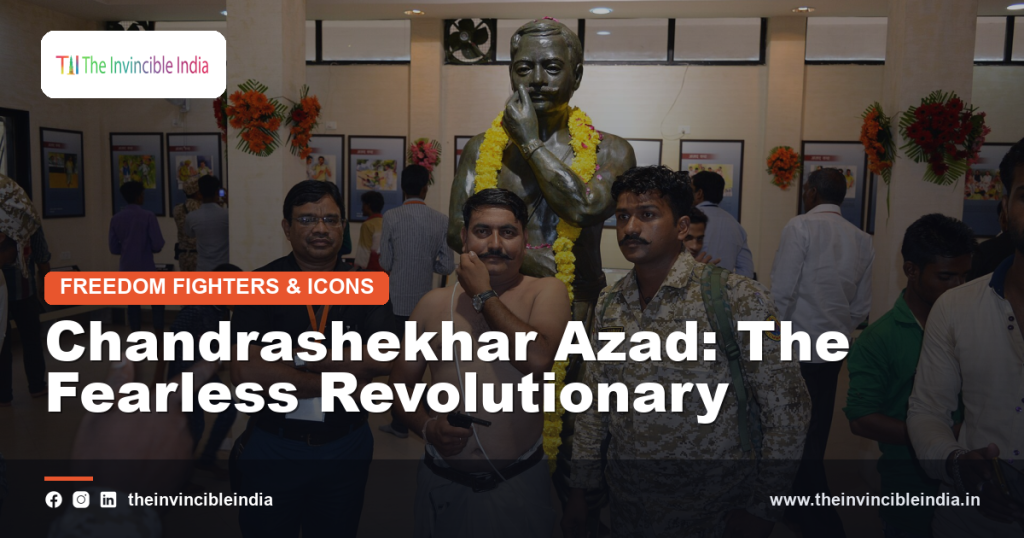
Today Chandrashekhar Azad is remembered and honoured across India as one of the most fearless and beloved of its revolutionary heroes, a young patriot who gave his life for freedom and who lived and died free. His statues and memorials honour his contribution, places bear his name in tribute, and his story of daring, sacrifice and his heroic death free to the last continues to inspire, especially the young. He is celebrated as a symbol of courage, patriotism and the uncompromising spirit of freedom. As the fearless revolutionary who kept his vow to remain free to the very end, Chandrashekhar Azad endures as one of the most inspiring and beloved of India’s freedom fighters and national icons.
Sources & Further Reading
- Ministry of Culture, Government of India, on Chandrashekhar Azad and the revolutionary movement (indiaculture.gov.in).
- National records and histories of the Indian freedom movement.
Frequently Asked Questions
Who was Chandrashekhar Azad?
Chandrashekhar Azad was one of the most fearless revolutionaries of India’s freedom struggle, a young patriot who dedicated his life to the armed fight for freedom, led the revolutionary movement, and vowed never to be captured alive by the British.
Why is he called Azad?
He is called Azad, meaning free, a name he is said to have adopted as a defiant declaration of his spirit. According to the famous story, when arrested and questioned as a young man, he gave his name as Azad, free, expressing his refusal to submit to British authority.
What was Azad's famous vow?
Azad’s famous vow was that he would never be captured alive by the British and would remain free, true to his name, to the very end. He is said to have kept this vow faithfully, dying free rather than allowing himself to be taken prisoner.
How did Chandrashekhar Azad die?
Chandrashekhar Azad died in 1931, surrounded by police in a public park, where he fought fearlessly to the last. According to the famous account, when he had a single bullet left, he used it on himself to remain free and never be captured alive, keeping his vow.
Why is Azad a symbol of youthful courage?
Azad dedicated himself to the freedom struggle in his youth and died young, living fearlessly and dying free. His example of a young patriot who gave everything for his country has made him a special symbol of youthful courage, idealism and sacrifice, beloved by the young.