


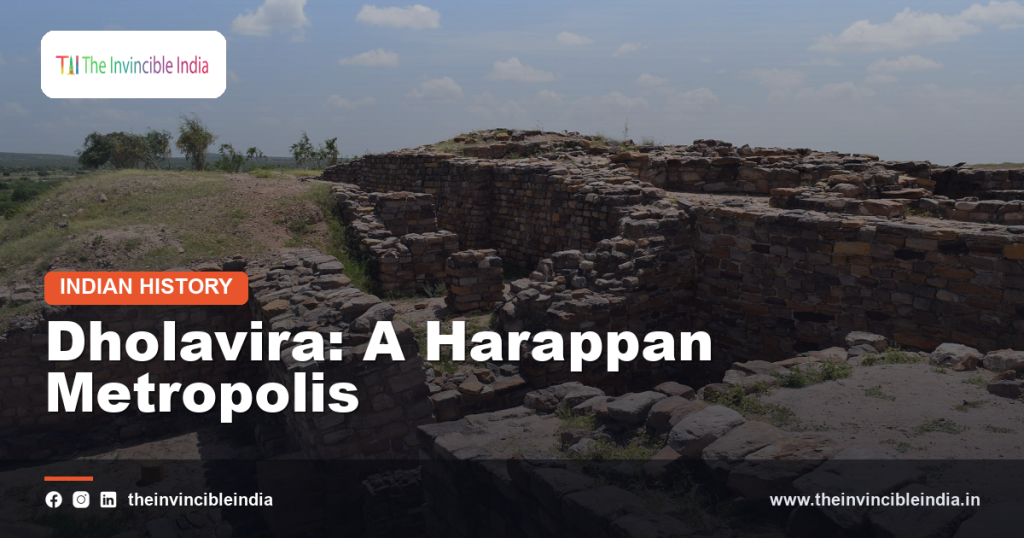
Among the great urban centers of the Indus Valley Civilisation, Dholavira stands out for the sheer sophistication of its engineering, particularly its remarkable systems for capturing and conserving water in one of India’s most arid regions. Located on an island within the seasonal wetlands of Kutch in present-day Gujarat, this ancient metropolis reveals a level of urban planning, craftsmanship, and civic organization that continues to impress archaeologists studying the broader Harappan world. Excavations at the site have uncovered a carefully divided city layout, elaborate reservoirs, and one of the most intriguing inscriptions associated with the civilization’s still-undeciphered script. Recognized in recent years for its outstanding universal value, Dholavira offers a vivid window into life in one of the ancient world’s most advanced urban cultures. This guide surveys its layout, engineering, and enduring significance.
Quick Facts
| Detail | Information |
|---|---|
| Location | Khadir island, Kutch region, Gujarat |
| Civilization | Indus Valley (Harappan) Civilisation |
| Approximate Period | Bronze Age, third to second millennium BCE |
| Known For | Advanced water conservation and structured urban planning |
| Layout | Divided into fortified citadel, middle town, and lower town |
| Recognition | UNESCO World Heritage Site |
Discovery and Location of Dholavira
Dholavira lies on Khadir island within the Rann of Kutch in present-day Gujarat, a stark and seasonally flooded landscape that makes the site’s ancient urban sophistication all the more striking. Archaeological investigation revealed the remains of a substantial fortified settlement, prompting sustained excavation that gradually uncovered the scale and complexity of the ancient city beneath the surface. The site’s relatively remote location, distant from the major rivers usually associated with Harappan settlement, offered valuable evidence that the civilization’s urban network extended into more challenging and arid environments than previously well understood. Systematic excavation over subsequent years revealed a city notable for its scale, its careful planning, and its distinctive approach to water management. Dholavira’s discovery significantly expanded scholarly understanding of the geographic reach and adaptability of Harappan urban culture.
Dholavira Within the Indus Valley Civilisation
As one of the largest and most well-preserved sites associated with the Indus Valley Civilisation, Dholavira offers crucial evidence for understanding the broader urban culture that flourished across a vast area of the northwestern subcontinent during the Bronze Age. Alongside other major Harappan centers, Dholavira shares core features of the civilization’s urban culture, including standardized construction techniques, sophisticated craft production, and evidence of long-distance trade connections. At the same time, the site’s distinctive water management systems and city layout reflect adaptations suited to its particular arid environment, illustrating the flexibility of Harappan urban planning across diverse regional settings. Its location in Kutch also situates it within a network of trade routes connecting the Indus heartland to coastal and peninsular India. This context underscores Dholavira’s importance as both a representative and a distinctive example of Harappan urbanism.
Urban Planning and City Layout
Dholavira’s city plan reflects a carefully organized approach to urban design, with the settlement divided into distinct fortified sections arranged according to a deliberate spatial hierarchy. This structured layout, combining defensive walls with clearly demarcated zones for different civic functions, reflects a level of centralized planning consistent with other major Harappan urban centers. Wide streets and organized public spaces within the city suggest attention to circulation and civic order, features that speak to sophisticated municipal administration. The scale and precision of this planning indicate significant investment of labor and resources in the city’s original design and construction. Dholavira’s urban layout remains one of the clearest surviving examples of deliberate town planning from the ancient Indus world.
The Citadel and Its Fortifications
At the heart of Dholavira stood a heavily fortified citadel, constructed using large dressed stone blocks and featuring substantial defensive walls, gateways, and bastions that distinguish it from the more modestly fortified structures seen at some other Harappan sites. This citadel likely housed the settlement’s ruling or administrative elite, its imposing construction reflecting both practical defensive concerns and a deliberate statement of civic authority. The scale of stone used in its construction represents a considerable investment of labor and resources, indicating the importance placed on this central precinct within the city’s overall design. Gateways into the citadel were carefully constructed, suggesting controlled access to this significant zone of the settlement. The citadel remains one of the most architecturally impressive features uncovered at the site.
Middle Town and Lower Town Divisions
Beyond the citadel, Dholavira’s urban plan included a middle town and a lower town, each separated by fortification walls and evidently serving distinct social and economic functions within the broader settlement. This tiered arrangement suggests a structured social organization, with different zones of the city potentially housing different segments of the population according to occupation or status. The presence of substantial open ground between sections of the city, possibly used for public gatherings or ceremonial purposes, further reflects the deliberate and considered nature of the overall urban design. Residential structures within these zones show evidence of standardized construction techniques consistent with broader Harappan building practices. This layered urban structure provides valuable insight into the social organization of one of the civilization’s major cities.
Water Conservation and Reservoir Systems
Perhaps Dholavira’s most celebrated achievement is its elaborate system of water conservation, featuring a series of large stone-cut reservoirs designed to capture and store seasonal rainwater and stream flow in a region with limited natural water sources. These reservoirs, some of considerable scale, were connected to the surrounding landscape through channels designed to direct water into storage during the region’s brief rainy season. Such careful water management reflects a sophisticated understanding of hydrology and civil engineering, essential for sustaining a substantial urban population in an otherwise arid environment. The scale of this infrastructure suggests significant communal investment and coordinated planning, likely overseen by a capable administrative authority. This achievement stands among the most remarkable examples of ancient water engineering anywhere in the world.
Stormwater Drainage and Engineering
Complementing its reservoir systems, Dholavira also featured carefully engineered channels and drains designed to manage stormwater runoff and direct it efficiently toward storage areas within the city. This attention to drainage engineering reflects a broader Harappan tradition of sophisticated urban infrastructure, evident at other major sites through similarly advanced drainage and sanitation systems. At Dholavira, the particular challenges of an arid, seasonally flooded environment required especially careful engineering to both manage excess water during storms and conserve it for use during drier periods. The integration of drainage and storage systems throughout the city demonstrates a holistic approach to urban water management rather than piecemeal solutions. This engineering sophistication continues to draw significant scholarly attention and admiration.
Streets, Gateways, and Public Spaces
Dholavira’s internal layout included well-defined streets and gateways connecting its various urban zones, facilitating both movement within the city and controlled access between its differently fortified sections. Excavated gateways show evidence of careful construction, including features that may have served ceremonial or administrative functions in addition to practical access control. Open spaces within the city, potentially used for public gatherings, markets, or ceremonial events, further indicate a settlement designed to accommodate collective civic life alongside residential and administrative functions. This attention to public infrastructure reflects a level of urban sophistication comparable to other major Harappan centers. These features together paint a picture of a well-organized and functionally diverse ancient city.
The Famous Signboard Inscription
Among Dholavira’s most intriguing discoveries is a set of large inscribed characters, crafted from a material believed to have been inlaid into a wooden signboard, found near one of the city’s gateways. Composed in the still-undeciphered Indus script, this inscription remains one of the longest single sequences of Harappan writing yet discovered, drawing considerable scholarly attention and speculation about its possible meaning. Its prominent placement near a major gateway has led some researchers to suggest it may have served an important civic or identifying function, though its precise significance remains uncertain given the script’s undeciphered status. The inscription exemplifies both the sophistication of Harappan visual and written culture and the persistent mysteries that continue to surround this ancient civilization. It remains one of the most discussed artifacts associated with the site.
Craft Production and Materials
Excavations at Dholavira have uncovered evidence of diverse craft production, including bead-making, shell working, metalworking, and pottery, reflecting a thriving artisan economy within the ancient city. Materials used in these crafts, some sourced from considerable distances, indicate the settlement’s integration into wider Harappan and possibly extra-regional trade and exchange networks. The quality and standardization of many recovered artifacts reflect the broader technical sophistication characteristic of Indus Valley craft traditions. Workshops and production areas identified within the city suggest organized, possibly specialized, craft activity rather than purely household-level production. This evidence of active craft industry underscores Dholavira’s role as an important economic center within the wider Harappan world.
Trade Connections and Exchange Networks
Dholavira’s location within the Kutch region positioned it as a significant node within broader Harappan trade networks, connecting the civilization’s core settlements to coastal and maritime trade routes. Evidence of materials and goods originating from distant regions suggests the city participated actively in long-distance exchange, both within the wider Indus Valley Civilisation and potentially beyond its borders. This trading role would have contributed significantly to the city’s prosperity, supporting the substantial public works and craft production evident from excavation. The presence of such far-reaching connections illustrates the sophistication and reach of Harappan commercial networks during this period. Dholavira’s role as a trade hub adds an important economic dimension to understanding its overall significance within the civilization.
Daily Life and Society at Dholavira
Evidence from Dholavira’s residential areas, artifacts, and urban layout offers valuable insight into the daily life and social organization of its ancient inhabitants, suggesting a structured society engaged in agriculture, craft production, and trade. The division of the city into distinct zones likely corresponded to differences in social status or occupation, though the precise nature of Harappan social hierarchy remains a subject of ongoing scholarly discussion. Household artifacts, including pottery, tools, and personal ornaments, provide glimpses into the material culture and daily routines of the city’s residents. The scale of public infrastructure, particularly the water conservation systems, suggests a society capable of significant collective organization and long-term planning. This picture of organized civic life adds important texture to understanding of Harappan urban society.
Decline of the Settlement
Like other major centers of the Indus Valley Civilisation, Dholavira eventually experienced a decline in urban activity, with evidence suggesting a gradual reduction in the scale and complexity of settlement over an extended period rather than a sudden abandonment. Researchers have proposed various general explanations for this broader civilizational decline, including shifts in environmental and climatic conditions that would have particularly affected a site so dependent on careful water management. Changes in trade patterns and regional connectivity may also have contributed to the settlement’s diminishing significance over time. Following its decline as a major urban center, evidence suggests more limited, smaller-scale occupation continued at the site for some further period. This gradual transformation mirrors the broader trajectory observed at other significant sites associated with the civilization’s later phases.
Excavation and Archaeological Study
Systematic archaeological excavation at Dholavira has taken place over an extended period, gradually revealing the site’s scale, layout, and engineering sophistication through careful and sustained fieldwork. Researchers involved in this work have documented the site’s fortifications, reservoirs, artifacts, and inscriptions, building a detailed picture of urban life at one of the Indus Valley Civilisation’s most significant centers. Ongoing study continues to refine understanding of the site’s chronology, construction techniques, and relationship to other Harappan settlements across the wider region. This sustained scholarly attention reflects Dholavira’s recognized importance within the broader field of Indus Valley archaeology. Continued excavation and analysis promise further insights into this remarkable ancient city in the years ahead.
UNESCO Recognition and Conservation
In recognition of its outstanding universal value, Dholavira has been designated a UNESCO World Heritage Site, acknowledging its significance as an exceptionally well-preserved example of Harappan urban planning and engineering. This recognition has brought increased attention to the site’s conservation needs, supporting efforts to protect its excavated structures and artifacts from the effects of weathering and human activity. World Heritage status has also helped raise public awareness of Dholavira among both domestic and international visitors interested in ancient Indian history. Conservation authorities continue to balance the practical demands of protecting a fragile archaeological site with the goal of making it accessible for education and responsible tourism. This recognition marks an important milestone in the ongoing effort to preserve and study the site.
Dholavira Today
Today, Dholavira stands as one of the most significant archaeological destinations associated with the Indus Valley Civilisation, drawing researchers, students, and visitors interested in its remarkable water engineering and urban planning. Site museums and interpretive facilities near the excavation help convey the scale and sophistication of the ancient city to a broader public audience. Ongoing conservation and research efforts continue to protect the site while contributing new insights into the daily life, engineering, and society of its ancient inhabitants. As a UNESCO World Heritage Site, Dholavira occupies an important place both within India’s cultural heritage and within the broader global story of ancient urban civilization. Its enduring legacy continues to shape understanding of one of the ancient world’s most sophisticated urban cultures.
Sources & Further Reading
- Archaeological Survey of India (asi.nic.in).
- Ministry of Culture, Government of India (indiaculture.gov.in).
Frequently Asked Questions
What is Dholavira?
Dholavira is a major archaeological site of the Indus Valley Civilisation located on Khadir island in the Kutch region of Gujarat, known for its advanced urban planning and water conservation systems.
Why is Dholavira significant?
Dholavira is significant for its sophisticated water reservoirs, structured city layout, and a rare inscription in the undeciphered Indus script, offering key insights into Harappan urban life.
What is the layout of Dholavira's city?
The city was divided into a fortified citadel, a middle town, and a lower town, each separated by walls and serving distinct social and administrative functions.
What is the Dholavira signboard inscription?
It is a set of large inscribed characters found near a city gateway, composed in the undeciphered Indus script, and considered one of the longest such inscriptions discovered at any Harappan site.
Is Dholavira a UNESCO World Heritage Site?
Yes, Dholavira has been designated a UNESCO World Heritage Site in recognition of its outstanding value as a well-preserved example of Harappan urban planning and engineering.