


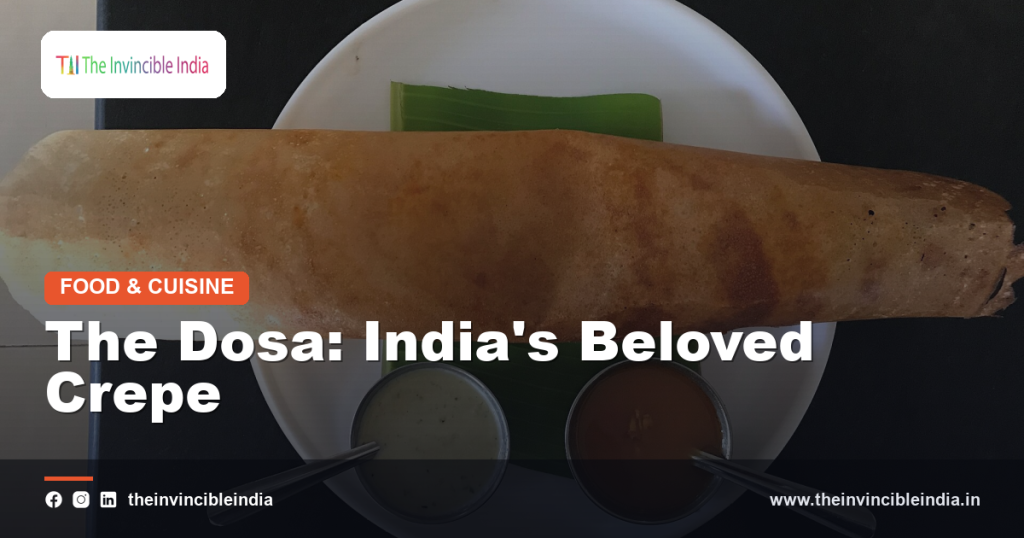
The dosa is one of India’s most beloved and celebrated dishes, a thin, crisp and delicious crepe made from a fermented batter of rice and lentils that has become a glory of South Indian cuisine and a favourite across the entire country and the world. Golden, crisp at the edges and delicately flavoured, the dosa is served in countless forms, from the simple plain dosa to the famous potato-filled masala dosa, always accompanied by chutney and sambar. Its versatility, lightness and delicious flavour have made it one of the most cherished dishes of Indian food. This guide explores the dosa, its making, its varieties and its enduring place in India’s South Indian breakfast tradition.
Quick Facts
| Detail | Information |
|---|---|
| Type | A thin, crisp fermented crepe |
| Origin | South India |
| Made from | Fermented rice and lentil batter |
| Texture | Crisp at the edges, soft within |
| Served with | Chutney and sambar |
| Role | A beloved breakfast and all-day favourite |
A Beloved Crepe
The dosa is one of India’s most beloved and widely enjoyed dishes, a thin, crisp crepe that has won admirers across the country and around the world. Made from a fermented batter of rice and lentils, poured thin onto a hot griddle and cooked until golden and crisp, the dosa is celebrated for its delicate flavour, its satisfying lightness and its wonderful versatility, appearing in countless forms from the plain and simple to the richly filled. This standing as a beloved crepe is the foundation of its fame. As one of India’s most beloved and widely enjoyed dishes, the dosa, thin, crisp and delicately flavoured, holds a cherished place in the country’s food heritage and continues to be celebrated as a glory of South Indian cuisine.
Origins in the South
The dosa has its origins in South India, where rice and lentils have long been staple ingredients and where the art of fermented batter cooking developed into a distinctive culinary tradition. Over generations, the peoples of the south refined the making of thin, fermented pancakes from rice and lentils into the dosa as it is loved today, a dish deeply rooted in the region’s agricultural bounty and culinary ingenuity. This southern origin remains central to the dosa’s identity. This deep rooting of the dosa in South India, where rice and lentils have long been staple ingredients and fermented batter cooking became a distinctive art, remains central to its identity, and the dosa continues to be regarded as one of the finest expressions of South Indian culinary heritage.
The Batter
At the heart of every dosa is its batter, a carefully prepared mixture of rice and lentils that is ground fine and left to develop its distinctive character. The batter is traditionally made by soaking rice and urad lentils separately, grinding each to a fine paste, and combining them in the right proportion, so that the resulting mixture is smooth, pourable and ready to ferment into the base of the dosa. This careful preparation of the batter is essential to a good dosa. This careful and traditional preparation of the batter, combining ground rice and lentils into a smooth, pourable mixture, is essential to a good dosa, and the quality of the batter is what determines the flavour and texture of the finished crepe.
Fermentation
A defining step in making dosa batter is fermentation, in which the ground rice and lentil mixture is left to rest and develop its characteristic tang and lightness. During fermentation, natural processes act upon the batter, giving it a pleasant sourness, a light and airy quality, and the ability to cook into a crepe that is crisp outside and tender within, so that fermentation is what transforms plain ground grains into the distinctive dosa batter. This fermentation is the secret of the dosa. This defining step of fermentation, in which the batter develops its characteristic tang, lightness and cooking quality, is the secret behind the dosa, and this careful transformation of the batter is what gives the dosa its distinctive and beloved flavour.
The Griddle
The dosa is cooked upon a flat, hot griddle, where the fermented batter is poured and spread thin with a practised hand to form the wide, delicate crepe. A small amount of batter is poured onto the hot griddle and swiftly spread in a circular motion into a thin round, which is then drizzled with a little oil and cooked until the underside turns golden and crisp, a skill that requires practice and a steady hand. This cooking on the griddle is central to the dosa’s character. This cooking of the dosa upon a flat, hot griddle, where the thin batter is spread and cooked until golden and crisp, is central to its character, and the skilled hand of the cook upon the griddle is what gives every dosa its perfect form.
The Classic Plain Dosa
The simplest and most classic form of the dish is the plain dosa, a thin, crisp crepe served without any filling, allowing the flavour of the fermented batter to shine through. Golden and crisp, folded or rolled and served hot straight from the griddle, the plain dosa is a wonderfully simple yet deeply satisfying dish, enjoyed with chutney and sambar, and it remains a favourite for those who cherish the pure, delicate flavour of the fermented batter itself. This classic plain dosa is a favourite in its own right. This simplicity of the classic plain dosa, served without filling so that the flavour of the fermented batter shines through, is a favourite in its own right, and its clean, satisfying taste is cherished by dosa lovers across India.
The Famous Masala Dosa
The most famous variety of the dish is the masala dosa, in which the crisp crepe is filled with a spiced potato mixture to make a hearty and delicious meal. The potato filling, cooked with onions, mustard seeds and mild spices, is spread inside the crisp dosa before it is folded, creating a wonderful contrast between the crunchy crepe and the soft, flavourful filling, and the masala dosa has become the most beloved and widely recognised of all dosa varieties. This famous masala dosa is the crowning glory of the dish. This filling of the crisp crepe with a spiced potato mixture to make the famous masala dosa is the crowning glory of the dosa, and this hearty, flavourful combination has made it the most beloved dosa of all across India and beyond.
Chutney and Sambar
No dosa is complete without its beloved accompaniments of chutney and sambar, which are served alongside to add flavour, moisture and delight to every bite. Coconut chutney, with its cool and mild flavour, and sambar, the tangy lentil and vegetable stew, are the traditional companions of the dosa, each dip and spoonful of sambar enhancing the crisp crepe and rounding out the meal into a complete and satisfying experience. These accompaniments are essential to the dosa experience. This essential pairing of the dosa with chutney and sambar, adding flavour, moisture and delight to every bite, completes the dish, and no plate of dosa is considered whole without these beloved and traditional accompaniments.
Varieties Across the South
Beyond the plain and masala dosa, South India offers a wonderful variety of dosas, each region and household adding its own touch to the basic batter and technique. From dosas flavoured with different grains and lentils to those cooked with distinctive spicing or served with different fillings and accompaniments, the variety of dosas across the south reflects the rich culinary diversity of the region, so that every state and city seems to have its own beloved version. This regional variety enriches the dosa tradition. This wonderful variety of dosas across the south, each region adding its own touch to the basic batter and technique, enriches the tradition, and the many beloved regional versions of the dosa are a testament to the culinary creativity of South India.
The Delicate Paper Dosa
Among the most admired varieties is the paper dosa, an especially large, thin and crisp version that is spread wide across the griddle to achieve its delicate, almost translucent texture. Requiring particular skill to spread the batter thin enough without tearing, the paper dosa is prized for its extraordinary crispness and its impressive size, often served rolled into a long cone, and it is a favourite for those who delight in the crispest possible version of the dish. This delicate paper dosa is admired for its skillful making. This admiration for the paper dosa, an especially large, thin and crisp version requiring particular skill to make, reflects the artistry of dosa making, and the paper dosa remains a favourite for those who delight in its extraordinary crispness.
Stuffed and Filled Varieties
Beyond the classic potato filling, dosas are also made with a variety of other stuffings, reflecting the creativity and adaptability of this versatile dish. Fillings of vegetables, paneer and other ingredients have been introduced into the dosa over time, each variation keeping the crisp crepe as its foundation while offering a different flavour experience, so that the dosa has proven itself endlessly adaptable to new fillings and tastes. This adaptability is a strength of the dish. This creativity in filling the dosa with a variety of stuffings beyond the classic potato, reflecting the adaptability of this versatile dish, is a strength of the tradition, and the dosa continues to welcome new variations while remaining true to its crisp, fermented foundation.
A Breakfast Favourite
The dosa holds a cherished place as a breakfast dish, especially in South India, where it is a common and beloved way to start the day. Light yet satisfying, easy to digest thanks to its fermentation, and delicious hot off the griddle, the dosa is a favourite morning meal in countless South Indian homes, often prepared fresh each morning from batter kept ready, so that the dosa is deeply woven into the daily rhythm of breakfast across the region. This role as a breakfast favourite is central to its place in daily life. This cherished place of the dosa as a breakfast dish, light yet satisfying and beloved to start the day, is central to its role in daily life, and it remains one of the most popular breakfasts across South India.
A Street Food and Restaurant Star
Beyond the home, the dosa has become a star of street food stalls and restaurants alike, served fresh off the griddle to eager customers across India. From roadside stalls where skilled cooks spread and fold dosas with practised speed to specialised restaurants devoted entirely to dosa and its accompaniments, the dish has found a place in every kind of dining setting, loved equally for a quick bite and a leisurely meal. This popularity in street food and restaurants reflects its universal appeal. This rise of the dosa as a star of street food stalls and restaurants alike, served fresh to eager customers across India, reflects its universal appeal, and the dosa continues to draw crowds wherever it is served.
Nutritional and Wholesome Qualities
The dosa is valued not only for its taste but also for its wholesome and nourishing qualities, being made from fermented rice and lentils that provide a balanced source of nutrition. The fermentation process is thought to make the nutrients in the batter more accessible, and the combination of rice and lentils provides a balanced meal, especially when paired with the vegetables in sambar and chutney, so that the dosa is regarded as a light yet nourishing dish suited to everyday eating. This wholesome character adds to its appeal. This valuing of the dosa for its wholesome and nourishing qualities, made from fermented rice and lentils that provide balanced nutrition, adds greatly to its appeal, and the dosa is appreciated as a dish that is both delicious and good for everyday health.
Global Popularity
In recent times, the dosa has travelled far beyond South India, becoming a beloved dish in Indian restaurants and homes across the world. Wherever Indian communities have settled and wherever Indian cuisine has found admirers, the dosa has followed, celebrated for its unique texture, its delicious flavour and its distinctive appearance, so that it has become one of the most recognisable and sought-after dishes of Indian cuisine on the global stage. This global popularity reflects the dosa’s universal appeal. This travelling of the dosa far beyond South India to become beloved in Indian restaurants and homes across the world reflects its universal appeal, and the dosa today stands as one of the great ambassadors of Indian food abroad.
The Dosa Today
Today the dosa continues to be celebrated as one of India’s most beloved and iconic dishes, enjoyed at breakfast, as a snack, and as a full meal across the country and the world. The classic plain dosa, the famous masala dosa, the delicate paper dosa, and countless regional and stuffed varieties continue to be made fresh on hot griddles, served with beloved chutney and sambar, and enjoyed by millions every single day. The dish continues to win new admirers everywhere it is served. As a thin, crisp and delicious crepe made from fermented rice and lentil batter, the dosa endures as a glory of South Indian cuisine and one of the most cherished dishes in all of Indian food.
Sources & Further Reading
- Ministry of Tourism, Government of India, on the cuisines of India (tourism.gov.in).
- Culinary references on the food traditions of South India.
Frequently Asked Questions
What is a dosa made of?
A dosa is made from a fermented batter of rice and lentils, ground fine, combined and left to ferment before being spread thin on a hot griddle and cooked until crisp and golden. This fermented batter gives the dosa its distinctive tangy flavour and light texture.
What is the difference between a plain dosa and a masala dosa?
A plain dosa is served without any filling, allowing the flavour of the crisp fermented crepe to stand alone, while a masala dosa is filled with a spiced potato mixture, making it a heartier and more famous variety enjoyed widely across India and beyond.
What is dosa traditionally served with?
Dosa is traditionally served with coconut chutney and sambar, a tangy lentil and vegetable stew. These beloved accompaniments add flavour and moisture to the crisp dosa and are considered essential to a complete and satisfying dosa meal.
Why is dosa batter fermented?
The batter is fermented to develop a pleasant tang, a light and airy texture, and better cooking qualities. Fermentation transforms the plain ground rice and lentils into the distinctive dosa batter, giving the finished crepe its characteristic flavour and crispness.
Is dosa a healthy food?
Dosa is often considered a wholesome and nourishing dish, being made from fermented rice and lentils that offer balanced nutrition, especially when paired with the vegetables found in sambar and chutney. Its light, easily digestible nature adds to its everyday appeal.