


DRDO, the Defence Research and Development Organisation, is the research and development wing of India’s Ministry of Defence. Its job is simple to state and enormously hard to do: design, develop and help produce advanced weapons, sensors and support systems so that the Indian armed forces do not have to depend entirely on foreign suppliers. From ballistic missiles and fighter aircraft to radars, sonars, armoured vehicles and even high-altitude food and clothing for soldiers, a very large share of what India’s forces field has some link to its laboratories.
This explainer walks through how DRDO came into being, how it is organised, what its major laboratories do, and which programmes made it famous. It also looks at its civilian spin-offs, its role during the COVID-19 pandemic, and the honest debates around delays, costs and the growing role of private industry. Last updated: 30 September 2026.
Quick Facts
| Full name | Defence Research and Development Organisation (DRDO) |
|---|---|
| Formed | 1958, by merging existing defence science and technical development bodies |
| Parent ministry | Ministry of Defence, Government of India |
| Functions under | Department of Defence Research and Development (DDR&D) |
| Headquarters | New Delhi |
| Head | Chairman, who is also Secretary of the Department of Defence R&D |
| Core mission | Self-reliance (Aatmanirbharta) in defence technology |
| Network | Dozens of laboratories and establishments spread across the country |
| Best-known figure | Dr A. P. J. Abdul Kalam, the “Missile Man of India” |
What Is DRDO?
DRDO is a government agency that sits at the intersection of science, engineering and national security. Unlike a manufacturing company, its principal task is to invent and prove technologies: it conducts basic and applied research, builds prototypes, runs trials, and then hands mature designs over to production agencies such as public sector undertakings, ordnance factory successors and, increasingly, private companies.
Motto and Purpose
The organisation’s motto is the Sanskrit phrase “Balasya Mulam Vigyanam”, often rendered as “the source of strength is science”. It captures the founding belief that military power ultimately rests on technological capability, not just on numbers of soldiers or platforms bought off the shelf.
Where It Fits in the Defence Set-up
India’s Ministry of Defence has several departments, including the Department of Defence, the Department of Military Affairs, the Department of Defence Production and the Department of Ex-Servicemen Welfare. The Department of Defence Research and Development is the one under which DRDO functions. The three Services, the Army, Navy and Air Force, are DRDO’s main customers: they state their requirements, DRDO develops solutions, and the Services test and eventually induct them.
Origins and History (1958 Onwards)
India inherited a modest set of defence science and technical bodies at Independence. In the early years these were small, scattered and largely focused on testing and inspecting equipment rather than designing it. Recognising that a large, ambitious country could not rely solely on imports, the government created DRDO in 1958.
The 1958 Merger
DRDO was formed by bringing together the Technical Development Establishments of the Army and the Directorate of Technical Development and Production of the Air Force with the Defence Science Organisation. Together these had only a small number of establishments. The new body was placed under a Scientific Adviser to the Defence Minister, and Dr D. S. Kothari, the eminent physicist, played a formative role in shaping the early scientific culture of defence research.
Growing Through Wars and Sanctions
The wars of 1962, 1965 and 1971 underlined how vulnerable an import-dependent force could be, and later technology-denial regimes after India’s nuclear tests reinforced the same lesson. Each of these phases pushed the government to widen DRDO’s mandate and invest in more laboratories, moving the organisation from tinkering with imported designs towards genuinely indigenous development.
Structure, Leadership and Laboratories
DRDO is headquartered in New Delhi, where the central administration, planning and coordination are based. The head of the organisation is the Chairman, who simultaneously serves as the Secretary of the Department of Defence Research and Development. This dual role gives DRDO’s leadership a seat at the table with the Ministry’s senior officials, and traditionally the post has been held by a senior scientist.
Clusters of Laboratories
Rather than being a single campus, DRDO is a network. Its laboratories are grouped by technology domain, for example:
- Aeronautics: combat aircraft, unmanned aerial vehicles, aero-engines and airborne systems.
- Armaments: guns, rockets, ammunition and explosives.
- Combat vehicles and engineering: tanks, bridges and mobility systems.
- Electronics and communication: radars, electronic warfare and secure communication.
- Missiles and strategic systems: tactical and strategic missiles, guidance and propulsion.
- Naval systems: sonars, underwater weapons and naval materials.
- Life sciences: soldier survival, high-altitude physiology, medicine and food technology.
- Materials, micro-electronics and computing: advanced alloys, composites, chips and artificial intelligence.
Academic and Support Institutions
Beyond the labs, DRDO runs talent and knowledge structures, including fellowships, research boards and an institute for advanced technology in Pune, which functions as a university-level institution serving defence needs.
Major DRDO Laboratories
The names of DRDO labs are often abbreviations that puzzle newcomers. The table below lists some of the best-known ones and what they are associated with. It is not exhaustive; the organisation has many more establishments, and their portfolios overlap and evolve over time.
| Laboratory | Location | Broad Area |
|---|---|---|
| Defence Research and Development Laboratory (DRDL) | Hyderabad | Tactical and strategic missile systems |
| Research Centre Imarat (RCI) | Hyderabad | Missile avionics, navigation and guidance |
| Aeronautical Development Establishment (ADE) | Bengaluru | Unmanned aerial vehicles and flight systems |
| Aeronautical Development Agency (ADA) | Bengaluru | Design and development of the Tejas fighter programme |
| Gas Turbine Research Establishment (GTRE) | Bengaluru | Aero gas turbine engines |
| Electronics and Radar Development Establishment (LRDE) | Bengaluru | Radars for land, air and sea |
| Defence Bioengineering and Electro Medical Laboratory (DEBEL) | Bengaluru | Soldier life support, biodigesters, protective gear |
| Armament Research and Development Establishment (ARDE) | Pune | Guns, rockets and ammunition, including Pinaka |
| Combat Vehicles Research and Development Establishment (CVRDE) | Avadi, Chennai | Armoured fighting vehicles, including Arjun |
| Naval Science and Technological Laboratory (NSTL) | Visakhapatnam | Underwater weapons and naval systems |
The Missile Story: IGMDP, Agni and BrahMos
If one programme defines DRDO’s public image, it is the Integrated Guided Missile Development Programme, usually called IGMDP. Approved by the Government of India in 1983, it was conceived to leapfrog India’s dependence on foreign missile suppliers by developing a whole family of missiles in parallel, rather than one at a time. Dr A. P. J. Abdul Kalam led the effort as its programme director.
The Five Original Missiles
- Prithvi: a surface-to-surface, short-range ballistic missile, the first of the family.
- Agni: the long-range ballistic missile series, which grew from a technology demonstrator into a family of nuclear-capable missiles of increasing range.
- Akash: a medium-range surface-to-air missile system for air defence.
- Trishul: a short-range, quick-reaction surface-to-air missile.
- Nag: a third-generation anti-tank guided missile.
Why IGMDP Mattered
IGMDP built a national ecosystem: propulsion, guidance electronics, composite materials, test ranges and a trained workforce. Not every system in the original list reached the Services in the form first imagined; Trishul, for instance, was later used mainly as a technology testbed. Yet the capabilities created, from solid rocket motors to inertial navigation, became the foundation for later programmes, and the programme is widely regarded as a landmark in Indian technological history.
The Agni Series
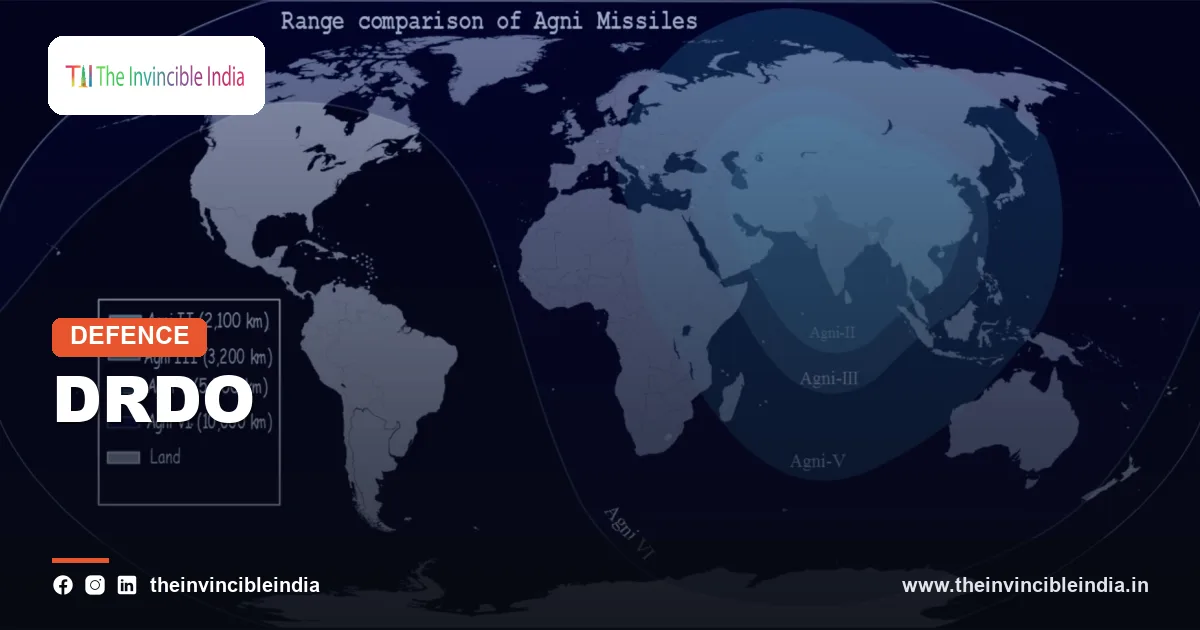
The Agni missiles are central to India’s strategic deterrence. The first Agni test in 1989 demonstrated re-entry technology, and successive versions extended range and improved accuracy, mobility and launch flexibility. Canisterised, road- and rail-mobile variants make the missiles easier to deploy and harder to detect. Details of performance are guarded, and official statements generally describe them in broad terms.
BrahMos: A Joint Venture
BrahMos is a supersonic cruise missile developed through BrahMos Aerospace, a joint venture between DRDO and Russia’s NPO Mashinostroyeniya, established in 1998. The name honours two rivers: India’s Brahmaputra and Russia’s Moskva. Variants exist for launch from land, ships, submarines and aircraft, and the system is prized for its speed and low-altitude flight profile. It is also an example of DRDO working in partnership rather than in isolation.
Aircraft, Tanks and Rockets
Tejas Light Combat Aircraft
The Tejas is a single-engine, multirole light fighter designed by the Aeronautical Development Agency with DRDO laboratories and built by Hindustan Aeronautics Limited (HAL). Its programme began in the 1980s, its technology demonstrator first flew in 2001, and the aircraft was officially named Tejas in 2003. It stands as a symbol of the effort to build a fighter with a largely indigenous design, though the road was long, involving new materials, fly-by-wire controls and an engine effort at GTRE.
Arjun Main Battle Tank
The Arjun tank, developed by CVRDE at Avadi, was India’s first serious attempt at an indigenous main battle tank. It went through a long development period and later upgraded variants were introduced. The programme is often discussed as a learning experience that improved India’s expertise in armour, suspension, fire control and testing.
Pinaka Multi-Barrel Rocket System
Developed chiefly by ARDE in Pune, the Pinaka is a multi-barrel rocket launcher designed to saturate an area with rockets in a short time. Later versions increased range and added guided rockets. Its progress shows how a laboratory can deliver a system that ends up in large-scale service.
Air Defence, Sensors and Space
Akash and Other Air-Defence Systems
Akash, one of the IGMDP missiles, is a medium-range surface-to-air missile system able to engage multiple aerial targets and has entered service with both the Army and the Air Force. Alongside it, DRDO has worked on shorter-range, long-range and naval air-defence missiles.
Ballistic Missile Defence
India’s Ballistic Missile Defence programme aims to detect and destroy incoming ballistic missiles using a layered approach: an exo-atmospheric interceptor for high altitudes and an endo-atmospheric one for lower altitudes. Tests from the mid-2000s onwards proved the key building blocks, including long-range tracking radars and command-and-control networks.
Mission Shakti (2019)
On 27 March 2019, India conducted the Anti-Satellite (ASAT) test known as Mission Shakti, in which an interceptor developed under the ballistic missile defence effort destroyed a satellite in low Earth orbit. It made India one of a small group of countries to have demonstrated such a capability, and the test was carried out by DRDO.
Sensors, Sonars and Electronics
Modern warfare is decided as much by what a force can see and hear as by what it can shoot. DRDO’s electronics laboratories have produced a wide array of radars, including surveillance and fire-control radars used on land and at sea. Its airborne early warning and control systems, mounted on aircraft, extend the vision of the Air Force well beyond ground-based radars.
Underwater Systems
Naval laboratories have developed sonars for surface ships and submarines, along with torpedoes and other underwater weapons. Sonar work is especially demanding because the ocean is a noisy, unpredictable medium, and it requires painstaking signal-processing research.
Electronic Warfare and Communications
Electronic warfare suites, secure communication networks, jammers and cyber-security tools form another set of DRDO responsibilities. These fields are highly sensitive, and only general descriptions of the capabilities are publicly available.
Civilian Spin-offs and the COVID-19 Response
Defence research often produces technologies with wide civilian use, and DRDO is no exception. Its life sciences labs have developed food and nutrition products for extreme altitudes, medical devices, and protective clothing. Its materials work has led to lightweight composites, and one well-known example is the use of carbon composite technology to make light artificial limbs for people with disability. Other spin-offs include water purification, biodigesters used at remote installations, and body armour technology adapted for police forces.
- Healthcare: low-cost medical devices, prosthetics and diagnostic tools.
- Materials: composites and specialty alloys used by industry.
- Environment: waste treatment systems that work in cold, high-altitude conditions.
- Electronics and software: secure communications and sensor technologies licensed to industry.
DRDO transfers many technologies to Indian industry through licensing, which helps the economy while spreading defence know-how.
DRDO During the COVID-19 Pandemic
The pandemic showed that a defence research organisation can be versatile in a national emergency. DRDO put its expertise into work far from the battlefield.
- Hospitals: temporary COVID care hospitals were set up in several cities on a fast timeline, with oxygen-supported beds.
- Drug: a drug based on 2-deoxy-D-glucose (2-DG), developed with a DRDO laboratory and an Indian pharmaceutical company, received emergency-use approval in 2021 as an adjunct therapy.
- Equipment: sanitisation systems, protective gear, masks, ventilator-related work and oxygen-generation technologies.
- Oxygen support: a supplemental oxygen delivery system designed for use at high altitudes was adapted for patients.
These efforts highlighted how the country’s defence science infrastructure can be repurposed for public health during crises.
Challenges, Criticism and the Push for Private Industry
DRDO’s record is a mixture of celebrated successes and long-running criticism, and a balanced picture acknowledges both.
Common Criticisms
- Some projects have taken far longer than planned and cost more than initially estimated, as with several combat aircraft and armour programmes.
- In certain cases, the Services have felt that delivered systems did not fully meet their evolving requirements, leading to imports.
- Critics have argued that development and production are not always well coordinated.
Points in DRDO’s Defence
Supporters note that defence technology is inherently difficult, that international sanctions cut off access to key components for years, and that building an entire industrial base from a low starting point takes decades. They also point to the many systems that have entered service, and to the strategic value of independence in critical areas.
Reforms and Private Participation
The government has encouraged wider participation from private companies, small businesses and start-ups. A significant step was iDEX (Innovations for Defence Excellence), launched in 2018 to fund and support start-ups and innovators working on defence problems. DRDO has also opened up its test facilities and technology-transfer routes to industry, and policies such as positive indigenisation lists aim to increase domestic procurement, all in line with the Aatmanirbharta vision.
Dr A. P. J. Abdul Kalam: The Missile Man
No name is more closely linked with DRDO than Dr Avul Pakir Jainulabdeen Abdul Kalam (1931-2015). An aeronautical engineer by training, he began his career in the defence research system in the late 1950s, later moved to the space programme where he led the SLV-III satellite launch vehicle project, and then returned to defence research to lead IGMDP. He went on to serve as Scientific Adviser to the Defence Minister and Secretary of the Department of Defence R&D in the 1990s.
Kalam received the Bharat Ratna in 1997 and served as the 11th President of India from 2002 to 2007. Known as the “Missile Man of India” and admired for his humility and love for teaching, he remains an enduring symbol of Indian science.
Conclusion
DRDO is a central pillar of India’s quest for defence self-reliance. Over more than six decades it has grown from a small collection of establishments into a national network that touches missiles, aircraft, armour, sensors, medicine and materials. Its successes have delivered strategic autonomy in important fields, while its delays and cost issues remain valid subjects of debate. As the organisation opens up to start-ups and industry, its future is likely to be defined by partnership as much as invention.
Frequently Asked Questions
What does DRDO stand for and what does it do?
DRDO stands for the Defence Research and Development Organisation. It is the research wing of India’s Ministry of Defence and develops indigenous weapons, sensors and support technologies for the Army, Navy and Air Force.
When was DRDO formed and where is it headquartered?
DRDO was formed in 1958 by merging existing defence research and technical development bodies. Its headquarters is in New Delhi, and it functions under the Department of Defence Research and Development.
Who heads DRDO?
DRDO is headed by a Chairman, who also serves as the Secretary of the Department of Defence Research and Development. The post is traditionally held by a senior scientist.
What is IGMDP and why is it important?
The Integrated Guided Missile Development Programme, approved in 1983 and led by Dr A. P. J. Abdul Kalam, developed a family of missiles including Prithvi, Agni, Akash, Trishul and Nag. It built the technological and industrial base for India’s later missile programmes.
What are some famous DRDO achievements?
Well-known achievements include the Agni missiles, the BrahMos cruise missile with Russia, the Tejas Light Combat Aircraft with ADA and HAL, the Arjun tank, the Akash air-defence system, the Pinaka rocket system, the ballistic missile defence programme and the 2019 Mission Shakti anti-satellite test.
Can private companies and start-ups work with DRDO?
Yes. Through initiatives such as iDEX, launched in 2018, and through technology transfer and access to test facilities, DRDO increasingly works with private firms, small businesses and start-ups as part of the push for Aatmanirbharta in defence.
{“@context”:”https://schema.org”,”@graph”:[{“@type”:”FAQPage”,”mainEntity”:[{“@type”:”Question”,”name”:”What does DRDO stand for and what does it do?”,”acceptedAnswer”:{“@type”:”Answer”,”text”:”DRDO stands for the Defence Research and Development Organisation. It is the research wing of India’s Ministry of Defence and develops indigenous weapons, sensors and support technologies for the Army, Navy and Air Force.”}},{“@type”:”Question”,”name”:”When was DRDO formed and where is it headquartered?”,”acceptedAnswer”:{“@type”:”Answer”,”text”:”DRDO was formed in 1958 by merging existing defence research and technical development bodies. Its headquarters is in New Delhi, and it functions under the Department of Defence Research and Development.”}},{“@type”:”Question”,”name”:”Who heads DRDO?”,”acceptedAnswer”:{“@type”:”Answer”,”text”:”DRDO is headed by a Chairman, who also serves as the Secretary of the Department of Defence Research and Development. The post is traditionally held by a senior scientist.”}},{“@type”:”Question”,”name”:”What is IGMDP and why is it important?”,”acceptedAnswer”:{“@type”:”Answer”,”text”:”The Integrated Guided Missile Development Programme, approved in 1983 and led by Dr A. P. J. Abdul Kalam, developed a family of missiles including Prithvi, Agni, Akash, Trishul and Nag. It built the technological and industrial base for India’s later missile programmes.”}},{“@type”:”Question”,”name”:”What are some famous DRDO achievements?”,”acceptedAnswer”:{“@type”:”Answer”,”text”:”Well-known achievements include the Agni missiles, the BrahMos cruise missile with Russia, the Tejas Light Combat Aircraft with ADA and HAL, the Arjun tank, the Akash air-defence system, the Pinaka rocket system, the ballistic missile defence programme and the 2019 Mission Shakti anti-satellite test.”}},{“@type”:”Question”,”name”:”Can private companies and start-ups work with DRDO?”,”acceptedAnswer”:{“@type”:”Answer”,”text”:”Yes. Through initiatives such as iDEX, launched in 2018, and through technology transfer and access to test facilities, DRDO increasingly works with private firms, small businesses and start-ups as part of the push for Aatmanirbharta in defence.”}}]}]}