


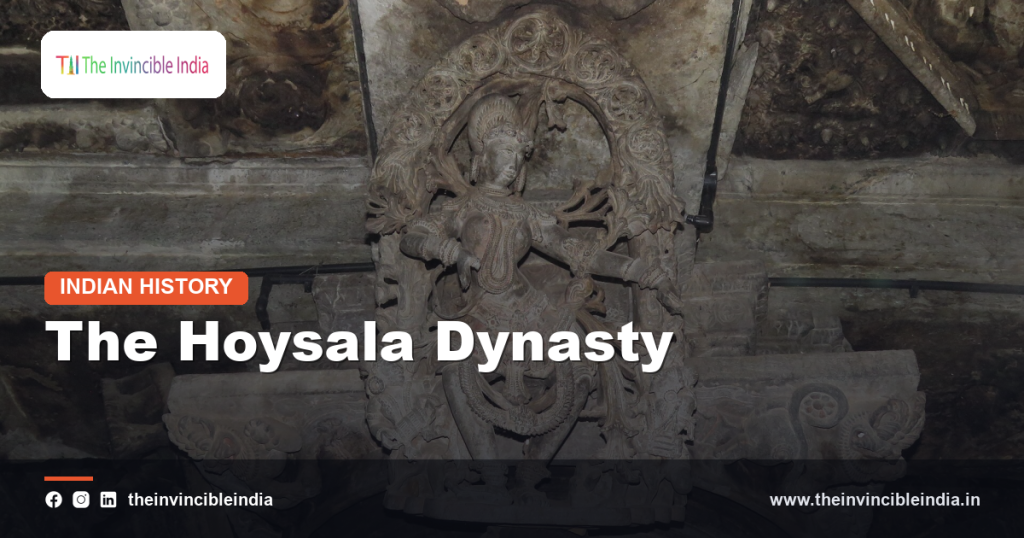
The Hoysala dynasty rose to prominence in the region of present-day Karnataka during the medieval period, growing from local feudatory beginnings into an independent and influential power in the affairs of the Chola dynasty‘s wider southern world. While its political reach extended across a substantial part of the Deccan plateau at its height, the Hoysalas are remembered above all for an extraordinary architectural achievement, building temples of such intricate carving and distinctive star-shaped design that they remain among the most celebrated monuments of Indian art. Working chiefly in soapstone, Hoysala sculptors achieved a level of surface detail rarely equalled elsewhere, adorning their temples with friezes, figures and ornament of astonishing precision. This guide explores the rise, architecture and enduring legacy of the Hoysala dynasty, a chapter of South Indian history now honoured on the world stage.
Quick Facts
| Detail | Information |
|---|---|
| Region | Karnataka, South India |
| Capital | Dwarasamudra (modern Halebidu) |
| Known for | Star-shaped soapstone temples of exceptional detail |
| Famous sites | Belur, Halebidu and Somanathapura |
| Medium | Carved soapstone (chloritic schist) |
| Legacy | Recognised as a UNESCO World Heritage Site |
Temple Builders of Karnataka
The Hoysala dynasty stands among the most celebrated builders in the history of Indian architecture, a medieval Karnataka power whose fame today rests less on the extent of its territory than on the extraordinary temples it left behind. Rising to prominence across the southern Deccan, the Hoysalas ruled during a period of vigorous artistic activity, and it was under their patronage that a distinctive style of temple building reached a level of intricacy admired around the world. This artistic identity defines the dynasty. This identity of the Hoysala dynasty as master builders, whose temples display a level of carved detail rarely matched elsewhere in India, defines the way the dynasty is remembered, and it secures their place among the great patrons of art in Indian history.
Origins as Feudatories
The Hoysalas began their political life as feudatories serving under the authority of the Western Chalukyas, a powerful dynasty that dominated much of the Deccan in the earlier medieval period. From this subordinate position, the Hoysala chiefs gradually built up their own strength, administering their territories with growing independence while formally acknowledging the overlordship of their Chalukya superiors. This period of service laid essential foundations. This period of service as Chalukya feudatories laid the essential foundations for the Hoysala dynasty’s later rise, giving its early rulers valuable experience in governance and military organisation that would serve them well once the opportunity for full independence arrived.
Rise to Independent Power
As the authority of the Western Chalukyas weakened over time, the Hoysala rulers seized the opportunity to assert full independence, transforming their subordinate territory into a sovereign and increasingly powerful kingdom in its own right. Skilful leadership and military success allowed the dynasty to expand its influence across a considerable part of the Karnataka region and beyond, establishing the Hoysalas as one of the leading powers of the southern Deccan. This assertion of independence marks a turning point. This assertion of independence by the Hoysala dynasty, achieved as Chalukya power declined, marks a decisive turning point in its history, opening the way for the era of stability and prosperity that would soon produce its greatest artistic achievements.
The Capital at Dwarasamudra
The Hoysala kings established their capital at a city known as Dwarasamudra, today identified with the town of Halebidu, which grew under royal patronage into a flourishing centre of governance, religion and art. From this capital, the dynasty administered its realm and oversaw the construction of temples and public works, and the city itself became home to one of the most celebrated Hoysala monuments. This capital anchors the dynasty’s story. This role of Dwarasamudra as the political and cultural heart of the Hoysala kingdom anchors the dynasty’s story firmly in the landscape of Karnataka, and the ruins and temples that survive there today continue to testify to its former splendour.
Belur and the Chennakeshava Temple
The town of Belur is home to the Chennakeshava Temple, one of the most magnificent monuments built under Hoysala patronage and a masterpiece of medieval Indian architecture. Constructed with meticulous attention to detail, the temple’s walls, pillars and ceilings are covered with carved figures, ornamental bands and narrative friezes that reward close and repeated viewing. This temple remains a living place of worship. This temple at Belur, a living place of worship as well as a masterpiece of Hoysala art, remains one of the most visited and admired heritage sites in Karnataka, drawing pilgrims and art lovers alike to marvel at its extraordinary craftsmanship.
Halebidu and the Hoysaleswara Temple
At Halebidu, the former Hoysala capital, stands the Hoysaleswara Temple, a monument renowned for the sheer density and quality of its carved surfaces, which depict deities, mythical creatures, dancers and scenes from epic literature in astonishing profusion. Though the temple was never entirely completed according to some accounts, its surviving carvings represent one of the high points of Hoysala artistic achievement. This temple showcases the dynasty’s ambition. This temple at Halebidu, showcasing the scale of Hoysala artistic ambition, is celebrated as one of the finest examples of the dynasty’s distinctive architectural style, and its carvings continue to be studied closely by scholars of Indian art.
The Star-Shaped Temple Plan
A defining feature of Hoysala architecture is the distinctive star-shaped plan adopted for many of its temples, in which the base of the shrine is laid out in a stepped, multi-pointed form rather than a simple square or rectangle. This unusual ground plan multiplied the number of exterior wall surfaces available for carving, allowing sculptors to cover the temple with an especially rich and continuous band of decorative and narrative relief work. This design choice is central to the style. This star-shaped design, central to the distinctive character of Hoysala temples, reflects both an aesthetic preference and a practical opportunity for artistic expression, and it remains one of the most recognisable features of the dynasty’s architectural legacy.
Soapstone: The Sculptor's Medium
Hoysala craftsmen favoured a soft, fine-grained stone known as soapstone or chloritic schist for their temple building, a material that could be carved with exceptional precision while still soft from the quarry and would harden further with exposure to air over time. This choice of material allowed sculptors to achieve a level of detail in figures, jewellery and ornament that would have been far more difficult in harder stone. This material choice enabled remarkable artistry. This choice of soapstone as the primary building material for Hoysala temples enabled the remarkable fineness of detail for which the dynasty’s architecture is celebrated, and it remains a defining technical feature distinguishing Hoysala monuments from those of other Indian dynasties.
Intricate Surface Carving
The surfaces of Hoysala temples are covered, often from base to summit, with continuous bands of carved decoration depicting rows of elephants, horsemen, floral scrollwork, mythical beasts and scenes from religious epics, arranged with careful attention to composition and rhythm. This density of ornament gives Hoysala temples a richly textured appearance unlike that of any other regional style in India. This carving reflects extraordinary patience and skill. This intricate and extensive surface carving found on Hoysala temples reflects the extraordinary patience, skill and artistic vision of the craftsmen who created it, and it remains one of the most admired qualities of the dynasty’s architectural legacy today.
The Madanika Bracket Figures
Among the most celebrated elements of Hoysala temple sculpture are the bracket figures known as madanikas, graceful carved images of celestial maidens shown in various poses of dance, music and adornment, positioned at key structural points around the temple. These figures, carved with remarkable fluidity and attention to ornament, are admired for their elegance and lifelike quality, standing as some of the finest examples of figural sculpture in Indian art. These bracket figures are widely celebrated. These madanika bracket figures adorning Hoysala temples are widely celebrated as masterpieces of medieval Indian sculpture, and they continue to be singled out by visitors and scholars as among the most beautiful and technically accomplished carvings surviving from the period.
Friezes and Narrative Panels
Beyond decorative ornament, Hoysala temples display extensive narrative friezes drawing on the great epics and Puranic literature, depicting battles, processions and episodes from sacred stories in sequences of carved panels running around the temple base. These narrative bands served both a devotional and an educational purpose, allowing worshippers to encounter familiar stories in visual form as they circled the temple. This storytelling function enriches the architecture. This narrative function of the friezes adorning Hoysala temples enriches their architectural significance, transforming the temple walls into a kind of stone scripture that conveyed sacred stories to worshippers of every background across the generations.
Patronage of Kannada Literature
Alongside their architectural achievements, the Hoysala kings extended patronage to literature and scholarship in the Kannada language, supporting poets and writers whose works contributed to the growth of a rich regional literary tradition. This royal encouragement helped Kannada literature flourish during the Hoysala period, adding a further dimension to the dynasty’s cultural legacy beyond its famous temples. This literary patronage broadens the dynasty’s contribution. This patronage of Kannada literature by the Hoysala court broadens the dynasty’s cultural contribution beyond architecture alone, and it is remembered as an important chapter in the wider history of literary development in the Kannada-speaking region.
Religion and Royal Devotion
Religious devotion played a central role in Hoysala royal life, with kings and queens sponsoring the construction and endowment of temples dedicated to various deities as expressions of personal piety as well as statecraft. This close connection between faith and patronage is reflected in the inscriptions found at Hoysala temples, which record royal gifts of land and resources for the upkeep of worship and ritual. This devotion shaped the dynasty’s building programme. This close connection between royal devotion and temple patronage under the Hoysala dynasty shaped its extraordinary building programme, ensuring a steady flow of resources and royal attention toward the creation of ever more elaborate places of worship.
Conflicts and Regional Politics
Throughout their history, the Hoysalas were drawn into the shifting political rivalries of South India, engaging at various times with neighbouring powers including the Pandyas and other regional dynasties in contests for territory and influence. These conflicts, though costly, reflect the dynasty’s active role in the broader political landscape of the medieval south, as it sought to defend and extend its position amid competing regional ambitions. This political engagement shaped its later history. This engagement in the regional politics and conflicts of medieval South India shaped much of the later history of the Hoysala dynasty, illustrating the competitive environment in which even a dynasty renowned chiefly for its art had to survive and assert itself.
Decline of the Dynasty
In its later years, the Hoysala kingdom faced growing pressure from powers expanding southward from the Deccan and beyond, and the dynasty’s strength gradually diminished amid these external challenges and internal difficulties. Despite valiant efforts to defend their kingdom, the Hoysalas were ultimately unable to withstand this mounting pressure, and their political power faded in the centuries that followed. This decline closed a remarkable chapter. This decline of Hoysala political power in the face of external pressure closed a remarkable chapter in South Indian history, yet the artistic and architectural achievements of the dynasty endured undiminished long after its political fortunes had faded.
A UNESCO World Heritage Legacy
In recognition of their extraordinary artistic and architectural value, the great Hoysala temples of Belur, Halebidu and Somanathapura have together been honoured as a UNESCO World Heritage Site, a designation that celebrates their significance to world art and ensures continued attention to their preservation. This international recognition affirms what visitors and scholars have long appreciated about these remarkable monuments. This global honour secures the dynasty’s lasting reputation. This UNESCO recognition of the Hoysala temples secures the dynasty’s lasting reputation as one of the great architectural traditions of world heritage, ensuring that its achievements continue to be studied and admired for generations to come.
The Hoysala Dynasty Today
Today the Hoysala dynasty is remembered above all through its magnificent temples, which continue to draw pilgrims, tourists and scholars from around the world to marvel at their intricate carving and distinctive design. The star-shaped plans, the soapstone artistry and the graceful madanika figures remain touchstones of medieval Indian art, and the dynasty’s legacy is celebrated as a high point in the story of South Indian architecture. Its temples remain vibrant centres of devotion. As the celebrated builders of some of the most intricately carved temples in Indian history, the Hoysala dynasty endures as one of the most admired and cherished chapters in the cultural heritage of Karnataka and of India as a whole.
Sources & Further Reading
- Archaeological Survey of India, on the Hoysala temples of Belur and Halebidu (asi.nic.in).
- UNESCO World Heritage Centre, on the Sacred Ensembles of the Hoysalas (whc.unesco.org).
Frequently Asked Questions
What was the Hoysala dynasty known for?
The Hoysala dynasty, which ruled from Karnataka during the medieval period, is best known for its extraordinary temple architecture, particularly the star-shaped, intricately carved soapstone temples at Belur, Halebidu and Somanathapura.
What is special about Hoysala temples?
Hoysala temples are distinguished by their star-shaped ground plans and by the extraordinary density of carved decoration on their surfaces, including narrative friezes, ornamental bands and the celebrated madanika bracket figures, all carved from fine-grained soapstone.
Where was the Hoysala capital?
The Hoysala dynasty ruled from a capital known as Dwarasamudra, identified today with the town of Halebidu in Karnataka, which is home to the renowned Hoysaleswara Temple.
Are Hoysala temples a UNESCO World Heritage Site?
Yes, the group of Hoysala temples at Belur, Halebidu and Somanathapura has been recognised together as a UNESCO World Heritage Site in acknowledgement of their outstanding artistic and architectural significance.
How did the Hoysala dynasty rise to power?
The Hoysala dynasty began as feudatories serving the Western Chalukyas and rose to independent power as Chalukya authority declined, gradually building a strong regional kingdom across Karnataka before eventually facing decline amid external pressures.