


Along the dry course of an ancient river in northern Rajasthan lies Kalibangan, one of the significant urban centers associated with the wider Indus Valley Civilisation, whose planned streets and distinctive ritual structures continue to inform understanding of early South Asian urban life. Excavated in the twentieth century, the site revealed a settlement organized with the careful attention to layout and drainage characteristic of Harappan towns, alongside features that point to specific local ritual practices. Its location along a now-dried river system also offers valuable evidence about the changing environmental conditions that shaped the fortunes of Indus Valley settlements. This guide surveys the site’s discovery, layout, notable features, and significance within the broader story of the Indus Valley Civilisation.
Quick Facts
| Detail | Information |
|---|---|
| Location | Northern Rajasthan, along the dried course of an ancient river |
| Civilisation | Indus Valley Civilisation (Harappan) |
| Notable Feature | Rows of distinctive fire altars |
| Layout | Planned settlement with a citadel and lower town |
| Excavated By | Archaeological teams working under Indian institutions |
| Significance | Key evidence for Harappan urban planning and ritual practice away from the main Indus river |
Location and Setting
Kalibangan is situated in northern Rajasthan, along the dry bed of what is generally identified with an ancient river system that once flowed through the region before its course changed or dried up over time. This setting places the site at some distance from the main Indus river itself, illustrating the considerable geographic spread of settlements associated with the wider Indus Valley Civilisation. The surrounding landscape today is considerably drier than the environmental conditions that likely supported settlement and agriculture in ancient times, reflecting significant long-term shifts in regional hydrology and climate. This changed environment is itself an important subject of study, as it bears on broader questions about the factors that influenced the rise and eventual decline of settlements across the region. Kalibangan’s location thus offers valuable evidence about both the extent of Harappan settlement and the environmental changes that shaped the region’s history.
Discovery and Excavation
The site at Kalibangan came to the attention of archaeologists as interest grew in tracing the broader extent of the Indus Valley Civilisation beyond its initially identified core sites. Systematic excavation revealed a substantial ancient settlement with clear evidence of planned construction, prompting sustained archaeological interest in the decades that followed its identification. Careful excavation methods allowed researchers to distinguish different phases of occupation at the site, providing insight into how the settlement developed and changed over time. Artifacts and structural remains uncovered during this work have been studied extensively to understand the material culture and daily life of the site’s ancient inhabitants. This process of discovery and ongoing study has established Kalibangan as one of the important reference points for understanding Harappan civilization beyond the Indus river itself.
Urban Layout and Planning
Like other major Harappan settlements, Kalibangan was organized according to a deliberate plan, typically divided into a raised citadel area and a separate lower town, each serving distinct functions within the settlement’s overall organization. This division reflects a broader pattern seen across Indus Valley sites, in which administrative or ceremonial activities appear to have been concentrated in an elevated, more controlled section of the settlement. Streets within the lower town were laid out with a degree of regularity, suggesting centralized planning decisions rather than organic, unplanned growth over time. Structures within the settlement made use of standardized building materials, consistent with the broader Harappan tradition of construction using fired and mud brick in regular proportions. This careful urban organization at Kalibangan reinforces the picture of the Indus Valley Civilisation as one capable of sophisticated town planning across a wide geographic area.
The Citadel Area
The citadel section of Kalibangan, raised above the surrounding settlement, appears to have served specialized functions distinct from the residential and commercial activities of the lower town. Structures within this area include platforms and features associated with ritual or ceremonial activity, suggesting that this part of the settlement held particular social or religious significance for its inhabitants. The elevated position of the citadel would also have provided practical advantages, including protection from flooding and a degree of visual and physical separation from the rest of the settlement. Excavations in this area have yielded evidence that continues to inform scholarly understanding of the social and religious organization of Harappan communities. The citadel at Kalibangan thus represents an important focus of archaeological study for understanding the site’s broader significance.
The Distinctive Fire Altars
Among the most discussed features uncovered at Kalibangan are rows of structures generally interpreted as fire altars, arranged in a manner that suggests deliberate and repeated ritual use rather than incidental or domestic function. These structures have prompted considerable scholarly discussion regarding the nature of religious or ceremonial practice among the site’s Harappan inhabitants, an area of Indus Valley studies that remains only partially understood due to the absence of deciphered textual sources. While interpretations of the exact significance of these features vary, their careful and repeated construction points to organized ritual activity of some importance to the community. The presence of such features at Kalibangan, in a location distinct from the main Indus river core sites, suggests that certain ritual practices may have been shared or adapted across different parts of the Harappan cultural sphere. These fire altars remain one of the most frequently cited and studied features of the site.
Residential Architecture
The lower town at Kalibangan contained residential structures built using standardized brick construction, reflecting the broader Harappan tradition of consistent building practices across different settlements. Houses appear to have been organized around courtyards, with rooms arranged to provide both private living space and areas suited to household tasks and storage. Evidence of drainage arrangements within the residential areas points to attention paid to sanitation and water management, consistent with practices observed at other major Harappan sites. The layout and construction of these residential areas offer valuable insight into the daily life and domestic organization of the community that once inhabited the settlement. This attention to organized, functional residential design is a hallmark of Harappan urban settlements generally, and Kalibangan provides a valuable regional example of this broader pattern.
Evidence of Agriculture
Archaeological evidence from Kalibangan includes indications of agricultural activity in the surrounding landscape, contributing to a broader understanding of how Harappan communities sustained themselves away from the immediate floodplain of the Indus river. Such evidence has been considered particularly significant for what it suggests about early agricultural practices and field organization in the region during the period of Harappan occupation. The presence of agricultural activity at some distance from a major river underscores the adaptability of Harappan communities in developing sustainable food production across varied environmental settings. This agricultural evidence, considered alongside the settlement’s urban remains, helps build a fuller picture of how the site’s inhabitants balanced urban life with the agricultural base needed to support it. Continued study of this evidence contributes to broader research into Harappan agricultural practices across the wider civilisation.
Craft Production and Material Culture
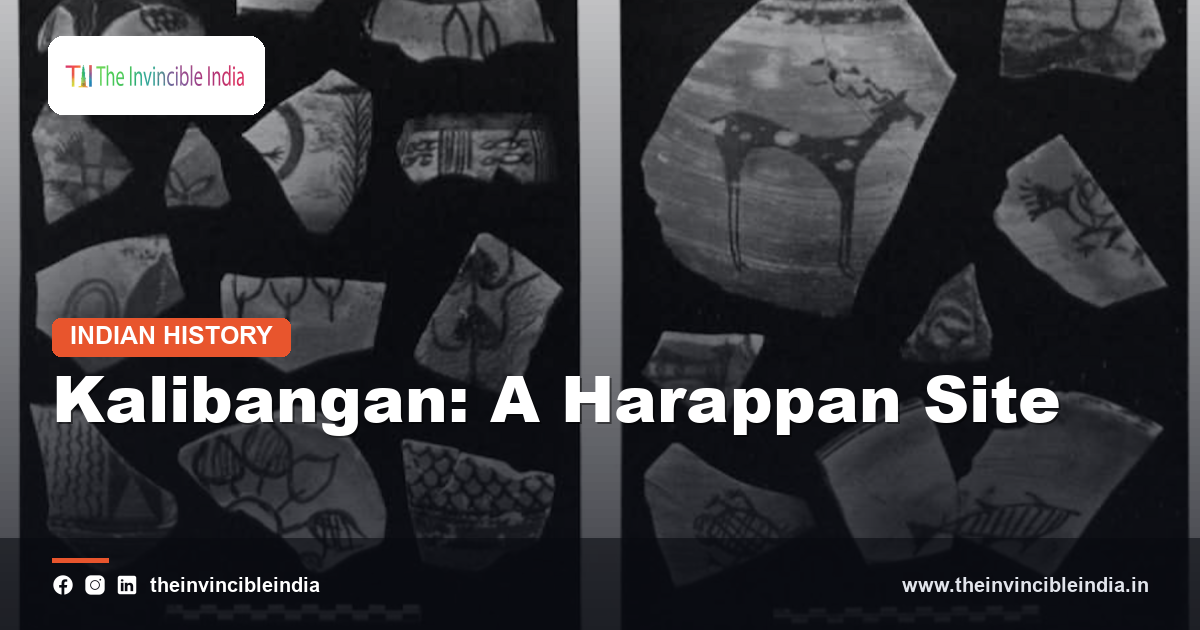
Excavations at Kalibangan have uncovered a range of artifacts reflecting craft production activities typical of Harappan settlements, including pottery, beads, and tools made from various materials available in the region. These finds illustrate the participation of the settlement’s inhabitants in the broader networks of craft specialization and exchange that characterized the Indus Valley Civilisation as a whole. Pottery styles and decorative motifs found at the site can be compared with material from other Harappan settlements, helping researchers trace patterns of cultural connection and regional variation across the civilisation. The presence of such craft goods also points to a degree of economic specialization within the community, with certain households or groups likely engaged in specific forms of production. This material culture provides an important complement to the architectural evidence in reconstructing daily life at the site.
The River and Environmental Change
The dried river course along which Kalibangan sits has drawn considerable scholarly attention, as it bears directly on broader questions about environmental change across the wider region during and after the Harappan period. Researchers have examined the settlement’s relationship to this ancient watercourse to better understand how shifts in river flow or drying may have affected the viability of agriculture and daily life at the site over time. Such environmental changes are considered by many researchers to be one of several interconnected factors that may have influenced the eventual decline of settlement in this part of the Harappan world. Studying Kalibangan in this environmental context contributes to broader efforts to understand the complex and likely gradual processes behind the transformation of Indus Valley urban centers. This line of inquiry remains an active and evolving area of archaeological research.
Kalibangan in the Wider Indus Valley Network
As one of several significant sites associated with the Indus Valley Civilisation beyond its principal riverine core, Kalibangan contributes important evidence to understanding the geographic extent and internal diversity of Harappan culture. Comparisons between Kalibangan and other major sites reveal both shared features, such as urban planning principles and standardized construction practices, and distinctive local elements, such as the site’s particular ritual structures. This combination of shared and local characteristics helps researchers understand how a broadly unified material culture could accommodate regional variation across a wide geographic area. Kalibangan’s position within this network underscores the scale and complexity of the Indus Valley Civilisation as a whole, extending well beyond a narrow riverine strip. Continued comparative study of sites like Kalibangan remains central to broader research into Harappan civilisation.
Later Occupation Phases
Archaeological work at Kalibangan has identified evidence of occupation extending across more than one phase, reflecting changes in the settlement’s character and organization over an extended period of use. These later phases provide valuable comparative evidence for understanding how the site evolved, including changes in construction practices, material culture, and possibly the scale of occupation over time. Studying this layered occupational history helps researchers avoid treating Harappan sites as static snapshots, instead recognizing them as places that changed and adapted across generations. This phased understanding of Kalibangan’s history contributes to broader scholarly efforts to construct a more nuanced chronology of Indus Valley settlement and change. Such careful stratigraphic study remains an essential part of ongoing archaeological work at the site.
Conservation and Site Management
As an important archaeological site, Kalibangan requires ongoing conservation efforts to protect its excavated remains from the effects of weathering, erosion, and visitor activity over time. Indian archaeological authorities have undertaken measures to preserve and document the site, recognizing its significance within the broader heritage of the Indus Valley Civilisation. Balancing public access and educational value with the need to protect fragile archaeological remains presents an ongoing challenge common to many ancient sites of this kind. Continued investment in conservation and site management helps ensure that Kalibangan remains available for both scholarly study and public appreciation in the future. This ongoing stewardship reflects the ongoing recognition of the site’s importance to India’s ancient heritage.
Kalibangan and Archaeological Research
Kalibangan continues to serve as a focus of archaeological research, with scholars examining its structures, artifacts, and environmental context to refine understanding of Harappan civilisation more broadly. Ongoing analysis of excavated material, alongside advances in archaeological science, continues to yield new insights into aspects of the site that were not fully understood at the time of initial excavation. This continued research reflects the broader, evolving nature of Indus Valley studies, in which each site contributes incrementally to a fuller understanding of this ancient civilisation. Collaboration between Indian institutions and international researchers has supported this ongoing work, bringing a range of expertise to bear on the site’s remaining questions. Kalibangan’s continued relevance to active research underscores its importance as more than simply a historical curiosity.
Educational and Cultural Significance
Beyond its purely archaeological value, Kalibangan holds educational and cultural significance as a tangible link to India’s ancient past, offering a window into the sophistication of early urban life in the subcontinent. The site features in educational materials and museum displays that introduce students and the general public to the achievements of the Indus Valley Civilisation. Its distinctive features, particularly the fire altars, provide a memorable point of engagement for visitors and learners seeking to understand the diversity of ancient Harappan practices. This educational role complements the site’s scholarly importance, helping to build broader public appreciation for India’s deep archaeological heritage. Kalibangan’s place in popular and educational narratives about ancient India reflects its enduring significance well beyond specialist circles.
Kalibangan Today
Today, Kalibangan remains an important protected archaeological site in Rajasthan, attracting researchers, students, and visitors interested in the history of the Indus Valley Civilisation. Ongoing conservation efforts continue to protect its excavated structures, while nearby facilities help present the site’s significance to the visiting public in an accessible manner. Scholars continue to draw on evidence from Kalibangan in broader discussions of Harappan urban planning, ritual practice, and environmental history, ensuring the site’s continued relevance to academic research. Its distinctive fire altars and planned urban layout remain frequently cited examples in general accounts of the Indus Valley Civilisation. As such, Kalibangan endures as a valuable and evocative link to one of the ancient world’s great urban civilisations.
Sources & Further Reading
- Archaeological Survey of India (asi.nic.in).
- Ministry of Culture, Government of India (indiaculture.gov.in).
Frequently Asked Questions
What is Kalibangan?
Kalibangan is an ancient Harappan site located in northern Rajasthan, notable for its planned urban layout and distinctive fire altar structures associated with the Indus Valley Civilisation.
Why are the fire altars at Kalibangan significant?
The fire altars are generally interpreted as evidence of organized ritual practice, offering valuable insight into the religious or ceremonial life of Harappan communities away from the main Indus river.
How was Kalibangan organized?
Like other major Harappan sites, Kalibangan was divided into a raised citadel area, associated with ritual and administrative functions, and a lower town containing planned residential streets.
What does Kalibangan reveal about environmental change?
The site’s location along a now-dried ancient river course offers important evidence about long-term environmental change that may have affected Harappan settlement patterns in the region.
Why is Kalibangan important to Indus Valley studies?
Kalibangan extends the known geographic range of the Indus Valley Civilisation and provides comparative evidence on urban planning, ritual practice, and daily life beyond the civilisation’s riverine core.