


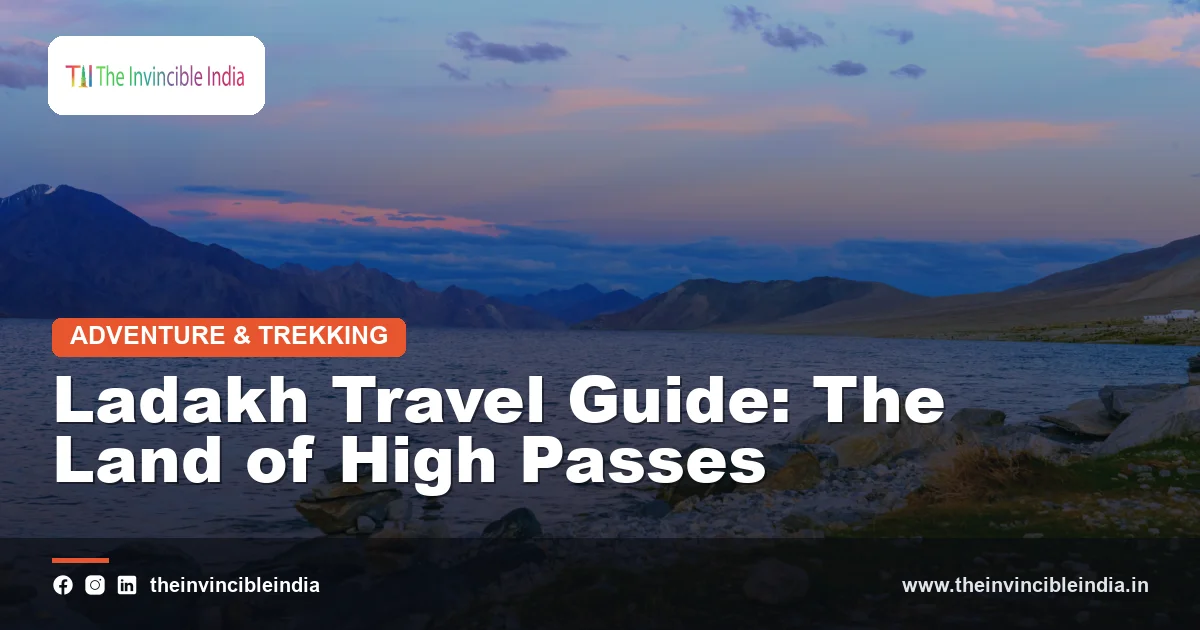
Ladakh, the “Land of High Passes,” is a breathtaking high-altitude desert in the Himalayas and one of India’s most spectacular destinations. Made a separate Union Territory in 2019, it is a realm of stark, snow-draped mountains, turquoise lakes, ancient Buddhist monasteries and warm, resilient people. A dream for adventurers, road-trippers, photographers and seekers of solitude alike, Ladakh offers landscapes of almost otherworldly beauty. This detailed guide covers the highlights of Ladakh and how to plan a safe and rewarding trip.
Quick Facts
| Region | Union Territory of Ladakh |
| Main town | Leh (around 3,500 m) |
| Famous for | High passes, lakes, monasteries |
| Best time to visit | May to September |
The Land and Its Altitude
Ladakh lies at extreme altitude, with most of the region above 3,000 metres and its passes soaring beyond 5,000 metres. This gives it a cold, dry, high-desert climate of thin air, intense sunlight and dramatic temperature swings between day and night. The landscape is one of barren, sculpted mountains in shades of ochre, purple and grey, punctuated by ribbons of green in the river valleys and startlingly blue lakes — a terrain often described as resembling the surface of the moon or Mars.
Leh: The Gateway
Most journeys to Ladakh begin in Leh, the region’s main town, which sits at around 3,500 metres. Overlooked by the imposing nine-storey Leh Palace and the hilltop Shanti Stupa, Leh has a lively bazaar, cafes, guesthouses and a relaxed traveller atmosphere. It is the essential base for acclimatising to the altitude and for organising trips to the surrounding valleys, passes and lakes, and its blend of Tibetan Buddhist culture and mountain charm makes it a delight in itself.
Pangong Lake
Perhaps the most famous sight in Ladakh, Pangong Tso is a stunning high-altitude lake at around 4,350 metres that stretches across the border into China. Its waters shift through mesmerising shades of blue and green as the light changes through the day, set against stark brown mountains. Made famous by Bollywood films, it draws visitors who camp on its shores to witness its ever-changing colours and brilliant starlit nights.
Nubra Valley
Reached by crossing the mighty Khardung La, one of the highest motorable passes in the world, the Nubra Valley is a striking landscape where cold-desert sand dunes meet green oases and rivers. At Hunder, visitors can ride the rare double-humped Bactrian camels among the dunes, a legacy of the ancient Silk Road, while the Diskit Monastery, with its giant statue of the Maitreya Buddha, presides over the valley.
Monasteries of Ladakh
Ladakh is often called “Little Tibet” for its rich Tibetan Buddhist heritage, and its monasteries (gompas) are among its greatest treasures. Thiksey Monastery, resembling a miniature Potala Palace, Hemis Monastery, famous for its vibrant annual festival, Diskit, Lamayuru amid its “moonland” landscape, and Alchi with its ancient murals, all offer spiritual serenity, stunning architecture and sweeping mountain views. Rising early to witness the morning prayers at a monastery is an unforgettable experience.
High Passes and Natural Wonders
Ladakh is a land of superlatives. It boasts some of the world’s highest motorable passes, including Khardung La and Chang La, which are thrilling to cross. The famous Magnetic Hill creates an optical illusion in which vehicles appear to roll uphill, and the confluence of the Indus and Zanskar rivers at Sangam, where two differently coloured waters meet, is a striking sight. In winter, the frozen Zanskar river becomes the route of the challenging Chadar Trek.
Culture, Festivals and Cuisine
Ladakhi culture is warm, hardy and deeply rooted in Buddhism. Colourful festivals such as the masked dances of Hemis and Losar (the Ladakhi new year) fill the monasteries with music and ritual. The local cuisine reflects the harsh climate, with warming dishes such as thukpa (noodle soup), momos (dumplings) and butter tea. Interacting with the friendly local people and experiencing their traditions is one of the most rewarding aspects of a visit.
Permits, Acclimatisation and Best Time to Visit
The best time to visit Ladakh is from May to September, when the roads and high passes are open and the weather is at its most favourable; winters are extremely cold and many routes close. Because of the high altitude, it is vital to spend a day or two acclimatising in Leh before travelling higher, to drink plenty of water and to avoid overexertion, in order to prevent altitude sickness. Inner Line Permits are required for certain areas such as Pangong, Nubra and Tso Moriri, and are easily arranged in Leh.
Tso Moriri and the Remote Lakes
Beyond the famous Pangong, Ladakh holds other spectacular high-altitude lakes. Tso Moriri, in the remote Changthang region, is a serene, pristine lake ringed by mountains and home to migratory birds and the nomadic Changpa herders. Less visited than Pangong, it offers a profound sense of solitude and unspoilt beauty. These lakes, set against vast open landscapes and brilliant skies, are among the most magical sights in all of Ladakh.
Zanskar Valley
The remote Zanskar Valley is one of the most isolated and dramatic regions of Ladakh, a land of deep gorges, ancient monasteries and hardy villages. In summer it is reached by a spectacular mountain road, while in the depths of winter its frozen river becomes the route of the famous Chadar Trek, one of the most challenging and unforgettable treks in the world. Zanskar rewards the adventurous with raw Himalayan grandeur and a glimpse of a way of life shaped by extreme isolation.
Trekking in Ladakh
Ladakh is a premier trekking destination, offering routes for every level of experience. Popular treks include the Markha Valley trek, passing through villages, monasteries and high passes; the Sham Valley “baby trek” suitable for beginners; the challenging Stok Kangri and Zanskar treks for the experienced; and the winter Chadar Trek across the frozen Zanskar. Trekking here immerses you in the region’s awe-inspiring landscapes and remote communities in a way that road travel alone cannot.
Ladakhi Cuisine and Culture
Ladakhi culture is warm, resilient and deeply rooted in Tibetan Buddhism. The cuisine is hearty and warming to suit the harsh climate, with staples such as thukpa (a nourishing noodle soup), momos (steamed dumplings), skyu (a pasta stew), tsampa (roasted barley flour) and the ubiquitous butter tea (gur gur cha). Sharing a meal in a Ladakhi home or a village homestay, and experiencing the region’s festivals and traditions, offers a rich cultural dimension to any visit.
A Photographer’s Dream
Few places on earth offer a photographer as much as Ladakh. The interplay of stark mountains, coloured by minerals in shades of purple, ochre and grey, with brilliant blue lakes, green valleys, whitewashed monasteries and prayer flags fluttering against deep blue skies, creates endlessly striking compositions. The clear, thin air and dramatic light, especially at dawn and dusk, make every scene extraordinary, from grand landscapes to intimate portraits of the region’s warm people.
Responsible Travel and Suggested Itinerary
Ladakh’s environment and culture are fragile, so responsible travel is essential: conserve water in this high desert, avoid plastic, respect monasteries and local customs, and support local homestays and businesses. A classic week-long itinerary allows a day or two to acclimatise in Leh, followed by visits to the monasteries of the Indus Valley, Nubra Valley via Khardung La, and Pangong Lake, with extra days for Tso Moriri or trekking. Travelling slowly not only aids acclimatisation but also lets you savour this extraordinary land.
The Indus Valley Monastery Route
One of the most rewarding day trips from Leh follows the Indus Valley, dotted with some of Ladakh’s greatest monasteries. Thiksey, with its resemblance to the Potala Palace and its giant Maitreya Buddha, Hemis, the largest and wealthiest monastery, Shey Palace, the old royal residence, and Stakna each offer stunning architecture, ancient art and serene atmospheres. Timing a visit to catch the early-morning prayers, with the sound of horns and chanting echoing through the halls, is an unforgettable spiritual experience.
Adventure in Ladakh
Ladakh is a magnet for adventure seekers. Beyond trekking, it offers some of the world’s most spectacular motorcycle and road journeys, white-water rafting on the Indus and Zanskar rivers, mountain biking down high passes, and camping beside remote lakes. In winter, the frozen Chadar Trek and the possibility of spotting a snow leopard draw the truly intrepid. The sheer scale and challenge of the terrain make Ladakh a bucket-list destination for adventurers.
The People of Ladakh
The warmth and resilience of the Ladakhi people leave a deep impression on visitors. Living in one of the harshest environments on earth, they have developed a rich culture of self-reliance, community and Buddhist devotion, expressed in their festivals, crafts, music and everyday kindness. Staying in a village homestay, sharing butter tea and conversation, offers a glimpse into this remarkable way of life and is often a highlight of any trip to Ladakh.
Why Visit Ladakh
Ladakh is a destination like no other — a place where nature, culture and adventure combine on a truly epic scale. Its surreal landscapes, luminous lakes, ancient monasteries, high passes and warm people offer experiences that stay with travellers for a lifetime. Whether you come to drive its legendary roads, trek its remote trails, find spiritual calm in its gompas, or simply marvel at its beauty, Ladakh rewards the effort of reaching it with unforgettable rewards.
Acclimatising to the Altitude
Because much of Ladakh lies at very high altitude, acclimatisation is the single most important part of a safe and enjoyable trip. On arriving in Leh, rest for at least a day or two before attempting any strenuous activity or heading to higher passes and lakes. Drink plenty of water, avoid alcohol and heavy exertion initially, and watch for symptoms of altitude sickness such as headache, nausea and breathlessness. Taking it slow allows your body to adjust and lets you fully savour the wonders of this high-altitude desert.
Responsible Travel in Ladakh
Ladakh’s fragile high-altitude environment and traditional communities call for mindful travel. Conserve water, which is extremely scarce, minimise plastic waste, and carry your rubbish back with you from remote areas. Respect local customs, dress modestly at monasteries, and always ask before photographing people. Supporting local homestays, guides and artisans keeps tourism’s benefits within the community. By treading lightly, visitors help preserve the pristine landscapes and unique culture that make Ladakh so extraordinary.
Frequently Asked Questions
What is Ladakh famous for?
Ladakh is famous for Pangong Lake, Nubra Valley, ancient monasteries, high mountain passes and its Buddhist culture.
When is the best time to visit Ladakh?
May to September, when the roads and mountain passes are open and the weather is best.
Do you need a permit for Ladakh?
Inner Line Permits are required for certain areas such as Pangong, Nubra and Tso Moriri.
How do you avoid altitude sickness in Ladakh?
Spend a day or two acclimatising in Leh, stay hydrated and avoid overexertion before travelling higher.
How do you reach Ladakh?
Ladakh can be reached by air to Leh, or by the scenic road routes from Srinagar and Manali in the summer months.