


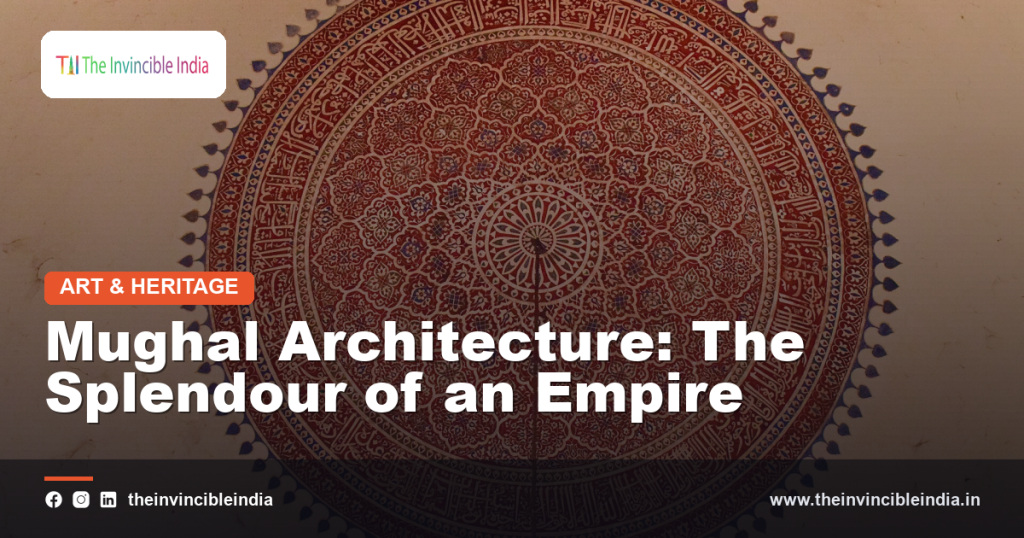
Mughal architecture is one of the most magnificent and influential building traditions in the history of India, the splendid architectural style of the Mughal empire, which produced some of the most beautiful and celebrated monuments in the world. Blending Indian, Persian and Central Asian influences into a distinctive and harmonious style, Mughal architecture is famed for its grand domes, elegant arches, symmetrical designs, beautiful gardens and exquisite decoration, and for monuments of extraordinary beauty and grandeur. Flourishing over the centuries of the Mughal empire, it left an enduring mark on the landscape and heritage of India. This guide explores the features, the great monuments, the influences and the legacy of Mughal architecture, one of the glories of India’s heritage.
Quick Facts
| Detail | Information |
|---|---|
| Type | The architectural style of the Mughal empire |
| Influences | A blend of Indian, Persian and Central Asian styles |
| Features | Grand domes, arches, symmetry and gardens |
| Materials | Red sandstone and white marble, richly decorated |
| Famous for | Monuments of extraordinary beauty and grandeur |
| Legacy | An enduring mark on India’s landscape and heritage |
The Splendour of the Mughals
Mughal architecture is one of the most magnificent building traditions in the history of India, the splendid architectural style of the Mughal empire, which ruled much of the subcontinent for centuries and left behind some of the most beautiful monuments in the world. Renowned for its grandeur, its beauty, its harmony and its exquisite decoration, Mughal architecture produced palaces, tombs, mosques, forts and gardens of extraordinary splendour, and it profoundly shaped the architectural heritage of India. As the magnificent architectural expression of the Mughal empire, famed for its beauty and grandeur, Mughal architecture holds a place of the highest importance in the heritage of India and is admired across the world for its splendid monuments.
A Blend of Influences
Mughal architecture is celebrated as a magnificent blend of different architectural traditions, uniting Indian, Persian and Central Asian influences into a distinctive and harmonious style. The Mughals brought with them the architectural traditions of Persia and Central Asia, which they combined with the rich building traditions and craftsmanship of India, creating a new and splendid style that drew on the best of these traditions. This blending of influences is a defining feature of Mughal architecture. This character of Mughal architecture as a magnificent blend of Indian, Persian and Central Asian influences, united into a distinctive and harmonious style, is one of its defining features and a large part of its beauty and richness, reflecting the meeting of great traditions in the Mughal empire.
Grand Domes
One of the most distinctive and beautiful features of Mughal architecture is the grand dome, which crowns many of its finest monuments with elegance and majesty. The Mughal dome, often large, graceful and sometimes bulbous in form, and frequently gleaming white against the sky, is a hallmark of the style and gives Mughal buildings their characteristic silhouette and sense of grandeur. The great domes are among the most striking features of Mughal architecture. These grand domes, which crown many of the finest Mughal monuments with elegance and majesty, are among the most distinctive and beautiful features of the style and give Mughal architecture its characteristic silhouette and sense of grandeur, contributing greatly to the beauty of its monuments.
Elegant Arches
Another characteristic feature of Mughal architecture is the elegant arch, used in doorways, windows, arcades and facades, which lends the buildings grace and beauty. The Mughal arch, often pointed or cusped in form, is a hallmark of the style, and the graceful arches, sometimes arranged in rows or framing entrances, are a beautiful and distinctive feature of Mughal buildings. The elegant arches contribute much to the beauty and harmony of the architecture. These elegant arches, used throughout Mughal architecture in doorways, windows and facades, are a characteristic and beautiful feature of the style, lending the buildings grace and harmony and contributing greatly to the beauty and elegance for which Mughal architecture is renowned.
Symmetry and Harmony
Mughal architecture is renowned for its perfect symmetry and harmony, with buildings and gardens laid out according to balanced, symmetrical designs that give them a sense of order, beauty and grandeur. The Mughal love of symmetry is expressed in the balanced arrangement of the parts of a building, in symmetrical facades and layouts, and in the ordered design of gardens, creating a harmonious and pleasing effect. This symmetry and harmony are among the most admired features of the style. This perfect symmetry and harmony, expressed in the balanced and ordered design of Mughal buildings and gardens, is one of the most admired features of Mughal architecture and a large part of its beauty, giving the monuments a sense of order, grandeur and serene perfection.
The Charbagh Gardens
A beautiful and important feature of Mughal architecture is the garden, especially the formal garden known as the charbagh, laid out in a symmetrical, four-part design with water channels and fountains. These Mughal gardens, with their ordered beds, flowing water, fountains and pathways, were an integral part of Mughal architecture and were designed as earthly reflections of paradise, surrounding and enhancing the great monuments. The gardens are among the loveliest features of the Mughal style. These charbagh gardens, laid out in beautiful symmetrical designs with water channels and fountains, were an integral and beautiful feature of Mughal architecture, designed as reflections of paradise, and they surrounded and enhanced the great monuments, adding greatly to their beauty and serenity.
Red Sandstone and White Marble
Mughal architecture is famed for its use of two great materials, red sandstone and white marble, which give its monuments their characteristic beauty and grandeur. Red sandstone was used for many great forts, palaces and mosques, giving them a warm and majestic appearance, while gleaming white marble was used for the most exquisite monuments, above all the finest tombs, lending them a serene and ethereal beauty. The use of these materials is central to the beauty of Mughal architecture. This use of red sandstone and white marble, giving the monuments their characteristic warm grandeur or serene beauty, is a famous feature of Mughal architecture, and the choice of these great materials contributed much to the beauty and magnificence of the Mughal monuments.
Exquisite Decoration
Mughal architecture is renowned for its exquisite decoration, which adorns the monuments with great beauty and refinement. The buildings are decorated with intricate carving, delicate inlay work of coloured and precious stones, beautiful calligraphy, floral and geometric patterns, and other fine ornamentation, executed with great skill and adding richness and beauty to the architecture. This exquisite decoration is one of the glories of the Mughal style. This exquisite decoration, which adorns Mughal monuments with intricate carving, delicate stone inlay, beautiful calligraphy and fine ornamentation, is one of the glories of the style, and the refinement and beauty of the decoration contribute greatly to the splendour of Mughal architecture.
The Art of Inlay
Among the most beautiful decorative techniques of Mughal architecture is the art of stone inlay, in which coloured and precious stones are set into marble to create exquisite patterns and designs. This delicate and painstaking technique, used to adorn the finest Mughal monuments, produces beautiful floral and geometric designs in coloured stones set into gleaming white marble, adding great richness and beauty. The art of inlay is one of the most admired features of the finest Mughal buildings. This art of stone inlay, in which coloured and precious stones are set into marble to create exquisite patterns, is among the most beautiful decorative techniques of Mughal architecture and one of the most admired features of its finest monuments, adding great richness and refinement.
Magnificent Tombs
Among the greatest achievements of Mughal architecture are its magnificent tombs, grand mausoleums built to honour the dead, which are among the most beautiful monuments in the world. The Mughal tombs, often set in beautiful gardens and crowned with grand domes, are masterpieces of the style, combining grandeur, beauty, symmetry and exquisite decoration, and the finest of them are counted among the most beautiful buildings ever created. These tombs are among the crowning glories of Mughal architecture. These magnificent tombs, grand mausoleums of great beauty set in beautiful gardens, are among the greatest achievements of Mughal architecture and include some of the most beautiful monuments in the world, representing the summit of the Mughal architectural style.
Forts and Palaces
Mughal architecture produced mighty forts and splendid palaces, grand complexes that served as the seats of imperial power and the residences of the emperors. These great forts, often built of red sandstone, enclosed magnificent palaces, halls, mosques and gardens, and they were centres of the imperial court and government, combining strength with beauty and splendour. The Mughal forts and palaces are among the great monuments of the style. These mighty forts and splendid palaces of Mughal architecture, grand complexes that served as the seats of imperial power, are among the great monuments of the style, combining strength with beauty and splendour and reflecting the grandeur and power of the Mughal empire.
Mosques of Grandeur
Mughal architecture also produced great mosques of beauty and grandeur, magnificent places of worship that are among the finest monuments of the style. The great Mughal mosques, with their grand domes, elegant arches, tall minarets and spacious courtyards, are impressive and beautiful structures, built to accommodate great numbers of worshippers and to express the majesty of the faith and the empire. These mosques are among the important monuments of Mughal architecture. These great mosques of Mughal architecture, magnificent places of worship with grand domes, elegant arches and spacious courtyards, are among the finest monuments of the style and impressive expressions of both religious devotion and imperial grandeur.
An Enduring Legacy
Mughal architecture left an enduring legacy that has profoundly shaped the architectural heritage of India and influenced building styles for centuries. Its magnificent monuments remain among the most celebrated in the country and the world, its style influenced later architecture in India, and its blend of beauty, grandeur and harmony set a standard that has been admired ever since. The legacy of Mughal architecture is a great part of India’s heritage. This enduring legacy of Mughal architecture, which has profoundly shaped the architectural heritage of India and influenced building styles for centuries, is a great part of the country’s heritage, and its magnificent monuments remain among the most celebrated and beloved in India and the world.
Mughal Architecture Today
Today the great monuments of Mughal architecture remain among the most celebrated and beloved treasures of India, admired by visitors from across the world for their beauty and grandeur, and many are recognised as World Heritage Sites. The magnificent tombs, forts, palaces, mosques and gardens continue to be preserved, visited and honoured, and they stand as enduring symbols of the splendour of the Mughal empire and the richness of India’s heritage. Their beauty and grandeur continue to inspire wonder and admiration. As the magnificent architectural expression of the Mughal empire, famed for its beauty, harmony and grandeur, Mughal architecture endures as one of the glories of India’s heritage and among the most admired building traditions in the world.
Sources & Further Reading
- Archaeological Survey of India, on the Mughal monuments of India (asi.nic.in).
- Ministry of Culture, Government of India, on the architectural heritage of India (indiaculture.gov.in).
Frequently Asked Questions
What is Mughal architecture?
Mughal architecture is the magnificent building style of the Mughal empire, which ruled much of India for centuries. It is famed for its grand domes, elegant arches, perfect symmetry, beautiful gardens and exquisite decoration, and for monuments of extraordinary beauty and grandeur.
What influences shaped Mughal architecture?
Mughal architecture is a magnificent blend of Indian, Persian and Central Asian influences. The Mughals combined the architectural traditions of Persia and Central Asia with the rich building traditions and craftsmanship of India, creating a distinctive and harmonious style.
What are the features of Mughal architecture?
The features of Mughal architecture include grand domes, elegant pointed and cusped arches, perfect symmetry and harmony, beautiful charbagh gardens with water channels, the use of red sandstone and white marble, and exquisite decoration such as carving and stone inlay.
What is a charbagh garden?
A charbagh is the formal Mughal garden, laid out in a symmetrical, four-part design with water channels and fountains. These beautiful gardens were an integral feature of Mughal architecture, designed as earthly reflections of paradise, and surrounded and enhanced the great monuments.
What are the greatest achievements of Mughal architecture?
Among the greatest achievements of Mughal architecture are its magnificent tombs, grand mausoleums of great beauty set in gardens, which include some of the most beautiful monuments in the world, along with its mighty forts, splendid palaces and great mosques.