


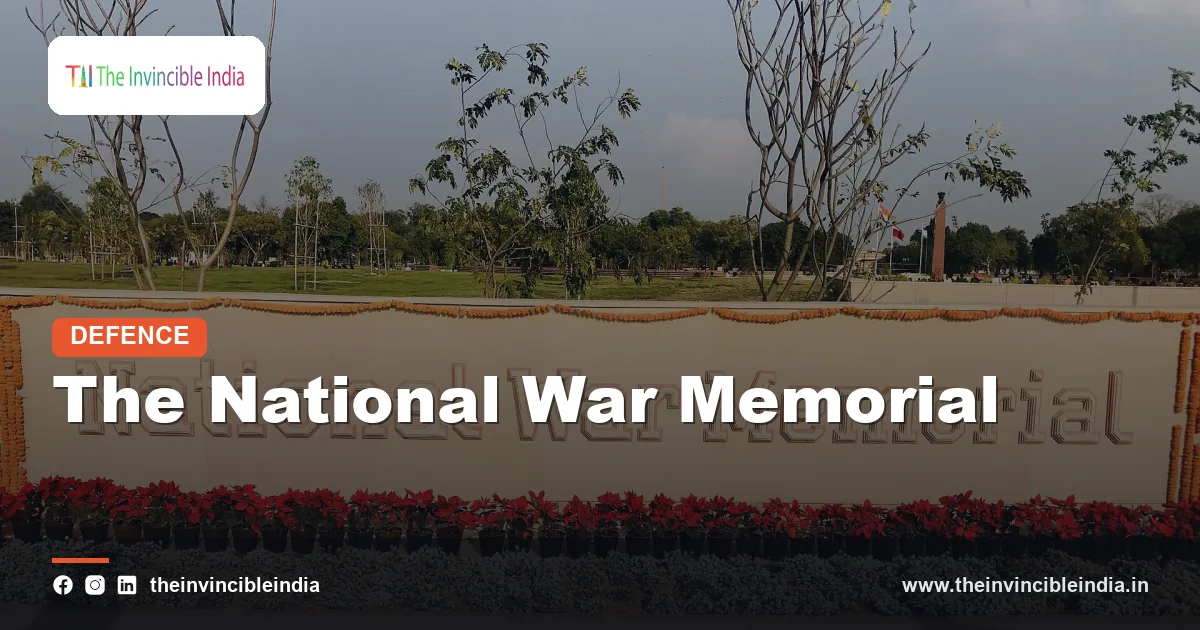
The National War Memorial in New Delhi is the country’s official tribute to the soldiers of the Indian armed forces who gave their lives in the service of the nation after Independence. Standing in the lush green lawns near India Gate, it is a place where the grief of a nation and the pride in its defenders are expressed in granite, bronze and a flame that is never meant to go out.
For decades, India had no single memorial that named and honoured the fallen of its post-1947 wars and operations. That gap was finally closed on 25 February 2019, when the memorial was dedicated to the nation. This explainer walks through its location, its symbolic design, the four concentric circles, the Param Yodha Sthal, the Amar Jawan Jyoti merger, and what the memorial means for ceremonies and visitors today. It was last reviewed on 1 October 2026.
Quick Facts
| Item | Details |
|---|---|
| Official name | National War Memorial (NWM) |
| Location | C-Hexagon, near India Gate, New Delhi |
| Inaugurated | 25 February 2019, by the Prime Minister |
| Purpose | To honour soldiers who made the supreme sacrifice in independent India’s wars and operations |
| Area | Spread over roughly 40 acres around the canopy |
| Design | Four concentric circles: Amar, Veerta, Tyag and Rakshak Chakra |
| Names inscribed | Over 25,000 names of fallen soldiers on granite tablets |
| Special section | Param Yodha Sthal, with busts of the Param Vir Chakra awardees |
| Eternal flame | Amar Jawan Jyoti merged with the NWM flame in January 2022 |
Why India Needed a National War Memorial
India Gate, designed by Edwin Lutyens and completed in the early 1930s, is one of Delhi’s best-known landmarks. However, it was built as a memorial to the Indian soldiers of the British Indian Army who died in the First World War and the Third Anglo-Afghan War of 1919. Its walls carry thousands of names from that era. It did not honour the soldiers who died defending independent India.
After 1947, the Indian Army, Navy and Air Force fought in several conflicts and operations, and many soldiers fell in each. In 1972, following the 1971 war, the Amar Jawan Jyoti was established beneath the India Gate arch as a symbolic tribute. Yet the demand for a dedicated memorial listing the names of the post-Independence fallen was raised repeatedly over the decades, by veterans, defence planners and families of the martyrs.
From proposal to construction
The idea gathered pace in the mid-2010s, when the Union government approved the construction of a memorial and a related museum. A national-level design competition was held, and the winning concept came from a Chennai-based architecture firm. Work on the site began soon after, and the memorial was completed and inaugurated in February 2019.
- Before 2019, official military wreath-laying took place at the Amar Jawan Jyoti near India Gate.
- India Gate remains a memorial to the First World War and Anglo-Afghan war soldiers.
- The National War Memorial became the main site for honouring those killed after Independence.
Location and Layout of the National War Memorial
The National War Memorial is located in the C-Hexagon, the large hexagonal area of lawns and roads that radiates from India Gate in the heart of Lutyens’ Delhi. The memorial occupies a site of around 40 acres around the canopy that once held a statue of King George V. Because it stands so close to India Gate, visitors can easily walk between the two monuments, but each serves a distinct purpose.
Setting in the capital’s ceremonial axis
The memorial sits within the broader ceremonial landscape that includes Rajpath (now called Kartavya Path), the Rashtrapati Bhavan and the National Stadium area. The planners made a point of preserving the visual line from India Gate to the canopy and treating the surrounding greenery as part of the memorial itself.
- It lies within walking distance of the India Gate arch.
- The canopy is a heritage structure and has been kept in the overall design.
- Landscaping, water features and a large number of trees form part of the setting.
An experience designed to be walked through
The design is not a single statue but a series of concentric paths and circles. Visitors move from the outer green ring inward, passing from protection to sacrifice, from sacrifice to bravery and finally reaching the central obelisk and flame. This inward journey is central to the way the memorial is meant to be experienced.
Design Concept: The Four Concentric Circles
The memorial’s central idea is that a soldier’s sacrifice is surrounded by several layers of courage, duty and protection. These layers are expressed as four concentric circles, each with a name in Hindi and a distinct role. Together they represent the ancient Indian military formation known as the Chakravyuha, in which protective rings surround a central point, here reinterpreted as a formation of honour rather than of battle.
| Circle | Meaning | Key feature |
|---|---|---|
| Amar Chakra | Circle of Immortality | Central obelisk and the eternal flame |
| Veerta Chakra | Circle of Bravery | Bronze murals depicting acts of valour in major battles |
| Tyag Chakra | Circle of Sacrifice | Granite walls with tablets bearing the names of the fallen |
| Rakshak Chakra | Circle of Protection | A ring of trees standing as sentinels |
The names, the murals and the trees are all arranged so that a visitor encounters the story of sacrifice in layers, rather than just reading a list of names.
Amar Chakra: The Circle of Immortality
At the very heart of the memorial is the Amar Chakra, or Circle of Immortality. Here stands a tall central obelisk, which rises as a vertical symbol of the soldiers’ memory, and in front of it burns the eternal flame. The flame is intended to represent the undying spirit of those who gave their lives.
The obelisk and flame
The obelisk is made of stone and carries a simple, dignified form. It is the visual anchor of the entire complex and is visible from the surrounding circles. The eternal flame at its base is where wreaths are laid on ceremonial occasions, and it is the focal point of the memorial’s military ceremonies.
- The obelisk symbolises the permanence of the nation’s remembrance.
- The flame burns continuously as a sign that the memory of the fallen will not fade.
- Wreath-laying by dignitaries takes place at this central platform.
The Amar Jawan Jyoti merger
The Amar Jawan Jyoti at India Gate had burned since 1972, after the 1971 war. In January 2022, the flame at India Gate was merged with the eternal flame at the National War Memorial in a ceremony. The government explained that the memorial now serves as the single national site honouring soldiers who died in post-Independence conflicts, and that having two flames was no longer needed. India Gate continues to stand as a heritage monument, and the arch remains a major public space and place of remembrance for the earlier wars.
Veerta Chakra: The Circle of Bravery
The second ring, the Veerta Chakra, is the Circle of Bravery. It is a covered gallery of six bronze murals, each depicting a celebrated episode of courage by Indian soldiers, sailors and airmen. The murals are designed to teach as well as honour, giving visitors a pictorial narrative of key moments in the armed forces’ history.
Telling stories in bronze
The murals cover actions from the Army, Navy and Air Force and highlight a range of terrains and operations, including desert warfare, high-altitude battles and naval and air engagements. Battles associated with the 1971 war and the earlier conflicts on the western and northern frontiers feature among the themes, and each mural is accompanied by descriptive text. The aim is to show that sacrifice has been made on land, sea and air.
- The murals are made in bronze for durability and visual impact.
- They draw attention to the role of all three services.
- They place individual acts of heroism within the larger picture of national defence.
Tyag Chakra: The Circle of Sacrifice
The third ring, the Tyag Chakra, is the emotional heart of the memorial. It consists of a series of circular granite walls, each lined with tablets on which the names of the fallen are engraved. The number of names inscribed is over 25,000, and the structure is designed so that more names can be added in future.
Names, ranks and regiments
The names are recorded individually, so the memorial honours each person and not just an abstract collective. The inscriptions are organised so that families can locate a loved one’s name and so that researchers and students have a clear public record.
- The walls are built from granite, chosen for its durability.
- Names are recorded individually and organised for easy reference.
- The structure allows additional names to be added over time.
Whose names are here
The memorial lists the names of soldiers who died in the 1947-48 conflict in Jammu and Kashmir, the 1962 war with China, the 1965 and 1971 wars with Pakistan, the Indian Peace Keeping Force operation in Sri Lanka, and the Kargil conflict of 1999. It also honours those killed in Siachen, in counter-insurgency operations, in UN peacekeeping missions and in other operations of the armed forces.
Rakshak Chakra: The Circle of Protection
The outermost ring is the Rakshak Chakra, or Circle of Protection. Instead of walls, it is formed by a dense line of trees. These trees are planted to stand like sentinels around the memorial, symbolising the vigilant soldiers who guard the borders and the citizens who are protected by their watch.
Why trees?
The choice of living trees is a deliberate one. Walls and tablets remember the dead, but trees suggest growth, continuity and shelter. They also give the memorial a calm and contemplative atmosphere, softening the monumental scale of the structures within. As the trees mature, they become a living boundary that separates the memorial from the bustle of the city around it.
- The trees are meant to stand as sentinels, like soldiers on guard.
- The green ring creates a quiet buffer from traffic and crowds.
- It connects the memorial to the natural landscape of Lutyens’ Delhi.
Param Yodha Sthal: Honouring the Param Vir Chakra Awardees
Within the memorial complex stands the Param Yodha Sthal, a dedicated space for the recipients of the Param Vir Chakra, India’s highest wartime gallantry award. The Param Vir Chakra was instituted in 1950, and the first recipient was Major Somnath Sharma, who was honoured for his actions in Kashmir in 1947.
Busts of India’s bravest
The Param Yodha Sthal displays bronze busts of the 21 Param Vir Chakra awardees. Each bust is accompanied by a citation summarising the act of gallantry. Most of the awardees served in the Army, one belonged to the Air Force, and many were honoured posthumously.
- The space honours the highest category of gallantry in India’s military tradition.
- Visitors can read short citations beneath each bust.
- It serves as an educational space for students and families.
A source of inspiration
For many young visitors, this is the most memorable section. The awardees’ stories show the circumstances in which ordinary soldiers have shown extraordinary courage, from the high ridges of Kashmir to the deserts of Rajasthan and the plains of Punjab.
Ceremonies, Wreath-Laying and National Significance
The National War Memorial is not only a monument but also a stage for the state’s military ceremonies. Visiting heads of state and other dignitaries are often taken to pay their respects at the memorial, and it has replaced India Gate as the principal location for official wreath-laying events.
National days at the memorial
Wreath-laying and tributes are held on several dates of national and military importance. The most prominent among them include:
- Republic Day (26 January): The Prime Minister and the service chiefs pay homage at the memorial before the parade on the ceremonial route.
- Independence Day (15 August): Tributes to the fallen form part of the national commemorations.
- Vijay Diwas (16 December): Marks India’s victory in the 1971 war and the liberation of Bangladesh, with wreaths laid by the leadership of the armed forces.
- Kargil Vijay Diwas (26 July): Honours the soldiers who died in the 1999 Kargil conflict.
- Armed Forces Veterans Day (14 January) and other occasions: Commemorations involving serving personnel and veterans.
Who lays the wreaths
Usually, the President, the Prime Minister, the Defence Minister and the chiefs of the three services take part in such ceremonies, along with foreign dignitaries during state visits. The event is conducted with military precision, including a bugle call and a guard of honour.
Symbolism and the Culture of Remembrance
The memorial is full of quiet symbolism. The central flame stands for immortality, the murals for bravery, the names for sacrifice and the trees for protection. Taken together, the four circles say that a nation’s security rests on a chain of courage, loss and vigilance, and that this chain must be acknowledged.
Remembering every conflict
The memorial is also inclusive of all conflicts and operations. Soldiers killed in wars that are widely remembered and in those that receive less attention are honoured side by side. Soldiers who died while serving the United Nations in peacekeeping missions abroad are also remembered, reflecting India’s long tradition of contributing troops to such missions.
| Conflict or operation | Period |
|---|---|
| Jammu and Kashmir operations | 1947-48 |
| Sino-Indian War | 1962 |
| Indo-Pakistani War | 1965 |
| Indo-Pakistani War and Bangladesh liberation | 1971 |
| IPKF operation in Sri Lanka | 1987-90 |
| Kargil conflict | 1999 |
| Siachen, counter-insurgency and UN missions | Ongoing across decades |
A place for families
For the families of the fallen, the memorial gives a permanent, public place where a name is written and recognised by the nation. Many relatives travel to Delhi to find a name on the walls, and the memorial has become a pilgrimage of sorts for such families.
Visiting the National War Memorial
The memorial is open to the public, and entry is generally free. It is among the more peaceful public spaces in central Delhi and is popular with families, students, school groups and veterans. Timings and arrangements can change, so it is wise to check the latest information from official sources before planning a visit.
Change of Guard and evening ceremonies
A highlight for many visitors is the Change of Guard ceremony, a solemn, formal ritual in which military personnel take their positions at the memorial. The memorial is also known for its quiet evening atmosphere, when the lighting adds to its dignity. Because ceremonies and timings can be adjusted, visitors should confirm them in advance.
Tips for visitors
- Dress modestly and maintain silence near the central flame.
- Expect security checks at the entrance; carry a valid photo identity.
- Allow enough time to walk all four circles and read the names and citations.
- Combine the visit with India Gate and the surrounding lawns, which are close by.
- Photography rules apply in some sections, so follow the posted instructions.
Getting there
The memorial is easily reachable from the centre of New Delhi by road and by metro followed by a short walk or ride. Because the area is part of a security-sensitive zone, certain roads may be closed during major ceremonies.
Conclusion
The National War Memorial is more than a monument; it is the nation’s formal act of remembering. By giving the soldiers of independent India’s wars and operations a single, dignified home, it completes a long-felt need that India Gate, a memorial to an earlier era, could not meet. Its four circles, its names, its Param Yodha Sthal and its eternal flame invite every visitor to pause and reflect on the cost of security and freedom. Whether one visits as a student, a veteran, a family member or a traveller, the memorial offers a quiet reminder that the peace of everyday life rests on the service and sacrifice of others.
Frequently Asked Questions
When was the National War Memorial inaugurated?
The National War Memorial in New Delhi was inaugurated by the Prime Minister on 25 February 2019. It was built to honour the soldiers who died in India’s wars and operations after Independence, a role that India Gate, which commemorates the First World War and the Anglo-Afghan war, did not fulfil.
Where is the National War Memorial located?
It is in the C-Hexagon area near India Gate in central New Delhi. The memorial is spread over a large green area around the canopy and is within walking distance of India Gate.
What are the four circles of the memorial?
The four concentric circles are the Amar Chakra (Circle of Immortality) with the eternal flame, the Veerta Chakra (Circle of Bravery) with bronze murals, the Tyag Chakra (Circle of Sacrifice) with granite tablets bearing the names of the fallen, and the Rakshak Chakra (Circle of Protection) formed by a ring of trees.
What is the Param Yodha Sthal?
The Param Yodha Sthal is a dedicated section of the memorial that honours the recipients of the Param Vir Chakra, India’s highest wartime gallantry award. It displays bronze busts of the 21 awardees, along with short citations describing their acts of bravery.
What happened to the Amar Jawan Jyoti at India Gate?
In January 2022, the flame of the Amar Jawan Jyoti at India Gate was merged with the eternal flame at the National War Memorial. The memorial is now the main site for official wreath-laying honouring soldiers who died after Independence, while India Gate remains a heritage monument.
Is entry to the National War Memorial free?
Entry is generally free for the public, though security checks apply and timings can change. Visitors should check current arrangements from official sources before going, especially around national days and ceremonies.
{“@context”:”https://schema.org”,”@graph”:[{“@type”:”FAQPage”,”mainEntity”:[{“@type”:”Question”,”name”:”When was the National War Memorial inaugurated?”,”acceptedAnswer”:{“@type”:”Answer”,”text”:”The National War Memorial in New Delhi was inaugurated by the Prime Minister on 25 February 2019. It was built to honour the soldiers who died in India’s wars and operations after Independence, a role that India Gate, which commemorates the First World War and the Anglo-Afghan war, did not fulfil.”}},{“@type”:”Question”,”name”:”Where is the National War Memorial located?”,”acceptedAnswer”:{“@type”:”Answer”,”text”:”It is in the C-Hexagon area near India Gate in central New Delhi. The memorial is spread over a large green area around the canopy and is within walking distance of India Gate.”}},{“@type”:”Question”,”name”:”What are the four circles of the memorial?”,”acceptedAnswer”:{“@type”:”Answer”,”text”:”The four concentric circles are the Amar Chakra (Circle of Immortality) with the eternal flame, the Veerta Chakra (Circle of Bravery) with bronze murals, the Tyag Chakra (Circle of Sacrifice) with granite tablets bearing the names of the fallen, and the Rakshak Chakra (Circle of Protection) formed by a ring of trees.”}},{“@type”:”Question”,”name”:”What is the Param Yodha Sthal?”,”acceptedAnswer”:{“@type”:”Answer”,”text”:”The Param Yodha Sthal is a dedicated section of the memorial that honours the recipients of the Param Vir Chakra, India’s highest wartime gallantry award. It displays bronze busts of the 21 awardees, along with short citations describing their acts of bravery.”}},{“@type”:”Question”,”name”:”What happened to the Amar Jawan Jyoti at India Gate?”,”acceptedAnswer”:{“@type”:”Answer”,”text”:”In January 2022, the flame of the Amar Jawan Jyoti at India Gate was merged with the eternal flame at the National War Memorial. The memorial is now the main site for official wreath-laying honouring soldiers who died after Independence, while India Gate remains a heritage monument.”}},{“@type”:”Question”,”name”:”Is entry to the National War Memorial free?”,”acceptedAnswer”:{“@type”:”Answer”,”text”:”Entry is generally free for the public, though security checks apply and timings can change. Visitors should check current arrangements from official sources before going, especially around national days and ceremonies.”}}]}]}