


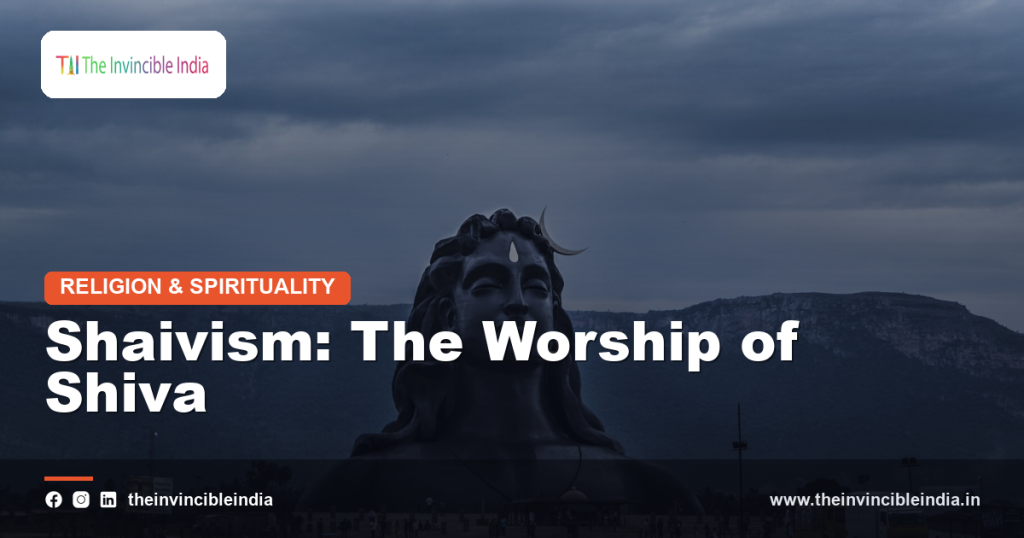
Alongside Vaishnavism, Shaivism forms one of the great devotional streams within Hinduism, centering worship on Shiva, a deity understood by his followers as encompassing both fierce, transformative power and profound ascetic stillness. Shaivism has flourished across the Indian subcontinent for many centuries, generating distinctive philosophical schools, temple traditions, and forms of yogic and ascetic practice closely associated with Shiva’s character. Its followers, known as Shaivas, express devotion through temple ritual, meditation, pilgrimage, and philosophical inquiry into the nature of consciousness and the self. This guide introduces Shaivism’s historical development, its core beliefs and iconography, its major philosophical schools, and the living practices and festivals through which the tradition continues to be experienced today.
Quick Facts
| Detail | Information |
|---|---|
| Tradition | Shaivism |
| Principal Deity | Shiva |
| Followers Called | Shaivas |
| Symbol | Lingam and trident |
| Key Scriptures | Vedas, Puranas, Shaiva Agamas |
| Major Festival | Maha Shivaratri |
Origins and Historical Roots
Shaivism traces its earliest roots to ancient Vedic references to Rudra, a powerful and somewhat fearsome deity associated with storms and untamed natural force, who over subsequent centuries came to be identified with the more fully developed figure of Shiva. As devotional and philosophical literature expanded during the classical and medieval periods, Shiva emerged as a supreme deity for his followers, combining the roles of ascetic yogi, cosmic destroyer, and benevolent protector within a single, complex theological figure. Royal patronage, temple construction, and the composition of extensive scriptural and philosophical texts gave the tradition an increasingly organized presence across many regions of India. Distinct regional schools of Shaiva thought and practice developed over time, each contributing its own emphasis and interpretation. This long historical evolution has given Shaivism both deep antiquity and remarkable regional diversity.
Shiva as Supreme Deity
For Shaivas, Shiva is regarded as the supreme reality underlying the universe, a deity who embodies seemingly opposite qualities, at once the ascetic seated in meditation upon a remote mountain and the cosmic force responsible for dissolution and renewal within the universal cycle. This dual character allows Shiva to be approached both as a distant, transcendent absolute and as an intimately accessible personal deity who responds to sincere devotion. Shaiva theology often describes creation, preservation, and dissolution as continuous processes within which Shiva plays an essential and active role, positioning him not merely as a destroyer but as an agent of necessary renewal. Followers view every aspect of existence, including apparent chaos and transformation, as ultimately connected to Shiva’s cosmic function. This comprehensive vision gives Shaivism a distinctive theological depth centered on paradox and transformation.
Iconography of Shiva
Shiva is represented through a rich and varied iconography, appearing alternately as a meditating ascetic seated in the Himalayas, as the cosmic dancer whose rhythmic movements are associated with the universe’s continuous cycle of creation and destruction, and in the abstract aniconic form of the lingam, widely worshipped in temples across India. Attributes commonly associated with Shiva include a trident, a crescent moon, a serpent coiled about his neck, and matted ascetic hair, each carrying layered symbolic meaning within the tradition. His consort, the goddess Parvati, and their sons Ganesha and Kartikeya, are frequently depicted alongside him, reflecting his role within a wider divine family. This combination of anthropomorphic imagery and abstract symbolic form gives Shaiva iconography exceptional richness, allowing devotees to relate to Shiva through multiple, complementary visual and conceptual expressions.
Shaiva Scriptures
Shaivism draws upon an extensive body of scripture, beginning with early Vedic hymns and extending through the Puranas, which narrate Shiva’s cosmic deeds and character in great detail, alongside a distinct body of texts known as the Shaiva Agamas that address ritual, temple worship, and philosophical doctrine specific to the tradition. These Agamic texts have historically guided temple construction, image consecration, and priestly ritual practice within Shaiva temples, giving the tradition a detailed and systematic ritual framework. Regional devotional poetry composed by Shaiva saints in various Indian languages further enriches this scriptural inheritance, bringing philosophical and devotional themes into popular song and recitation. Philosophical commentaries developed by later scholars added additional layers of systematic theological interpretation. Together, these varied textual sources sustain both the ritual and philosophical dimensions of Shaiva religious life.
Major Shaiva Philosophical Schools
Shaivism encompasses several distinct philosophical schools that developed over the centuries, each offering its own systematic account of the relationship between the individual self, the material world, and Shiva as ultimate reality. Some schools emphasize a non-dualist perspective, holding that the individual consciousness is ultimately identical with Shiva’s universal consciousness, recognized through disciplined spiritual insight. Other schools maintain a more dualistic framework, describing the soul as bound by ignorance and matter, gradually purified and liberated through ritual, devotion, and grace. These differing philosophical positions have generated rich traditions of scholarly debate and commentary within Shaivism. Despite their doctrinal differences, most Shaiva schools share an emphasis on disciplined practice, whether contemplative, ritual, or devotional, as the means toward spiritual liberation. This philosophical diversity is one of Shaivism’s most intellectually significant features.
Shaiva Temples and the Jyotirlinga Tradition
Temples dedicated to Shiva are found throughout India, ranging from modest village shrines to vast pilgrimage centers that attract devotees from across the country. Among these, a set of temples traditionally associated with especially sacred, luminous manifestations of Shiva, known as Jyotirlingas, hold particular importance within Shaiva pilgrimage practice, drawing pilgrims who undertake extensive journeys to visit them. Shiva temples typically center on the lingam as the primary object of worship, housed within an inner sanctum approached through halls and courtyards reflecting regional architectural traditions. Ritual worship within these temples follows detailed procedures often rooted in Agamic scriptural guidance. As both architectural achievements and living centers of devotion, Shaiva temples anchor the tradition’s ritual life while also serving as important markers of regional cultural identity across the country.
Worship Practices and Rituals
Devotion to Shiva is expressed through a range of ritual practices, most notably the ceremonial bathing of the lingam with water, milk, and other substances, an act known as abhishekam that symbolizes purification and devotion. Offerings of bilva leaves, considered especially sacred in Shaiva worship, along with flowers, ash, and incense, form part of both temple ritual and personal devotion at home shrines. Many devotees apply sacred ash to their foreheads as a mark of Shaiva identity and a reminder of the impermanence central to Shiva’s symbolism. Chanting of sacred syllables and hymns forms an essential part of both congregational and solitary worship. These varied ritual practices, spanning grand temple ceremony and quiet personal devotion, together sustain the rich devotional culture surrounding Shiva worship.
Maha Shivaratri and Shaiva Festivals
The Shaiva calendar is marked by numerous festivals, the most prominent being an annual night of vigil and worship dedicated entirely to Shiva, during which devotees observe fasting, night-long prayer, and ritual bathing of the lingam at temples throughout the country. This occasion draws vast numbers of worshippers to Shiva temples, where continuous rituals and devotional singing continue through the night in a shared expression of faith. Other regional festivals throughout the year honor specific aspects of Shiva’s character or mythology, each accompanied by its own local customs and temple observances. Pilgrimage activity often intensifies around these festival periods, as devotees travel to sacred sites associated with Shiva. Through these communal celebrations, Shaiva theology finds vivid, shared public expression that reinforces both individual devotion and collective religious identity.
Ascetic and Yogic Traditions
Shiva’s identity as the archetypal ascetic and master of yoga has made Shaivism especially closely associated with renunciate and yogic traditions across Indian religious history. Numerous orders of wandering ascetics and monastic communities trace their spiritual lineage and practice to Shiva, adopting disciplines of meditation, austerity, and detachment modeled on his mythological example. These ascetic communities have historically played an important role in preserving and transmitting yogic knowledge, philosophical teaching, and ritual practice across generations. Pilgrimage sites associated with Shiva often attract such ascetics, who gather at major festivals and sacred locations throughout the year. This close connection between Shaivism and organized asceticism gives the tradition a distinctive contemplative dimension alongside its more public temple-centered worship, reflecting Shiva’s dual character as both householder deity and supreme yogi.
Shiva's Family in Mythology and Symbolism
Shiva is frequently depicted within a wider divine family, alongside his consort Parvati, the goddess of devotion and power, and their two sons, Ganesha, the elephant-headed remover of obstacles, and Kartikeya, associated with courage and leadership. This family grouping carries rich symbolic meaning, representing the union of consciousness and creative energy, and the harmonious balance between contemplative withdrawal and engaged worldly responsibility. Devotional narratives involving this divine family are widely popular, appearing in temple sculpture, painting, and storytelling traditions across India. Worship of Ganesha, in particular, often serves as an entry point into broader Shaiva devotional life, given his immense popularity across Hindu communities generally. This extended mythological family gives Shaivism additional depth and emotional accessibility beyond the worship of Shiva alone.
Shaiva Saints and Teachers
The growth and articulation of Shaivism owes much to generations of devoted teachers and poet-saints who composed hymns, established philosophical schools, and organized communities of practice dedicated to Shiva worship. In South India, a tradition of devotional poet-saints composed passionate hymns to Shiva in regional languages, helping popularize Shaiva devotion far beyond scholarly circles. Elsewhere, philosopher-teachers developed systematic doctrinal frameworks that shaped the intellectual foundations of various Shaiva schools. These figures often traveled widely, engaging in debate and establishing centers of learning and worship that endured for generations after their own lifetimes. Their combined legacy, encompassing both emotional devotional poetry and rigorous philosophical inquiry, continues to shape how Shaivism is taught, practiced, and understood today.
Shaivism and the Bhakti Movement
Shaivism contributed significantly to the broader Bhakti movement that swept across India over several centuries, emphasizing heartfelt personal devotion over elaborate ritual as the primary path to spiritual fulfillment. Shaiva poet-saints composed passionate devotional verses expressing intense longing for union with Shiva, often using the language of human love and longing to convey profound spiritual experience. These compositions, transmitted orally and later in written collections, brought Shaiva theology into everyday cultural life through song, recitation, and communal gathering. The Bhakti movement’s emphasis on direct, personal access to the divine resonated strongly with Shaiva teachings on the accessibility of grace to sincere devotees regardless of social position. This close relationship between Shaivism and Bhakti devotion remains evident in the continued popularity of Shaiva devotional song and poetry across many regions of India.
Shaivism in Art, Dance, and Sculpture
Shiva’s mythology and symbolism have profoundly influenced Indian art and performance, most famously through sculptural depictions of Shiva as the cosmic dancer, an image celebrated for its dynamic balance of movement and stillness within a single form. Classical dance traditions across India frequently draw upon this imagery and upon narratives from Shaiva mythology, using structured gesture and rhythm to convey theological themes of creation, destruction, and renewal. Temple sculpture throughout India presents Shiva in his many forms, from serene ascetic to fierce protector, offering artists rich material for both devotional and technical expression. Painting traditions, both classical and folk, similarly depict scenes from Shiva’s mythology across many regional styles. This deep artistic engagement reflects how thoroughly Shaiva theology has been woven into India’s broader visual and performing arts heritage.
Regional Variations of Shaivism
While united by shared devotion to Shiva, Shaivism displays considerable regional variation across the Indian subcontinent, reflecting differing philosophical emphases, ritual practices, and historical development. In parts of northern India, particularly the Kashmir region, a sophisticated non-dualist philosophical tradition developed, emphasizing recognition of one’s essential identity with universal consciousness. In South India, Shaivism developed strong devotional and temple-centered traditions, supported by extensive royal patronage and a rich body of vernacular devotional poetry. Other regions developed their own distinctive combinations of philosophy, ritual, and popular devotion suited to local culture and history. This regional diversity, while sometimes producing quite different doctrinal emphases, remains united by a shared reverence for Shiva as supreme reality. Such variation illustrates Shaivism’s capacity to adapt to diverse cultural and intellectual contexts across a vast geographic area.
Shaivism Today
Shaivism remains one of the most widely practiced devotional and philosophical traditions within contemporary Hinduism, its temples continuing to draw large numbers of pilgrims and its festivals remaining vibrant occasions of community celebration. Interest in Shaiva philosophy, particularly its contemplative and yogic dimensions, continues to attract scholarly and popular attention both within India and internationally. Modern media and digital platforms have extended access to Shaiva teachings, devotional music, and temple ceremonies to audiences well beyond traditional centers of worship. At the same time, ascetic orders and temple traditions rooted in centuries of continuous practice persist largely unchanged in spirit. This combination of deep historical continuity with ongoing contemporary relevance ensures that Shaivism remains a dynamic and evolving devotional tradition rather than a fixed historical inheritance.
Sources & Further Reading
- Ministry of Culture, Government of India (indiaculture.gov.in).
- Archaeological Survey of India (asi.nic.in).
Frequently Asked Questions
What is Shaivism?
Shaivism is a major Hindu devotional and philosophical tradition centered on the worship of Shiva, regarded by his followers as the supreme reality combining ascetic stillness with the cosmic power of dissolution and renewal.
What does the lingam represent in Shaivism?
The lingam is an abstract, aniconic symbol of Shiva widely worshipped in temples across India, representing his formless, transcendent nature and serving as the primary focus of ritual worship in most Shiva temples.
What is Maha Shivaratri?
Maha Shivaratri is the most important annual Shaiva festival, observed with night-long vigil, fasting, and ritual worship of Shiva at temples throughout India, drawing large numbers of devotees.
How is Shaivism connected to yoga?
Shiva is traditionally regarded as the archetypal yogi and ascetic, and numerous yogic and monastic orders trace their spiritual lineage and contemplative practices to his mythological example.
Are there different philosophical schools within Shaivism?
Yes. Shaivism includes several philosophical schools, including non-dualist traditions associated with the Kashmir region and other schools emphasizing a more dualistic path of devotion and grace.