


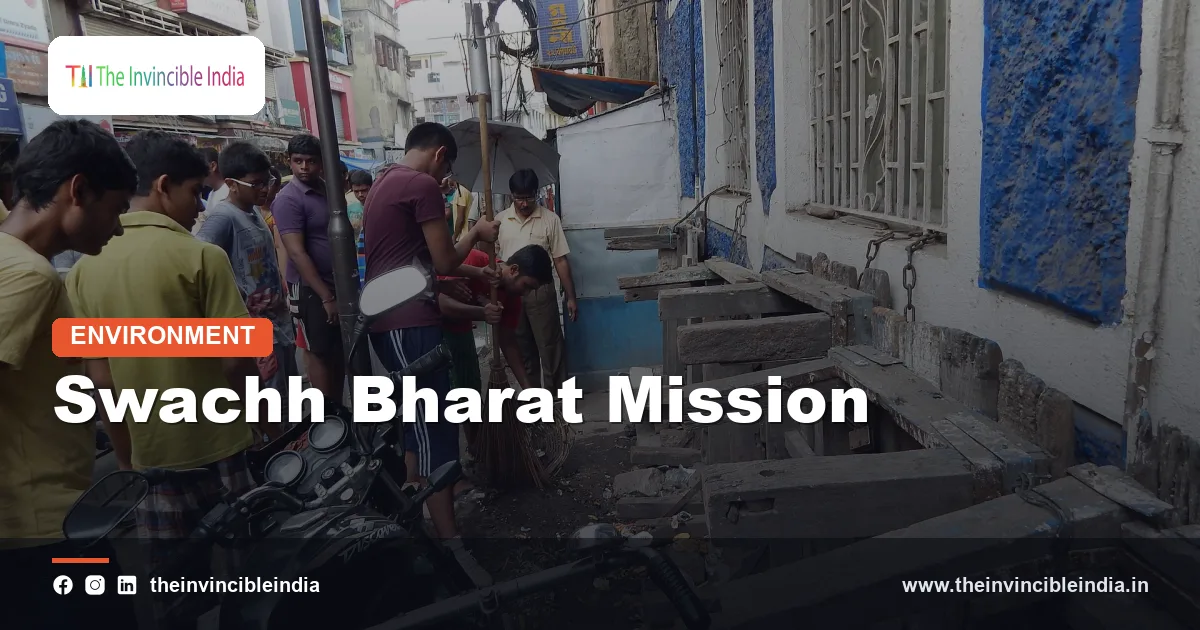
The Swachh Bharat Mission, also called the Clean India Mission, is the largest cleanliness and sanitation campaign that India has ever undertaken. Launched on 2 October 2014, the birth anniversary of Mahatma Gandhi, it set out to make the country clean by 2 October 2019, the year of his 150th birth anniversary. Its most visible aim was to end open defecation by building toilets, but the campaign was always meant to be wider: it covers waste management, public hygiene and a change in everyday habits.
What makes the mission unusual is that it treats sanitation as a mass movement and not merely a construction project. Households, schools, village councils, municipal bodies, celebrities and ordinary citizens were all invited to take part. This explainer walks through how the mission began, how it is organised, what it achieved in its first phase, how it has moved into a second phase, and where its critics and supporters agree that work remains.
Quick Facts
| Fact | Detail |
|---|---|
| Launched | 2 October 2014 (Gandhi Jayanti), by the Prime Minister of India |
| Original target | A “Clean India” by 2 October 2019, Gandhi’s 150th birth anniversary |
| Rural component | Swachh Bharat Mission (Gramin), Ministry of Jal Shakti (Department of Drinking Water and Sanitation) |
| Urban component | Swachh Bharat Mission (Urban), Ministry of Housing and Urban Affairs |
| Symbol | Gandhi’s round spectacles, with the tagline “Ek Kadam Swachhata Ki Ore” (one step towards cleanliness) |
| Phase 1 headline goal | Ending open defecation through household and community toilets |
| Official ODF declaration | India declared Open Defecation Free (ODF) on 2 October 2019 |
| Phase 2 focus | ODF-Plus in villages from 2020-21; “Garbage Free Cities” and used water management in urban areas |
Origins and the Gandhian Inspiration
Cleanliness was never a side issue for Mahatma Gandhi. He treated it as a moral and social duty, and he is widely quoted as saying that sanitation was more important than political independence. In his ashrams, everyone, including visitors, took turns cleaning latrines and sweeping grounds, a practice he used to challenge the caste prejudice that pushed sanitation work onto particular communities. The 2014 campaign deliberately drew on this legacy, which is why it was launched on Gandhi Jayanti and why the 2019 deadline was tied to his 150th anniversary.
Earlier sanitation programmes
The mission did not start from zero. India had run rural sanitation programmes for decades, and each taught lessons that shaped the later campaign.
- Central Rural Sanitation Programme (1986): the first national effort, largely supply-driven, with subsidised toilets built by the government.
- Total Sanitation Campaign (1999): shifted towards demand creation, community participation and incentives.
- Nirmal Bharat Abhiyan (2012): the renamed and restructured version, which introduced greater emphasis on behaviour and on rewarding clean villages.
- Swachh Bharat Mission (2014): a much larger, time-bound mission with a national mass-communication push and a single headline goal.
By the official estimates of the time, rural toilet coverage in 2014 was well under half of households, and India accounted for a large share of the world’s people who defecated in the open. That gap gave the mission its urgency.
Two Components, Two Ministries
The Swachh Bharat Mission runs on two parallel tracks because rural and urban India face different problems. Villages struggle mainly with toilet access and use, while cities must also manage the enormous volume of garbage, sewage and plastic that dense populations produce. Each track has its own ministry, funding pattern and set of targets.
| Feature | Swachh Bharat Mission (Gramin) | Swachh Bharat Mission (Urban) |
|---|---|---|
| Nodal ministry | Ministry of Jal Shakti (Department of Drinking Water and Sanitation) | Ministry of Housing and Urban Affairs |
| Area covered | Villages and rural households | Statutory towns and cities |
| Phase 1 focus | Household toilets, ODF villages | Household and community/public toilets, solid waste management |
| Phase 2 focus | ODF-Plus: sustaining ODF, waste and greywater management | Garbage-free cities, used water management, legacy waste remediation |
| Key delivery agents | Gram panchayats, village motivators, self-help groups | Urban local bodies, municipal corporations, sanitation workers |
The rural department was earlier part of a separate Ministry of Drinking Water and Sanitation, which was merged into the Ministry of Jal Shakti when that ministry was formed in 2019. In both tracks, the Centre and states share costs, while the day-to-day work sits with local governments, since sanitation is a subject where panchayats and municipalities hold direct responsibility.
Phase 1: Ending Open Defecation
The first phase of the mission, running from 2014 to 2019, put toilets at the centre. Rural households that did not have a toilet were offered financial incentive support for building one, and the money was tied to verified completion rather than paid upfront. In cities, the mission supported household toilets for families without access and community and public toilets in places such as markets, bus stations and low-income settlements where individual toilets were not feasible.
Scale of the effort
Government figures reported that well over ten crore toilets were built in rural India during this phase, and that urban India added tens of lakhs of household toilets and several lakh community and public toilets. These are official numbers reported at the close of Phase 1; they are best read as approximate and as claims made by the government, not as independently audited counts.
Verification and declarations
Villages, districts and states were progressively declared ODF after verification processes, and cities in the urban track were certified through third-party assessments. On 2 October 2019, the Prime Minister announced that rural India had been declared Open Defecation Free, with all states and Union Territories reporting themselves ODF by that date. Independent researchers and journalists have debated the claim. Some surveys, including academic and household studies in a few states, found that a proportion of people with toilets still defecated in the open or that some households still lacked access. The government’s position is that ODF is a status that must be sustained and verified repeatedly, which is exactly why Phase 2 was designed.
Behaviour Change, Logo and Campaigns
Everyone involved in the mission agrees that construction was the easier part. The harder challenge was persuading people to use toilets consistently, because open defecation in many places is tied to habit, custom, beliefs about purity and perceptions of pit latrines. A toilet that stands unused, or is used for storage, does not deliver a health benefit.
Community-led methods
The rural mission relied heavily on community-led total sanitation approaches. Trained volunteers and motivators, often called Swachhagrahis, walked through villages, held meetings and helped residents understand how faecal contamination spreads disease. The idea was to make people feel the problem themselves, so that the village committed to change rather than being told to comply.
The logo and communication drive
The mission’s identity is simple and memorable: a pair of round spectacles, associated with Gandhi, next to the tagline “Ek Kadam Swachhata Ki Ore”. The spectacles appeared on hoardings, school walls, garbage trucks and government forms. The campaign also enlisted well-known film, sports and public figures as brand ambassadors, ran radio and television messages, and used short films to encourage toilet use in local languages.
Swachhata Hi Seva and other initiatives
Swachhata Hi Seva (“cleanliness is service”) is a fortnight-long campaign held around Gandhi Jayanti, first run in 2017, in which citizens, schools and organisations take part in cleanliness drives. 2 October is marked each year as Swachh Bharat Diwas. Other tools included the Swachhata mobile app for lodging civic complaints, and a Swachh Bharat Cess levied for a time on certain services to help finance the campaign.
Solid and Liquid Waste Management
Once a country has toilets, the question becomes where the waste goes. Toilets that empty into open drains or untreated pits merely move the problem. That is why the urban mission gave heavy weight to solid and liquid waste from the start, and why the rural mission’s second phase expanded in this direction.
What waste management involves
- Door-to-door collection: households and shops handing waste to municipal workers rather than dumping it on streets.
- Source segregation: separating wet (kitchen and garden) waste from dry recyclables and hazardous items such as batteries.
- Processing: composting wet waste, sending dry waste to material recovery facilities, and limiting what reaches landfills.
- Sewage and faecal sludge: ensuring that septic tanks are emptied safely and that the sludge is treated, not dumped in fields or water bodies.
The rules behind the drive
India’s Solid Waste Management Rules, notified in 2016, replaced older municipal waste rules and made segregation at source a formal duty. The Plastic Waste Management Rules, also of 2016, and later restrictions on identified single-use plastic items, added to this framework. The mission provided funds and technical support for local bodies to implement them.
Swachh Survekshan: Ranking Cleanliness
To keep cities competing on cleanliness, the urban ministry launched Swachh Survekshan, an annual survey that ranks cities. It began in 2016 with a modest set of cities and expanded to cover thousands of towns in later rounds. Scoring generally combines documented service-level progress, independent field observation of streets and public toilets, and direct feedback from citizens.
Indore and the cities that follow
Indore in Madhya Pradesh first topped the rankings in 2017 and has repeatedly finished at the top in the years since, becoming a well-known example of what sustained municipal effort can achieve. Its model is usually described as a combination of strict source segregation, dedicated collection vehicles, citizen engagement and consistent enforcement. Other cities, such as Surat, Navi Mumbai and Bhopal, have also featured near the top of various rounds. Survey categories and ranking formats have changed from year to year, so the exact placings are best checked against the latest official release.
Star ratings and certifications
Alongside rankings, cities can earn star ratings for being garbage-free and protocols such as ODF, ODF+ and ODF++, which reflect not just toilets but their maintenance and the safe handling of sludge. A “Water Plus” certification recognises cities that treat and reuse wastewater. These labels give local governments concrete goals and public recognition.
Phase 2: ODF-Plus and Beyond
The second phase of the rural mission began in 2020-21. Its central idea is that being ODF is a starting point rather than a finish line. ODF-Plus asks villages to sustain their ODF status while also managing solid and liquid waste, and to look clean and green in daily life. In the urban track, the renewed mission that started in October 2021 aims at Garbage Free Cities and better used-water management.
What ODF-Plus includes
- Sustaining ODF: keeping toilets functional and used, with attention to new households and left-out families.
- Solid waste management: collection, segregation and composting or processing of village waste.
- Plastic waste management: collecting and channelling plastic to recyclers.
- Greywater management: handling used water from kitchens and bathrooms through soak pits, small treatment systems or reuse for kitchen gardens.
- Faecal sludge management: safe emptying and treatment of toilet waste.
- Visual cleanliness: clean public spaces, no litter, no stagnant water.
Aspiring, Rising and Model
Villages are graded in stages, commonly described as Aspiring, Rising and Model ODF-Plus, depending on how many of these systems they have in place. A related scheme, GOBARdhan, launched in 2018, encourages converting cattle dung and organic waste into biogas and compost, linking cleanliness with rural energy and income.
Health, Dignity, Safety and the Environment
The reasons for the mission are best understood through the benefits it seeks. Safe sanitation is a public-health measure first. Faecal contamination of water and soil spreads diarrhoea, intestinal worms and other infections, which fall hardest on young children and contribute to malnutrition and stunted growth. Studies by international agencies and independent researchers have suggested that improved sanitation coverage in India was associated with health and financial gains, although the exact size of the effect is debated and varies by study.
Dignity and safety, especially for women
For many women and girls, the lack of a household toilet meant waiting until dark to relieve themselves, with risks to health, comfort and personal safety. Toilets at home and at school also matter for girls’ attendance, particularly during menstruation. Sanitation workers, too, are central to the mission’s vision of dignity, which is why worker safety and protective equipment appear increasingly in policy documents.
The environmental link
Cleanliness has a clear environmental side. Uncollected waste clogs drains, worsens flooding, pollutes rivers and releases methane when it decomposes in open dumps. Better segregation and processing cut the load on landfills, and treating wastewater protects water sources. The mission overlaps with river-cleaning efforts and with plastic waste rules.
Challenges and Criticism
A fair assessment of the Swachh Bharat Mission has to include the problems that officials, researchers and civil society groups have raised. These do not cancel the scale of what has been built, but they show what the next stage must fix.
Sustainability and use
Toilets need water, maintenance and repair. Where water is scarce or twin-pit systems are not emptied or understood, toilets may fall out of use. Surveys in some regions have reported gaps between toilet ownership and actual use, and the second phase exists partly to address this.
Manual scavenging
Manual scavenging, the cleaning of insanitary latrines and sewers by hand, is prohibited under the Prohibition of Employment as Manual Scavengers and their Rehabilitation Act, 2013. Concerns remain about deaths during sewer and septic tank cleaning. The government has responded with mechanisation-oriented measures, including the NAMASTE scheme, which seeks to support safe, mechanised cleaning and the rehabilitation of sanitation workers.
Processing gaps and legacy dumps
Many cities still collect more waste than they can scientifically process. Large old landfills, called legacy dumpsites, continue to be a concern, and the renewed urban mission includes bio-mining and remediation of such sites. Finally, data quality is an issue: self-reported ODF and cleanliness numbers depend on the strength of verification, so independent surveys remain valuable.
Related Missions and Waste-to-Energy Efforts
The Swachh Bharat Mission sits within a wider set of urban and environmental programmes. The Atal Mission for Rejuvenation and Urban Transformation (AMRUT), launched in 2015, focuses on water supply, sewerage and green spaces in cities, and thus complements the toilet-and-waste agenda. The Jal Jeevan Mission works towards household tap water in villages, which supports the use of toilets. Namami Gange targets river pollution, which overlaps with sewage treatment.
Waste-to-energy plants, which burn or process municipal waste to generate power, have been tried in several Indian cities, with mixed experience because mixed and wet waste burns poorly and emissions must be controlled. Many experts prefer to combine segregation, composting and biogas with selective energy recovery. Compressed biogas under the GOBARdhan and related efforts is a growing part of this picture.
Conclusion
The Swachh Bharat Mission changed how sanitation is discussed in India. It moved toilets and waste from the margins of policy to a subject of public pride, competition and citizen participation. Its first phase focused on building and declaring ODF status, and its second on sustaining that gain and tackling waste more thoroughly. The gaps that remain, from toilet use to waste processing and worker safety, are exactly the areas the newer phases are meant to address. Progress figures are updated regularly by the responsible ministries, so readers wanting the latest numbers should consult their official dashboards. Last updated: 30 September 2026.
Frequently Asked Questions
When was the Swachh Bharat Mission launched and why on that date?
It was launched on 2 October 2014, the birth anniversary of Mahatma Gandhi. The date was chosen to honour Gandhi’s emphasis on cleanliness, and the original goal was to achieve a Clean India by 2 October 2019, his 150th birth anniversary.
Which ministries run the Swachh Bharat Mission?
The rural component, Swachh Bharat Mission (Gramin), is run by the Ministry of Jal Shakti through its Department of Drinking Water and Sanitation. The urban component, Swachh Bharat Mission (Urban), is run by the Ministry of Housing and Urban Affairs.
What does ODF mean, and was India declared ODF?
ODF stands for Open Defecation Free, meaning that no one in an area defecates in the open. India was officially declared ODF on 2 October 2019, though independent researchers have debated how completely toilets are used, which is why the mission moved on to ODF-Plus and sustained verification.
What is Swachh Survekshan?
Swachh Survekshan is the annual cleanliness survey run by the urban ministry that ranks cities and towns using service-level data, field assessment and citizen feedback. Indore has repeatedly topped the rankings since 2017.
What is ODF-Plus under Phase 2?
ODF-Plus builds on ODF status by adding solid and liquid waste management, plastic waste handling, greywater and faecal sludge management, and visual cleanliness. Villages are graded as Aspiring, Rising or Model depending on the systems they have in place.
What are the main criticisms of the mission?
Commonly raised concerns include whether toilets are used and maintained over time, the continuing risk to sanitation workers from manual scavenging, gaps in waste processing, and the reliability of self-reported data. The government has responded through later phases, mechanisation schemes and third-party verification.
{“@context”:”https://schema.org”,”@graph”:[{“@type”:”FAQPage”,”mainEntity”:[{“@type”:”Question”,”name”:”When was the Swachh Bharat Mission launched and why on that date?”,”acceptedAnswer”:{“@type”:”Answer”,”text”:”It was launched on 2 October 2014, the birth anniversary of Mahatma Gandhi. The date was chosen to honour Gandhi’s emphasis on cleanliness, and the original goal was to achieve a Clean India by 2 October 2019, his 150th birth anniversary.”}},{“@type”:”Question”,”name”:”Which ministries run the Swachh Bharat Mission?”,”acceptedAnswer”:{“@type”:”Answer”,”text”:”The rural component, Swachh Bharat Mission (Gramin), is run by the Ministry of Jal Shakti through its Department of Drinking Water and Sanitation. The urban component, Swachh Bharat Mission (Urban), is run by the Ministry of Housing and Urban Affairs.”}},{“@type”:”Question”,”name”:”What does ODF mean, and was India declared ODF?”,”acceptedAnswer”:{“@type”:”Answer”,”text”:”ODF stands for Open Defecation Free, meaning that no one in an area defecates in the open. India was officially declared ODF on 2 October 2019, though independent researchers have debated how completely toilets are used, which is why the mission moved on to ODF-Plus and sustained verification.”}},{“@type”:”Question”,”name”:”What is Swachh Survekshan?”,”acceptedAnswer”:{“@type”:”Answer”,”text”:”Swachh Survekshan is the annual cleanliness survey run by the urban ministry that ranks cities and towns using service-level data, field assessment and citizen feedback. Indore has repeatedly topped the rankings since 2017.”}},{“@type”:”Question”,”name”:”What is ODF-Plus under Phase 2?”,”acceptedAnswer”:{“@type”:”Answer”,”text”:”ODF-Plus builds on ODF status by adding solid and liquid waste management, plastic waste handling, greywater and faecal sludge management, and visual cleanliness. Villages are graded as Aspiring, Rising or Model depending on the systems they have in place.”}},{“@type”:”Question”,”name”:”What are the main criticisms of the mission?”,”acceptedAnswer”:{“@type”:”Answer”,”text”:”Commonly raised concerns include whether toilets are used and maintained over time, the continuing risk to sanitation workers from manual scavenging, gaps in waste processing, and the reliability of self-reported data. The government has responded through later phases, mechanisation schemes and third-party verification.”}}]}]}