

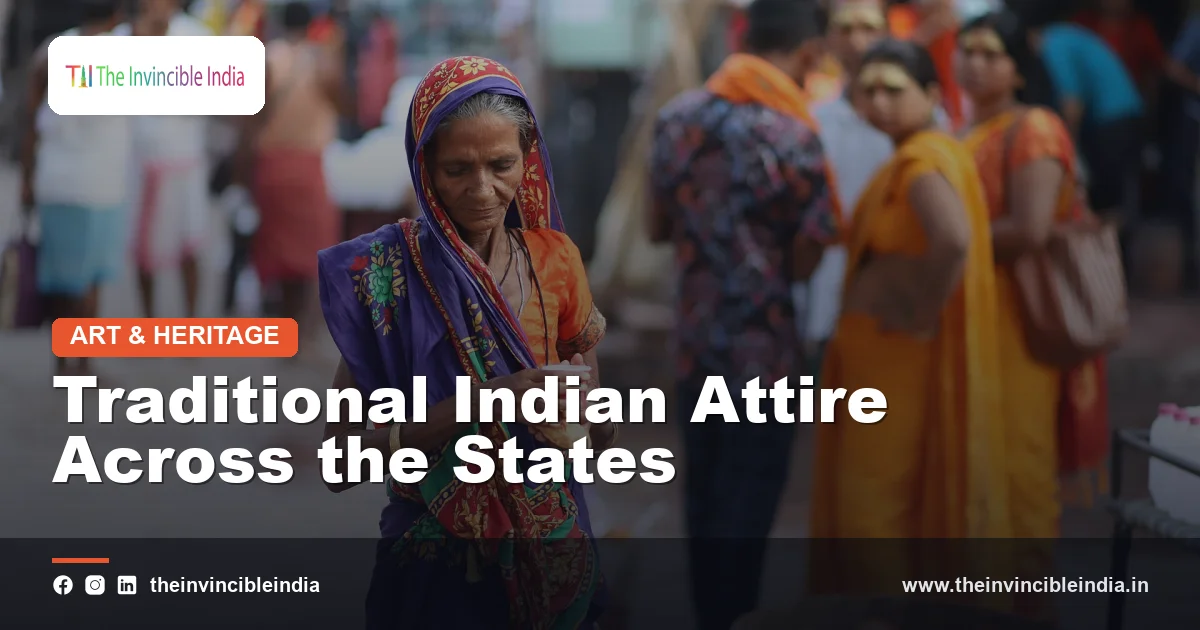
India’s traditional attire is as rich, diverse and colourful as the country itself. From the elegant drape of the saree to the regal sherwani, from the vibrant Punjabi salwar kameez to the graceful Kerala mundu, every region has its own distinctive clothing, shaped by climate, culture, history and craft. Indian garments are celebrated the world over for their exquisite fabrics, intricate embroidery and dazzling colours, and they remain an integral part of festivals, weddings and daily life. This guide explores the beautiful and varied traditional attire worn across the states of India.
Quick Facts: Traditional Indian Attire
| Detail | Information |
|---|---|
| Most iconic garment | The saree (worn in countless regional styles) |
| Common women’s wear | Saree, salwar kameez, lehenga choli |
| Common men’s wear | Dhoti, kurta-pyjama, sherwani, lungi |
| Famous fabrics | Silk, cotton, Banarasi, Kanjeevaram |
| Key features | Regional diversity, handloom, embroidery |
| Worn for | Festivals, weddings, rituals, daily life |
The Saree: India’s Iconic Garment
The saree is perhaps the most iconic and enduring symbol of Indian attire, a single, unstitched length of cloth, usually five to nine metres long, draped elegantly around the body in myriad regional styles. Worn by women across the country, the saree comes in an astonishing variety of fabrics, weaves and designs, from the luxurious Banarasi silk of Uttar Pradesh and the Kanjeevaram of Tamil Nadu to the Bandhani of Gujarat and Rajasthan. The way a saree is draped varies from region to region, with the Nivi style of Andhra Pradesh being the most common, while Bengal, Maharashtra and other states have their own distinctive drapes.
Regional Attire of Women
Beyond the saree, women across India wear a wonderful range of traditional garments. The salwar kameez, a tunic worn with loose trousers and a dupatta (scarf), is especially popular in the north, particularly Punjab, in its vibrant Patiala style. The lehenga choli, a richly embroidered skirt and blouse, is favoured for weddings and festivals, especially in Rajasthan and Gujarat, where the ghagra choli with its mirror work is famous. In Kerala, women wear the elegant white-and-gold mundu set, while in the northeast, garments such as the Assamese mekhela chador and the Manipuri phanek reflect distinctive regional traditions.
Traditional Attire of Men
Indian men’s traditional clothing is equally varied and distinguished. The dhoti, an unstitched cloth draped around the waist and legs, is worn across the country, often with a kurta. The kurta-pyjama, a long tunic with loose trousers, is a versatile and widely worn outfit. For formal occasions and weddings, the elegant sherwani, a long coat-like garment, exudes regality, especially in the north. In South India, men wear the lungi and the veshti (a formal white dhoti), while regional headgear such as the Rajasthani and Punjabi turbans (pagri) adds distinctive character and signifies pride and identity.
Fabrics, Weaves and Craft
The beauty of Indian attire owes much to the country’s extraordinary heritage of textiles and craftsmanship. India is famous for its handloom traditions, producing exquisite silks such as Banarasi, Kanjeevaram, Muga and Patola, as well as fine cottons like the Chanderi and Maheshwari. Intricate techniques adorn these fabrics, from the tie-dye Bandhani and block-printing to the delicate Chikankari embroidery of Lucknow, the mirror work of Gujarat, the Phulkari of Punjab and the Zardozi gold embroidery. These crafts, passed down through generations, make Indian garments treasured works of art as much as clothing.
The Cultural Significance of Indian Attire
Traditional attire in India is far more than clothing; it is a profound expression of identity, culture, status and belonging. What a person wears can indicate their region, community, religion, marital status and the occasion being marked. Certain colours and garments carry deep symbolic meaning, red being auspicious for brides, white associated with purity and mourning, and saffron with spirituality. Attire plays a central role in the rituals and ceremonies that mark the milestones of life, from birth and coming of age to marriage and religious observances. In this way, Indian clothing weaves together the threads of heritage, faith and personal identity into every drape and stitch.
Bridal and Wedding Attire
Indian weddings are famous for their spectacular and elaborate attire, which varies beautifully from region to region. In the north, brides traditionally wear richly embroidered red or maroon lehengas or sarees, adorned with gold jewellery and intricate henna. In the south, the classic Kanjeevaram silk saree in vibrant hues is favoured, while Bengali brides wear the distinctive red-and-white Benarasi saree with a decorative headpiece. Grooms, too, dress magnificently, often in sherwanis, dhotis or regional finery, complete with turbans. These wedding garments, resplendent with gold thread, embroidery and ornamentation, represent the pinnacle of India’s textile artistry and are treasured heirlooms passed down through families.
Attire of the Northeast and Tribal Communities
The northeastern states and the many tribal communities of India possess their own distinctive and beautiful clothing traditions, adding rich variety to the national tapestry. The handwoven garments of the northeast, such as the Assamese mekhela chador in golden Muga silk, the Manipuri phanek and innaphi, and the vibrant, intricately patterned shawls and wraps of the Naga, Mizo and other tribes, are renowned for their craftsmanship and symbolic designs. Across central and southern India, tribal communities weave and wear distinctive textiles, often adorned with beadwork, shells and metal ornaments. These traditions reflect a deep connection to community, nature and heritage, and are an important part of India’s living cultural diversity.
Traditional Attire in Modern India
In contemporary India, traditional attire continues to thrive alongside Western clothing, worn with pride on festivals, at weddings, during religious occasions and often in everyday life. The saree, salwar kameez and kurta remain everyday staples for many, while festive occasions call for the finest traditional garments. Indian designers have also brought traditional attire onto the global stage, blending age-old crafts and drapes with contemporary styles to create fashion that is admired worldwide. This dynamic coexistence of tradition and modernity ensures that India’s magnificent clothing heritage remains vibrant, relevant and cherished by new generations.
The Handloom Heritage and Its Revival
India’s traditional attire is inseparable from its extraordinary handloom heritage, which supports millions of weavers and artisans across the country and represents one of the largest such traditions in the world. Each region is known for its signature weaves and crafts, and these handmade textiles are treasured for their quality, uniqueness and the skill they embody. In recent years, there has been a heartening revival of interest in handloom and handcrafted garments, driven by a growing appreciation for sustainable, ethical and authentic fashion. Supporting handloom not only preserves priceless traditional skills but also sustains the livelihoods of the artisan communities who keep India’s rich textile heritage alive.
The Jewellery and Accessories of India
Traditional Indian attire is beautifully complemented by an equally rich tradition of jewellery and accessories, which are integral to the complete look, especially for women. From the gold necklaces, jhumka earrings and bangles of the north and south to the elaborate temple jewellery of Tamil Nadu, the kundan and meenakari work of Rajasthan, and the distinctive tribal ornaments of many communities, Indian jewellery is renowned for its craftsmanship and symbolism. Accessories such as the bindi, the nose ring (nath), anklets (payal), and the maang tikka worn on the forehead all carry cultural meaning. For men, turbans, brooches and embroidered footwear like the mojari complete the traditional ensemble, making Indian attire a harmonious blend of garment, adornment and artistry.
Regional Draping Styles of the Saree
One of the most fascinating aspects of the saree is the extraordinary variety of ways it is draped across different regions of India, each style reflecting local culture, climate and tradition. The Nivi drape of Andhra Pradesh, with its neat pleats, is the most widely recognised, but there are dozens of others. The Bengali drape, with its distinctive box pleats and the pallu draped over both shoulders, the Maharashtrian nauvari (nine-yard) drape resembling trousers for ease of movement, the Gujarati seedha pallu style, and the Coorgi and various tribal drapes all showcase the saree’s remarkable versatility. This diversity of drapes is a beautiful testament to how a single garment can be adapted into countless distinctive regional identities.
Sustainability and the Future of Indian Attire
As global awareness of sustainable and ethical fashion grows, India’s traditional attire and handloom heritage have found renewed relevance and appreciation. Handwoven fabrics, made using time-honoured techniques with minimal environmental impact, represent a sustainable alternative to mass-produced clothing, and each handcrafted garment supports the livelihoods of artisan communities. There is a growing movement, both within India and internationally, to celebrate and revive these traditional crafts, from wearing handloom sarees to supporting artisan cooperatives and slow-fashion initiatives. This renewed interest ensures that India’s magnificent textile and clothing traditions are not only preserved but continue to evolve and thrive, honouring the past while embracing a more conscious and sustainable future.
Colours, Symbolism and Occasions
Colour plays a deeply symbolic role in Indian attire, with different hues carrying particular meanings and being chosen carefully for various occasions. Red, symbolising love, fertility and auspiciousness, is the traditional colour for brides across much of India, while yellow is associated with festivals, spring and haldi ceremonies. Green signifies new beginnings and is favoured by many communities, saffron represents spirituality and renunciation, and white denotes purity but is also worn during periods of mourning. During festivals, people often wear bright, celebratory colours, while specific rituals and regions may call for particular shades. This rich symbolism means that the choice of colour in Indian clothing is rarely arbitrary, but reflects tradition, emotion and the significance of the occasion.
The Global Influence of Indian Attire
India’s traditional garments and textiles have long captivated the world and continue to influence global fashion. For centuries, Indian fabrics such as fine cottons, silks and printed textiles were prized trade goods sought after across continents. Today, elements of Indian attire, from the elegant drape of the saree and the embroidered kurta to intricate Indian embroidery, prints and embellishments, regularly appear on international runways and in the collections of global designers. Indian bridal wear and festive fashion are cherished by the diaspora and admired far beyond, and the growing appreciation for handcrafted, artisanal clothing has brought renewed global attention to India’s textile heritage, cementing its place as a lasting source of inspiration in the world of fashion.
Frequently Asked Questions
What is the traditional dress of India?
India has no single traditional dress, but the saree for women and the dhoti or kurta-pyjama for men are among the most iconic garments, with each region having its own distinctive attire.
What is a saree?
A saree is a long, unstitched length of cloth, usually five to nine metres, draped elegantly around the body, worn by women across India in many regional styles and made from a variety of fabrics.
What do Indian men traditionally wear?
Indian men traditionally wear garments such as the dhoti, kurta-pyjama, lungi and veshti for everyday and formal occasions, and the elegant sherwani for weddings and special events.
What are famous Indian fabrics?
India is famous for fabrics such as Banarasi and Kanjeevaram silk, Chanderi and Maheshwari cotton, and crafts like Bandhani tie-dye, block printing, Chikankari and Zardozi embroidery.


