

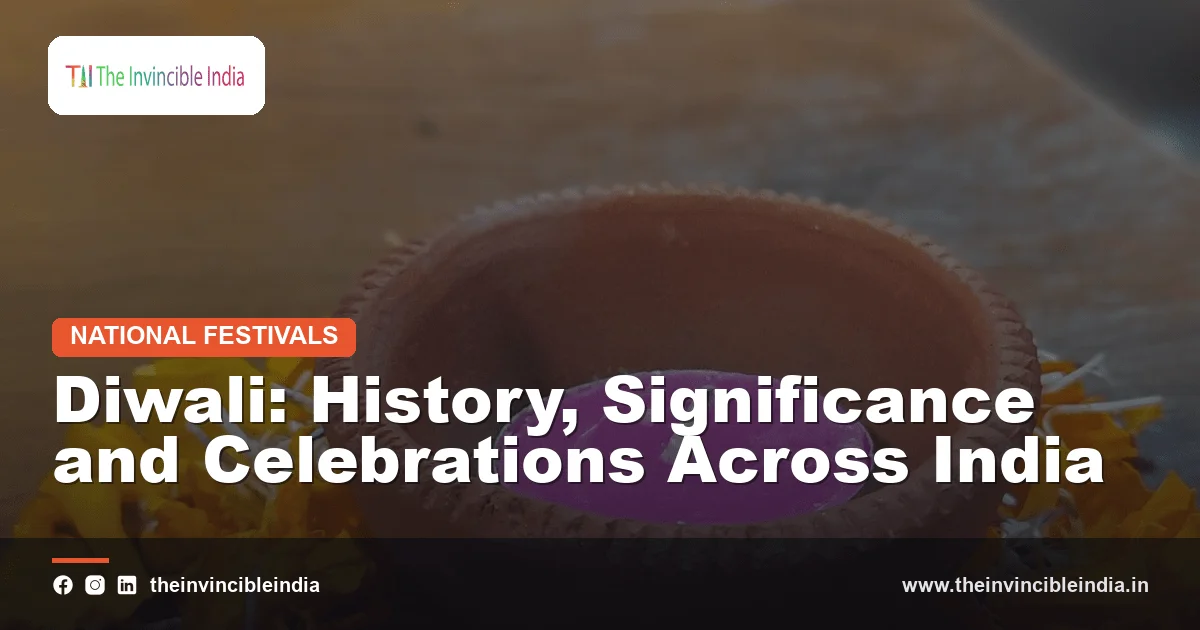
Diwali, also known as Deepavali or the “festival of lights,” is the most widely celebrated festival in India and among the most beloved festivals in the world. Its name derives from the Sanskrit “deepavali,” meaning “a row of lamps.” Symbolising the timeless victory of light over darkness and good over evil, Diwali is a luminous five-day celebration that brings families together across faiths, regions and generations. This detailed guide explores the history, legends, significance, rituals, foods and regional celebrations of Diwali across India.
The History and Legends Behind Diwali
Diwali’s origins are woven through several ancient legends, which vary by region and community. The most widely known commemorates the return of Lord Rama, along with his wife Sita and brother Lakshmana, to the kingdom of Ayodhya after 14 years of exile and his victory over the demon king Ravana; the overjoyed people are said to have lit rows of oil lamps to welcome them home, a tradition that continues to this day. In another popular legend, especially in the south and west, Diwali marks Lord Krishna’s defeat of the demon Narakasura, freeing 16,000 captives. Yet another tradition links the festival to the day Goddess Lakshmi emerged from the churning of the cosmic ocean (Samudra Manthan).
Quick Facts
| Also known as | Deepavali, Festival of Lights |
| Duration | Five days |
| Main day | Lakshmi Puja (Amavasya) |
| Month | Kartik (October–November) |
| Celebrated by | Hindus, Jains, Sikhs, Buddhists and others |
| Symbolism | Victory of light over darkness, good over evil |
Religious Significance Across Faiths
Diwali is remarkable for being celebrated across several religions, each with its own meaning. For Hindus, it is closely associated with Goddess Lakshmi, the deity of wealth and prosperity, who is believed to visit clean, brightly lit homes on the main night; it also honours Lord Ganesha, Lord Rama and Lord Krishna. For Jains, Diwali marks the day Lord Mahavira, the 24th Tirthankara, attained nirvana in 527 BCE. For Sikhs, it is celebrated as Bandi Chhor Divas, commemorating the release of Guru Hargobind and 52 imprisoned princes from the Gwalior fort. Some Buddhists, particularly Newar Buddhists, also observe the festival. This shared celebration reflects India’s deep pluralistic spirit.
The Five Days of Diwali
The festival traditionally unfolds over five days, each with its own rituals and meaning:
| Day 1 – Dhanteras | Buying gold, silver or utensils for good fortune; worship of Lakshmi and Dhanvantari, the god of health |
| Day 2 – Naraka Chaturdashi (Chhoti Diwali) | Marks Krishna’s victory over Narakasura; early oil baths in the south |
| Day 3 – Lakshmi Puja | The main day: prayers to Lakshmi and Ganesha, lamps and fireworks |
| Day 4 – Govardhan Puja / Annakut | Honouring Krishna lifting Mount Govardhan; a feast of many dishes |
| Day 5 – Bhai Dooj | Celebrating the loving bond between brothers and sisters |
How Diwali Is Celebrated
In the days leading up to Diwali, homes are thoroughly cleaned and renovated, as it is believed Goddess Lakshmi blesses tidy, welcoming homes. Doorways and courtyards are decorated with diyas (clay oil lamps), fairy lights, marigold garlands and vibrant, colourful rangoli patterns made from coloured powders, rice or flower petals. On the main day, families dress in new clothes, perform Lakshmi-Ganesh Puja, exchange gifts and boxes of sweets, light lamps and (traditionally) fireworks, and share elaborate feasts. Businesses often begin new account books, and the whole atmosphere is one of joy, generosity, prosperity and renewal.
Celebrations Across India
Diwali takes on distinct regional flavours across the country. In North India, it centres on Rama’s return to Ayodhya, and the city now hosts the spectacular Deepotsav, lighting hundreds of thousands of lamps along the Sarayu river. In West Bengal, Assam and Odisha, the festival coincides with the worship of the fierce Goddess Kali. In the South, it commemorates the defeat of Narakasura, beginning with a ritual pre-dawn oil bath. In Gujarat, Diwali also heralds the new year and the worship of account books, while in Maharashtra it begins with Vasubaras honouring cows and calves. Amritsar’s Golden Temple glows with thousands of lamps for Bandi Chhor Divas.
Festive Foods of Diwali
Food is central to Diwali. Households prepare and exchange a huge variety of sweets (mithai) such as laddoo, kaju katli, barfi, gulab jamun, soan papdi and jalebi, along with savoury snacks like chakli (murukku), mathri, namak pare, shakarpara and chivda. Sharing these homemade treats with family, friends, neighbours and colleagues is an essential expression of the festival’s spirit of togetherness and goodwill.
A Greener, Safer Diwali
In recent years, growing awareness of air and noise pollution has led many people and communities to celebrate a more eco-friendly Diwali — choosing lamps and light displays over firecrackers, using natural rangoli colours, opting for sustainable, locally made clay diyas and decorations, and being mindful of pets and the elderly. Several Indian cities now promote “green” celebrations.
The Deeper Meaning of Diwali
Beyond the lamps and festivities, Diwali carries a profound and universal message. It is a time for renewal, gratitude, forgiveness, charity and the strengthening of family and community bonds. The lighting of lamps symbolises the dispelling of ignorance and negativity, and the triumph of knowledge, hope and inner goodness — a timeless reminder that light will always overcome darkness, and good will ultimately prevail over evil.
Regional Names and Variations
Diwali is known by different names and observed in varied ways across India. In the south it is Deepavali, often marked by a pre-dawn oil bath and celebrating the defeat of Narakasura. In Maharashtra it begins with Vasubaras and Govatsa Dwadashi. In Gujarat it doubles as the new year (Bestu Varas), when businesses open fresh account books in a ritual called Chopda Pujan. In West Bengal and the east, Kali Puja is observed on the Diwali night. Across the diaspora — in Nepal, Sri Lanka, Malaysia, Singapore, Fiji, Mauritius, the UK, the US and beyond — Diwali is celebrated with equal warmth, and it is now a public holiday in several countries.
Lakshmi Puja and Muhurat
On the main day, families perform Lakshmi Puja during an auspicious time (muhurat) in the evening, worshipping Goddess Lakshmi alongside Lord Ganesha for wealth, wisdom and prosperity. Homes and shops are cleaned and decorated to welcome the goddess, lamps are lit at every doorway and window, and offerings of sweets, flowers and coins are made. Many traders consider Diwali the start of their financial year and seek blessings for their businesses.
Economic and Cultural Significance
Diwali is not only a spiritual festival but also one of the biggest economic events of the year in India. The weeks leading up to it see a surge in shopping for gold, jewellery, electronics, vehicles, clothing and home goods, as buying on Dhanteras is considered auspicious. Markets, artisans, sweet-makers and small businesses all benefit from the festive spending, making Diwali a vital driver of the seasonal economy.
Diwali Sweets and Gifting
Gifting is central to Diwali. Families and businesses exchange decorative boxes of sweets and dry fruits, gifts and greetings as gestures of goodwill. Homemade delicacies — from besan and motichoor laddoos to karanji, shankarpali and chivda — are prepared in large quantities and shared with relatives, neighbours and colleagues, strengthening social bonds.
Celebrating Responsibly
With rising awareness of air quality and safety, many families now celebrate a mindful Diwali — prioritising diyas, lamps and lights over loud firecrackers, choosing eco-friendly and locally made products, keeping pets and the elderly comfortable, and donating to those in need so that the festival’s light of generosity reaches everyone. This modern, conscious approach keeps the festival’s true spirit — the triumph of light, hope and goodness — at its heart.
Rangoli and Home Decorations
Decoration is a joyful and important part of Diwali. Colourful rangoli patterns — made from coloured powders, rice, flower petals or sand — are drawn at doorways and in courtyards to welcome Goddess Lakshmi and guests. Homes are strung with rows of diyas, candles and electric fairy lights, and doorways are hung with torans of mango leaves and marigolds. Many families place small footprints (symbolising Lakshmi entering the home) near the entrance, and keep their houses brightly lit through the night so no corner remains dark.
Diwali in Indian Mythology and Literature
Diwali is deeply embedded in Indian epics and scriptures. The Ramayana provides the story of Rama’s return to Ayodhya, while the Bhagavata Purana relates Krishna’s slaying of Narakasura. The churning of the ocean, from which Lakshmi arose, is another key myth. Over centuries, poets, playwrights and storytellers have celebrated the festival of lights, and its themes of exile and return, darkness and illumination, and the ultimate triumph of good have made it one of the most resonant celebrations in Indian culture.
Preparing for Diwali
Preparations begin weeks in advance. Families undertake a thorough cleaning and often repainting of their homes, believing that Lakshmi visits only clean and welcoming spaces. New clothes are bought for every family member, homes are stocked with sweets and snacks, and gifts are chosen for relatives, friends and staff. Shopping peaks during this period, especially on Dhanteras, when buying gold, silver or new utensils is considered particularly auspicious.
Tips for Celebrating Diwali
To enjoy a safe and meaningful Diwali, plan the Lakshmi Puja for the auspicious evening muhurat, keep water and first-aid handy if lighting any fireworks, and supervise children closely. Prefer diyas, candles and lights to reduce pollution and noise, choose eco-friendly decorations, and remember the festival’s spirit of generosity by sharing sweets and giving to those in need. Above all, Diwali is a time to reconnect with family and celebrate togetherness.
Diwali Around the World
Diwali’s light now shines far beyond India. It is a significant festival in Nepal (as Tihar), Sri Lanka, Malaysia, Singapore, Fiji, Mauritius, Trinidad and Guyana, wherever communities of Indian origin have settled. In countries such as the United Kingdom, the United States, Canada and Australia, Diwali is celebrated with public events, fireworks and cultural programmes, and is increasingly recognised officially, with landmarks lit up and greetings issued by world leaders. Leicester in the UK is famous for hosting some of the largest Diwali celebrations outside India.
The Enduring Message of Diwali
What makes Diwali so enduring and universal is its message. Across every legend and region, the festival celebrates the victory of light over darkness, knowledge over ignorance and good over evil. It is a time to cleanse not just the home but the heart — to forgive, to be grateful, to give generously and to renew hope. In a fast-changing world, Diwali remains a luminous reminder that no matter how deep the darkness, a single lamp can begin to dispel it, and that shared light grows ever brighter.
Frequently Asked Questions
Why is Diwali celebrated?
Diwali celebrates the victory of light over darkness and good over evil, most popularly the return of Lord Rama to Ayodhya after defeating Ravana.
How many days is Diwali?
Diwali is a five-day festival, from Dhanteras to Bhai Dooj, with Lakshmi Puja as the main day.
Which goddess is worshipped on Diwali?
Goddess Lakshmi, the deity of wealth and prosperity, is worshipped on the main day of Diwali, often alongside Lord Ganesha.
Do other religions celebrate Diwali?
Yes, Jains celebrate it as the nirvana of Lord Mahavira and Sikhs as Bandi Chhor Divas, along with many communities across India.
When is Diwali celebrated?
Diwali falls in the Hindu month of Kartik, usually in October or November, on the night of the new moon (Amavasya).
What are the five days of Diwali called?
They are Dhanteras, Naraka Chaturdashi (Chhoti Diwali), Lakshmi Puja, Govardhan Puja and Bhai Dooj.


