

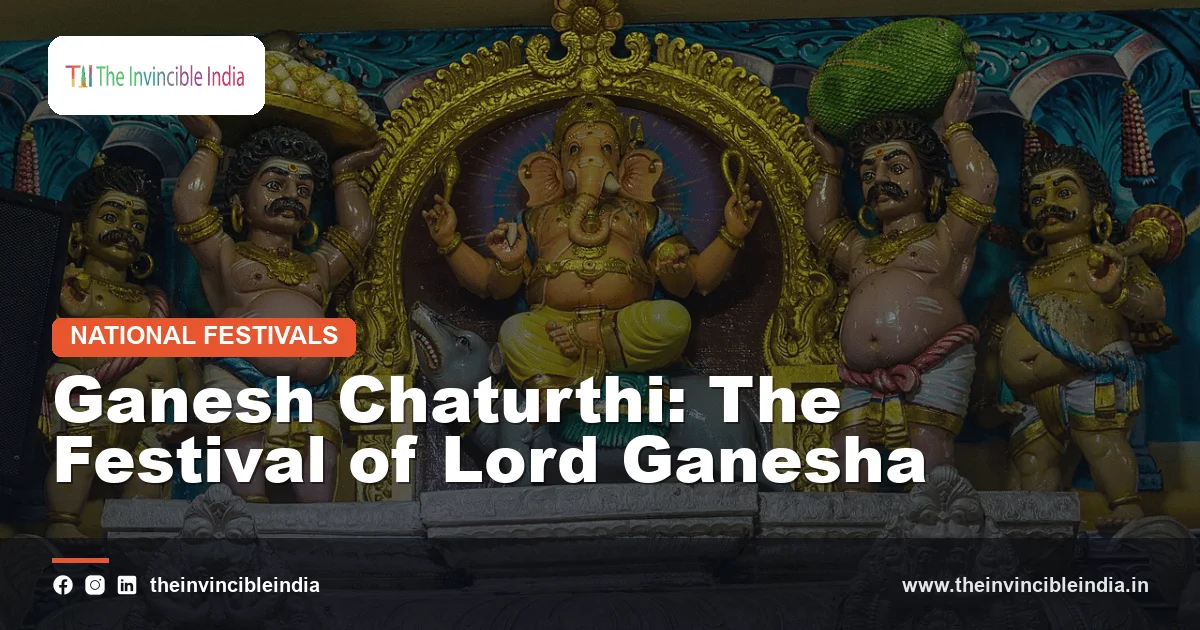
Ganesh Chaturthi is one of India’s most joyous and widely celebrated festivals, honouring the birth of Lord Ganesha, the beloved elephant-headed deity revered as the remover of obstacles and the god of wisdom, prosperity and new beginnings. Marked with immense enthusiasm across the country, and most spectacularly in Maharashtra, the festival transforms cities and homes with beautifully crafted idols, vibrant processions, music and devotion. This guide explores the history, significance, rituals and grand celebrations of Ganesh Chaturthi, one of the most colourful events in the Hindu calendar.
Quick Facts: Ganesh Chaturthi
| Detail | Information |
|---|---|
| Honours | Lord Ganesha, the elephant-headed deity |
| When | August or September (Bhadrapada month) |
| Duration | Typically 10 days |
| Most famous celebrations | Mumbai and Pune, Maharashtra |
| Final ritual | Visarjan (immersion of idols) |
| Popular offering | Modak (sweet dumpling) |
The Significance of Lord Ganesha
Lord Ganesha holds a special place in Hindu worship as the deity invoked at the beginning of any new venture, journey or ceremony, for he is believed to remove obstacles and grant success. Depicted with the head of an elephant and a rotund human body, each of his features carries symbolic meaning: his large ears signify the importance of listening, his small eyes focus and concentration, and his large belly the ability to digest all that life brings. As the god of wisdom, learning and good fortune, he is cherished by millions.
History of the Festival
While Ganesha has been worshipped for many centuries, the grand public celebration of Ganesh Chaturthi as we know it today was popularised in the late 19th century by the freedom fighter Lokmanya Bal Gangadhar Tilak. During the struggle for independence, he transformed what had been a private family observance into a large public festival, using it to bring people together across social divides and foster a spirit of unity and nationalism. This vision turned Ganesh Chaturthi into the massive community celebration seen today.
The Rituals and Celebrations
The festival begins with the installation of Ganesha idols, ranging from small images in homes to enormous, elaborately decorated statues in public pandals (pavilions). The deity is welcomed with the ritual of pranapratishtha, invoking life into the idol, followed by daily prayers, offerings and the singing of devotional songs. Sweet modaks, believed to be Ganesha’s favourite, are offered in abundance, along with other delicacies. For the days of the festival, communities gather to worship, celebrate and share in the festive spirit.
Visarjan: The Grand Immersion
The festival reaches its climax with Visarjan, the immersion of the idols in rivers, lakes or the sea, symbolising Ganesha’s return to his celestial home and the cycle of creation and dissolution. In Mumbai, this is an unforgettable spectacle, as millions accompany the idols to the shore in massive processions filled with music, dancing and chants of “Ganpati Bappa Morya”, bidding the beloved deity farewell until the next year. In recent times, there has been a growing movement towards eco-friendly idols made of clay to protect the environment.
Regional Celebrations Across India
While Maharashtra is the epicentre of Ganesh Chaturthi, the festival is celebrated with great devotion across many parts of India, each region adding its own flavour. In Goa, it is a major family festival with beautifully decorated homes and traditional offerings. In Karnataka, Andhra Pradesh and Telangana, grand public celebrations feature enormous idols and elaborate pandals, with Hyderabad famous for its towering Ganesha at Khairatabad. In Tamil Nadu, the festival is known as Vinayaka Chaturthi and observed with special rituals and sweets. Even in northern and eastern India, the worship of Ganesha during this period is widespread, reflecting the universal appeal of the beloved deity across linguistic and regional boundaries.
The Art of Idol Making
The creation of Ganesha idols is a highly skilled art form that supports entire communities of craftsmen in the months leading up to the festival. Traditionally, idols were made from natural clay and painted with natural colours, ranging from tiny images for home worship to colossal statues many metres tall for public pandals. Artisans work for weeks, sometimes months, sculpting, drying and painting the idols with great care and devotion. In recent years, growing environmental awareness has revived the tradition of eco-friendly clay idols, which dissolve harmlessly in water, in place of those made from plaster of Paris and chemical paints that can pollute rivers and lakes.
Food and Festive Traditions
Food is central to the celebration of Ganesh Chaturthi, and the festival is associated with a wonderful array of sweets and delicacies. The most iconic offering is the modak, a sweet dumpling filled with grated coconut and jaggery, either steamed or fried, believed to be Lord Ganesha’s favourite. Other traditional treats include ladoos, puran poli (a sweet flatbread), and various regional specialities prepared with love and offered to the deity before being shared among family, friends and visitors. The preparation and sharing of these festive foods, along with communal meals at pandals, strengthen the bonds of family and community that lie at the heart of the festival.
The Spirit and Message of the Festival
Beyond its rituals and festivities, Ganesh Chaturthi carries a deeper message of unity, renewal and hope. As the remover of obstacles, Ganesha is invoked for the strength to overcome life’s challenges and to begin afresh. The festival brings people together across social and economic divides, fostering a spirit of community, generosity and shared joy that Tilak envisioned when he transformed it into a public celebration. The final immersion, in which the idol dissolves back into the water, offers a profound reminder of the impermanence of all things and the eternal cycle of creation and dissolution, leaving devotees with a sense of peace and spiritual renewal.
The Ten Days of Celebration
The festival unfolds over ten days, each with its own rhythm of devotion and celebration. It begins with the joyful installation of the idol and the ritual invocation of the deity, followed by days of morning and evening prayers, the singing of aartis and devotional songs, and the offering of sweets and flowers. Public pandals become vibrant community hubs, hosting cultural programmes, music, dance and social gatherings, and often taking up charitable and social causes. Families welcome friends and neighbours to seek the blessings of the deity, and an atmosphere of warmth, festivity and togetherness pervades homes and neighbourhoods alike, building steadily towards the grand finale of the immersion.
Eco-Friendly Celebrations
In recent years, growing awareness of the environmental impact of the festival has inspired a heartening shift towards greener celebrations. Traditional idols made of plaster of Paris and painted with chemical colours do not dissolve easily and can harm rivers, lakes and marine life during immersion. In response, many devotees and communities have embraced eco-friendly idols made from natural clay, along with natural colours, artificial immersion tanks, and even “tree Ganeshas” made with seeds that can be planted afterwards. This movement reflects a thoughtful effort to honour the deity while protecting the natural world, adding a meaningful new dimension to the ancient festival that resonates especially with younger generations.
The Enduring Appeal of Ganesh Chaturthi
Ganesh Chaturthi endures as one of India’s most cherished festivals because it combines deep spiritual meaning with irrepressible joy, artistry and community spirit. It brings together people of all ages and backgrounds in shared devotion and celebration, filling streets and homes with colour, music and the sweet aroma of festive food. As the worship of the beloved remover of obstacles, it offers hope, renewal and the promise of new beginnings, while its message of unity and its evolving embrace of environmental responsibility ensure that this ancient celebration remains as relevant and beloved today as ever, welcomed each year with the heartfelt cry of “Ganpati Bappa Morya”.
Ganesha in Art and Devotion
Lord Ganesha is one of the most depicted deities in Indian art, appearing in countless forms across sculpture, painting, jewellery and everyday objects. Each representation is rich in symbolism, from the mouse that serves as his humble vehicle, teaching that even the smallest creature has its place, to the modak in his hand, representing the sweet rewards of spiritual effort. His image is placed at the entrances of homes and temples as an auspicious guardian, and he is invoked at the start of weddings, business ventures, journeys and examinations. This universal presence in daily life, transcending region and language, explains the extraordinary affection in which Ganesha is held and the boundless enthusiasm with which his festival is celebrated.
A Celebration of Community and Joy
Ultimately, Ganesh Chaturthi is a festival that unites devotion with celebration, the sacred with the joyful, and the individual with the community. From the quiet family shrine to the towering public pandal, from the careful moulding of a clay idol to the exuberant immersion procession, every aspect of the festival reflects the deep bond between the people and their beloved deity. It is a time of prayer and reflection, but also of music, feasting, art and togetherness, when neighbourhoods come alive and social barriers dissolve in shared happiness. This blend of spiritual depth and irrepressible joy is what makes Ganesh Chaturthi one of the most beloved and vibrant festivals in all of India.
Best Time and How to Experience the Festival
Ganesh Chaturthi falls in the Hindu month of Bhadrapada, usually in late August or September, and lasts up to ten days, culminating in the grand immersion on Anant Chaturdashi. To experience it at its most spectacular, Mumbai and Pune in Maharashtra are the ideal destinations, where towering public idols, magnificently decorated pandals and enormous immersion processions create an atmosphere of extraordinary energy and devotion. Visitors should be prepared for large, enthusiastic crowds, especially on the final day, and are welcome to join in the celebrations, seek the blessings of the deity, and savour the festive sweets. Experiencing this joyous festival firsthand offers an unforgettable glimpse into the living heart of Indian devotion and community spirit.
Ganesha, the God of New Beginnings
At the heart of Ganesh Chaturthi lies the timeless appeal of Ganesha himself, the deity of new beginnings, wisdom and good fortune, worshipped before every important undertaking. This role gives the festival a universal resonance, for it celebrates hope, the courage to overcome obstacles, and the promise of fresh starts, sentiments that speak to people of every age and walk of life. As families install their idols and communities gather in joyful devotion, they reaffirm their faith that, with the blessings of the beloved elephant-headed god, the path ahead can be cleared of difficulties and filled with success, prosperity and peace.
Frequently Asked Questions
What is Ganesh Chaturthi?
Ganesh Chaturthi is a Hindu festival celebrating the birth of Lord Ganesha, the elephant-headed god of wisdom and remover of obstacles, marked with the installation and worship of idols over about ten days.
Why is Ganesh Chaturthi celebrated for ten days?
The festival traditionally lasts ten days, from the installation of the idol on Ganesh Chaturthi to its immersion on Anant Chaturdashi, though some households observe it for a shorter period.
What is Visarjan?
Visarjan is the final ritual of immersing the Ganesha idol in water, symbolising the deity’s return to his heavenly abode, accompanied by grand processions and celebrations.
Where is Ganesh Chaturthi celebrated most grandly?
The most spectacular celebrations take place in Maharashtra, especially in Mumbai and Pune, where enormous public idols and processions draw millions of devotees.


