

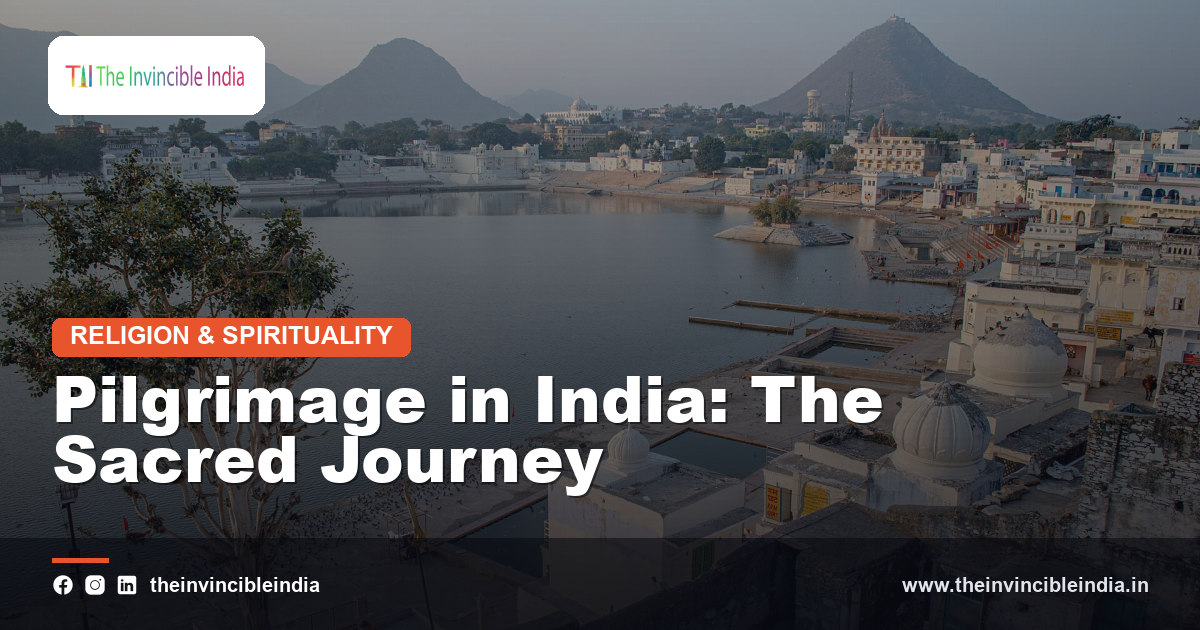
Pilgrimage is one of the most central and cherished practices in the religious life of India, a land woven through with sacred places that draw devotees on holy journeys of devotion, purification and merit. From the holy rivers and towering mountains to the great temples and sacred cities, India is a landscape of the sacred, and to journey to these holy places is a profound spiritual act, undertaken by countless pilgrims across the ages. The concept of the tirtha, the sacred crossing place, lies at the heart of the tradition, and the great pilgrimages of India are among the most important expressions of its faith. This guide explores pilgrimage in India, the meaning of tirtha, the holy sites, the great pilgrimages and the sacred journey, a central part of India’s spiritual life.
Quick Facts
| Detail | Information |
|---|---|
| Practice | A central and cherished practice of Indian religion |
| Key concept | Tirtha, the sacred crossing place |
| Holy sites | Sacred rivers, mountains, temples and cities |
| Purpose | Devotion, purification, blessing and merit |
| Great pilgrimages | The Char Dham, the Kumbh Mela and many more |
| Shared by | The religious traditions of India |
A Land of the Sacred
India is a land woven through with the sacred, its landscape marked everywhere by holy places, sacred rivers, mountains, temples and cities, that draw devotees on pilgrimage. For the peoples of India, the land itself is sacred, sanctified by the presence of the divine at countless holy sites, and pilgrimage to these places has been a central practice of religious life for thousands of years. This vision of a sacred landscape, dotted with holy places and bound together by the journeys of pilgrims, is one of the most striking features of the religious culture of India. As a land of the sacred, filled with holy places and alive with the movement of pilgrims, India has one of the richest traditions of pilgrimage in the world.
The Meaning of Tirtha
At the heart of the Indian tradition of pilgrimage is the concept of the tirtha, a word that means a crossing place or ford, and which came to signify a sacred site, a holy place where one may cross over from the ordinary world to the divine. A tirtha is a place where the divine is especially present and accessible, where the boundary between the earthly and the sacred is thin, and where the pilgrim may draw near to the divine and gain spiritual benefit. Pilgrimage, the journey to a tirtha, is thus a sacred crossing towards the divine. This profound concept of the tirtha as a sacred crossing place, where one may cross over towards the divine, lies at the heart of the meaning of pilgrimage in India.
The Sacred Journey
Pilgrimage in India is understood as a sacred journey, a spiritual undertaking in which the outward journey to a holy place mirrors an inward journey towards the divine. The pilgrim leaves behind the ordinary world and its concerns, undertakes the journey often with hardship and devotion, and comes at last to the sacred place and the presence of the divine, in an act of faith and dedication. The journey itself, with its effort and its devotion, is part of the spiritual meaning of the pilgrimage. This understanding of pilgrimage as a sacred journey, in which the physical journey to the holy place is also a spiritual journey towards the divine, gives the practice its profound meaning and its power to transform and bless the pilgrim.
The Holy Rivers
Among the most sacred of India’s holy places are its rivers, revered as divine and life-giving, and the banks and confluences of the holy rivers are important centres of pilgrimage. The greatest of these is the Ganga, held to be the most sacred of rivers, whose waters are believed to purify and bless, but many other rivers are also revered as holy. Pilgrims come to bathe in the sacred rivers, an act believed to cleanse the soul, and the holy cities along their banks are great centres of pilgrimage. This deep reverence for the sacred rivers, and the practice of pilgrimage to bathe in their holy waters, is one of the most important and beloved aspects of pilgrimage in India.
The Sacred Mountains
The mountains of India, above all the mighty Himalayas, are revered as sacred, the abode of the gods and a realm of profound spiritual power, and they draw pilgrims to holy shrines set amid their peaks. The Himalayas in particular are held to be deeply sacred, and many of the holiest pilgrimage sites, including great shrines and the sources of sacred rivers, are found high in the mountains, reached by arduous and devoted journeys. Other sacred mountains across India are also places of pilgrimage. This reverence for the sacred mountains as the abode of the divine, and the drawing of pilgrims to shrines set amid the peaks, is a beautiful and important aspect of the pilgrimage tradition of India.
The Sacred Cities
India is home to a number of sacred cities, holy places revered as especially sacred and drawing great numbers of pilgrims to their temples and holy sites. Among the most famous is the ancient and holy city of Varanasi, one of the oldest continuously inhabited cities in the world and one of the most sacred, on the banks of the holy Ganga. There are several great sacred cities revered across the tradition as especially holy, each a major centre of pilgrimage. These sacred cities, with their many temples and holy sites and their deep sanctity, are among the great destinations of pilgrimage in India, drawing devotees to worship, to bathe in sacred waters and to experience the profound spiritual atmosphere of these holy places.
The Great Temples
The great temples of India are important destinations of pilgrimage, holy places where devotees come to worship the deities and to seek their darshan and blessing. Famous temples across the country, some of great antiquity, splendour and sanctity, draw pilgrims from far and wide, who undertake journeys to worship at these sacred shrines and to come into the presence of the deity. The most sacred temples, such as the great shrines of the deities, are among the most important pilgrimage sites in India. This pilgrimage to the great temples, to worship the deities and seek their blessing at their most sacred shrines, is one of the central forms of pilgrimage in India and an important expression of the devotion of the pilgrims.
The Char Dham
Among the most important of all pilgrimages in India is the Char Dham, the four sacred abodes, revered as the great spiritual corners of the land. The term refers both to the four holy abodes spread across the four corners of India and to the four sacred shrines of the Himalayas, and to undertake the Char Dham pilgrimage is regarded as one of the holiest and most meritorious of spiritual journeys. The Char Dham, embracing the whole land or the sacred mountains, draws great numbers of devout pilgrims. This great pilgrimage, to the four sacred abodes, is one of the supreme expressions of the pilgrimage tradition of India, cherished by devout Hindus as one of the holiest of journeys.
The Kumbh Mela
The greatest of all the pilgrimages of India, and the largest peaceful gathering of people on earth, is the Kumbh Mela, held periodically at sacred sites on the banks of holy rivers, when tens of millions of pilgrims gather to bathe in the sacred waters. This vast pilgrimage, drawing an almost unimaginable multitude of devotees, ascetics and seekers, is a supreme expression of the pilgrimage tradition of India and one of the most extraordinary religious gatherings in the world. Recognised as a treasure of world heritage, the Kumbh Mela is a wonder of faith. As the greatest of India’s pilgrimages, drawing millions to the sacred rivers, the Kumbh Mela stands as the supreme example of the power and the scale of the pilgrimage tradition of India.
The Merit of Pilgrimage
In the Indian traditions, pilgrimage to sacred places is regarded as a deeply meritorious act, bringing spiritual benefit, blessing, purification and progress towards the ultimate goal of liberation. To undertake pilgrimage, to journey to the holy places with devotion and to worship there, is believed to cleanse the soul, to earn spiritual merit, and to bring the pilgrim closer to the divine. The hardships of the journey are themselves part of the spiritual discipline and merit of the pilgrimage. This belief in the great spiritual merit and benefit of pilgrimage is central to the practice and to the devotion with which pilgrims undertake their sacred journeys, and it is one of the reasons for the enduring importance of pilgrimage in Indian religious life.
Pilgrimage and Purification
A central purpose of pilgrimage in India is purification, the cleansing of the soul from sins and impurities through the sacred journey and the worship at holy places. Bathing in the sacred rivers, worshipping at the holy shrines and undertaking the devoted journey are all believed to purify the pilgrim, washing away sins and renewing the spirit. This theme of purification, of cleansing the soul through the sacred journey and the holy places, is one of the most important meanings of pilgrimage in the Indian traditions. The pilgrim comes to the holy place seeking not only blessing but purification and spiritual renewal, and the belief in the purifying power of pilgrimage is central to its practice and its profound significance.
A Shared Tradition
Pilgrimage is a practice shared across the religious traditions of India, cherished not only in Hinduism but in the other faiths of the subcontinent as well. Buddhists undertake pilgrimage to the sacred sites of the Buddha’s life, Jains to their holy temples and sites, Sikhs to their sacred shrines, Muslims to the dargahs of the Sufi saints, and people of many faiths to holy places across the land. This shared practice of pilgrimage, undertaken by the followers of all the great traditions of India, reflects the deep and widespread importance of the sacred journey in the religious life of the subcontinent. Pilgrimage is thus a common thread running through the many faiths of India, uniting them in the practice of the sacred journey.
The Experience of Pilgrimage
For the pilgrim, pilgrimage is a profound and often transformative experience, a time set apart from ordinary life and devoted wholly to the sacred journey and the worship of the divine. The pilgrim leaves behind daily concerns, undertakes the journey with devotion and often hardship, shares the road with fellow pilgrims, and comes at last to the holy place and the presence of the divine, in an experience of faith, devotion and spiritual intensity. Many find pilgrimage a deeply moving and renewing experience. This experience of pilgrimage, as a sacred time of devotion, journey and encounter with the divine, is at the heart of the practice, and it is what draws countless pilgrims, year after year, to the holy places of India.
A Landscape of Faith
The tradition of pilgrimage has, over the ages, woven the whole of India into a landscape of faith, bound together by its holy places and the sacred journeys that connect them. The great pilgrimages, spread across the length and breadth of the country, and the countless holy sites in every region, create a sacred geography that unites the land, and the movement of pilgrims across the country has been a powerful force for cultural unity and exchange. This vision of India as a landscape of faith, sanctified by its holy places and bound together by pilgrimage, is one of the most beautiful and significant aspects of the pilgrimage tradition, expressing the deep unity of the sacred land and its peoples across all their diversity.
Pilgrimage in India Today
Today pilgrimage remains one of the most vibrant and cherished practices in the religious life of India, with countless millions undertaking sacred journeys to the holy places every year. The great pilgrimages, from the Char Dham to the Kumbh Mela, draw ever greater numbers, and the holy rivers, mountains, temples and cities continue to attract devotees on their sacred journeys, now aided by modern travel. The practice, shared across the faiths of India, continues to express the deep devotion and the vision of a sacred landscape that lie at the heart of Indian religious life. As a central and living practice of devotion, purification and merit, pilgrimage endures as one of the great and beautiful expressions of the spiritual life of India.
Sources & Further Reading
- Ministry of Culture, Government of India, on the pilgrimage traditions of India (indiaculture.gov.in).
- Ministry of Tourism, Government of India, on the sacred sites and pilgrimages of India (tourism.gov.in).
Frequently Asked Questions
What is pilgrimage in India?
Pilgrimage is a central and cherished practice in the religious life of India, in which devotees undertake sacred journeys to holy places, such as sacred rivers, mountains, temples and cities, for devotion, purification, blessing and spiritual merit.
What is a tirtha?
A tirtha is a sacred site, a word meaning a crossing place or ford, which came to signify a holy place where one may cross over from the ordinary world to the divine. It is a place where the divine is especially present and where the pilgrim may draw near to the sacred.
What are the great pilgrimages of India?
The great pilgrimages of India include the Char Dham, the four sacred abodes revered as the spiritual corners of the land, and the Kumbh Mela, the greatest of all pilgrimages and the largest peaceful gathering on earth, along with countless other holy sites and journeys.
Why do Hindus bathe in sacred rivers on pilgrimage?
Hindus revere the rivers, above all the Ganga, as sacred and purifying, and bathing in their holy waters on pilgrimage is believed to cleanse the soul of sins and bring spiritual purification and blessing. It is one of the most important acts of pilgrimage in India.
Is pilgrimage practised by all religions in India?
Yes. Pilgrimage is shared across the religious traditions of India. Hindus, Buddhists, Jains, Sikhs and Muslims all undertake pilgrimage to their sacred sites, making the sacred journey a common thread running through the many faiths of the subcontinent.


