

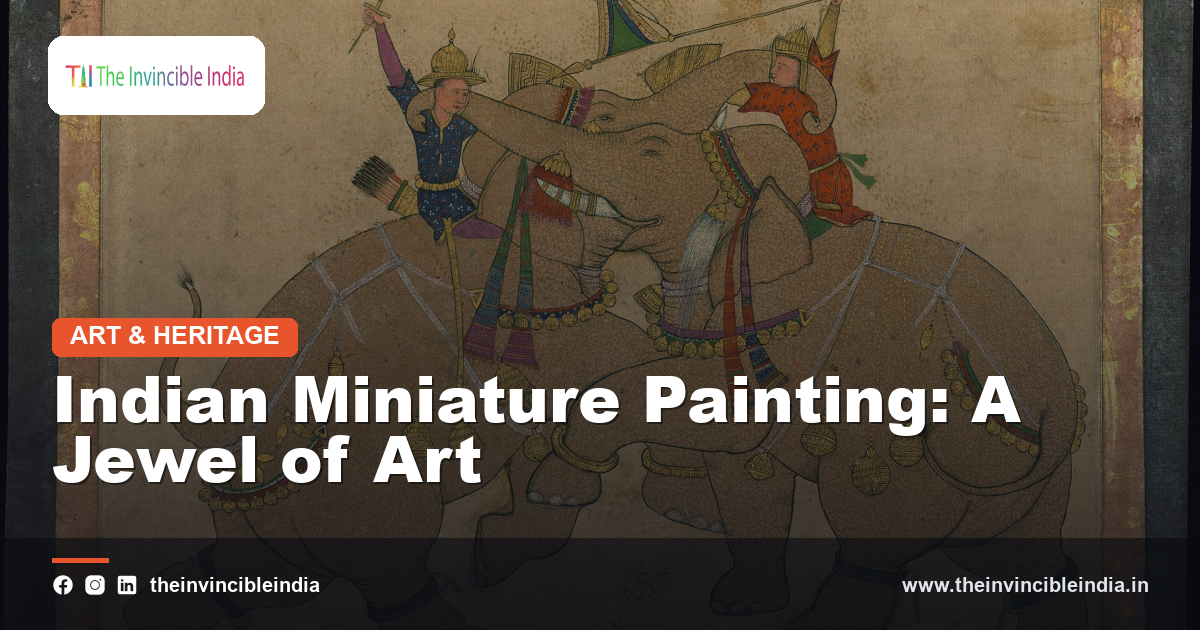
Indian miniature painting is one of the most exquisite and refined of the country’s art traditions, an art of small, intricately detailed paintings executed with extraordinary skill, delicacy and beauty. Flourishing over the centuries in the courts and centres of India, it developed into several great schools, each with its own distinctive style, from the refined and naturalistic Mughal painting to the vibrant and lyrical Rajput and Pahari styles. Rich in colour, fine in detail, and drawing on themes from court life, mythology, devotion, poetry and nature, Indian miniature painting is a jewel of the country’s artistic heritage. This guide explores the tradition, its great schools, its themes, its techniques and its enduring beauty, one of the treasures of India’s art and heritage.
Quick Facts
| Detail | Information |
|---|---|
| Type | An art of small, intricately detailed paintings |
| Character | Refined, delicate and richly coloured |
| Great schools | Mughal, Rajput, Pahari, Deccan and others |
| Themes | Court life, mythology, devotion, poetry and nature |
| Medium | Painted on paper, cloth and other surfaces |
| Heritage | A jewel of India’s artistic tradition |
A Jewel of Indian Art
Indian miniature painting is one of the most exquisite and refined of the country’s art traditions, a jewel of its artistic heritage. As its name suggests, it is an art of small paintings, but ones executed with extraordinary skill, delicacy and detail, rich in colour and fine in workmanship, and often of great beauty. Flourishing over the centuries in the courts and cultural centres of India, the tradition developed into several great schools and produced a vast wealth of beautiful works. As a jewel of Indian art, exquisite in its detail, delicacy and colour, miniature painting holds a cherished place among the treasures of the country’s artistic heritage and is admired for its beauty and refinement across the world.
The Art of the Miniature
Miniature painting is the art of creating small paintings of great detail and refinement, requiring extraordinary skill, patience and a fine hand. Despite their small size, these paintings are executed with remarkable intricacy, with the finest details rendered with great precision, rich colours applied with care, and elaborate compositions created in a small space. The smallness of the format demands the utmost skill and delicacy from the artist. This art of the miniature, in which small paintings of extraordinary detail and refinement are created with great skill and delicacy, is the essence of the tradition, and the ability to render such fine detail and beauty in a small format is what distinguishes the miniature painter and gives the art its special charm.
Ancient Roots
The tradition of miniature painting in India has ancient roots, developing over many centuries from earlier traditions of painting, including the illustration of manuscripts. Small paintings were created to illustrate texts and manuscripts, and this tradition of manuscript illustration was one of the sources from which the great schools of miniature painting later developed. Over time, the art grew in sophistication and beauty. These ancient roots of Indian miniature painting, developing from earlier traditions including the illustration of manuscripts, are the foundation from which the great schools of the art later flowered, and they connect the tradition to a long history of painting in India stretching back over many centuries.
The Mughal School
One of the greatest schools of Indian miniature painting is the Mughal school, which flourished under the patronage of the Mughal emperors and is celebrated for its refinement, naturalism and technical brilliance. Mughal painting, blending Indian, Persian and other influences, is renowned for its exquisite detail, its naturalistic depiction of people, animals and nature, its fine portraiture, and its scenes of court life, history and events, executed with great skill and refinement. The Mughal school represents a summit of the art. This Mughal school of miniature painting, celebrated for its refinement, naturalism and technical brilliance under the patronage of the Mughal emperors, is one of the greatest schools of the tradition and a summit of Indian painting, admired for its exquisite detail and beauty.
The Rajput School
Another great tradition of Indian miniature painting is the Rajput school, which flourished in the courts of Rajasthan and is celebrated for its vibrant colour, its lyrical beauty and its devotional and romantic themes. Rajput painting, more stylised and colourful than the naturalistic Mughal style, is renowned for its bold colours, its graceful figures, and its depiction of themes from mythology, devotion, poetry, romance and court life, especially the beloved stories of Krishna. The Rajput school produced works of great charm and beauty. This Rajput school of miniature painting, celebrated for its vibrant colour, lyrical beauty and devotional and romantic themes, is one of the great traditions of the art and a wonderful expression of the culture and devotion of the courts of Rajasthan.
The Pahari School
Among the most beautiful and lyrical traditions of Indian miniature painting is the Pahari school, which flourished in the hill regions of northern India and is celebrated for its delicacy, grace and poetic beauty. Pahari painting, developed in the hill kingdoms, is renowned for its lyrical and delicate style, its soft colours, its graceful figures and its tender depiction of themes from devotion, poetry and romance, above all the love of Krishna and Radha. The Pahari school produced some of the most exquisite and poetic works of Indian painting. This Pahari school of miniature painting, celebrated for its delicacy, grace and poetic beauty and developed in the hill regions of the north, is among the most lyrical and exquisite traditions of the art and a treasure of Indian painting.
The Deccan and Other Schools
Beyond the great Mughal, Rajput and Pahari schools, Indian miniature painting includes other important traditions, such as the Deccan school and various regional styles. The Deccan school, which flourished in the courts of the Deccan region, is celebrated for its rich colour, its distinctive style and its own blend of influences, and there are further regional schools and styles, each with its own character. Together these various schools enrich the tradition of Indian miniature painting. These further schools of Indian miniature painting, including the Deccan school and various regional styles, add to the richness and diversity of the tradition, each contributing its own distinctive character and beauty to the great art of Indian miniature painting.
Themes of Court and Legend
Indian miniature painting draws on a rich variety of themes, from the life of the courts to mythology, devotion, poetry, romance and nature. The paintings depict scenes of court life, portraits of rulers and nobles, historical events, and courtly pastimes, as well as themes from mythology and the epics, devotional subjects, illustrations of poetry and romance, and beautiful depictions of nature, animals and the seasons. This rich range of themes gives the tradition great variety. This rich variety of themes in Indian miniature painting, from court life and history to mythology, devotion, poetry and nature, gives the tradition great range and interest, and the beautiful depiction of these subjects is one of the glories of the art.
The Love of Krishna
Among the most beloved and beautiful themes of Indian miniature painting, especially in the Rajput and Pahari schools, are the stories of Krishna, above all his love for Radha and the gopis. The paintings depict the enchanting scenes of Krishna’s life and loves, his playful deeds, and the beautiful and tender love of Krishna and Radha, drawn from devotional poetry and rendered with great beauty, grace and feeling. These paintings of Krishna are among the most cherished works of the tradition. This beloved theme of the love of Krishna, depicted with great beauty and tenderness especially in the Rajput and Pahari schools, is among the most cherished subjects of Indian miniature painting and a wonderful expression of the devotion and poetry that inspired much of the art.
Colours and Materials
Indian miniature paintings are renowned for their rich and beautiful colours, traditionally made from natural materials and applied with great care. The colours were made from minerals, stones, plants and other natural sources, producing a palette of rich and glowing hues, and precious materials such as gold were also used to add richness and beauty. The colours were applied with fine brushes with great precision and skill. This use of rich natural colours, and precious materials such as gold, applied with great care and skill, is central to the beauty of Indian miniature painting, and the glowing colours and fine workmanship are among the most admired features of the art.
The Painstaking Technique
The creation of an Indian miniature painting was a painstaking process, demanding great skill, patience and fine workmanship. The artist prepared the surface, sketched the composition, and then built up the painting with fine brushes, applying the colours and rendering the intricate details with great precision, often over a long period. The finest brushes, sometimes made of just a few hairs, were used for the most delicate details. This painstaking technique, in which the miniature painting was built up with great skill and patience using the finest brushes, is central to the art, and the extraordinary care and workmanship that went into each painting are a large part of what makes these small works such jewels of Indian art.
The Court Patronage
Indian miniature painting flourished above all under the patronage of the courts, where rulers and nobles supported artists and commissioned beautiful works. The emperors, kings and nobles of India were great patrons of the art, maintaining workshops of skilled painters and commissioning paintings of court life, portraits, illustrated manuscripts and works on many themes, and this patronage was crucial to the flourishing of the tradition. The courts were the great centres of the art. This court patronage, under which the emperors, kings and nobles of India supported artists and commissioned beautiful works, was crucial to the flourishing of Indian miniature painting, and the courts were the great centres where the art was cultivated and reached its heights of beauty and refinement.
A Treasured Heritage
The great works of Indian miniature painting are treasured as some of the finest achievements of Indian art, preserved in museums and collections in India and around the world. These exquisite paintings, admired for their beauty, detail and refinement, are cherished as masterpieces of the country’s artistic heritage, and they are studied, exhibited and celebrated as treasures of world art. The tradition also continues to be practised by artists today. This treasured heritage of Indian miniature painting, preserved and celebrated as some of the finest achievements of Indian art, is a precious part of the country’s artistic legacy, and the exquisite works of the tradition are admired as jewels of art in India and around the world.
Miniature Painting Today
Today Indian miniature painting is treasured as one of the great art traditions of the country, its masterpieces admired in museums and collections around the world, and the art itself still practised by skilled artists. The exquisite works of the great schools, from the Mughal to the Rajput and Pahari, continue to be studied, exhibited and celebrated, and contemporary artists carry the tradition forward, creating miniature paintings in the traditional styles. The beauty and refinement of the art continue to inspire admiration. As a jewel of Indian art, exquisite in its detail, delicacy and colour, and expressed in its great schools, Indian miniature painting endures as one of the most beautiful and treasured traditions of the country’s artistic heritage.
Sources & Further Reading
- Ministry of Culture, Government of India, on the art traditions of India (indiaculture.gov.in).
- National Museum and other institutions, on Indian miniature painting.
Frequently Asked Questions
What is Indian miniature painting?
Indian miniature painting is an exquisite tradition of small, intricately detailed paintings executed with extraordinary skill, delicacy and rich colour. It flourished over the centuries in the courts of India and developed into several great schools, such as the Mughal, Rajput and Pahari styles.
What are the main schools of Indian miniature painting?
The main schools include the Mughal school, celebrated for its refinement and naturalism; the Rajput school of Rajasthan, known for its vibrant colour and devotional themes; the Pahari school of the hill regions, famed for its delicacy and poetic beauty; and the Deccan school, among others.
What themes does Indian miniature painting depict?
Indian miniature painting depicts a rich variety of themes, including court life, portraits and historical events, as well as mythology, devotion, poetry, romance and nature. Among the most beloved themes are the stories of Krishna, especially his love for Radha.
What is special about the Mughal school of painting?
The Mughal school of miniature painting, which flourished under the Mughal emperors, is celebrated for its refinement, naturalism and technical brilliance, blending Indian, Persian and other influences, and is renowned for its exquisite detail, fine portraiture and scenes of court life.
How were Indian miniature paintings made?
Indian miniature paintings were created through a painstaking process, in which the artist prepared the surface, sketched the composition and built up the painting with fine brushes, using rich natural colours and precious materials such as gold, rendering intricate details with great precision.


