

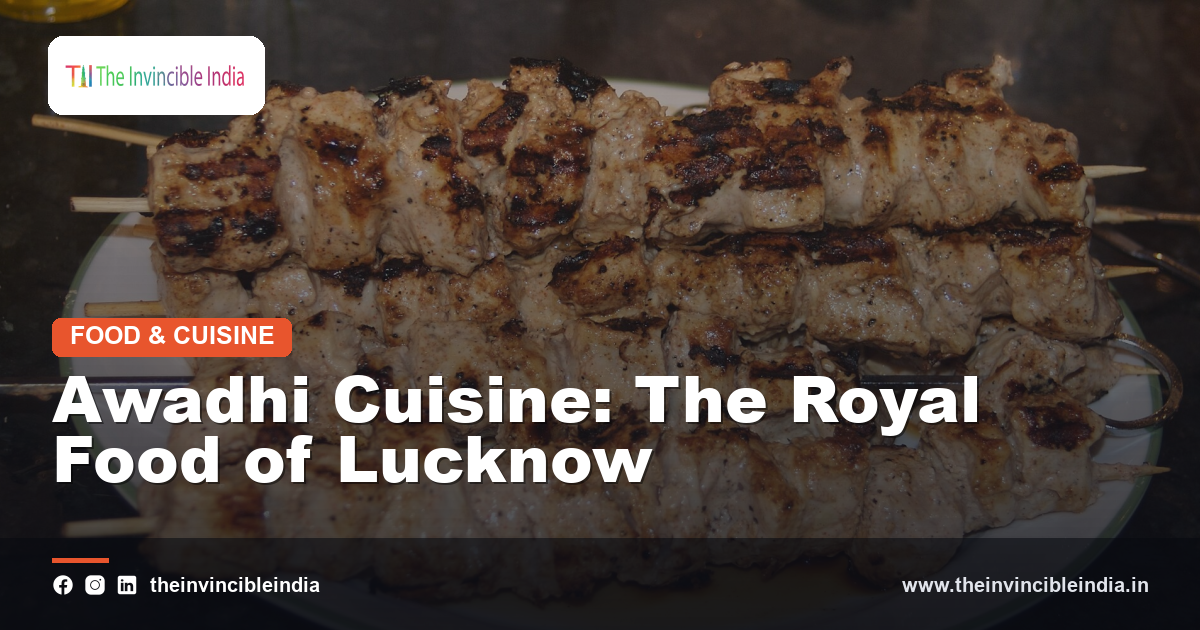
Awadhi cuisine is the royal and exquisitely refined food of Lucknow, a culinary tradition that grew up in the court of the Nawabs of Awadh and remains celebrated for its subtlety, its patience and its remarkable finesse. Known above all for its fragrant biryani, its melt-in-the-mouth kebabs and the slow, sealed art of dum pukht cooking, Awadhi cuisine favours gentle, layered flavour over overt heat, achieving richness through technique rather than sheer spice. Its refinement recalls the courtly elegance found in the Mughlai culinary tradition from which it partly descends. This guide explores Awadhi cuisine, its history, its famous dishes and its enduring place in India’s culinary heritage.
Quick Facts
| Detail | Information |
|---|---|
| Type | The royal cuisine of Lucknow and Awadh |
| Rooted in | The court kitchens of the Nawabs of Awadh |
| Famous for | Biryani, galouti kebab and dum pukht cooking |
| Signature technique | Slow, sealed dum pukht cooking |
| Character | Subtle, refined and delicately spiced |
| Legacy | A byword for courtly elegance in Indian food |
The Royal Food of Lucknow
Awadhi cuisine is the royal and exquisitely refined food that grew up in the court of the Nawabs of Awadh at Lucknow, prized for its subtlety, its patience and its remarkable finesse. The Nawabs cultivated a court culture of great refinement, and their kitchens developed a style of cooking that valued gentle, layered flavour, careful technique and elegant presentation above overt spice or heat, giving Awadhi food its distinctive courtly character. This refinement remains its defining quality. As the royal food of Lucknow, prized for its subtlety and finesse, Awadhi cuisine carries forward a proud tradition of courtly cooking and remains one of the most refined and admired cuisines of India.
The Legacy of the Nawabs
Awadhi cuisine owes its distinctive character to the patronage of the Nawabs of Awadh, rulers renowned for their love of art, poetry, music and above all fine dining, who encouraged their cooks to develop dishes of great subtlety and technical skill. This royal patronage created an environment in which culinary innovation flourished, and the legacy of the Nawabs lives on in the elaborate, patient cooking methods that continue to define Awadhi food. This legacy shaped the cuisine profoundly. This legacy of the Nawabs of Awadh, whose love of refinement encouraged their cooks toward great subtlety and skill, remains at the very heart of Awadhi cuisine and continues to inform its most celebrated dishes today.
The Fragrant Lucknawi Biryani
Among the most celebrated dishes of Awadhi cuisine is Lucknawi biryani, a fragrant rice dish distinguished by its gentler, more subtly layered flavour compared to the bolder biryanis of other regions. Prepared using the pakki method, in which meat is first cooked separately before being layered with rice and then finished with dum, this biryani achieves a delicate balance of fragrance and flavour that reflects the refined character of the wider Awadhi tradition. Its subtlety is its hallmark. This fragrant Lucknawi biryani, gentle and delicately layered rather than boldly spiced, exemplifies the refined character of Awadhi cuisine and stands as one of its most celebrated and widely admired dishes.
The Patient Art of Dum Pukht
Central to Awadhi cuisine is dum pukht, a slow-cooking technique in which food is sealed in a heavy pot, often with a dough seal, and cooked gently over very low heat for an extended period so that flavours meld and deepen entirely within the sealed vessel. This patient method, said to have been refined in the royal kitchens of Awadh, produces dishes of exceptional tenderness and depth, as no aroma or moisture is allowed to escape during the long, gentle cooking. Its patience is the secret to its success. This patient art of dum pukht, slow and sealed to preserve every aroma, is one of the most celebrated culinary techniques associated with Awadhi cuisine and a hallmark of its refined cooking style.
The Melting Galouti Kebab
Among the most famous dishes of Awadhi cuisine is the galouti kebab, a finely minced and delicately spiced meat kebab so tender that it is said to melt in the mouth, traditionally prepared to suit those unable to chew tougher cuts of meat. The careful pounding and marination of the meat, along with a blend of subtle spices, gives this kebab its remarkable softness and depth of flavour, making it one of the most celebrated kebabs in all of Indian cuisine. Its texture is unlike any other kebab. This melting galouti kebab, tender, delicately spiced and famed across India, stands as one of the crowning achievements of Awadhi cuisine and a testament to the refined skill of its cooks.
Kakori and Other Kebabs
Alongside the galouti kebab, Awadhi cuisine offers the kakori kebab, a skewered, minced meat preparation named after a town near Lucknow, known for its own delicate texture and subtle spicing, along with a range of other kebabs that showcase the region’s mastery of meat cookery. These kebabs, grilled or roasted with careful attention to technique, reflect the broader Awadhi tradition of achieving remarkable tenderness and flavour through skill rather than heavy spicing. Their preparation demands considerable expertise. This tradition of kakori and other refined kebabs, each showcasing the region’s mastery of subtle meat cookery, further demonstrates the technical sophistication that runs throughout the whole of Awadhi cuisine.
Korma and Rich Curries
Awadhi cuisine is celebrated for its rich, mildly spiced kormas, curries built on a base of yogurt, nuts and gentle spices that produce a smooth, velvety gravy without excessive heat. These kormas, simmered slowly to develop their flavour, exemplify the Awadhi preference for depth and richness achieved through technique and quality ingredients rather than sheer chilli heat, distinguishing the cuisine from many of its more fiery regional counterparts. Their smoothness is prized above all. This tradition of korma and rich, mildly spiced curries, achieving depth through technique rather than heat, is a defining feature of Awadhi cuisine and a fine expression of its overall commitment to subtlety and refinement.
Nihari and Slow-Cooked Stews
Among the hearty dishes of Awadhi cuisine is nihari, a slow-cooked meat stew traditionally simmered overnight until the meat becomes exceptionally tender, often enjoyed as a rich and warming breakfast dish. This long, gentle cooking, much like the dum pukht method applied elsewhere in the cuisine, allows the flavours of the spices to fully develop and the meat to reach a remarkable tenderness, making nihari a beloved specialty of Lucknow’s food culture. Its slow cooking demands considerable patience. This nihari, slow-cooked overnight to achieve exceptional tenderness, exemplifies the patient cooking philosophy that runs throughout Awadhi cuisine and remains a cherished dish among the specialities of Lucknow.
Awadhi Breads
Awadhi cuisine includes its own refined breads, among them sheermal, a slightly sweet, saffron-infused flatbread traditionally baked in a tandoor, enjoyed alongside the rich kebabs and curries of the cuisine. These breads, prepared with the same attention to subtlety found throughout Awadhi cooking, complement rather than compete with the delicate flavours of the meal’s other dishes, reflecting the cuisine’s overall commitment to balance. Their fragrance enhances the whole meal. These Awadhi breads, refined and subtly flavoured, are designed to complement rather than overwhelm the delicate dishes they accompany, reflecting the careful balance and restraint that characterises the wider Awadhi culinary tradition.
Awadhi Vegetarian Dishes
Though renowned chiefly for its meat dishes, Awadhi cuisine also possesses a refined vegetarian tradition, with vegetable kormas, subtly spiced dals and delicate paneer dishes prepared with the same technique and finesse found in its non-vegetarian cooking. These vegetarian dishes show that the Awadhi commitment to subtlety and refinement extends across the whole cuisine, not merely its most famous kebabs and biryanis. Their preparation shares the same careful philosophy. These Awadhi vegetarian dishes, prepared with the same technique and subtlety as the cuisine’s famous meat preparations, demonstrate that the refined philosophy of Awadhi cooking extends fully across the entire range of the cuisine.
The Subtlety of Spice
A defining philosophy of Awadhi cuisine is its preference for subtlety over overt heat, achieving richness and depth of flavour through the careful layering of gentle spices, slow cooking and quality ingredients rather than a heavy hand with chilli. This restrained approach to spicing, refined in the courtly kitchens of the Nawabs, distinguishes Awadhi food from many bolder regional cuisines and reflects the aesthetic sensibility of the court that shaped it. This subtlety is the cuisine’s guiding principle. This defining philosophy of subtlety over overt heat, achieved through careful layering and patient technique rather than heavy spicing, remains the guiding principle of Awadhi cuisine and the quality for which it is most admired.
Awadhi Desserts
Awadhi cuisine closes its meals with refined desserts, among them kulfi, a dense, slow-frozen milk dessert flavoured with cardamom, saffron or pistachio, and various sweetmeats prepared with the same attention to subtlety found throughout the cuisine. These desserts, rich yet delicately flavoured, provide a fitting conclusion to a meal built on gentleness and refinement rather than boldness. Their preparation reflects the cuisine’s overall aesthetic. These Awadhi desserts, rich yet delicately flavoured, bring the meal to a fitting close and reflect the same commitment to subtlety and refinement that defines the whole of Awadhi cuisine, from its kebabs to its biryani.
The Etiquette of Awadhi Dining
Dining in the Awadhi tradition was historically accompanied by a refined etiquette, reflecting the courtly culture of Lucknow, where hospitality, gracious manners and careful presentation were considered as important as the food itself. This etiquette, sometimes described using the Urdu term nazakat, or delicacy, extended to the pace and manner of eating, and it reflects the broader Lucknawi cultural value placed on refinement in every aspect of life. This etiquette shaped the wider dining experience. This etiquette of Awadhi dining, valuing gracious hospitality and careful presentation as much as the food itself, reflects the broader cultural refinement of Lucknow and remains an important part of understanding the full character of Awadhi cuisine.
Street Food of Lucknow
Beyond its royal kitchens, Lucknow has developed its own vibrant street food culture, with small eateries and stalls serving kebabs, chaat and other snacks that carry forward the city’s culinary reputation in a more everyday setting. These street food establishments, some operating for generations, allow ordinary residents and visitors alike to sample the flavours of Awadhi-influenced cooking without the formality of a royal feast. This accessible tradition broadens the cuisine’s reach. This street food culture of Lucknow, offering kebabs and other snacks in a more everyday setting, has helped keep the flavours and reputation of Awadhi-influenced cooking alive and accessible to people well beyond the old royal court.
Awadhi Cuisine Today
Today Awadhi cuisine is celebrated across India and beyond, its biryani and kebabs served in restaurants far from Lucknow while the city itself continues to be regarded as a pilgrimage destination for lovers of refined Indian food. The patient art of dum pukht, the melting galouti kebab and the fragrant Lucknawi biryani continue to be prepared with the same care that once graced the tables of the Nawabs. Its reputation for refinement endures. As the royal food of Lucknow, subtle, patient and exquisitely refined, Awadhi cuisine remains one of the most admired and distinctive culinary traditions of India.
Sources & Further Reading
- Ministry of Tourism, Government of India, on the cuisines of India (tourism.gov.in).
- Culinary references on the food traditions of Lucknow and Awadh.
Frequently Asked Questions
What is Awadhi cuisine known for?
Awadhi cuisine is known for its subtlety and refinement, developed in the royal kitchens of the Nawabs of Awadh at Lucknow. It is famous for its fragrant biryani, its melt-in-the-mouth galouti kebab, and the patient art of dum pukht slow cooking.
What is dum pukht cooking?
Dum pukht is a slow-cooking technique in which food is sealed in a heavy pot, often with a dough seal, and cooked gently over low heat for an extended period. This method allows flavours to meld and deepen fully within the sealed vessel, producing exceptional tenderness.
What is a galouti kebab?
A galouti kebab is a finely minced and delicately spiced meat kebab so tender that it is said to melt in the mouth. It was traditionally prepared to suit those unable to chew tougher cuts of meat and is one of the most celebrated kebabs in Indian cuisine.
How is Awadhi biryani different from other biryanis?
Awadhi or Lucknawi biryani is generally gentler and more subtly layered in flavour than the bolder biryanis of some other regions. It is prepared using the pakki method, in which meat is cooked separately before being layered with rice and finished with dum.
Why is Awadhi cuisine considered refined?
Awadhi cuisine is considered refined because of its courtly origins under the Nawabs of Awadh, who valued subtlety, technique and elegant presentation. Its dishes favour gentle, layered flavour and patient cooking methods over overt heat or heavy spicing.


