

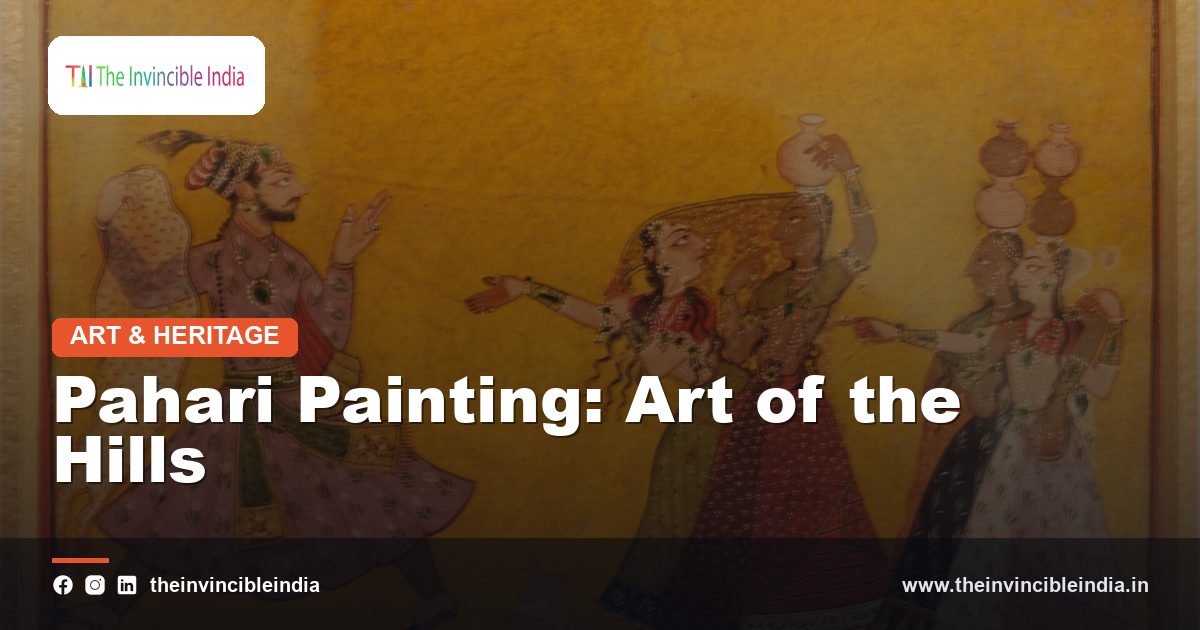
Pahari painting is one of the most lyrical and delicate schools of Indian miniature painting, developed in the hill kingdoms of northern India and celebrated for its grace, tenderness and poetic beauty. Flourishing in small courts nestled among the hills, the tradition produced paintings of remarkable refinement, especially in its depiction of devotion and romance, standing alongside other great schools of Indian miniature painting as one of its most cherished branches. Centres such as Kangra and Basohli each contributed their own distinctive character to the wider tradition. This guide explores the origins, centres, themes and enduring beauty of Pahari painting, an art of the hills treasured among India’s artistic heritage.
Quick Facts
| Detail | Information |
|---|---|
| Type | A school of Indian miniature painting from the hill regions |
| Region | The hill kingdoms of northern India |
| Known for | Delicacy, lyricism and poetic beauty |
| Major centres | Kangra, Basohli, Guler and other hill states |
| Favourite theme | The love of Radha and Krishna |
| Legacy | Among the most lyrical schools of Indian painting |
Art of the Hills
Pahari painting is one of the most lyrical and delicate schools of Indian miniature painting, developed in the hill kingdoms of northern India and celebrated for its grace, tenderness and poetic beauty. Flourishing over the centuries in small courts nestled among the hills, the tradition produced paintings of remarkable refinement, combining fine technique with deep emotional feeling, particularly in its depiction of devotion and romance. Its name reflects its origin in the hill, or “pahari”, regions. As an art of the hills, marked by its unique delicacy and lyrical grace, Pahari painting occupies a cherished place among the great schools of Indian miniature painting and is admired for the tenderness and beauty of its finest works.
Origins in the Hill Kingdoms
Pahari painting emerged in the small hill kingdoms of northern India, where local rulers, following the example of larger courts elsewhere in the country, extended patronage to skilled painters. Over time, these hill courts developed their own distinctive schools of painting, drawing on wider traditions of Indian miniature art while shaping a style suited to their own taste and setting. The relatively small and intimate scale of these courts allowed for close artistic development. These origins in the hill kingdoms, where small courts nurtured skilled painters over generations, gave rise to a distinctive artistic tradition and set the stage for the flowering of Pahari painting into one of the most admired schools of Indian art.
Character and Style
Pahari painting is distinguished by a character of great delicacy, softness and lyrical grace, setting it apart from other schools of Indian miniature painting. The style favours gentle colours, flowing lines and tender, expressive figures, often set against landscapes rendered with a soft and poetic sensibility. This gentle and lyrical quality gives Pahari paintings a distinctive emotional warmth. This distinctive character and style of Pahari painting, marked by softness, grace and lyrical feeling, is what most clearly identifies the school among the many traditions of Indian miniature art and accounts for much of its enduring appeal to admirers of the form.
Kangra Painting
Among the most celebrated centres of Pahari painting is Kangra, whose name has become closely associated with some of the finest and most refined works of the tradition. Kangra painting is renowned for its exceptional delicacy, its graceful figures, and its tender depiction of romantic and devotional themes, rendered with a soft palette and flowing, naturalistic lines. The Kangra style represents one of the high points of Pahari art. This Kangra style of Pahari painting, celebrated for its exceptional delicacy and grace, is often regarded as among the finest expressions of the tradition and has come to represent, for many admirers, the very essence of Pahari painting at its most refined.
Basohli Painting
Another important centre of Pahari painting is Basohli, whose style stands in contrast to the softer Kangra manner through its bold colours and striking, vigorous energy. Basohli painting is known for its intense palette, strong composition and a certain rustic vigour, often depicting scenes with dramatic emotional force rather than the gentler lyricism found elsewhere in Pahari art. This bold style represents an earlier and distinctive phase of the tradition. This Basohli style of Pahari painting, marked by bold colour and vigorous energy, adds an important and distinctive strand to the tradition, showing the range of expression that the hill schools of painting were capable of achieving.
Guler and Other Centres
Beyond Kangra and Basohli, Pahari painting flourished in a number of other hill centres, including Guler, each contributing its own refinements and character to the wider tradition. Guler in particular is associated with a transitional and highly accomplished style that helped shape the later, more delicate manner associated with Kangra, while other small hill courts produced their own distinctive variations. This network of centres enriched the Pahari tradition as a whole. These further centres of Pahari painting, including Guler and other hill courts, enrich the tradition with their own distinctive contributions and demonstrate how widely the art was cultivated across the small kingdoms of the Himalayan foothills.
Themes of Devotion and Love
The dominant themes of Pahari painting are devotion and romantic love, expressed with a tenderness and emotional depth that is among the hallmarks of the school. Paintings depict devotional subjects and scenes of romance drawn from cherished poetry and legend, rendered with a gentle sensitivity that captures the emotional nuance of longing, union and devotion. This focus on feeling distinguishes Pahari painting from more formal or historical styles. This deep engagement with devotion and love as central themes of Pahari painting reflects the poetic and spiritual sensibility of the hill courts and gives the tradition its distinctive emotional resonance and lasting appeal.
The Love of Radha and Krishna
Among the most beloved subjects of Pahari painting is the love of Radha and Krishna, portrayed with exceptional tenderness and lyrical beauty across countless works of the tradition. Artists depicted the various moods and episodes of this cherished devotional romance, from playful encounter to longing separation and joyful reunion, rendering each scene with delicate feeling and poetic sensitivity. This theme allowed painters to explore the full range of human and divine emotion. This portrayal of the love of Radha and Krishna, rendered with such tenderness and poetic feeling, is among the most cherished achievements of Pahari painting and a defining expression of its lyrical and devotional character.
Depictions of Nature
Pahari painting is notable for its sensitive and often lyrical depiction of nature, with landscapes, trees, rivers and skies rendered as an integral part of the composition rather than mere background. The hill setting of the tradition, with its rivers, forests and changing seasons, is reflected in a tender feeling for the natural world that pervades many of the finest works. This attentiveness to nature adds to the poetic quality of the paintings. This lyrical depiction of nature in Pahari painting, integrating landscape and season into the emotional fabric of the composition, is one of the most distinctive and admired features of the tradition and reflects the close relationship between the hill courts and their surrounding landscape.
Colour and Composition
The colour and composition of Pahari painting contribute greatly to its distinctive lyrical character, with soft, harmonious palettes and carefully balanced arrangements of figures and setting. Painters achieved a sense of gentle rhythm and flow within their compositions, using colour to evoke mood and atmosphere as much as to depict form. This careful handling of colour and composition sets a refined visual tone. This distinctive handling of colour and composition in Pahari painting, favouring harmony and gentle rhythm over stark contrast, is central to the tradition’s lyrical beauty and reflects the refined sensibility that its artists brought to even the smallest details of their work.
Technique and Materials
Like other schools of Indian miniature painting, Pahari painting was created using fine brushes, natural pigments and paper, with artists building up their compositions through careful, patient technique. The finest details, from delicate facial features to intricate textile patterns, were rendered with brushes of only a few hairs, requiring great steadiness and skill. This painstaking technique is common to the miniature tradition as a whole. This careful technique and use of fine natural materials, shared with other schools of Indian miniature painting, underlies the exquisite detail found in Pahari works and reflects the broader craftsmanship that defines the wider tradition of Indian miniature art.
Court Patronage in the Hills
Pahari painting flourished largely through the patronage of the small hill courts, whose rulers supported skilled painters and commissioned works for their palaces and personal enjoyment. This patronage, though smaller in scale than that of larger empires, was intimate and sustained, allowing painters to develop close relationships with their patrons and to refine their craft over long careers. Such patronage was essential to the tradition’s flowering. This court patronage in the hills, sustained by rulers who valued and supported skilled painters, was crucial to the flourishing of Pahari painting and helped the small hill kingdoms become important centres of Indian artistic achievement.
Relationship to Other Schools
Pahari painting developed in relationship to other schools of Indian miniature painting, particularly the Mughal and Rajput traditions, absorbing influences while developing its own distinctive character. Elements of Mughal technique and Rajput thematic concerns can be traced in Pahari work, yet the hill painters transformed these influences into something unmistakably their own, marked by a gentleness and lyricism not found elsewhere. This dialogue with other schools enriched Pahari art. This relationship of Pahari painting to the Mughal and Rajput schools, absorbing influence while forging its own distinctive identity, situates the tradition within the wider story of Indian miniature painting while highlighting its unique contribution to that story.
A Treasured Legacy
The finest works of Pahari painting are treasured today as masterpieces of Indian art, preserved in museums and collections in India and abroad, admired for their delicacy, grace and emotional depth. Scholars and art lovers regard the tradition as one of the summits of Indian miniature painting, and its influence can be traced in later Indian art. This treasured legacy reflects the lasting achievement of the hill painters. This legacy of Pahari painting, preserved and celebrated as among the finest achievements of Indian miniature art, ensures that the tenderness and beauty of the hill schools continue to be appreciated by new generations of viewers around the world.
Pahari Painting Today
Today Pahari painting is remembered and celebrated as one of the most lyrical and beautiful schools of Indian miniature art, its finest works displayed in major museums and studied by scholars of Indian painting. The delicate style associated with Kangra, the vigorous energy of Basohli and the contributions of Guler and other centres together represent a rich and varied artistic achievement. Contemporary artists in the hill regions continue to draw inspiration from this heritage. As an art of the hills marked by tenderness, grace and poetic feeling, Pahari painting endures as one of the great treasures of India’s artistic tradition.
Sources & Further Reading
- Ministry of Culture, Government of India, on the miniature painting traditions of India (indiaculture.gov.in).
- National Museum, on the schools of Indian miniature painting.
Frequently Asked Questions
What is Pahari painting?
Pahari painting is a school of Indian miniature painting that developed in the hill kingdoms of northern India. It is celebrated for its delicacy, lyrical grace and tender depiction of devotional and romantic themes.
What are the main centres of Pahari painting?
The main centres of Pahari painting include Kangra, known for its exceptional delicacy, and Basohli, known for its bold colour and vigorous energy, along with Guler and other hill courts.
What themes does Pahari painting depict?
Pahari painting mainly depicts themes of devotion and romantic love, especially the beloved story of Radha and Krishna, along with sensitive depictions of the hill landscape and nature.
How does Kangra painting differ from Basohli painting?
Kangra painting is known for its exceptional delicacy, softness and graceful lines, while Basohli painting is known for its bold colours and vigorous, dramatic energy, representing two distinct strands within the wider Pahari tradition.
How is Pahari painting related to other Indian miniature schools?
Pahari painting developed in relationship to the Mughal and Rajput schools of Indian miniature painting, absorbing some influences while creating its own distinctive style marked by gentleness and lyrical feeling.


