

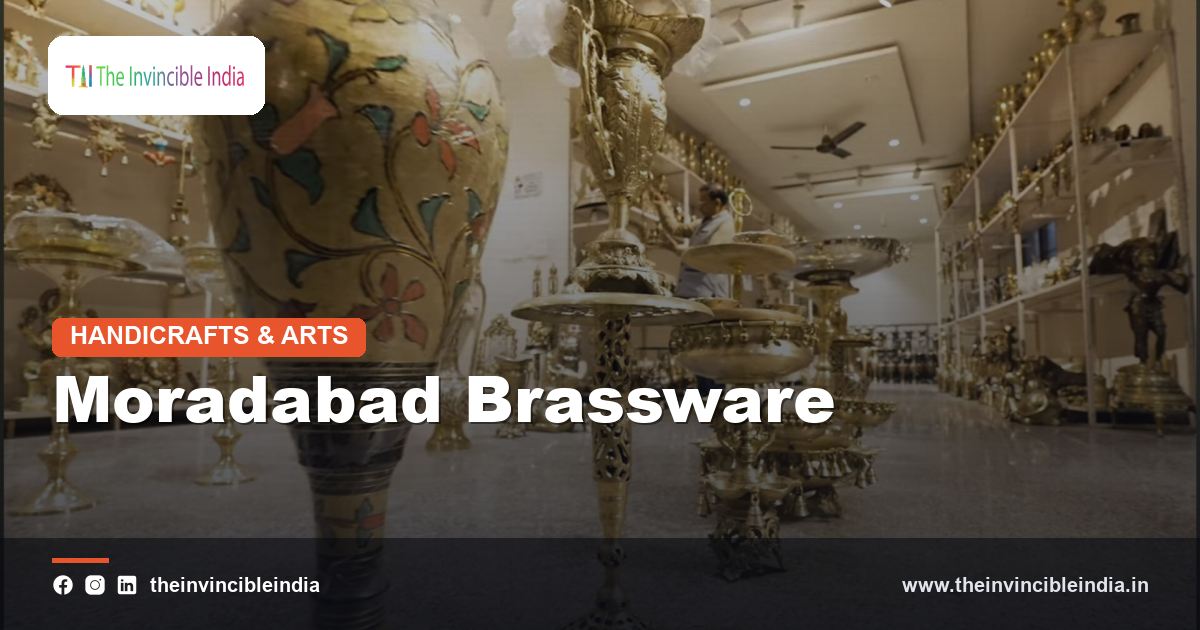
Moradabad, a city in western Uttar Pradesh known as India’s Brass City, is home to a vast brass manufacturing industry that produces everything from household utensils to elaborately engraved decorative showpieces. Generations of skilled karigars have built the city’s reputation for fine engraving, casting and finishing, supplying both domestic buyers and international export markets. Much like the metal traditions behind bell metal craft, Moradabad’s brass industry blends functional utility with decorative artistry. This guide explores its history, materials, techniques and economic significance.
Quick Facts
| Detail | Information |
|---|---|
| Craft Type | Metal engraving and casting |
| Region | Moradabad, Uttar Pradesh |
| Base Material | Brass (copper-zinc alloy) |
| Known As | Brass City of India |
| Finishing Techniques | Engraving, enamel, lacquer |
| Primary Market | Domestic and export |
Origins and Historical Roots
Brassware production in Moradabad, a city in western Uttar Pradesh, is believed to date back several centuries, developing as a specialised craft within the region’s broader metalworking traditions. Historical accounts suggest that skilled metalworkers were encouraged to settle in the area, contributing to the growth of a dedicated brass industry that gradually expanded from serving local and regional needs to supplying markets across India and abroad.
Over time, Moradabad’s artisans developed distinctive engraving and finishing techniques that set the city’s brassware apart from other metalworking centres in India. This long history of specialisation helped establish Moradabad’s reputation as a hub for fine brass craftsmanship, a reputation that has persisted through subsequent generations of artisans and manufacturers based in the city.
Moradabad: The Brass City
Moradabad is widely known as the Brass City of India, a title reflecting the central role that brass manufacturing and export play in the local economy and identity. The city hosts a large concentration of brassware workshops, factories and export houses, making it one of the most significant centres for metal handicraft production in the country.
This concentration of expertise and infrastructure has allowed Moradabad to serve as a hub not only for traditional engraved brassware but also for a wide range of metal products adapted to changing market demands. Generations of families remain connected to the trade in various capacities, from artisans and engravers to traders and exporters.
What Is Moradabad Brassware
Moradabad brassware refers to a broad category of metal products, ranging from decorative items and religious objects to household goods, characterised by fine engraving, embossing and various decorative finishing techniques applied to brass. The craft typically involves shaping brass sheets or cast forms into the desired object, followed by detailed surface decoration achieved through hand or machine engraving.
This combination of metal forming and surface embellishment allows Moradabad’s artisans to produce items ranging from simple, functional brass utensils to highly decorative showpieces intended for both domestic use and export, reflecting the city’s position as a comprehensive centre for brass manufacturing.
Materials and Alloys
Brass, an alloy of copper and zinc, is the primary material used in Moradabad’s metal industry, valued for its workability, attractive golden colour and relative affordability compared with precious metals. The specific ratio of copper to zinc can be adjusted to achieve different properties, affecting the malleability, colour and durability of the finished brass product.
In addition to brass, some Moradabad workshops also work with other metals such as aluminium, iron and white metal, particularly for products where a different weight, cost or finish is desired. The choice of alloy is an important early consideration affecting both ease of shaping and the quality of the finished item.
The Engraving and Etching Process
Engraving is one of the defining decorative techniques associated with Moradabad brassware, involving the careful cutting of fine lines and patterns into the metal surface using specialised hand tools or, increasingly, mechanised engraving equipment. Skilled engravers work from a design outline, using controlled hand pressure to cut consistent, detailed patterns into the brass without distorting the underlying form.
Etching, a related technique using chemical processes to create surface patterns, is also used in some workshops. The quality of engraving is a key factor distinguishing premium Moradabad brassware from more basic, mass-produced items.
Casting and Metal Forming Techniques
Before engraving or other decoration can take place, brass must first be formed into the desired shape through casting, sheet metal forming, or a combination of both, depending on the type of object being produced. Casting involves pouring molten brass into a mould to create three-dimensional forms such as figurines, vessels or decorative bases, while sheet metal techniques shape flatter items such as trays and plates.
Skilled metalworkers must control temperature, mould quality and cooling processes carefully during casting to avoid defects, since this initial metal forming stage lays the foundation for all subsequent decoration.
Finishing Techniques
Once an object has been formed and engraved, a range of finishing techniques may be applied to enhance its appearance and durability, including polishing, lacquering, enamelling and various forms of metal plating. Lacquer coatings help protect brass from tarnishing while adding a smooth, even shine, extending the practical life of decorative and functional items alike.
Some products incorporate coloured enamel work within engraved sections, while electroplating with other metals is also used to achieve a different visual effect. These finishing choices allow manufacturers to offer a wide range of styles from the same basic forming and engraving processes.
Common Motifs and Designs
Moradabad brassware features a wide variety of decorative motifs, including floral patterns, geometric borders, religious symbols and scenes drawn from Indian mythology and daily life, reflecting the broad range of products and markets the industry serves. Religious items such as idols, lamps and ritual vessels often feature traditional iconography appropriate to their devotional use.
Export-oriented products sometimes incorporate design elements requested by international buyers, blending traditional Indian motifs with styles suited to different regional markets abroad, helping the industry remain adaptable to shifting demand.
Product Range: Household and Decorative Items
The range of products manufactured in Moradabad spans functional household items such as utensils, trays, planters and lamps, as well as purely decorative pieces including figurines, vases and ornamental showpieces. Religious and ceremonial items, including idols, incense holders and ritual vessels, also form a significant part of the city’s output.
Export-focused production has further expanded the product range to include items such as garden ornaments and decorative home accessories, helping Moradabad’s brass industry serve multiple market segments simultaneously.
Moradabad's Export Industry
Moradabad has developed into one of India’s most significant centres for handicraft exports, with brass and related metal products shipped to markets across the world. The city’s export infrastructure includes specialised trading houses, quality inspection facilities and logistics networks developed specifically to support the international brassware trade.
This export orientation has encouraged manufacturers to adapt designs, finishes and packaging to suit overseas preferences, while still drawing on the city’s traditional engraving and metalworking expertise, making it an important contributor to India’s broader handicraft export sector.
The Artisan and Karigar Community
Moradabad’s brass industry depends on a large community of skilled artisans, commonly referred to as karigars, who specialise in various stages of production including casting, engraving, polishing and finishing. Many karigars work within small workshops or as home-based specialists supplying larger manufacturing units, reflecting a decentralised production model.
This division of specialised labour allows individual artisans to develop deep expertise in specific techniques, contributing to the overall quality of finished products and making the karigar community central to the city’s economic identity.
Workshop and Manufacturing Structure
Brass production in Moradabad is organised through a mix of small artisan workshops, mid-sized manufacturing units and larger factories, often linked together through a network of subcontracting relationships. A single finished product may pass through several different workshops during its production, with casting, engraving, finishing and packaging sometimes handled by separate specialised units.
This layered manufacturing structure allows the industry to combine the flexibility and skill of small workshops with the scale needed to fulfil large export orders, though coordinating quality across this network remains an ongoing operational task.
Training and Skill Transmission
Skills in brass casting, engraving and finishing are typically passed down within artisan families or learned through informal apprenticeship in local workshops, with young workers gradually progressing from simple tasks to more specialised, skilled roles over time. In addition to this traditional transmission, some vocational training centres and industry associations in Moradabad have introduced programmes aimed at formalising skill development.
These training efforts aim to maintain a steady supply of skilled engravers and metalworkers capable of meeting both traditional craft standards and evolving export requirements.
Economic Significance
The brass industry is a major contributor to Moradabad’s local economy, providing employment across a wide range of roles from artisans and factory workers to traders, exporters and support service providers. The city’s status as a leading centre for handicraft exports has also made it an important contributor to India’s broader trade in metal handicrafts.
The industry’s scale supports numerous ancillary businesses, including raw material suppliers, packaging companies and logistics providers, extending its economic impact well beyond brassware manufacturing itself.
Contemporary Challenges
Moradabad’s brass industry faces several contemporary challenges, including fluctuating international demand, competition from lower-cost manufacturing in other countries, and rising costs of raw materials such as copper and zinc. Environmental and regulatory considerations related to metal processing and finishing techniques, including electroplating, have also become increasingly important.
Ensuring fair wages and working conditions for the large workforce of artisans and factory workers involved in brass production remains an ongoing concern for industry stakeholders.
Brassware in Indian Households
Brass has long held a familiar place in Indian homes, valued for its durability, warm golden appearance and association with tradition, and Moradabad’s output has done much to keep this material within reach of ordinary households. Everyday items such as serving trays, water vessels, planters and decorative lamps produced in the city continue to find buyers who appreciate both the practicality and the visual warmth that brass brings to interior spaces.
Many households also maintain brass items specifically for festivals, religious observances or gifting occasions, reflecting a continued cultural attachment to the material that persists even as everyday cookware has shifted toward lighter, more convenient alternatives. Moradabad’s manufacturers have responded to this pattern by producing both simple, functional pieces for daily use and more elaborate, finely engraved items intended for display or special occasions. This dual role, spanning ordinary utility and cherished decoration, helps explain why brassware from the city remains a familiar presence across a wide range of Indian homes.
Moradabad Brassware Today
Moradabad remains one of India’s most significant centres for brass and metal handicraft production, continuing to supply both domestic and international markets with a wide range of engraved, cast and finished brass products. The city’s long-established reputation as the Brass City continues to attract buyers, traders and designers interested in traditional Indian metal craftsmanship.
As global interest in handcrafted metal products persists, Moradabad’s combination of skilled labour, established infrastructure and export experience positions its brass industry to remain an important part of India’s handicraft economy for years to come.
Sources & Further Reading
- Export Promotion Council for Handicrafts (epch.in).
- Ministry of Micro, Small and Medium Enterprises, Government of India (msme.gov.in).
Frequently Asked Questions
What is Moradabad known for?
Moradabad, in Uttar Pradesh, is known as the Brass City of India for its long-established brass manufacturing and export industry.
What techniques are used to decorate Moradabad brassware?
Engraving, etching, enamelling, lacquering and metal plating are commonly used to decorate cast or sheet-formed brass items.
What products are made in Moradabad's brass industry?
The industry produces household items, religious objects, decorative showpieces and export-oriented items such as garden ornaments and home accessories.
Is Moradabad brassware mainly for domestic use or export?
Moradabad supplies both domestic markets and a significant international export trade in brass and metal handicrafts.
Who are karigars in the context of Moradabad brassware?
Karigars are the skilled artisans who specialise in stages of brass production such as casting, engraving, polishing and finishing.


