

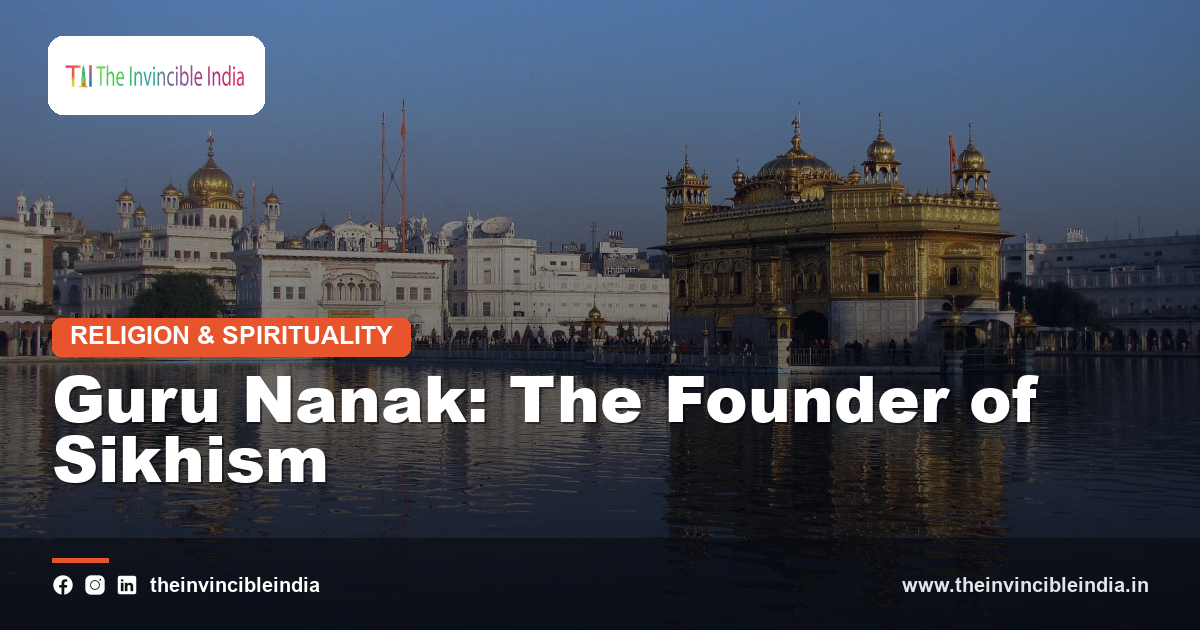
Guru Nanak stands as one of the most influential religious figures to emerge from the Indian subcontinent, revered as the founder of what would become Sikhism, a distinct faith built on the worship of one formless God and a commitment to equality, honest living, and selfless service. Born into the Punjab region, he traveled widely over the course of his life, sharing teachings that challenged rigid ritualism and social division while emphasizing direct, personal connection with the divine. His hymns and teachings laid the theological and ethical foundation for the community of followers that grew around him, a foundation later generations of Sikh Gurus would continue to build upon. This guide surveys his life, his core teachings, and his enduring legacy within Sikh tradition and beyond.
Quick Facts
| Detail | Information |
|---|---|
| Role | Founder of Sikhism, First Guru |
| Era | Fifteenth to sixteenth century |
| Birthplace Region | Punjab |
| Core Teaching | One God, equality, honest living |
| Sacred Formula | Ik Onkar (One God) |
| Legacy | Foundation of the Sikh faith and community |
Early Life and Background
Guru Nanak was born into a family in the Punjab region, an area long shaped by the meeting of diverse religious and cultural currents across northern India. Raised within a household that valued learning, he is remembered by tradition as showing an early inclination toward spiritual reflection and questioning of conventional religious practice from a young age. His family background provided him with a degree of education and social standing, though accounts describe him as increasingly drawn toward contemplative and spiritual pursuits rather than a conventional worldly career. This early period of his life, though described with reverence rather than precise historical detail in traditional accounts, set the stage for the profound spiritual transformation that tradition associates with his young adulthood. His formative years are remembered as the quiet beginning of what would become an extraordinary spiritual and social mission.
Spiritual Awakening
According to Sikh tradition, Guru Nanak underwent a profound spiritual experience that marked a decisive turning point in his life, after which he emerged with a clear and unified message about the nature of God and the proper way to live a righteous life. This experience is remembered as the moment from which his mission as a teacher and spiritual guide truly began, shaping the rest of his life’s work. Following this awakening, he adopted a life increasingly devoted to teaching, travel, and the composition of devotional hymns expressing his spiritual insights. Traditional accounts describe this period with reverence, emphasizing its transformative significance for his subsequent teachings rather than providing precise historical detail. This awakening is regarded within Sikh tradition as the foundational moment from which the entire Sikh faith would eventually grow.
Core Teaching: One God
Central to Guru Nanak’s teaching is the affirmation of a single, formless, and eternal God, beyond specific form or image, who pervades and sustains the entire universe. This foundational belief is expressed through a sacred formula affirming the oneness of God, a phrase that remains central to Sikh worship and identity to this day. Guru Nanak taught that this God could be directly experienced through sincere meditation, honest living, and remembrance, without the need for elaborate ritual, pilgrimage to specific sites, or reliance on intermediaries. This teaching represented a distinctive theological position, emphasizing personal, unmediated connection with the divine over external religious formality. His insistence on divine oneness and formlessness became the bedrock of Sikh theology, shaping virtually every subsequent development within the tradition he founded.
Teachings on Equality and Service
Guru Nanak taught firmly that all human beings, regardless of caste, social status, gender, or religious background, are equal in the eyes of God, a message that directly challenged the rigid social hierarchies prevalent in the society of his time. This commitment to equality found practical expression in the communal institutions he encouraged, particularly shared meals open to people of all backgrounds, a practice that would become a defining feature of Sikh community life. Alongside equality, he emphasized selfless service to others as an essential spiritual discipline, teaching that service to fellow human beings was itself a form of devotion to God. These twin principles of equality and service became foundational values within the community that formed around his teachings. Their continued centrality within Sikh practice today reflects the lasting influence of Guru Nanak’s social vision.
Rejection of Ritualism and Caste
Guru Nanak consistently taught against empty ritual observance and rigid caste distinctions, arguing that outward religious performance held little value without genuine inner devotion and ethical conduct. He criticized practices he viewed as excessively formalistic or exclusionary, encouraging instead a direct, sincere relationship with God grounded in truthful living and compassion toward others. His teachings challenged the notion that spiritual worth was determined by birth or social position, insisting instead that devotion and righteous conduct were available to all people equally. This critical stance toward ritualism and social hierarchy distinguished his message within the broader religious landscape of his time and place. It remains one of the most consistently emphasized themes across his recorded hymns and teachings, reflecting a core and enduring aspect of his spiritual outlook.
Travels and Missionary Journeys
Tradition holds that Guru Nanak undertook a series of extensive journeys across a wide geographic area, traveling to various regions to share his teachings, engage in dialogue with religious scholars and leaders of different faiths, and visit sites of established religious significance. These travels are remembered as demonstrating his commitment to spreading his message widely while also reflecting a spirit of respectful engagement with diverse religious traditions he encountered along the way. Accounts of these journeys, preserved and cherished within Sikh tradition, emphasize his consistent message of devotion to one God, equality, and honest living wherever he traveled. Upon completing his travels, he eventually settled and established a community dedicated to living out his teachings in daily practice. These extensive journeys are remembered as a formative and defining chapter of his life’s mission.
Founding of the Sikh Community
Following his travels, Guru Nanak established a settled community of followers dedicated to practicing his teachings in daily life, forming the earliest foundation of what would grow into the Sikh faith and community. This community emphasized collective worship, honest labor, and communal service as central elements of religious practice, translating his teachings into a structured way of life. Followers gathered to hear his teachings, participate in devotional singing, and share communal meals that embodied his message of equality. This early community structure established patterns of worship and communal organization that later Sikh Gurus would continue to develop and formalize. The founding of this community represents the crucial transition from Guru Nanak’s individual teaching mission to an organized and enduring religious tradition.
Kartarpur and Community Living
In the later part of his life, Guru Nanak settled in a community he established along the banks of a river in the Punjab region, where he lived among his followers and demonstrated his teachings through everyday communal life rather than solitary asceticism. This settlement modeled a way of life combining honest work, shared worship, and communal meals, reflecting his conviction that spiritual devotion should be integrated with practical, everyday responsibility rather than withdrawal from worldly life. This period of settled community living is remembered as an important demonstration of how his teachings could be lived out collectively, not merely preached individually. The model of communal life established here influenced the later development of Sikh institutions and gathering places. This chapter of his life underscored his consistent emphasis on practical, engaged spirituality over renunciation.
Guru Nanak's Hymns and Sacred Compositions
Guru Nanak composed numerous devotional hymns expressing his theological insights, ethical teachings, and personal spiritual experience, many of which were later compiled alongside compositions of subsequent Sikh Gurus into the Sikh scripture. These hymns, composed in poetic form suited to musical performance, address themes including the nature of God, the equality of all people, the value of honest living, and the importance of remembrance and meditation. Their poetic and musical qualities made them accessible and memorable to ordinary followers, allowing his teachings to spread through singing and recitation as much as through direct instruction. These compositions remain central to Sikh worship today, recited and sung in gatherings and personal devotion alike. His hymns represent the most direct and enduring textual expression of his spiritual teaching.
The Guru Lineage Begins
Before his passing, Guru Nanak designated a successor to continue his spiritual leadership and teaching mission, establishing a pattern of guided succession that would continue through a line of Sikh Gurus over subsequent generations. This act of appointing a successor reflected his intention that his teachings and community continue to develop under continued spiritual guidance rather than dissolve after his own lifetime. Each successive Guru built upon the foundation he established, gradually developing the institutions, scripture, and identity of the Sikh faith over time. This succession model gave early Sikhism a structured continuity of leadership during its formative period. The lineage that began with Guru Nanak’s foundational teachings ultimately shaped Sikhism into the distinct and enduring faith recognized today.
Guru Nanak in Sikh Scripture and Worship
Guru Nanak’s compositions hold a place of foundational importance within Sikh scripture, recited daily in Sikh worship and regarded as carrying profound spiritual authority for the community. His hymns are studied not only for their theological content but also for their poetic and musical structure, which continues to guide how Sikh devotional music is composed and performed. Sikh worship services regularly include recitation and singing of his compositions alongside those of later Gurus, reflecting the continuity of teaching across the Guru lineage. His words are approached with deep reverence, understood by Sikhs as a direct expression of divine truth communicated through his life and teaching. This central scriptural role ensures that Guru Nanak’s voice remains a living and active presence within contemporary Sikh worship.
Guru Nanak's Symbolism and Iconography
Guru Nanak is commonly depicted in traditional art with a serene, contemplative expression, often seated in meditation and accompanied by companions associated with his travels and teaching mission, imagery that emphasizes his role as a wandering spiritual teacher. These depictions, found in paintings, manuscripts, and devotional prints across Sikh tradition, generally avoid excessive ornamentation, reflecting the tradition’s broader emphasis on humility and inner spirituality over external display. His image is treated with great reverence within Sikh homes, institutions, and gathering places, serving as a visual reminder of his teachings and example. Artistic representations of his life and travels remain popular across Sikh communities, both in India and abroad. This visual tradition helps sustain collective memory of his life and mission across generations of followers.
Legacy in Sikh Institutions
Guru Nanak’s teachings gave rise to institutions that remain central to Sikh religious and community life, most notably the practice of communal free meals served in Sikh houses of worship, open to people of all backgrounds without distinction. This institution embodies his foundational teachings on equality and selfless service in a direct, tangible form that continues to be practiced daily in Sikh gathering places around the world. His emphasis on honest labor and communal responsibility also shaped broader Sikh institutional values concerning charitable service and community welfare. These institutional legacies demonstrate how his personal teachings were translated into lasting communal practices that extend well beyond individual devotion alone. Their continued vitality today reflects the practical, socially engaged character of the tradition he founded.
Guru Nanak's Influence Beyond Sikhism
Guru Nanak’s message of one God, equality, and respectful engagement across religious boundaries earned him respect and admiration extending well beyond the community that would formally become Sikhism. His willingness to engage thoughtfully with religious scholars and traditions he encountered during his travels reflected a spirit of interfaith respect that continues to be celebrated within Sikh tradition today. Followers of other faiths have historically expressed admiration for his ethical teachings on honesty, humility, and service to others. This broader recognition reflects the universal appeal of his core ethical and spiritual teachings, which emphasize values shared across many religious traditions. His legacy as a figure of interfaith respect and moral teaching continues to be honored well beyond the boundaries of the Sikh community alone.
Guru Nanak's Legacy Today
Guru Nanak’s teachings remain the living foundation of Sikhism, a faith practiced by millions of followers across India and around the world today. His core principles of one God, equality, honest living, and selfless service continue to guide Sikh worship, community organization, and ethical conduct in daily life. Annual celebrations commemorating his life and teachings draw large gatherings of devotees who participate in communal worship, singing, and service, keeping his memory and message vividly alive. Scholarly and popular interest in his life and hymns continues to grow, both within Sikh communities and among broader audiences interested in his historical and spiritual significance. This enduring devotion and continued institutional vitality ensure that Guru Nanak’s legacy remains a profoundly living inheritance rather than a distant historical memory.
Sources & Further Reading
- Ministry of Culture, Government of India (indiaculture.gov.in).
- Sahitya Akademi.
Frequently Asked Questions
Who was Guru Nanak?
Guru Nanak was the founder of Sikhism, a religious teacher born in the Punjab region who taught devotion to one formless God, equality among all people, and honest, service-oriented living.
What is Guru Nanak's core teaching?
His core teaching centers on the oneness of God, expressed through the sacred formula Ik Onkar, along with the equality of all people and the importance of honest living and selfless service.
What is Kartarpur associated with Guru Nanak?
Kartarpur was a community Guru Nanak established in the Punjab region where he lived among followers, demonstrating his teachings through communal worship, honest labor, and shared meals in daily practice.
Why is the practice of communal meals important to Guru Nanak's legacy?
Communal free meals, open to people of all backgrounds, embody Guru Nanak’s teaching on equality and service, and remain a defining practice in Sikh houses of worship around the world today.
How is Guru Nanak remembered in Sikh scripture?
His devotional hymns hold foundational importance within Sikh scripture, recited daily in worship and regarded as a central expression of Sikh theology and spiritual guidance.


