

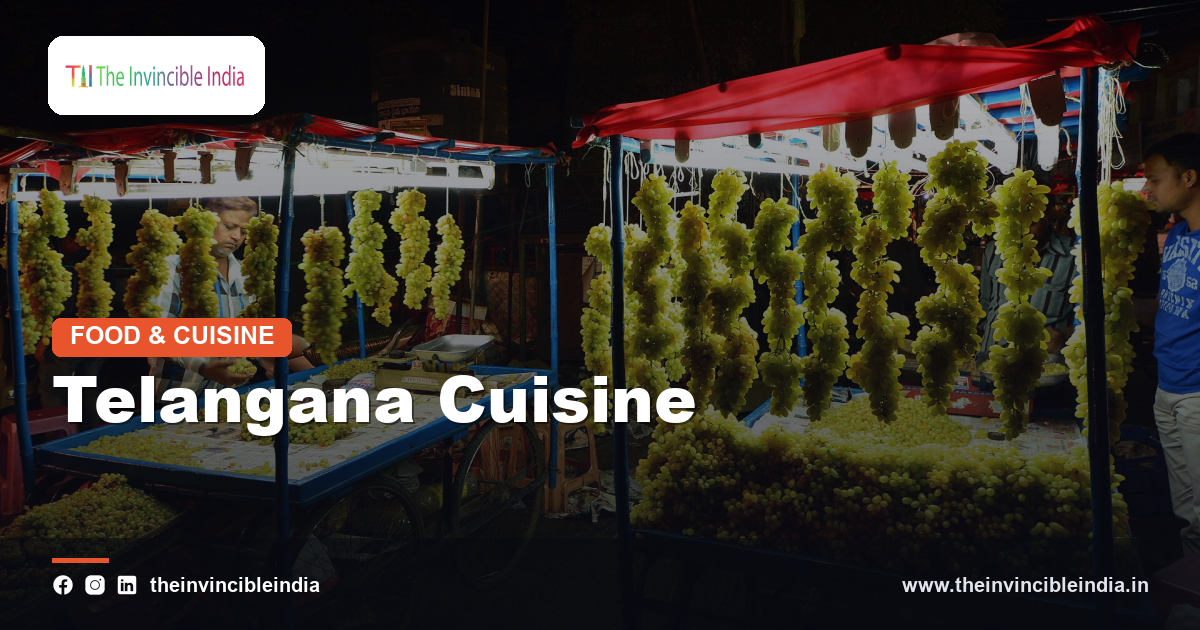
Telangana cuisine is the food of Telangana, a state carved from the wider Telugu-speaking region and home to a food culture that reaches well beyond the famous Nizami kitchens of Hyderabad. Built on millets such as jowar and rice, sharpened with tangy gongura and finished with a confident hand of chilli, Telangana’s everyday cooking reflects the rhythms of a largely agrarian, plateau society rather than only the courtly cooking most visitors first encounter. While the region is closely linked to the Nizami dishes covered in the guide to Hyderabadi cuisine, Telangana’s own rural food traditions form a distinct and equally rich culinary heritage. This guide explores Telangana cuisine, its history, its famous dishes and its enduring place in India’s culinary heritage.
Quick Facts
| Detail | Information |
|---|---|
| Type | The rural and Telugu cuisine of Telangana |
| Rooted in | Plateau agriculture and Telugu village tradition |
| Famous for | Gongura pachadi, sakinalu and jowar rotti |
| Key ingredients | Jowar, rice, tamarind and red chilli |
| Signature snack | Sakinalu and ariselu at festival time |
| Character | Rustic, tangy and generously spiced |
The Food of Telangana
Telangana cuisine is the food of Telangana, a Telugu-speaking region of plateau and scrubland whose everyday cooking developed largely apart from the celebrated Nizami kitchens of Hyderabad city. Shaped by dry-farmed millets, modest rainfall and a strong tradition of village agriculture, Telangana’s food is often heartier and more rustic than the refined court cuisine associated with the region’s largest city. Tamarind, chilli and locally grown greens feature throughout its dishes, giving them a tang and heat suited to a hardworking rural life. As the food of Telangana, rooted in plateau farming rather than palace kitchens, this cuisine occupies its own distinct and increasingly recognised place among the regional cuisines of India.
Millets and Jowar Rotti
Millets, and jowar in particular, have long formed a staple of the Telangana table, reflecting the region’s drier climate and its long history of dryland farming compared with the rice-rich deltas found elsewhere in the Telugu-speaking world. Jowar rotti, a flatbread made from sorghum flour, is prepared fresh and eaten with a chutney or curry, offering a filling and nutritious alternative to rice at many everyday meals. Other millets such as bajra and ragi are used in similar ways across rural households. This continued reliance on jowar and other millets within Telangana cuisine reflects the region’s agricultural heritage and remains one of its most distinctive and healthful culinary features.
Rice and the Everyday Meal
Alongside millets, rice remains central to the Telangana meal, particularly in areas closer to the state’s rivers and irrigated tracts, where it is served with a lentil preparation, a vegetable curry and a tangy pickle or chutney. A typical everyday plate brings together plain rice with sambar-like lentil stews and the pungent gongura relish that the region is so well known for. This combination of grain, lentil and tang forms the backbone of daily eating. This central place of rice within the everyday Telangana meal, served alongside millet breads depending on the household, reflects the flexible and practical character of the region’s food culture.
Gongura and Tangy Flavours
Gongura, the tart sorrel leaf shared with neighbouring Andhra Pradesh, holds an especially cherished place in Telangana cuisine, most famously in gongura pachadi, a thick and intensely tangy chutney made by cooking the leaves with chilli and garlic. This relish, eaten with rice or millet rotti, is considered one of the defining tastes of Telugu food and is prepared in households across Telangana with considerable pride. Its sharp, sour character cuts effectively through richer dishes. This prominent role of gongura and other tangy flavours within Telangana cuisine reflects a shared Telugu culinary heritage while remaining one of the region’s own most treasured specialities.
Spice and Chilli in Telangana Cooking
Telangana cooking shares with the wider Telugu culinary tradition a bold and confident use of red chilli, present in its curries, pickles and dry vegetable preparations in generous measure. Freshly ground spice blends, often prepared at home by roasting lentils, chillies and seeds together, are used to season vegetables, meats and lentils, giving Telangana dishes a robust and warming character. This heat is typically balanced with tamarind or tomato for depth. This confident use of spice and chilli throughout Telangana cooking gives the cuisine its characteristic warmth, marking it clearly as part of the broader spicy tradition of Telugu food.
Sakinalu and Festive Snacks
Sakinalu, a crisp, spiral-shaped snack made from rice flour and sesame seeds and deep-fried until golden, is one of the most recognisable festive foods of Telangana, prepared especially around the harvest festival of Sankranti. Made in large batches and shared among family and neighbours, sakinalu reflects the strong tradition of home-based festival cooking that runs through Telangana culture, with each household often guarding its own preferred proportions and technique. Its preparation is considered a mark of skill. This tradition of sakinalu and similar festive snacks, prepared communally at key points in the agricultural calendar, reflects the deep connection between food and festival in Telangana life.
Ariselu and Traditional Sweets
Ariselu, a sweet rice-flour disc fried in oil and coated with jaggery and sesame, ranks among Telangana’s most cherished traditional sweets, prepared during festivals and family celebrations across the region. Its preparation, involving the careful cooking of rice flour with jaggery syrup before shaping and frying, is regarded as a skilled art passed down through generations of women in Telangana households. Other jaggery-based sweets accompany it during major festivals. This tradition of ariselu and other traditional sweets, made with rice, jaggery and sesame, adds warmth and ceremony to Telangana cuisine and marks its most important festive occasions with dishes of lasting affection.
Pesarattu and Tiffin Traditions
Telangana shares with the wider Telugu-speaking region a fondness for tiffin dishes such as pesarattu, a savoury crepe made from ground green gram, and idli and dosa prepared in the South Indian style, all commonly eaten for breakfast or as a light evening meal. These dishes, often served with chutney and a mildly spiced lentil accompaniment, sit alongside more distinctly Telangana items such as millet-based snacks. This blending of shared Telugu tiffin culture with local specialities is characteristic of the region. This tiffin tradition within Telangana cuisine, combining familiar South Indian dishes with local touches, reflects the region’s place within the broader Telugu culinary world.
Haleem and the Hyderabadi Influence
No account of food in Telangana can ignore haleem, the slow-cooked wheat, lentil and meat preparation associated above all with Hyderabad and its Nizami culinary heritage, particularly popular during the month of Ramzan. Though rooted in the courtly and Persian-influenced kitchens of the old city rather than rural Telangana, haleem has become closely woven into the state’s wider food identity and is enjoyed by communities across the region. Its rich, slow-cooked texture requires hours of careful preparation. This influence of haleem and the broader Hyderabadi tradition on Telangana’s culinary identity shows how the state’s food draws on both courtly and rural sources at once.
Biryani in Telangana
Biryani holds an especially prominent place in Telangana, with Hyderabad recognised as home to one of the most celebrated styles found among the many biryanis of India, prepared using the dum method in which marinated meat and part-cooked rice are sealed and slow-cooked together. Beyond the city, biryani is also prepared in towns and villages across Telangana for weddings and celebrations, often with local variations in spice and technique. Its popularity cuts across community and region alike. This central place of biryani within Telangana’s food culture, from courtly Hyderabadi versions to countless local variations, reflects the dish’s unmatched popularity across the state.
Street Food and Snacks
Telangana’s towns and cities offer a lively street food culture, from spicy mirchi bajji and punugulu, deep-fried lentil-batter fritters, to a wide range of chaat-style snacks sold at stalls and small eateries. These snacks, generously spiced and often served with tangy chutneys, are enjoyed at any hour and reflect the same bold flavours found in the region’s home cooking. Vendors frequently specialise in a single dish perfected over years. This vibrant street food tradition, offering quick and flavourful bites throughout the day, extends the tang and heat of Telangana cuisine into its everyday snacking culture with considerable local enthusiasm.
Non-Vegetarian Cooking
Telangana has a robust non-vegetarian tradition, with mutton and chicken curries, often built on a base of onion, tomato and a generous helping of chilli, appearing regularly at family meals and celebrations. Dishes such as mutton curry and various local preparations of chicken are cooked with the same rustic, tangy sensibility found throughout the region’s food, frequently finished with tamarind or gongura for extra sharpness. Goat and chicken are the most commonly used meats. This robust non-vegetarian tradition within Telangana cuisine, spiced with the region’s characteristic tang and heat, forms an important part of the state’s everyday and festive cooking alike.
Vegetarian Traditions
Telangana also maintains a strong vegetarian tradition, particularly among farming households, where lentils, seasonal vegetables and leafy greens are transformed into flavourful curries and dry preparations using the same bold spicing found elsewhere in the cuisine. Gourds, brinjal and local greens are cooked simply, often with minimal oil, and finished with tamarind, chilli or gongura for depth of flavour. Such dishes are typically paired with jowar rotti or rice. This strong vegetarian tradition within Telangana cuisine, achieving real depth of flavour from humble, locally grown ingredients, reflects the resourcefulness of the region’s agrarian food culture.
Pickles and Preserves
Pickling is a well-developed art in Telangana, with mango, lime, chilli and gongura preserved in oil and spice to create pickles that keep for months and accompany nearly every meal. These pickles, often prepared in large quantities during the appropriate season and stored for the rest of the year, are considered an essential part of the Telangana table, adding a concentrated burst of tang and heat to simple rice or rotti. Their preparation is a matter of household pride. This tradition of pickles and preserves, carefully made and stored across the year, reflects the same resourceful, flavour-forward approach found throughout Telangana cuisine.
Dining Customs and the Telangana Thali
A traditional Telangana meal, often served as a thali comparable to the wider Indian thali tradition, brings together rice or millet rotti with a lentil preparation, one or two vegetable curries, a pickle and a chutney, arranged for the diner to combine as they choose. Meals are traditionally eaten with the hand, and dishes are often shared generously among family members and guests. This structure allows for considerable regional and seasonal variation. This Telangana thali and its accompanying dining customs, built around grain, lentil and tangy accompaniment, remain central to how the region’s food is experienced in homes across the state.
Telangana Cuisine Today
Today Telangana cuisine is gaining recognition in its own right, distinct from the Nizami cooking of Hyderabad with which it is often conflated, as food writers and restaurants increasingly highlight its millet dishes, its gongura specialities and its festive sweets such as sakinalu and ariselu. Home cooks across the state continue to prepare these dishes much as earlier generations did, ensuring their survival as living tradition. Renewed interest in millets has further boosted the profile of Telangana’s rural cooking. As the rustic, tangy and generously spiced food of Telangana, this cuisine stands as a distinct and increasingly celebrated part of India’s culinary heritage.
Sources & Further Reading
- Ministry of Tourism, Government of India, on the cuisines of India (tourism.gov.in).
- Culinary references on the food traditions of Telangana.
Frequently Asked Questions
What is Telangana cuisine known for?
Telangana cuisine is known for its use of millets such as jowar, its tangy gongura pachadi, and festive sweets and snacks such as ariselu and sakinalu. It also shares dishes such as haleem and biryani with the wider Hyderabadi culinary tradition.
How is Telangana cuisine different from Hyderabadi cuisine?
Telangana cuisine refers to the broader rural and Telugu food of the state, built on millets, gongura and tangy curries, while Hyderabadi cuisine refers more specifically to the Nizami, Persian-influenced court cooking of Hyderabad, including dishes such as haleem and biryani.
What is gongura pachadi?
Gongura pachadi is a tangy chutney made from sorrel leaves cooked with chilli and garlic into a thick, intensely flavoured relish. It is one of the most cherished dishes in both Telangana and Andhra cuisine.
What are sakinalu and ariselu?
Sakinalu is a crisp, spiral-shaped rice and sesame snack, and ariselu is a sweet rice-flour disc coated in jaggery and sesame; both are traditional festive foods prepared especially around the Sankranti harvest festival in Telangana.
Is Telangana cuisine spicy?
Telangana cuisine is generally spicy, relying on generous chilli and tangy ingredients such as tamarind and gongura, though its vegetarian and lentil-based dishes can also be prepared with more moderate heat depending on the household.


