

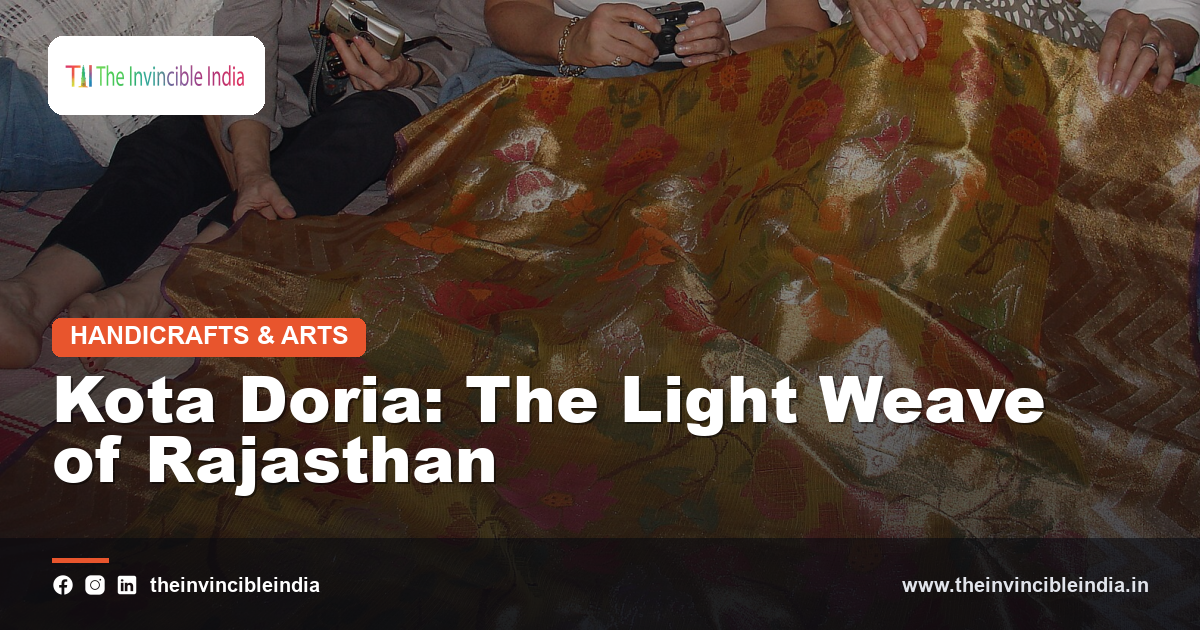
Kota Doria is a lightweight, sheer fabric woven in the Kota region of Rajasthan, instantly recognisable by the small square checks, locally called khat, that give the cloth its characteristic textured surface. Woven from a blend of cotton and silk yarns, the fabric is prized for its breathability and delicate feel, making it a popular choice for warm-weather sarees and dress material. The tradition is closely linked to the weaving village of Kaithoon near Kota, much as traditional handicrafts of Rajasthan more broadly reflect the state’s long history of skilled craftsmanship. This guide examines the technique, motifs and continuing legacy of Kota Doria weaving.
Quick Facts
| Detail | Information |
|---|---|
| Region | Kota district, Rajasthan |
| Material | Cotton-silk blend yarn |
| Known For | Sheer texture with signature square checks |
| Weave Type | Open, airy plain weave (khat pattern) |
| Recognition | Geographical Indication (GI) tag |
| Typical Use | Summer sarees and dress fabric |
Origins and Historical Roots in Rajasthan
Kota Doria traces its origins to weaving communities established in and around the Kota region of Rajasthan, where the craft developed over successive generations into a distinctive local speciality. Historical patronage from regional rulers is often credited with helping establish weaving as an organised trade in the area, encouraging skilled artisans to settle and refine their techniques over time. The fabric’s association with the Kota region has remained strong even as the craft has occasionally spread to neighbouring weaving centres. Its reputation for fine, breathable cloth suited to Rajasthan’s hot climate helped the fabric find steady demand both locally and in wider regional trade networks. Over time, the technique became closely identified with specific villages near Kota that continue to specialise in the craft today. This long-standing regional association forms the foundation of Kota Doria’s continuing identity as a distinctly Rajasthani textile tradition.
The Doria Weave Explained
The term Doria refers to the fine, thread-like quality of the yarn used in this weaving tradition, which is spun and set on the loom in a manner that produces an open, airy fabric rather than a dense, tightly packed cloth. This open structure is achieved through careful control of thread count and tension, allowing small gaps to form evenly across the fabric’s surface. The resulting cloth is notably lightweight, letting air pass through easily, which makes it especially suited to warm climates. Achieving this balance between openness and structural strength requires considerable weaving skill, since a poorly tensioned fabric can either sag or tear more easily than a conventional weave. This distinctive open weave is what fundamentally sets Kota Doria apart from denser cotton or silk fabrics produced elsewhere in India. The technique remains central to the fabric’s identity and continues to be practised largely by hand on traditional looms.
The Distinctive Khat Checks
One of the most recognisable features of Kota Doria is the small, square check pattern known locally as khat, formed by the specific arrangement of warp and weft threads during weaving. These checks are not printed or embroidered but emerge directly from the structure of the weave itself, a result of the particular thread grouping technique used by Kota weavers. The size and regularity of the khat pattern is often used as an informal indicator of weaving quality, with finer, more even checks generally associated with more skilled craftsmanship. This textural quality gives the fabric a subtle, understated visual interest that complements rather than competes with printed or embroidered motifs later added to finished garments. The khat pattern has become so closely identified with the fabric that it is often the first feature used to recognise genuine Kota Doria. This distinctive structural signature remains at the heart of the fabric’s continuing appeal.
Cotton-Silk Blend Yarns
Kota Doria is traditionally woven using a combination of cotton and silk yarns, with cotton typically used for the warp and silk for the weft, or variations of this arrangement depending on the specific workshop. This blend allows the fabric to combine the breathability and easy drape of cotton with the subtle sheen and strength contributed by silk fibres. The precise ratio of cotton to silk can vary between producers, influencing the fabric’s weight, texture and cost. Pure cotton variants also exist and are generally more affordable, while cotton-silk blends are often considered more premium due to the added complexity of working with two different fibre types simultaneously. Managing the different tension and behaviour of cotton and silk threads during weaving requires particular skill, since the two fibres respond differently to handling. This careful blending of materials is central to achieving the fabric’s signature lightness and texture.
The Weaving Process and Loom
Kota Doria is traditionally woven on pit looms, which are set into the ground to allow the weaver to use foot pedals in coordination with hand movements while operating the shuttle. This setup demands sustained physical effort and precise coordination, since maintaining the fabric’s open, even structure requires consistent tension throughout the weaving process. Preparing the loom, including setting the warp threads in the correct sequence for the khat pattern, is itself a detailed and time-consuming task that precedes actual weaving. Weavers typically work at a measured pace, since rushing can disrupt the delicate balance needed to produce the fabric’s characteristic sheerness. The entire process, from loom setup to finished fabric, can take considerable time depending on the complexity of any additional embellishment. This labour-intensive process underscores why genuine handwoven Kota Doria continues to be valued above mass-produced imitations.
Lightness and Breathability
The defining practical quality of Kota Doria is its exceptional lightness, a direct result of the open weave structure and fine yarn used in its production. This lightness makes the fabric particularly well suited to Rajasthan’s hot, arid climate, where breathable clothing offers genuine comfort during long, warm days. Wearers often note that Kota Doria sarees feel cooler against the skin compared to denser cotton or silk fabrics, a quality that has helped sustain demand for the textile well beyond its region of origin. This breathability has also made the fabric popular in other parts of India with similarly warm climates, expanding its market beyond Rajasthan itself. The combination of a delicate appearance with genuine practical comfort is often cited as one of the fabric’s most appealing characteristics. This balance of form and function continues to define how the fabric is marketed and appreciated today.
Motifs and Embellishments
While the base khat weave itself provides the fabric’s primary visual texture, many Kota Doria sarees are further embellished with block printing, embroidery or woven borders that add colour and pattern to the otherwise subtle base fabric. Floral, paisley and geometric motifs are common choices for such embellishment, often applied using techniques associated with other Rajasthani craft traditions. Zari borders are also frequently added to more formal or festive versions of the fabric, providing a contrast between the sheer body and a more richly worked edge. This combination of a plain, textured base with additional decorative techniques allows Kota Doria to serve a wide range of style preferences, from understated everyday wear to more elaborate festive sarees. The relative simplicity of the base fabric makes it a versatile canvas for varied decorative approaches. This adaptability has helped the fabric maintain relevance across different fashion contexts over time.
Colour Traditions
Kota Doria fabric is produced in a wide range of colours, from soft pastels well suited to its sheer, delicate character to more vivid, saturated shades favoured for festive occasions. Because the open weave allows light to pass through the fabric, certain colours can appear to shift subtly depending on lighting conditions, adding a further layer of visual interest. Traditional colour choices have often reflected regional and seasonal preferences, with lighter shades particularly popular for summer wear given the fabric’s association with warm-weather comfort. Dyeing must be carried out carefully to achieve even colour across the open weave structure, since any inconsistency can be more visible than on denser fabrics. Contemporary producers have expanded the available colour palette considerably, responding to changing fashion trends while retaining the fabric’s essential textural identity. This flexibility in colour has helped Kota Doria remain adaptable to a wide range of tastes.
Kaithoon: The Weaving Hub
The village of Kaithoon, located near Kota, is widely regarded as the principal centre of Kota Doria production, home to a concentration of weaving families who have practised the craft across generations. The village’s economy has long been closely tied to this weaving tradition, with looms often set up within family homes rather than in separate industrial facilities. This close-knit structure has helped preserve traditional techniques, since skills and knowledge are transmitted directly within families and local community networks. Kaithoon’s reputation as the heart of Kota Doria production has made it a point of reference for buyers and researchers seeking to understand the authentic roots of the craft. Various support initiatives have specifically targeted this village and surrounding areas, recognising their central role in sustaining the tradition. The continued vitality of Kaithoon as a weaving community remains closely tied to the broader fortunes of the Kota Doria craft as a whole.
Community of Weavers
The Kota Doria weaving community consists largely of families who have practised the craft for generations, passing down specialised knowledge of loom setup, thread tension and the khat weaving technique through direct apprenticeship rather than formal training. This close intergenerational transmission has helped preserve the precise skills required to achieve the fabric’s characteristic openness and evenness. Many weavers operate as part of small household units or cooperative groups, which help coordinate raw material supply and marketing beyond the immediate local area. As with many handloom traditions, the economic wellbeing of these weaving families is closely tied to demand for genuine, handwoven fabric, making fair pricing and market access ongoing concerns. Various governmental and cooperative programmes have periodically supported these communities through training, credit access and promotional initiatives. The continuity of Kota Doria as a living craft depends directly on the sustained engagement of these dedicated weaving families.
Zari and Embroidery Embellishment
Many Kota Doria sarees intended for formal or festive wear incorporate zari work along the border and pallu, adding a touch of richness that contrasts with the sheer, understated body of the fabric. This zari embellishment is typically woven or applied with care to avoid overwhelming the delicate base fabric, maintaining a balance between ornamentation and the textile’s inherently light character. Hand embroidery, including techniques associated with other Rajasthani craft traditions, is also sometimes applied to Kota Doria, particularly on sarees marketed for weddings and special occasions. This combination of a plain, breathable body with more elaborately decorated borders reflects a broader design principle found across many Indian handloom textiles. The choice of embellishment often signals the intended use of the saree, with simpler pieces suited to everyday wear and more heavily decorated versions reserved for formal events. This layered approach to design has helped Kota Doria serve a wide spectrum of occasions and preferences.
Occasions and Regional Dress
Kota Doria sarees are worn across a range of occasions, from everyday wear in warm climates to more formal festive and ceremonial contexts when paired with richer embellishment. Their light weight and breathability make them a particularly popular choice during summer months and in regions with consistently warm weather, extending well beyond Rajasthan itself. In more formal settings, embellished Kota Doria sarees are worn for weddings, festivals and other significant family occasions, often alongside other traditional Rajasthani textiles. The fabric’s versatility across both casual and formal contexts has contributed significantly to its sustained popularity in Indian fashion. Many wearers appreciate the combination of traditional craftsmanship with genuine everyday practicality, a balance not always found in more elaborately decorated handloom textiles. This broad range of appropriate occasions has helped Kota Doria maintain steady demand across different consumer segments.
GI Tag and Recognition
Kota Doria has received a Geographical Indication tag, formally recognising the link between the fabric and its region of production in and around Kota, Rajasthan. This recognition serves to protect the name from misuse by producers outside the traditional weaving area and helps assure buyers of the authenticity of genuine Kota Doria products. Alongside this legal protection, various governmental schemes focused on handloom development have extended support to weaving communities in the Kota region, covering areas such as skill training, raw material access and market promotion. Such institutional recognition plays an important role in helping traditional textile crafts remain economically viable amid competition from machine-made alternatives. The GI tag has also contributed to greater visibility for Kota Doria in national and international markets, supporting efforts to position the fabric as a distinctive Rajasthani heritage product. These recognition and support efforts together form an important part of the broader ecosystem sustaining the craft.
Contemporary Fashion Uses
In recent years, Kota Doria has found expanded use in contemporary fashion, appearing not only in traditional sarees but also in dupattas, kurtas and other lightweight garments favoured for their breathability. Designers have increasingly incorporated the fabric into modern silhouettes, appreciating its distinctive texture and versatility across both casual and more elevated fashion contexts. This diversification has helped introduce Kota Doria to audiences who might not otherwise encounter the fabric through traditional saree retail alone. Online marketplaces and handloom promotion platforms have further expanded its reach, connecting weaving communities in Kaithoon and surrounding areas with buyers across India and internationally. At the same time, demand for classic, traditionally woven Kota Doria sarees remains strong, particularly for warm-weather formal wear. This blend of contemporary adaptation and enduring traditional demand has supported the craft’s continued commercial relevance.
Challenges Facing Kota Doria Weavers
Kota Doria weavers face a number of challenges common to many traditional Indian handloom crafts, including competition from powerloom and machine-made imitations that can be produced more quickly and at lower cost. The labour-intensive nature of genuine handwoven production means that authentic Kota Doria often carries a higher price point, which can limit its market compared to cheaper alternatives that lack the same craftsmanship. Attracting younger generations to continue the tradition remains an ongoing concern, as many find other livelihoods more immediately attractive given the physical demands and uncertain returns associated with handloom weaving. Fluctuations in raw material costs, particularly for silk yarn, add further financial pressure on weavers who often operate with limited capital reserves. Addressing these challenges requires sustained investment in fair pricing, market access and skill development programmes tailored to the specific needs of Kota Doria weaving communities. Recognising these pressures is an important step toward ensuring the craft’s continued survival.
Government and Cooperative Support
Various government schemes and cooperative societies have worked to support Kota Doria weaving communities, focusing on areas such as skill development, access to quality raw materials and connections to wider markets beyond the local region. These efforts have included training programmes aimed at maintaining traditional weaving skills alongside initiatives to help weavers access fair pricing for their work. Handloom promotion bodies have also supported participation in exhibitions and trade fairs, helping raise the profile of Kota Doria among buyers unfamiliar with the craft. Such institutional support is particularly important for a craft as labour-intensive and specialised as Kota Doria weaving, where individual artisans often lack the resources to access broader markets independently. Continued collaboration between government bodies, cooperative societies and weaving communities remains an important factor in sustaining the craft’s economic viability. This support ecosystem plays a significant role in helping preserve Kota Doria as a living tradition rather than a purely historical reference.
Kota Doria Today
Today, Kota Doria remains a distinctive and recognisable part of Rajasthan’s textile heritage, valued for its exceptional lightness, breathability and signature khat check texture. The fabric continues to be produced largely by hand in and around Kaithoon, sustained by weaving families whose skills have been passed down across generations. Institutional recognition through the GI tag, alongside government and cooperative support, has helped the craft maintain economic viability despite competition from machine-made alternatives. Growing interest from contemporary fashion designers and expanded reach through online markets have introduced Kota Doria to new audiences while traditional demand for the fabric remains steady. As with many handloom traditions, its long-term future will depend on continued efforts to support weavers, maintain quality and connect the craft with new generations of buyers. Kota Doria stands today as a testament to Rajasthan’s enduring skill in producing fine, functional and beautifully textured handwoven fabric.
Sources & Further Reading
- Ministry of Textiles, Government of India (texmin.nic.in).
- Development Commissioner for Handlooms, Government of India (handlooms.nic.in).
Frequently Asked Questions
What is special about Kota Doria fabric?
Kota Doria is known for its exceptionally lightweight, open weave and the distinctive small square checks known as khat, which together give the fabric a sheer, breathable quality well suited to warm climates.
What materials are used to weave Kota Doria?
The fabric is traditionally woven from a blend of cotton and silk yarns, combining the breathability of cotton with the subtle sheen and strength contributed by silk.
Where is Kota Doria mainly produced?
The village of Kaithoon near Kota in Rajasthan is widely regarded as the principal centre of Kota Doria production, home to generations of specialised weaving families.
Is Kota Doria suitable for everyday wear?
Yes, its lightness and breathability make plain or lightly embellished Kota Doria sarees popular for everyday and semi-formal wear, especially in warm climates.
Does Kota Doria have a Geographical Indication tag?
Yes, Kota Doria has received GI recognition, which protects the name and helps assure buyers of the authenticity of genuine products from the Kota region.


