

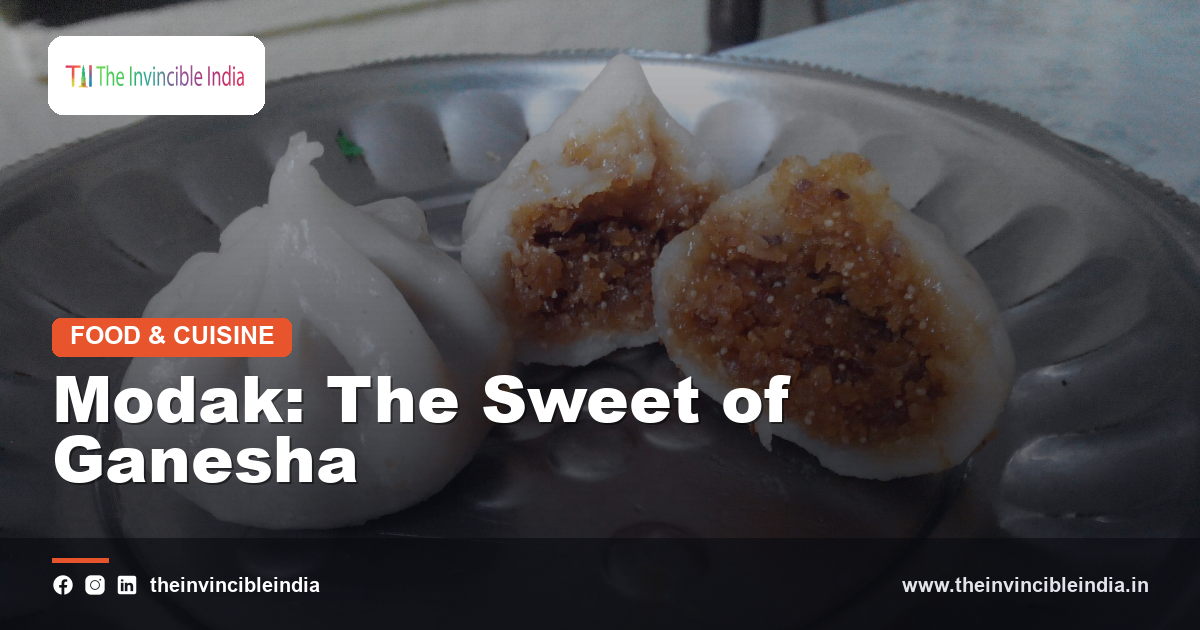
Modak is a small, delicately shaped sweet dumpling that holds a place of particular devotion in Indian food culture, closely associated with Lord Ganesha and prepared in vast numbers during the festival of Ganesh Chaturthi. Made from a soft rice flour or wheat flour casing filled with a sweet mixture of grated coconut and jaggery, modak is offered to the deity before being shared among family and devotees, carrying a significance that goes well beyond its taste alone. As with many treats found among the famous sweets of India, modak’s importance lies as much in its symbolism as in its flavour. This guide explores modak, its history, its varieties and its enduring place in Indian festival food.
Quick Facts
| Detail | Information |
|---|---|
| Type | A sweet dumpling with coconut and jaggery filling |
| Rooted in | Maharashtrian tradition and Ganesh Chaturthi worship |
| Famous for | Its close association with Lord Ganesha |
| Key ingredients | Rice flour or wheat flour, coconut and jaggery |
| Occasion | Ganesh Chaturthi and other festive offerings |
| Character | Soft, sweet and delicately shaped |
The Sweet of Lord Ganesha
Modak is a small sweet dumpling that holds a uniquely devotional place in Indian food culture, closely associated with Lord Ganesha, the elephant-headed deity revered as the remover of obstacles, who is traditionally believed to be especially fond of this sweet. Shaped into a distinctive pointed dome with pleated edges, modak is prepared with particular care and offered before being eaten, making it as much a religious object as a dessert. Its preparation is often treated as an act of devotion. As the sweet most closely linked to Lord Ganesha, modak occupies a place in Indian festival food that carries deep religious meaning alongside its gentle, comforting flavour.
Coconut and Jaggery Filling
At the heart of modak lies its filling, a warm, fragrant mixture of freshly grated coconut cooked down with jaggery until it thickens into a sweet, slightly caramelised paste, often perfumed with a touch of cardamom. This filling is prepared separately before being encased in the outer dough, and its balance of sweetness and coconut richness is considered essential to a good modak. Some versions add chopped nuts or poppy seeds. This coconut and jaggery filling, simple yet deeply satisfying, is what gives modak its distinctive character and remains largely unchanged across the many regional variations of the sweet.
Ukadiche Modak: The Steamed Classic
Ukadiche modak, the classic steamed version of the sweet particularly associated with Maharashtra, is made by shaping a soft, translucent dough of rice flour around the coconut-jaggery filling before steaming the dumplings until the outer casing turns glossy and delicate. This steaming method, rather than frying, produces a lighter, softer modak considered by many to be the most traditional and authentic form of the sweet. Shaping the dough well requires practice and patience. This ukadiche modak, delicate and steamed with care, is widely regarded as the purest expression of the sweet and remains the preferred offering in many Maharashtrian homes during Ganesh Chaturthi.
Fried Modak Varieties
Alongside the steamed classic, fried modak varieties are also popular, made using a firmer wheat flour dough that is shaped around the same coconut-jaggery filling before being deep-fried until golden and crisp on the outside. This fried version offers a longer shelf life than its steamed counterpart and a satisfyingly crunchy texture that contrasts with the soft filling inside. It is often prepared for gifting or for keeping over several days. This fried modak variety, crisp and more durable, provides a popular alternative to the steamed original while preserving the same beloved coconut and jaggery centre.
The Art of Shaping Modak
Shaping modak into its distinctive pleated, dome-like form is considered a skill in itself, traditionally done entirely by hand by pressing small pleats into the edge of a circle of dough before gathering it around the filling and pinching it closed at the top into a pointed tip. Special modak moulds are also widely used today to achieve a neat, uniform shape more easily. Even with a mould, a careful hand is needed. This art of shaping modak, whether by traditional hand-pleating or with the help of a mould, adds a further layer of care and craftsmanship to the sweet’s preparation.
Modak in Ganesh Chaturthi Worship
During the festival of Ganesh Chaturthi, modak occupies a central place in worship, prepared in large quantities and offered to the idol of Lord Ganesha as part of daily rituals before being distributed as prasadam among family and visitors. Many households prepare a specific number of modaks each day of the festival as an act of devotion. This practice is observed with particular devotion in Maharashtra. This central role of modak in Ganesh Chaturthi worship, offered and shared with genuine devotion, is what elevates the sweet from an ordinary treat to one of India’s most religiously significant foods.
Maharashtrian Roots of Modak
Modak is most closely associated with Maharashtra, where its preparation for Ganesh Chaturthi is treated as an important household tradition, often involving multiple generations of a family working together to shape and steam large batches of the sweet. This close Maharashtrian association has helped modak become one of the most recognisable symbols of the festival itself, inseparable in the popular imagination from the worship of Ganesha. Recipes are often passed down within families. These deep Maharashtrian roots continue to shape how modak is prepared and understood, even as the sweet has become known and loved well beyond the state’s borders.
Regional Variations of Modak
While Maharashtra is most closely linked with modak, variations of the sweet appear in other parts of India as well, particularly in regions with strong Ganesha worship traditions, where local ingredients and techniques may lead to slightly different fillings or outer casings. Some versions use a slightly different proportion of jaggery to coconut, or add local spices to the filling. These small variations reflect regional taste while preserving the sweet’s essential identity. This range of regional variations of modak shows how a single devotional sweet can be adapted gently to different local food cultures without losing its core symbolism.
Chocolate and Modern Modak
In recent years, modern interpretations of modak have appeared alongside the traditional versions, including fillings such as chocolate, dry fruit or khoya, offered as contemporary alternatives to the classic coconut and jaggery centre. These modern modak varieties are often sold by sweet shops during the festival season, appealing particularly to younger generations seeking novelty within a familiar form. Traditional versions nonetheless remain the preferred choice for actual worship. These modern modak innovations show the sweet’s ability to evolve with changing tastes while the traditional versions continue to hold their central place in religious observance.
Rice Flour Dough and Its Preparation
The dough used for ukadiche modak is made by cooking rice flour with water, a little ghee and salt until it forms a smooth, pliable mass that can be shaped while still warm, a process that requires some skill since the dough cools and stiffens quickly. Cooks often keep their hands lightly oiled while shaping to prevent sticking and to achieve a smooth finish. Timing is important, as the dough must be worked while still warm. This careful preparation of rice flour dough, requiring both precision and speed, is a key part of what makes steamed modak such a technically demanding sweet to prepare well.
Symbolism of the Modak's Shape
The distinctive pointed, pleated shape of modak carries its own symbolic meaning within Hindu tradition, often interpreted as representing knowledge or the fruit of spiritual effort, fitting for an offering made to Ganesha, who is associated with wisdom and the removal of obstacles. This symbolism adds further depth to what might otherwise be seen simply as an appealingly shaped sweet. The care taken in shaping it is itself considered meaningful. This symbolism attached to the modak’s shape reinforces its status as far more than an ordinary dessert, tying its very form to the devotional purpose it serves.
Modak as a Family Tradition
The preparation of modak, particularly during Ganesh Chaturthi, is often treated as a cherished family tradition, with grandmothers, mothers and children gathering together to shape the dumplings by hand, sharing techniques and stories passed down across generations in the process. This communal preparation adds a warm, social dimension to what is already a devotional act. Children are often taught to shape their first modak during the festival. This role of modak as a family tradition, bringing generations together around a shared task, deepens the sweet’s meaning well beyond its place on the festival plate.
Sweet Shops and Festival Demand
During the weeks surrounding Ganesh Chaturthi, sweet shops across Maharashtra and other parts of India see a considerable surge in demand for modak, with many establishments preparing thousands of pieces daily to meet the needs of households too busy to make their own. Some shops become known specifically for their modak during this season, drawing long queues of customers each year. Fresh coconut filling is prepared daily to meet demand. This seasonal surge in sweet shop demand for modak reflects just how central the sweet has become to the festival experience for households across the region.
Nutritional Character of Modak
Modak, built primarily from rice or wheat flour, coconut and jaggery, offers a naturally sweetened treat that avoids refined sugar in favour of jaggery, which is often considered a somewhat gentler sweetener within Indian food tradition. The coconut filling also lends a certain richness and texture that makes even a small modak feel satisfying. Steamed versions are generally considered lighter than fried ones. This nutritional character of modak, built on traditional, minimally processed ingredients, reflects the broader tendency of Indian festival sweets to rely on wholesome staples rather than heavily refined ones.
Storing and Sharing Modak
Modak is generally best enjoyed fresh, particularly the steamed ukadiche version, whose soft rice flour casing can turn slightly firm if left standing for too long, while fried modak keeps somewhat longer thanks to its crisper outer layer. Many households prepare modak in batches specifically for sharing, packing a few pieces into small boxes to send to relatives and neighbours during the festival period. Refrigeration can extend freshness by a day or two if needed. This practice of storing and sharing modak, mindful of its delicate texture, reflects the wider spirit of generosity that surrounds Ganesh Chaturthi, when sweets made at home are readily passed on to family, friends and neighbours alike.
Modak Today
Today modak remains inseparable from the celebration of Ganesh Chaturthi, prepared in homes and sweet shops across Maharashtra and increasingly across India as the festival’s popularity continues to grow in cities far from its traditional heartland. Both the classic steamed ukadiche modak and newer fried or modern variations continue to be made and enjoyed each year. Its presence marks the festival as much as any ritual. As the sweet most closely associated with Lord Ganesha, gentle and devotional in equal measure, modak remains one of India’s most meaningful festival foods.
Sources & Further Reading
- Ministry of Culture, Government of India, on Indian festivals (indiaculture.gov.in).
- Culinary references on the festival food traditions of Maharashtra.
Frequently Asked Questions
What is modak made of?
Modak is typically made from a rice flour or wheat flour dough filled with a sweet mixture of grated coconut cooked with jaggery, often flavoured with cardamom, then either steamed or fried.
Why is modak associated with Lord Ganesha?
Modak is traditionally believed to be a favourite sweet of Lord Ganesha, which is why it is prepared and offered in large numbers during Ganesh Chaturthi as part of daily worship rituals.
What is the difference between ukadiche modak and fried modak?
Ukadiche modak is made with a soft rice flour dough and steamed, giving it a delicate texture, while fried modak uses a firmer wheat flour dough that is deep-fried until crisp and golden.
Is modak only eaten during Ganesh Chaturthi?
While modak is most closely associated with Ganesh Chaturthi, it is also prepared on other occasions and sold in sweet shops throughout the year, especially in regions with strong Ganesha worship traditions.
Which region is modak most associated with?
Modak is most closely associated with Maharashtra, where its preparation during Ganesh Chaturthi is treated as an important household and family tradition passed down across generations.


