

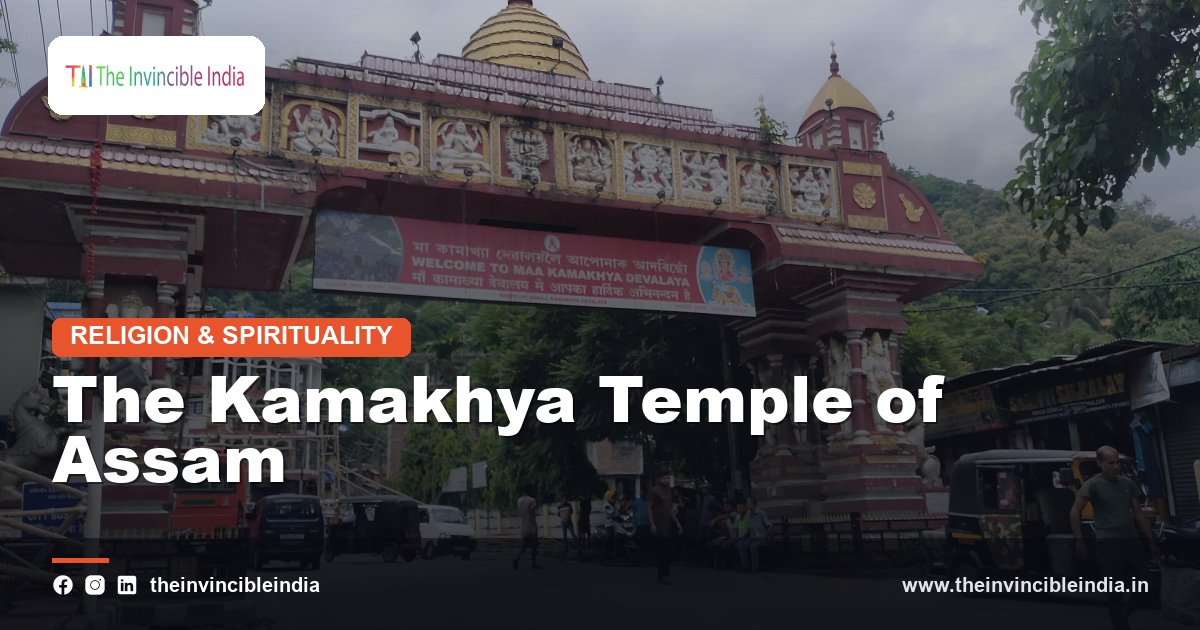
Perched atop Nilachal Hill on the outskirts of Guwahati, the Kamakhya Temple stands as one of the most significant centers of goddess worship in India. Counted among the revered Shakti Peethas associated with the worship of the divine feminine, the temple draws devotees, scholars, and pilgrims from across the country and beyond, particularly during its major annual festival. Distinguished by its unusual architecture and its close ties to tantric tradition, Kamakhya occupies a singular place in the religious landscape of Northeast India, embodying a form of devotion that blends ancient goddess-centered practice with the region’s own rich cultural heritage.
Quick Facts
| Detail | Information |
|---|---|
| Location | Nilachal Hill, Guwahati, Assam |
| Deity | Goddess Kamakhya (a form of Shakti) |
| Category | One of the Shakti Peethas |
| Notable Festival | Ambubachi Mela |
| Tradition | Shakti and tantric worship |
| Setting | Hilltop overlooking the Brahmaputra |
Kamakhya Amid Nilachal Hill
The Kamakhya Temple sits atop Nilachal Hill, rising above the city of Guwahati and offering commanding views over the surrounding landscape, including the Brahmaputra river below. This elevated, scenic setting has long contributed to the site’s reputation as a place set apart for sacred purposes.
The hill itself is regarded as an integral part of the temple’s sanctity, with the natural terrain woven into devotional memory and practice, reinforcing the broader Indian pattern of associating elevated, dramatic landscapes with heightened spiritual significance.
A Principal Shakti Peetha
Kamakhya is counted among the Shakti Peethas, a network of shrines across the subcontinent associated with the worship of the goddess in her many forms. Each Peetha carries its own local legend while contributing to a shared devotional geography spanning the whole of India.
Its recognition as one of the most important sites within this network reflects the depth of devotion historically associated with Kamakhya, positioning it among the foremost centers of goddess worship recognized across diverse regional and linguistic traditions.
Legendary Origins and the Shakti Peetha Tradition
Devotional narratives associated with the Shakti Peethas describe the goddess manifesting at multiple sacred locations, each site linked by shared legend to a broader mythological framework. Kamakhya’s place within this tradition has shaped its identity as a site of profound goddess-centered sanctity.
As with many ancient shrines, such legends are valued by devotees primarily for the devotional meaning they convey rather than as historical record, reinforcing the emotional and spiritual significance pilgrims associate with the temple rather than any claim to precise historical detail.
Architecture of the Temple
The Kamakhya Temple features a distinctive architectural style associated with the region, characterized by a beehive-shaped dome and richly carved surfaces that set it apart from temple styles found elsewhere in India. This regional character reflects Assam’s own distinct artistic traditions.
The structure’s blend of ornamentation and solid, weathered stonework conveys a sense of ancient continuity, reinforcing the temple’s reputation as one of the most architecturally distinctive Shakti shrines in the country.
The Sanctum and Its Distinctive Worship
Unlike many Hindu temples that center on a sculpted image, the sanctum at Kamakhya centers on a natural rock formation, revered by devotees as a symbol of the goddess’s creative power. This distinctive form of worship sets Kamakhya apart within the wider landscape of Shakti temples.
Pilgrims approach this sanctum with particular reverence, and the unusual nature of the object of worship is often described by visitors as contributing to the temple’s uniquely intense devotional atmosphere.
Association With Tantric Tradition
Kamakhya holds a prominent place within tantric traditions of Hindu practice, which emphasize direct ritual engagement with divine feminine energy. The temple is historically recognized as an important center for practitioners associated with this stream of devotional and philosophical thought.
This association has given Kamakhya a distinct scholarly and devotional significance, drawing interest from practitioners and researchers alike who study the temple as a living center of tantric goddess worship within contemporary Hindu practice.
Daily Rituals and Priestly Practice
Resident priests conduct daily rituals at Kamakhya following practices passed down through established temple tradition, including ceremonial offerings performed according to a structured devotional schedule. These rituals continue uninterrupted throughout the year, punctuated by special observances during major festivals.
Pilgrims visiting the temple on ordinary days typically join queues for darshan, offering flowers, cloth, or other simple items as tokens of devotion within the temple’s structured system of worship.
The Ambubachi Mela Festival
The Ambubachi Mela stands as the most significant annual festival associated with Kamakhya, drawing very large numbers of pilgrims and practitioners from across India during a period linked to the temple’s central devotional themes. The temple closes briefly before a period of renewed worship and celebration.
This festival transforms the surrounding hill into a site of intense devotional activity, with visiting ascetics, pilgrims, and devotees converging in numbers that make it one of the most notable religious gatherings in Northeast India.
Pilgrims and Devotees
Kamakhya attracts a wide range of visitors, from local devotees who visit regularly to pilgrims traveling long distances specifically to seek the blessings associated with the temple. Its reputation extends well beyond the immediate Assam region into broader networks of Shakti devotion across India.
The steady flow of visitors throughout the year, punctuated by surges during major festivals, reflects the temple’s standing as one of the most significant pilgrimage destinations associated with goddess worship in the country.
Kamakhya and the Goddess Traditions of Assam
Within Assam, Kamakhya serves as a central anchor for broader traditions of goddess worship practiced across the region, connecting local devotional customs to the wider pan-Indian network of Shakti Peethas. Its prominence has shaped religious life throughout the surrounding area.
The temple’s influence extends into regional festivals, local ritual calendars, and community identity, illustrating how a single major shrine can become deeply woven into the devotional fabric of an entire region.
Blend of Regional and Broader Hindu Traditions
Kamakhya reflects a notable blending of distinct regional customs with broader pan-Indian Hindu devotional frameworks, a characteristic often highlighted by scholars studying the temple’s history and continuing practice. This blend contributes to the site’s unique religious character.
Rather than existing as an isolated regional cult, Kamakhya has long maintained connections to wider currents of Shakti worship and tantric thought, positioning it as a bridge between local Assamese tradition and broader national devotional networks.
The Wider Temple Complex
Beyond the main sanctum, the Kamakhya complex includes a number of smaller shrines dedicated to associated forms of the goddess, together forming an extended sacred precinct atop Nilachal Hill. Visiting these subsidiary shrines is often considered part of a complete pilgrimage to the site.
This layered complex reflects a broader pattern found at major Shakti Peethas, where a principal sanctum is surrounded by related shrines that together deepen the devotional experience of pilgrims visiting the hill.
Setting and Views Over Guwahati
The elevated position of the temple atop Nilachal Hill affords sweeping views over Guwahati and the Brahmaputra river, a vista that many pilgrims describe as adding to the sense of tranquility and elevation associated with their visit.
This combination of natural scenery and sacred architecture has made the temple grounds a place of quiet reflection for visitors, complementing the more intense devotional activity found within the sanctum itself.
Access and Pilgrim Facilities
Given its location within Guwahati, Kamakhya is relatively accessible compared to many remote pilgrimage sites, with road access leading up to the temple complex and facilities supporting the steady flow of daily visitors and larger festival crowds alike.
Local authorities and temple administration coordinate crowd management, particularly during major festivals, to accommodate the significant surge in pilgrim numbers while maintaining the smooth functioning of daily worship at the shrine.
Preservation and Heritage Significance
As one of Assam’s most historically and religiously significant structures, the Kamakhya Temple has been the subject of ongoing preservation efforts aimed at maintaining its distinctive architecture while accommodating the needs of a heavily visited active place of worship.
Such preservation work reflects a broader recognition that Kamakhya represents not only a living center of devotion but also an important piece of the region’s architectural and cultural heritage, deserving careful, sustained attention.
Kamakhya and Assamese Cultural Identity
Kamakhya occupies a place in Assamese cultural identity that extends well beyond its religious function, serving as a widely recognized symbol of the region within the broader national imagination. Its image and name are closely associated with Assam in popular and cultural references alike.
Local festivals, oral traditions, and artistic expressions across the region frequently draw on themes connected to the temple, reflecting how deeply the shrine has become interwoven with the cultural self-understanding of the communities surrounding it.
Temple Administration and Governance
The day-to-day functioning of the Kamakhya Temple is overseen by an established administrative body responsible for coordinating rituals, managing the flow of pilgrims, and maintaining the temple’s extensive grounds and subsidiary shrines.
This structured governance becomes especially important during major festivals, when administrators must balance the demands of large crowds with the need to preserve the dignity and continuity of daily ritual practice at the shrine.
Kamakhya Among the Shakti Peethas
Within the wider network of Shakti Peethas, Kamakhya is frequently singled out for its combination of dramatic natural setting, distinctive form of worship, and deep association with tantric tradition, qualities that together set it apart from many sister shrines.
Comparisons with other Peethas across India often highlight how each site expresses a shared devotional framework through its own regional character, with Kamakhya standing as one of the most distinctive expressions of this broader Shakti tradition.
Scholarly Interest in Kamakhya's Traditions
The distinctive form of worship practiced at Kamakhya, together with its close association with tantric thought, has drawn sustained scholarly attention from researchers interested in the history and living practice of goddess-centered traditions in South Asia. Academic interest in the temple spans religious studies, anthropology, and the study of regional cultural history.
Such scholarship has helped document the temple’s rituals, its place within the wider network of Shakti Peethas, and its unique position at the intersection of local Assamese custom and broader pan-Indian devotional frameworks. This body of research continues to grow, reflecting the enduring importance of Kamakhya as a subject of serious academic as well as devotional interest.
Kamakhya's Place in the National Pilgrimage Landscape
Within the broader landscape of pilgrimage destinations across India, Kamakhya occupies a distinctive position as one of the relatively few major Shakti Peethas located in the northeastern part of the country, making it an important devotional anchor for pilgrims from across that region as well as beyond it.
Its inclusion within nationally recognized circuits of goddess worship has helped connect Northeast India more closely to the broader devotional map of the subcontinent, encouraging cultural exchange and reinforcing shared traditions of Shakti worship that link communities across otherwise distant regions of the country.
Kamakhya Today
Today, the Kamakhya Temple remains one of India’s most visited and significant centers of goddess worship, drawing devotees, scholars, and travelers who wish to experience its distinctive rituals and dramatic hilltop setting firsthand.
As both a living tantric and Shakti tradition and a landmark of Assamese heritage, Kamakhya continues to occupy a central place in the religious and cultural life of Northeast India, sustaining a devotional lineage that stretches back through centuries of continuous worship.
Sources & Further Reading
- Ministry of Culture, Government of India (indiaculture.gov.in).
- Archaeological Survey of India (asi.nic.in).
Frequently Asked Questions
Where is the Kamakhya Temple located?
The Kamakhya Temple is located atop Nilachal Hill in Guwahati, Assam, overlooking the Brahmaputra river.
Why is Kamakhya considered significant?
It is regarded as one of the principal Shakti Peethas in India and holds a prominent place within tantric traditions of goddess worship.
What is unique about worship at Kamakhya?
The temple’s sanctum centers on a natural rock formation rather than a conventional sculpted image, a distinctive feature within Hindu temple worship.
What is the Ambubachi Mela?
It is the most significant annual festival associated with Kamakhya, drawing large numbers of pilgrims and practitioners from across India.
Is Kamakhya easy to visit?
Yes, its location within Guwahati makes it more accessible than many remote pilgrimage sites, with facilities supporting daily visitors and festival crowds.


