

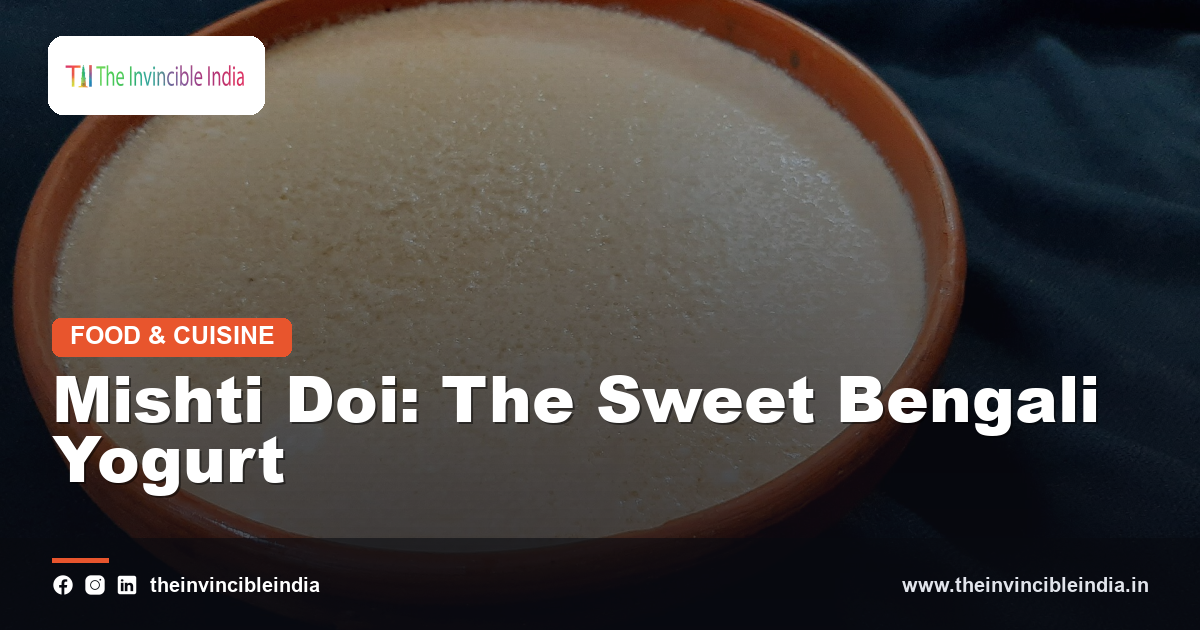
Bengal has long been celebrated for its sweets, and among the most beloved of them, standing apart from the syrup-soaked confections listed among the famous sweets of India, is mishti doi, a sweetened yogurt with a pale caramel hue and a smooth, creamy texture. The name is simple and literal: mishti means sweet and doi means yogurt in Bengali. Prepared by combining thickened milk with sugar that has been caramelised, then setting it with a yogurt culture in a shallow earthen pot, mishti doi develops a gentle sweetness, a faint tang, and a delicate, almost custard-like body. It is a fixture at Bengali weddings, festivals, and family meals, often arriving as the final course. This guide explores its identity, method, history, and cultural significance within the culinary life of Bengal.
Quick Facts
| Detail | Information |
|---|---|
| Type | Sweetened set yogurt |
| Main Ingredients | Milk, sugar or jaggery, yogurt culture |
| Colour | Pale caramel to light brown |
| Traditional Vessel | Shallow earthen pot |
| Regional Origin | Bengal |
| Typical Occasion | Weddings, festivals and family meals |
What Is Mishti Doi
Mishti doi is a traditional Bengali dessert made by setting sweetened milk into yogurt, resulting in a thick, smooth, lightly caramelised sweet. Unlike plain yogurt, which is tangy and typically served as an accompaniment to savoury food, mishti doi is sweet and rich, with a mellow flavour in which the tang is present only as a gentle undertone. Its colour ranges from pale cream to a warm, light brown, depending on how much the sugar has been caramelised before it is added to the milk. The texture is dense and creamy, firm enough to hold its shape when spooned out yet soft enough to melt easily in the mouth. It is traditionally set in a shallow earthen pot that gives it a distinctive character. Mishti doi is, in essence, the sweet yogurt of Bengal, a dessert that combines the cooling quality of dairy with the warmth of caramel.
Origins and History
The exact origins of mishti doi are not documented with precision, and its history is best understood in general terms. Yogurt has been part of Indian food for a very long time, and Bengal has a particularly rich dairy and sweet-making tradition in which milk is transformed in countless ways. Mishti doi grew out of this environment, as cooks and sweet-makers discovered that sweetening milk before setting it produced a dessert that was both refreshing and indulgent. Local tradition associates the dish with the sweet shops of Bengal, and it has long been regarded as a regional emblem. Over time it became linked to festive meals and ceremonies, and its popularity spread across the region and beyond. Although individual accounts of its first appearance vary and cannot be confirmed, there is no doubt about its deep connection to Bengali culture, where it remains an essential part of celebratory eating.
The Basic Ingredients
The ingredients of mishti doi are few, and their quality determines the final result. Full-cream milk is the foundation, and it is typically simmered and reduced so that it becomes thick and rich before setting. Sugar provides the sweetness, and it is often caramelised first, which gives the yogurt its characteristic golden-brown colour and a faint toasty flavour. In some kitchens, date palm jaggery, known as nolen gur in Bengal and available in the cooler months, is used in place of sugar, lending a distinctive fragrance and a deeper, earthier sweetness. A small amount of existing yogurt serves as the starter culture, introducing the bacteria that convert warm milk into yogurt. No artificial thickeners are traditionally needed, since reduction and the earthen pot do that work. The simplicity of this ingredient list reveals how much of mishti doi’s character depends on method and patience rather than on elaborate additions.
Caramelised Sugar and Colour
The warm colour and subtle depth of mishti doi come largely from caramelised sugar. To prepare it, sugar is heated gently until it melts and turns a light golden brown, at which point it is combined with hot milk. The result is a mixture that carries both sweetness and a faint, toasty complexity, a flavour quite different from that of plain white sugar dissolved in milk. The degree of caramelisation shapes the colour of the finished yogurt: a lightly caramelised sugar yields a pale, creamy tone, while a deeper one produces a richer brown. Cooks take care not to burn the sugar, since excessive darkening introduces bitterness that would overwhelm the delicate dairy flavour. This step is a small but defining part of the craft. Caramelisation gives mishti doi its signature appearance and its mellow, rounded sweetness, setting it apart from other sweetened yogurts found elsewhere.
Reducing the Milk
A crucial stage in preparing mishti doi is the slow reduction of the milk. The milk is simmered over steady, moderate heat for an extended period, with frequent stirring to prevent sticking or scorching, until it has thickened and reduced in volume. This concentration of the milk solids gives the finished yogurt its dense, creamy body and rich flavour, and it also contributes a subtle natural sweetness and slight caramel notes from the gentle cooking. The reduced milk is then combined with the caramelised sugar and allowed to cool to a warm, comfortable temperature before the culture is introduced. If the milk is too hot, it can kill the bacteria needed for setting, while if it is too cool, the yogurt may fail to set properly. Reducing the milk is therefore both a flavour step and a practical one, laying the foundation for the thick, luscious texture that defines mishti doi.
Setting the Yogurt
Setting is the quiet, transformative stage in which warm sweetened milk becomes yogurt. A small spoonful of existing yogurt is stirred into the milk once it has cooled to a lukewarm temperature, and the mixture is poured into shallow earthen pots. The pots are then covered and left undisturbed in a warm place, where the beneficial bacteria multiply and gradually convert the milk sugars into lactic acid, thickening the mixture into a soft, uniform set. The process typically takes several hours or overnight, depending on the surrounding warmth. During this time the yogurt should not be moved or disturbed, since agitation can disrupt the set and leave it watery. Once set, it is usually chilled before serving, which firms the texture and sharpens its refreshing character. Setting mishti doi is a lesson in patience and warmth, rewarding those who allow the natural process to unfold without interference.
The Earthen Pot
The earthen pot is inseparable from the identity of mishti doi. Traditionally, the yogurt is set in shallow, unglazed clay pots, and these vessels do much more than hold the mixture. The porous clay absorbs some of the whey and moisture from the yogurt as it sets, helping it become thicker and creamier than it would in a glass or metal container. The clay also maintains a gentle, even warmth that supports steady fermentation, and it imparts a faint, earthy fragrance that many people consider essential to the dish. Serving mishti doi in its own pot adds to the sense of occasion and to the connection with rural craft traditions, since potters have long supplied these vessels to sweet shops and households. The earthen pot is thus both a tool and a symbol, linking the dessert to the soil of Bengal and to a continuing tradition of handmade, natural materials in the kitchen.
Flavour and Texture
The flavour of mishti doi is a harmonious balance of sweetness, creaminess, and gentle tang. The caramelised sugar contributes a warm, toasty sweetness, while the reduced milk gives a rich dairy depth, and the culture adds a light, refreshing acidity that prevents the dessert from becoming cloying. The earthen pot lends a subtle mineral, earthy note that distinguishes it from versions set in other containers. In texture, mishti doi is thick, smooth, and creamy, with a firm yet delicate set that holds together when spooned but dissolves readily on the tongue. When served cold, it is particularly cooling and refreshing, which makes it a welcome dessert in the warm Bengali climate. Neither too sweet nor too sour, it occupies a pleasing middle ground. The combination of flavours and textures in mishti doi explains why it is so widely loved and why it remains a mainstay of Bengali meals.
Mishti Doi in Bengali Cuisine
Mishti doi holds an esteemed place in the culinary world of Bengal, where sweets are not merely a final course but a cultural passion. The region is known for a wide range of dairy-based confections, many made from chhena, and mishti doi stands as one of the most distinctive because it is made from set milk rather than from curdled cheese. It frequently appears at the end of a Bengali meal, offering a cooling conclusion after rich or spiced dishes. Alongside rasgulla, sandesh, and other favourites, it forms part of the sweet repertoire that defines Bengali hospitality. For a deeper look at the region’s food heritage, the Bengali cuisine guide offers broader context. Mishti doi illustrates the Bengali talent for turning milk into sweets of great variety and refinement, and it remains one of the most recognizable symbols of that tradition.
Nolen Gur and the Winter Variation
One of the seasonal pleasures of Bengali food is the use of nolen gur, the jaggery made from the sap of date palms, which becomes available in the cooler months of the year. When used to sweeten mishti doi, nolen gur imparts a distinctive aroma and a rounded, slightly smoky sweetness that many Bengalis regard as a treasured winter flavour. This variation tends to have a deeper colour and a more complex taste than the version made with refined sugar, and it is often anticipated eagerly each season. Because nolen gur is seasonal and relatively special, desserts made with it carry an air of celebration and of connection to the rhythms of the agricultural year. It also reflects Bengal’s strong tradition of using local ingredients in its sweets. The nolen gur version of mishti doi shows how seasonality enriches regional cooking, giving a familiar dessert a fresh and distinctive identity each winter.
Mishti Doi at Weddings and Festivals
Mishti doi is closely tied to the celebratory life of Bengal. At weddings, it is often served as part of the feast, and in some Bengali wedding customs yogurt and sweets hold ceremonial importance, symbolising auspiciousness and good fortune. During festivals such as Durga Puja and on occasions like the Bengali New Year, sweet shops prepare large quantities, and families share pots of mishti doi among relatives and friends. Its cooling nature makes it especially suitable for warm-weather festivities, while its rich flavour suits the spirit of indulgence that accompanies major celebrations. The act of serving it in individual earthen pots adds a touch of charm and tradition to the occasion. In this way, mishti doi functions as more than a dessert; it is a marker of hospitality and joy. Wherever Bengalis gather to celebrate, mishti doi is likely to be present, binding people together through shared sweetness.
The Role of the Sweet Shop
Sweet shops, known as mishtir dokan, are central to the story of mishti doi. These shops, many of them run by families over generations, are repositories of specialized knowledge about milk, sugar, and the delicate arts of setting and caramelising. Their makers know how to judge the thickness of reduced milk, the shade of caramel, and the right warmth for setting, often relying on experience rather than measurement. Rows of earthen pots filled with creamy yogurt are a familiar sight at such shops, particularly before festivals and weddings. The shops also play a social role, serving as gathering places where neighbours buy sweets for guests and celebrations. Through their daily work, sweet-makers preserve techniques that might otherwise fade. The mishtir dokan is therefore the guardian of mishti doi as a craft tradition, ensuring that its flavour, texture, and cultural meaning are passed on from one generation to the next.
Mishti Doi Compared With Other Yogurts and Sweets
Mishti doi is easiest to understand when compared with related foods. Ordinary curd, or dahi, is unsweetened, tangy, and commonly eaten with savoury dishes or used in cooking, while mishti doi is sweet, caramelised, and served as dessert. Shrikhand, a sweetened strained yogurt popular in western India, is thick and flavoured with saffron and cardamom, but it is made from drained curd and lacks the caramel notes and earthen-pot character of mishti doi. Western sweetened yogurts are typically made with added fruit or flavourings and are rarely caramelised or reduced. Compared with Bengali chhena sweets such as rasgulla, mishti doi is smoother, softer, and chilled rather than steeped in syrup. These distinctions show that mishti doi occupies a distinctive niche of its own. Its combination of reduced milk, caramelised sweetener, and clay-pot setting makes it a singular creation of Bengali kitchens.
Preparation at Home
Many households prepare mishti doi at home, though it requires planning and care. The milk is first simmered and reduced, the sugar caramelised separately, and the two combined while hot, after which the mixture is cooled to a lukewarm temperature. A small quantity of yogurt is stirred in as a starter, and the mixture is poured into clean pots, covered, and left in a warm, still place to set. Since the process depends on warmth, cooks in cooler weather often wrap the pots or place them in a warm corner of the kitchen. Once the yogurt has set, it is refrigerated to firm up before serving. Common difficulties include a runny set from milk that was too hot or too cool when the culture was added, and a bitter taste from over-caramelised sugar. With attention to temperature and patience, home cooks can achieve results close to those of professional sweet shops, preserving a beloved tradition in everyday kitchens.
Serving and Storing Mishti Doi
Mishti doi is best served chilled, directly from its earthen pot, with a spoon. The cold temperature emphasises its creamy body and its refreshing character, and the clay vessel keeps it attractive on the table. It is often offered as the last item of a Bengali meal, though it also stands well on its own as a dessert or an afternoon treat. For storage, it should be kept refrigerated and consumed within a few days, since it is a fresh dairy product, and the pot should be covered to prevent it from absorbing other odours. Some people garnish it lightly with chopped nuts, though the classic version is served plain to let its flavour speak for itself. Good serving and storage preserve what defines mishti doi: a cool, smooth texture, a balanced sweetness, and the faint earthiness of the pot in which it was made.
Mishti Doi Today
Today mishti doi remains one of the most recognizable and cherished desserts of Bengal. It is available in sweet shops and markets, served at restaurants and celebrations, and increasingly found beyond the region, as Bengali communities and food enthusiasts share it with wider audiences. Modern producers have introduced packaged versions and variations in flavour, yet the traditional earthen-pot form continues to be valued for its authenticity and charm. Home cooks and craftspeople alike help to sustain the techniques of reduction, caramelisation, and clay-pot setting that define the dish. The enduring appeal of mishti doi lies in its combination of simplicity and richness, of cooling freshness and warm sweetness, and in its close association with community and celebration. As a dessert that carries the character of a region in every spoonful, mishti doi continues to bring comfort and pleasure to tables across Bengal and beyond.
Sources & Further Reading
- Ministry of Culture, Government of India (indiaculture.gov.in).
- Government of West Bengal, Department of Tourism (wbtourism.gov.in).
Frequently Asked Questions
What is mishti doi?
Mishti doi is a Bengali sweetened yogurt made by setting reduced milk with caramelised sugar or jaggery. It is thick, creamy, lightly caramel in colour, and traditionally served in an earthen pot.
Why is mishti doi set in an earthen pot?
The porous clay absorbs excess moisture, which helps the yogurt thicken and become creamy. It also keeps a steady warmth during setting and adds a faint earthy fragrance.
What gives mishti doi its brown colour?
The colour comes mainly from caramelised sugar added to the reduced milk before setting. Using nolen gur, the date palm jaggery of Bengal, can also deepen the colour and flavour.
How is mishti doi different from regular curd?
Regular curd is unsweetened and tangy and is usually eaten with savoury food. Mishti doi is made from thickened, sweetened milk and is served chilled as a dessert.
When is mishti doi usually eaten?
It is commonly served at the end of a Bengali meal and at weddings, festivals and family celebrations. Its cooling character also makes it a popular treat in warm weather.


