

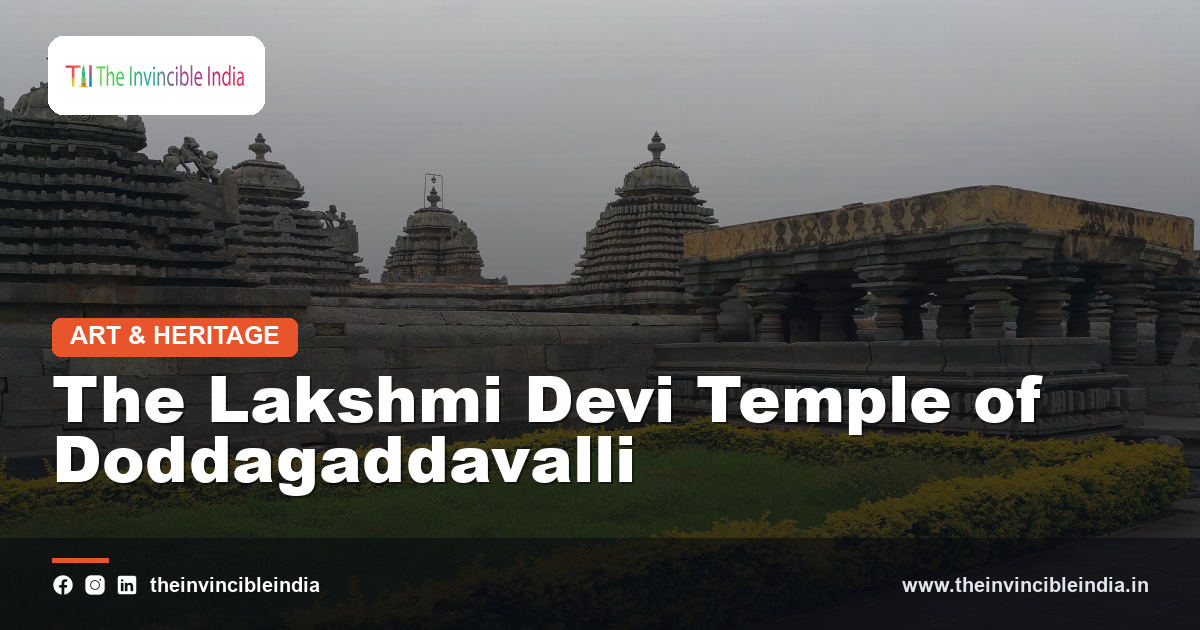
The Lakshmi Devi temple of Doddagaddavalli, also spelled Doddagadavalli or Doddagaddavalli and sometimes called the Mahalakshmi temple, is an early Hoysala temple standing in a village of Hassan district in the Indian state of Karnataka. It lies not far from the better-known Hoysala centres of Belur and Halebidu, yet it belongs to an earlier phase of the dynasty’s art and has a plan of its own, with four shrines arranged around a common hall. The temple is dedicated to the goddess Lakshmi and is admired for its balanced design and careful stone carving. It enriches the wider story of Dravidian temple architecture and its regional variations in the Deccan. This article explains where the temple is, who built it, what it contains and why it matters.
Quick answer: The Lakshmi Devi temple of Doddagaddavalli is an early Hoysala temple in Hassan district, Karnataka, India, dedicated to the goddess Lakshmi. Built in the early twelfth century and known for its plan of four shrines around a central hall, it predates the great temples of Belur and Halebidu. Its inscriptions, tower, carved doorways and soapstone sculpture make it an important monument of early Hoysala art.
Key Takeaways
- The Lakshmi Devi temple is a Hoysala temple in the village of Doddagaddavalli, Hassan district, Karnataka.
- It is dated by inscription to the early twelfth century CE, during the reign of the Hoysala king Vishnuvardhana.
- The temple is traditionally credited to a merchant named Kullahana Rahuta, which shows the role of traders as patrons.
- Its plan is chaturkuta, meaning four shrines arranged around a shared pillared hall.
- The main shrine is dedicated to Lakshmi, and other shrines honour deities such as Kali.
- It is a rare example of an early Hoysala temple that is not built on the star-shaped platform of the later style.
The sections below describe the setting, builders, plan, carving and cultural meaning of the Doddagaddavalli temple.
Quick Facts
| Detail | Information |
|---|---|
| Location | Doddagaddavalli village, Hassan district, Karnataka |
| Type | Early Hoysala Hindu temple with four shrines |
| Main deity | Lakshmi (Mahalakshmi) |
| Era | Early twelfth century CE |
| Dynasty | Hoysalas, in the reign of Vishnuvardhana |
| Traditional patron | Merchant Kullahana Rahuta |
| Plan | Chaturkuta (four shrines around a common hall) |
| Material | Soapstone and local stone |
What Is the Lakshmi Devi Temple of Doddagaddavalli?
The Lakshmi Devi temple of Doddagaddavalli is a small but historically important Hoysala temple devoted to the goddess Lakshmi, the deity of wealth, prosperity and good fortune. It stands in a quiet village in the green farming country of Hassan district. The temple is built of stone and has four shrines placed on four sides of a shared hall, a design that is rare among the temples of the Hoysala dynasty. It is known as one of the earliest dated Hoysala temples, which gives it great importance for the study of the dynasty’s art. Although it is modest in size, it combines clear planning with sensitive carving. The temple is therefore valued by scholars as a key early example, and by worshippers as a living shrine of the goddess.
Where Is Doddagaddavalli Located?
Doddagaddavalli is located in Hassan district of Karnataka, in the Malnad foothills region that holds many of the great Hoysala temples. The village lies a short distance from the town of Hassan and within reach of Belur and Halebidu, the two best-known Hoysala centres. The countryside is one of coconut groves, paddy fields and gentle hills, and the climate is mild for much of the year. The temple stands in a village setting, and visitors reach it along rural roads that pass through typical Karnataka scenery. Because the village is small and quiet, a visit has a peaceful and unhurried character. The location within the Hoysala heartland helps explain the style and history of the temple and makes it a natural stop on a heritage tour.
Who Were the Hoysalas?
The Hoysalas were a medieval dynasty that ruled much of southern Karnataka from roughly the eleventh to the fourteenth century. They rose from the hilly Malnad region and became one of the leading powers of the Deccan, with capitals at Belur and later Halebidu. The dynasty is remembered above all for its temples, which are famous for dense sculpture, lathe-turned pillars and star-shaped platforms. Hoysala kings, queens, officials and merchants all supported temple building, and the dynasty’s architecture reached a high point in the twelfth and thirteenth centuries. The Doddagaddavalli temple belongs to the early period of this tradition. Understanding the Hoysalas helps to place the temple within the larger story of South Indian art and to see how a regional dynasty created a lasting cultural legacy.
Who Built the Doddagaddavalli Temple?
The Doddagaddavalli temple is traditionally credited to Kullahana Rahuta, a merchant who built it during the reign of the Hoysala king Vishnuvardhana. An inscription at the site is usually cited as the basis for this attribution and for dating the temple to the early twelfth century. The involvement of a merchant is significant, since it shows that temple building in medieval India was not only a royal activity. Traders and guilds grew wealthy through commerce and often used their wealth to endow temples and tanks. The details of the inscription and the exact year are matters on which scholars sometimes differ, but the general picture is widely accepted. The temple is thus a monument to the partnership between royal rule and mercantile enterprise in the Hoysala age.
What Does Chaturkuta Mean?
Chaturkuta means four towers or four shrines, and it describes a temple plan in which four sanctums are grouped around a shared hall. In this plan each shrine has its own entrance from the hall, and each can house a different deity. The Doddagaddavalli temple follows this design, with shrines on the four sides of a central pillared space. The arrangement is uncommon in the Hoysala tradition, where most temples have one, two or three shrines. It allows several deities to be worshipped under one roof and creates a balanced and harmonious composition. The chaturkuta plan shows the creativity of early Hoysala builders, who experimented with different forms before the later star-shaped style became dominant.
Why Is the Temple Dedicated to Lakshmi?
The temple is dedicated to Lakshmi because she is the goddess of prosperity, and a merchant patron would naturally honour the deity who blesses trade and wealth. Lakshmi is one of the principal goddesses of Hinduism and the consort of Vishnu, and she is worshipped in homes and temples across India. Her shrine at Doddagaddavalli holds a sculpted image of the goddess, and the temple is therefore a place where people come to seek well-being and good fortune. The choice of dedication reflects the interests of the community that raised the temple. It also illustrates a wider truth about Indian temples, which often express the hopes and values of those who built them. The dedication to Lakshmi gives the temple a warm and distinctive religious character.
What Are the Four Shrines Like?
The four shrines of the temple are placed at the cardinal points around the central hall, each with its own sanctum and doorway. The principal shrine is that of Lakshmi, and the others honour different deities, with the goddess Kali among them. Each shrine has a simple, clear plan, and the doorways are carved with decorative bands and guardian figures. The grouping of several deities in one temple reflects the inclusive spirit of Hindu worship, in which different divine forms are honoured side by side. The shrines differ in detail but share a common style and are bound together by the hall in the centre. The four shrines make the temple a compact world of devotion, in which each deity has a distinct place yet all form one harmonious whole.
What Is the Tower of the Temple Like?
The main tower of the temple rises above the Lakshmi shrine and is a notable feature of the building. It is built in the early Hoysala style, with tiers of miniature shrines and mouldings that rise toward a crowning stone dome. A projecting front section, known as the sukanasi, joins the tower to the hall below. The tower shows the Dravidian tradition of tiered pyramidal superstructures, adapted to the taste of the Hoysala builders. Its decoration is clear and precise, and its proportions are pleasing to the eye. The tower lacks the heavy ornament of the later Hoysala temples, which gives it a calm elegance. It provides an early statement of ideas that were later developed in the great Hoysala monuments of Belur and Halebidu.
What Is Distinctive About the Platform and Plan?
The temple is distinctive because it stands on a simple rectangular platform rather than the star-shaped platform that became the hallmark of mature Hoysala architecture. This shows that the star-shaped plan was a later development and that early temples followed more straightforward layouts. The plain base gives the building a firm and uncluttered look, and the wall surface above it is decorated with carefully cut mouldings. The plan, with its four shrines and central hall, is easy to read and has a strong sense of symmetry. For students of architecture, the temple offers a clear view of the stage before the Hoysala style became highly elaborate. The simplicity of the base and plan is a strength, since it allows the proportions of the temple to be appreciated at a glance.
What Is the Sculpture Like at Doddagaddavalli?
The sculpture of the temple is carved in fine-grained stone, including the soft soapstone that Hoysala artists favoured for its ability to hold delicate detail. The images include goddesses, guardians and decorative figures, and they are carved with calm expression and graceful posture. Doorways and ceilings carry floral and geometric patterns, and some pillars show the smooth finish that comes from turning on a lathe. Compared with the crowded carving of Belur and Halebidu, the sculpture here is restrained and refined. This restraint gives the temple its quiet charm and helps the viewer focus on individual works. The sculpture shows that the early Hoysala workshops had already mastered the techniques that would later flower in the dynasty’s most famous monuments.
What Is Inside the Hall?
The hall at the centre of the temple is a pillared space that connects the four shrines. Its pillars are carved and polished, and the ceiling is formed of stone slabs supported by brackets. The hall is dimly lit, with light entering through the doorways, and this soft light gives the interior a contemplative mood. It serves as a gathering place for worshippers, who pass from the hall into the shrine of their choice. The structure of the hall is a fine example of early Hoysala interior design, balancing strength with decorative richness. Its central position makes it the heart of the whole building. The hall therefore acts as the practical and spiritual centre of the temple, uniting the four shrines into a single sacred space.
How Does It Compare with Belur and Halebidu?
The Doddagaddavalli temple differs from the great temples of Belur and Halebidu in scale, plan and ornament, though it belongs to the same tradition. Belur and Halebidu are large temple complexes with star-shaped platforms and thousands of carved figures, while Doddagaddavalli is a small village temple with a simple platform and restrained decoration. The earlier date of the Doddagaddavalli temple means that it shows the foundations on which the later masterpieces were built. A visit to all three sites gives a clear sense of how the Hoysala style grew from modest beginnings to splendid maturity. The Doddagaddavalli temple is therefore a valuable chapter in the Hoysala story and a rewarding contrast to its more famous neighbours.
What Role Do Merchants Play in Temple Building?
Merchants played a major role in temple building in medieval South India, and the Doddagaddavalli temple is a clear example. Trade brought wealth to merchant communities, and many used part of it to endow temples, support priests and dig tanks for public use. Guilds of traders and craftsmen often acted as patrons alongside kings, and inscriptions record their gifts. These donations expressed piety and also raised the status of the donors in society. The temples they built became centres for the local community and part of the economic life of the village. The Doddagaddavalli temple shows that heritage in India was shaped not only by rulers but also by the generosity of ordinary citizens who valued faith and craft.
How Is the Temple Cared For Today?
The temple is protected as a monument of heritage importance, and conservation efforts focus on preserving the stonework, roofing and carved surfaces. The humid climate of the region can encourage moss and plant growth, so regular cleaning and drainage maintenance are important. The temple is still used for worship, and local priests and villagers help to look after the premises. Heritage authorities work to keep the surroundings clean and to guide visitors with information boards. Visitors are asked to respect the sanctity of the shrines, to remove footwear before entering and to avoid touching the carvings. Careful conservation allows the temple to remain both a place of devotion and a source of knowledge about the early history of Hoysala art.
How Can Visitors Plan a Visit?
Visitors can plan a visit to the Doddagaddavalli temple as part of a wider tour of Hoysala heritage in Hassan district. The temple is best seen in the morning, when the light is gentle and the village is quiet, and the cooler months from October to February are the most comfortable. A guide or local priest can explain the history of the shrines and the meaning of the carvings. It is helpful to visit Belur and Halebidu on the same trip, in order to compare the early temple with the mature Hoysala style. Modest dress and respectful behaviour are expected at the shrine. A thoughtful visit rewards the traveller with a deeper understanding of how the Hoysala tradition took shape.
Doddagaddavalli Temple Today
Today the Lakshmi Devi temple of Doddagaddavalli stands as one of the treasures of Hoysala heritage and a living place of devotion to the goddess of prosperity. It draws scholars of art history, pilgrims and travellers who wish to see the beginnings of a great architectural tradition. Its four shrines, calm tower and refined carving offer a quiet contrast to the grandeur of the better-known Hoysala sites. The temple also preserves the memory of a merchant patron and of a society in which trade and faith worked together. As interest in regional heritage grows, the temple is gaining the attention it deserves. It remains a reminder that India’s cultural richness is found in village shrines as much as in famous monuments.
Sources & Further Reading
- Archaeological Survey of India (asi.nic.in).
- Ministry of Culture, Government of India (indiaculture.gov.in).
Frequently Asked Questions
Where is the Doddagaddavalli temple located?
The Lakshmi Devi temple is in the village of Doddagaddavalli in Hassan district, Karnataka. It lies a short distance from Hassan town and within reach of Belur and Halebidu.
Who built the Lakshmi Devi temple at Doddagaddavalli?
The temple is traditionally credited to a merchant named Kullahana Rahuta, who built it during the reign of the Hoysala king Vishnuvardhana. An inscription at the site dates it to the early twelfth century.
What is special about the Doddagaddavalli temple?
The temple is special for its chaturkuta plan, in which four shrines surround a shared hall, and for being one of the earliest dated Hoysala temples. It also has a simple rectangular platform rather than the later star-shaped one.
Which deity is worshipped at Doddagaddavalli?
The main shrine is dedicated to the goddess Lakshmi, the deity of wealth and prosperity. Other shrines in the temple honour deities such as Kali.
What does chaturkuta mean?
Chaturkuta means four towers or four shrines and describes a temple with four sanctums grouped around a common hall. It is a rare plan in Hoysala architecture.
How is Doddagaddavalli different from Belur and Halebidu?
Doddagaddavalli is an earlier and smaller temple with restrained carving and a plain platform, while Belur and Halebidu are large, richly sculpted temples on star-shaped platforms. Seeing them together shows how the Hoysala style developed.


