

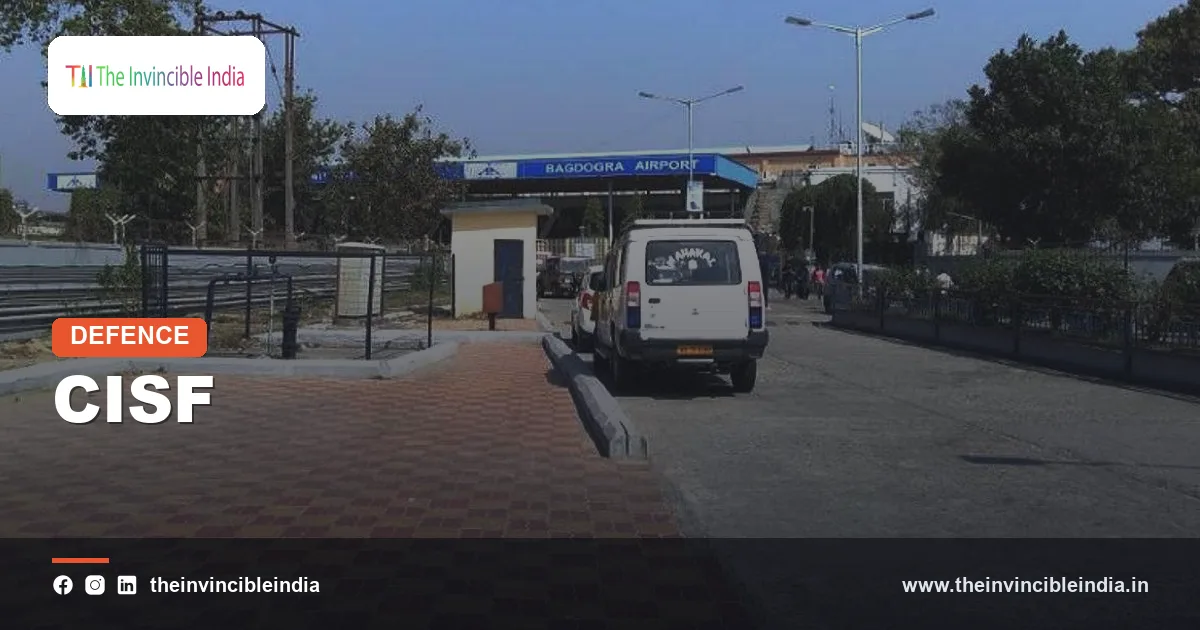
The Central Industrial Security Force (CISF) is an armed force of the Union of India, raised in 1969 under the Ministry of Home Affairs, that provides security cover to critical infrastructure such as airports, the Delhi Metro, nuclear and space installations, major seaports, power plants, government buildings and selected private industrial units. It is one of the seven Central Armed Police Forces (CAPFs) and is unusual among them because it protects installations rather than borders, and because many of its clients pay for the service.
The Central Industrial Security Force began as a small unit meant to guard public sector factories, and over five decades it has grown into one of the largest security organisations of its kind. This explainer sets out what the CISF does, how it is organised, who pays for it and why it has become central to India’s civil security architecture. Details were last reviewed on 16 October 2026.
| Attribute | Details |
|---|---|
| Full name | Central Industrial Security Force (CISF) |
| Raised | 1969, under the Central Industrial Security Force Act, 1968 |
| Parent ministry | Ministry of Home Affairs, Government of India |
| Category | Central Armed Police Force (CAPF) and an armed force of the Union |
| Headed by | Director General, traditionally an officer of the Indian Police Service (IPS) |
| Headquarters | New Delhi |
| Core mandate | Protection of vital installations, airports, metro systems, ports and industrial units |
| Funding model | Largely cost-reimbursement from the organisations it protects |
| Special features | Own fire service wing, consultancy services, disaster response capability, women’s contingents |
Key Takeaways
- The Central Industrial Security Force was raised in 1969 under the Central Industrial Security Force Act, 1968, initially to protect public sector industrial undertakings.
- The Central Industrial Security Force functions under the Ministry of Home Affairs and is one of the seven Central Armed Police Forces of India.
- The Central Industrial Security Force guards civil airports, the Delhi Metro, atomic and space establishments, major seaports, power plants and key government buildings.
- The Central Industrial Security Force recovers much of its cost from the client organisations that receive its security cover, which makes it a cost-reimbursement force.
- The Central Industrial Security Force runs a dedicated fire service wing that protects industrial units, and it also offers security consultancy services.
- The Central Industrial Security Force has inducted women personnel in significant numbers, including all-women contingents, and deploys them at airports, metro stations and other sites.
What is the Central Industrial Security Force (CISF)?
The Central Industrial Security Force (CISF) is a Central Armed Police Force whose main task is to secure sensitive and strategically important establishments rather than to patrol borders or police the streets. Its personnel are stationed inside and around the premises they protect, controlling entry, screening people and baggage, guarding perimeters and responding to threats.
The force is governed by a parliamentary statute, the Central Industrial Security Force Act, and its rules, which give its members powers of arrest, search and seizure within the protected premises. It is headed by a Director General and organised in zones, sectors and units, with each protected installation usually having a dedicated CISF unit commanded by a senior officer.
The CISF is distinct from the Central Reserve Police Force (CRPF), which focuses on law and order and counter-insurgency, and from the Border Security Force (BSF), which guards the frontiers with Pakistan and Bangladesh. The CISF specialises in the “inside the fence” security of infrastructure that the economy and national security depend on.
When and why was the Central Industrial Security Force raised?
The Central Industrial Security Force was raised in 1969, following the enactment of the Central Industrial Security Force Act in 1968, to give public sector industrial undertakings a professional and disciplined security cover. India had expanded its public sector rapidly during the 1950s and 1960s, building steel plants, fertiliser units, refineries and power stations, and these facilities faced problems of theft, sabotage and labour unrest that local arrangements could not handle well.
The force began with a small strength, organised in a handful of battalions, and was first assigned to a limited number of public sector units. Its mandate was narrow at that stage: protect government-owned industrial property and ensure that production was not disrupted by security lapses.
In the early 1980s Parliament amended the Act to declare the force an armed force of the Union, which expanded its powers and strengthened its structure. The mandate widened further in later decades. A major turning point came after the hijacking of an Indian Airlines flight in December 1999, when the government decided that airport security required a central armed force, and the CISF was given that responsibility from the early 2000s.
Who controls and commands the Central Industrial Security Force?
The Central Industrial Security Force is controlled by the Ministry of Home Affairs and commanded by a Director General, who is usually an Indian Police Service officer on central deputation. The Director General is supported by Additional Directors General and Inspectors General who lead zones and specialised functions such as airports, training and the fire wing.
The force has a hierarchy that follows the standard CAPF pattern, with ranks running from Constable up to Inspector in the subordinate ranks, and from Assistant Commandant up to Director General in the officer ranks. Direct-entry Assistant Commandants are recruited through the Union Public Service Commission, while subordinate staff are recruited through the Staff Selection Commission and force-specific recruitment drives.
Regulatory oversight for certain functions lies elsewhere. For airport security, the Bureau of Civil Aviation Security (BCAS) sets the standards and audits compliance, while the CISF carries out the physical security work. Nuclear and space sites likewise follow guidelines set by their own departments, which the CISF implements on the ground.
Which installations does the Central Industrial Security Force protect?
The Central Industrial Security Force protects a wide spectrum of installations, including civil airports, metro rail systems, atomic energy and space research facilities, major seaports, thermal and hydro power plants, steel plants, coal and oil installations, mints and currency presses, and important government buildings. The category list has grown steadily as the government has recognised more sites as vulnerable.
Strategic and sensitive sites
- Nuclear power plants and facilities of the Department of Atomic Energy.
- Establishments of the Department of Space and the Indian Space Research Organisation (ISRO).
- Defence-linked production and research facilities, where requested.
Civil and economic sites
- Airports of different sizes across the country.
- Major seaports.
- Power stations, steel plants, mines and oil and gas installations.
- Currency and security printing facilities, and mints.
Government and heritage sites
- Important government buildings in New Delhi and the state capitals.
- A number of heritage monuments that attract large visitor numbers.
The CISF’s footprint therefore reflects a simple principle: wherever a lapse in security could cause severe economic, human or strategic damage, the government tends to assign the CISF.
How does the Central Industrial Security Force provide airport security?
The Central Industrial Security Force provides airport security by manning passenger and baggage screening points, controlling access to the airside, guarding the perimeter and responding to emergencies, under the standards set by the Bureau of Civil Aviation Security. It took over this function in phases after the 1999 hijacking and now covers the large majority of India’s commercial airports.
At a typical airport, CISF personnel carry out several distinct tasks:
- Frisking passengers and scanning hand baggage at security checks before the boarding area.
- Checking vehicles and staff entering restricted airside areas.
- Patrolling the perimeter and watch towers to prevent trespass.
- Operating X-ray machines, explosive trace detectors and, in many airports, body scanners.
- Coordinating with airport operators, airlines, local police and intelligence agencies.
The CISF also fields bomb detection and disposal teams and dog squads at major airports. Airport security remains one of the most visible and demanding assignments of the force because passenger numbers, airline schedules and threat levels leave little room for delay or error.
How does the Central Industrial Security Force secure the Delhi Metro?
The Central Industrial Security Force secures the Delhi Metro by deploying armed personnel at stations and on trains, screening passengers and baggage, monitoring CCTV feeds and responding to security incidents. It took over the metro’s security in 2007 and has since been assigned to metro systems in other cities as they have opened.
Metro security has some unusual features. Stations are open public spaces visited by very large numbers of people every day, so screening has to be quick yet thorough. CISF personnel use door-frame metal detectors, hand-held detectors and baggage scanners, and they run frequent announcements and mock drills in cooperation with the metro operator.
Women commandos and women constables staff the dedicated women’s coaches and the women’s security queues, while bomb disposal squads and dog teams carry out sweeps of stations. The CISF also manages lost property, helps passengers in distress and assists with crowd management during festivals and large events, making it a service force as well as a security one.
What is the Central Industrial Security Force fire service?
The Central Industrial Security Force fire service is a specialist wing, formed in the late 1980s, that protects industrial units from fire and provides fire-fighting, rescue and fire-safety consultancy. It is one of the few CAPF wings dedicated to fire protection, and it serves refineries, power plants, ports and manufacturing units where a fire could be catastrophic.
Fire wing personnel are trained in handling chemical, oil and gas fires, not just ordinary building fires. They operate fire tenders, foam units and rescue equipment, and they work to regulate safety practices inside the facilities they cover.
The fire wing also provides advisory services to industrial clients, such as fire-risk audits, inspection of fire-fighting systems and training in fire safety for plant employees. Because industrial fires can cause widespread loss of life and property, the CISF considers fire protection an integral part of industrial security rather than an add-on.
Is the Central Industrial Security Force funded by the units it protects?
Yes, the Central Industrial Security Force is largely funded by the organisations that receive its services, which reimburse the government for the cost of the personnel deployed. This cost-reimbursement system distinguishes the CISF from forces like the BSF, which are funded from the central budget for defending the border.
Under this model, a public sector undertaking, an airport operator or a metro corporation that requests CISF cover pays charges that include salaries, allowances and related expenses. The arrangement keeps the cost of securing commercial establishments off the general budget and encourages the clients to ask for only as many personnel as they need.
Private sector and consultancy
The CISF is one of the few Central Armed Police Forces allowed to provide security to private industrial establishments on a payment basis, following a legal amendment in 2009 that opened this possibility for units of national importance. In addition, the force offers security consultancy: CISF experts conduct security audits, advise on layout and technology, and train the personnel of other organisations, again against payment.
Does the Central Industrial Security Force provide VIP security and disaster response?
Yes, the Central Industrial Security Force provides security to a limited number of high-risk protectees in addition to its industrial role, and it contributes to disaster response through its trained teams. The VIP security role is smaller than its installation role, but it has been used when the government wants to reduce the burden on other forces.
The VIP security assignment involves close protection teams, escort vehicles and residence security. The CISF has been given the responsibility for some protectees previously guarded by other forces, as the government has rationalised these duties across agencies.
For disaster response, the CISF trains personnel in search, rescue and relief, and its fire wing brings equipment suited to industrial accidents, collapsed structures and chemical emergencies. In industrial towns and port areas, CISF units are often the first organised responders when an accident occurs inside a protected facility, and they work with the National Disaster Response Force (NDRF) and local authorities when a bigger operation is needed.
What role do women play in the Central Industrial Security Force?
Women play a growing role in the Central Industrial Security Force, serving as constables, sub-inspectors and officers who are deployed at airports, metro stations, government buildings and other protected sites. Their presence is operationally important because physical screening of women passengers must be done by women personnel.
The government decided in the mid-2010s to reserve a share of constable posts in the CAPFs for women, and the CISF has sanctioned an all-women reserve battalion. Women in the force serve in frontline roles such as armed guard duty, quick-reaction teams and bomb detection, as well as in administrative and training roles.
The CISF has also formed women’s contingents for ceremonial duties and has sent women personnel on adventure and sports expeditions. Their increasing visibility at airports and on the metro has helped make security checks more acceptable to travellers while widening career options for women in uniformed services.
How are Central Industrial Security Force personnel recruited and trained?
Central Industrial Security Force personnel are recruited through national examinations and physical tests, and they are trained at the force’s own institutions, with the National Industrial Security Academy (NISA) in Hyderabad serving as its premier centre. The academy trains officers and also runs courses for personnel of other agencies and private organisations.
Basic training covers weapons handling, drill, physical fitness, law, intelligence gathering and the handling of crowds, followed by specialised courses relevant to the assignment, such as airport security, fire fighting, bomb disposal, commando operations and the use of screening technology. The CISF also operates regional training centres that prepare recruits for service.
Because CISF personnel deal daily with civilians, training places emphasis on conduct, courtesy and communication. Regular refresher courses help staff stay updated with changing technology and with international aviation and industrial security standards.
How does the Central Industrial Security Force differ from other Central Armed Police Forces?
The Central Industrial Security Force differs from other Central Armed Police Forces mainly in its mandate: it guards installations and infrastructure, whereas the others guard borders, maintain public order or conduct specialised operations. The table below compares the seven CAPFs by their principal role.
| Force | Principal role |
|---|---|
| Assam Rifles | Guarding the Indo-Myanmar border and counter-insurgency in the North East |
| Border Security Force (BSF) | Guarding the borders with Pakistan and Bangladesh |
| Central Industrial Security Force (CISF) | Protecting airports, metros, nuclear and industrial installations |
| Central Reserve Police Force (CRPF) | Internal security, law and order and counter-insurgency |
| Indo-Tibetan Border Police (ITBP) | Guarding the high-altitude border with China |
| National Security Guard (NSG) | Counter-terrorism and hostage-rescue operations |
| Sashastra Seema Bal (SSB) | Guarding the borders with Nepal and Bhutan |
This distribution of work shows why the CISF is considered the infrastructure-security specialist of the CAPFs. It is the only one of the seven whose services are delivered inside commercial premises, under a client-funded arrangement and with a mix of armed guards, technology and fire protection.
Bottom Line
The Central Industrial Security Force is India’s infrastructure-security force: raised in 1969 to protect factories, it now guards airports, metros, nuclear and space sites, ports and many other critical assets. Its cost-reimbursement model, fire wing and consultancy services set it apart from the other Central Armed Police Forces, and its growing women’s contingents show how the force has adapted to changing needs.
Frequently Asked Questions
What does the CISF stand for and what does it do?
CISF stands for the Central Industrial Security Force, an armed force of the Union under the Ministry of Home Affairs. It protects critical infrastructure such as airports, the Delhi Metro, nuclear and space installations, seaports, power plants and government buildings. It also provides fire protection, security consultancy and a limited amount of VIP security.
When was the CISF established?
The CISF was raised in 1969 under the Central Industrial Security Force Act, 1968. It began as a small force to protect public sector industrial units and was later declared an armed force of the Union through an amendment in the early 1980s. Its responsibilities grew substantially after it took charge of airport security in the early 2000s.
Does the CISF protect airports in India?
Yes, the CISF protects most commercial airports in India, working under the standards of the Bureau of Civil Aviation Security. It screens passengers and baggage, controls access to airside areas, patrols perimeters and maintains bomb detection teams. The government assigned it this role in phases after the 1999 hijacking of an Indian Airlines flight.
Who pays for CISF security?
The organisation that receives CISF cover generally pays for it, reimbursing the government for the cost of the personnel deployed. This applies to public sector undertakings, airport operators and metro corporations, and the CISF can also serve private industrial units of importance on a payment basis. The force also earns fees from consultancy and training services.
Is the CISF a paramilitary force or a police force?
The CISF is a Central Armed Police Force, which is the official name for what many people call paramilitary forces in India. It is an armed force of the Union under the Ministry of Home Affairs, not under the Ministry of Defence. Its personnel carry arms and have legal powers inside the premises they protect.
Do women serve in the CISF?
Yes, women serve in the CISF as constables, sub-inspectors and officers, and the force has sanctioned an all-women reserve battalion. They are deployed at airports, metro stations and other sites, where they conduct searches of women passengers and perform armed duties. Their share in the force has been rising since the mid-2010s.
{“@context”:”https://schema.org”,”@graph”:[{“@type”:”FAQPage”,”mainEntity”:[{“@type”:”Question”,”name”:”What does the CISF stand for and what does it do?”,”acceptedAnswer”:{“@type”:”Answer”,”text”:”CISF stands for the Central Industrial Security Force, an armed force of the Union under the Ministry of Home Affairs. It protects critical infrastructure such as airports, the Delhi Metro, nuclear and space installations, seaports, power plants and government buildings. It also provides fire protection, security consultancy and a limited amount of VIP security.”}},{“@type”:”Question”,”name”:”When was the CISF established?”,”acceptedAnswer”:{“@type”:”Answer”,”text”:”The CISF was raised in 1969 under the Central Industrial Security Force Act, 1968. It began as a small force to protect public sector industrial units and was later declared an armed force of the Union through an amendment in the early 1980s. Its responsibilities grew substantially after it took charge of airport security in the early 2000s.”}},{“@type”:”Question”,”name”:”Does the CISF protect airports in India?”,”acceptedAnswer”:{“@type”:”Answer”,”text”:”Yes, the CISF protects most commercial airports in India, working under the standards of the Bureau of Civil Aviation Security. It screens passengers and baggage, controls access to airside areas, patrols perimeters and maintains bomb detection teams. The government assigned it this role in phases after the 1999 hijacking of an Indian Airlines flight.”}},{“@type”:”Question”,”name”:”Who pays for CISF security?”,”acceptedAnswer”:{“@type”:”Answer”,”text”:”The organisation that receives CISF cover generally pays for it, reimbursing the government for the cost of the personnel deployed. This applies to public sector undertakings, airport operators and metro corporations, and the CISF can also serve private industrial units of importance on a payment basis. The force also earns fees from consultancy and training services.”}},{“@type”:”Question”,”name”:”Is the CISF a paramilitary force or a police force?”,”acceptedAnswer”:{“@type”:”Answer”,”text”:”The CISF is a Central Armed Police Force, which is the official name for what many people call paramilitary forces in India. It is an armed force of the Union under the Ministry of Home Affairs, not under the Ministry of Defence. Its personnel carry arms and have legal powers inside the premises they protect.”}},{“@type”:”Question”,”name”:”Do women serve in the CISF?”,”acceptedAnswer”:{“@type”:”Answer”,”text”:”Yes, women serve in the CISF as constables, sub-inspectors and officers, and the force has sanctioned an all-women reserve battalion. They are deployed at airports, metro stations and other sites, where they conduct searches of women passengers and perform armed duties. Their share in the force has been rising since the mid-2010s.”}}]}]}


