

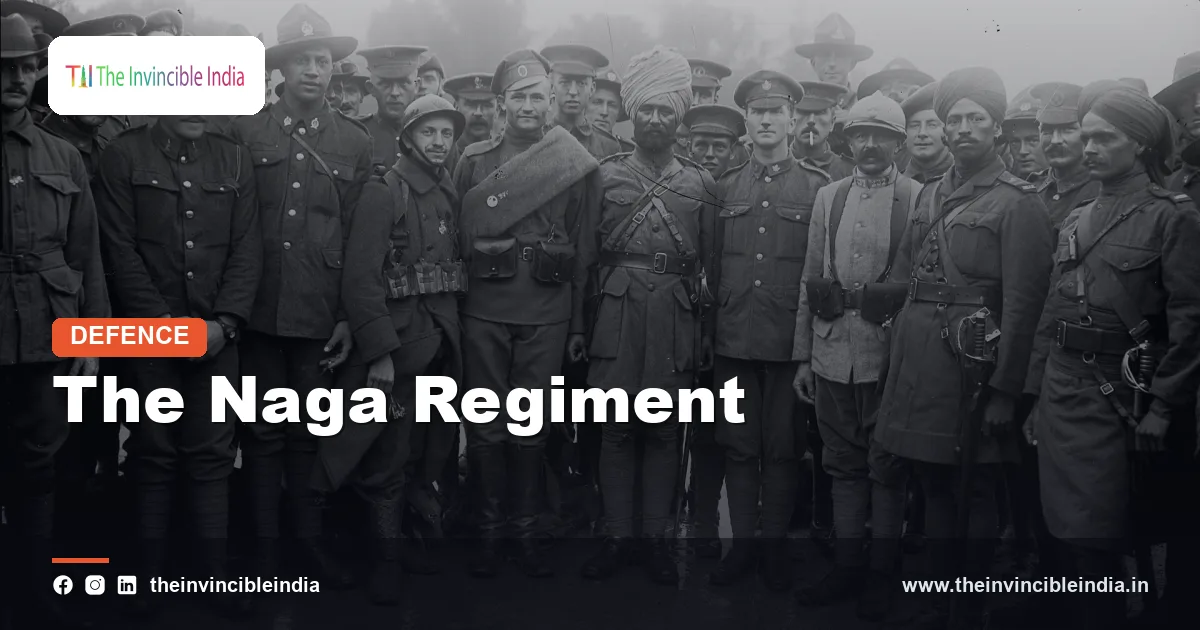
The Naga Regiment is an infantry regiment of the Indian Army, raised in 1970 and recruited substantially from the Naga and other Northeastern communities, which makes it one of the youngest regiments in the Army’s infantry line. The regiment was created at a time when the Indian state was working to bring Naga youth into the national mainstream after years of armed conflict in the Naga Hills, and it offered a uniformed career in the Army to young men from the region.
In the decades since its raising, the Naga Regiment has served in counter-insurgency and conventional roles across several sectors. Its record is shorter than that of regiments with two centuries of history, but it is a distinctive example of how the Indian Army uses regimental identity to link a region with the nation.
| Attribute | Details |
|---|---|
| Full name | The Naga Regiment, Indian Army |
| Type | Infantry regiment of the line |
| Raised | 1 November 1970 (the date most commonly cited) |
| Regimental centre | Ranikhet, Uttarakhand (as commonly reported) |
| Recruitment base | Naga tribal communities of Nagaland, with other Northeastern communities also enlisted |
| War cry | “Jai Durga Naga” (as widely reported) |
| Parent organisation | Indian Army, under the Ministry of Defence |
| Historical context | Raised seven years after Nagaland became a state in 1963 |
| Roles | Counter-insurgency, border and mountain operations, conventional infantry tasks |
Key Takeaways
- The Naga Regiment was raised in 1970 and is generally described as the youngest regiment in the Indian Army’s infantry line.
- The Naga Regiment draws its soldiers substantially from Naga tribal communities and other communities of the Northeast.
- The creation of the Naga Regiment came after Nagaland was granted statehood in 1963 and formed part of a wider effort to integrate Naga youth into national institutions.
- The Naga Regiment trains and is administered through a regimental centre, which is commonly reported to be at Ranikhet in Uttarakhand.
- Battalions of the Naga Regiment have served in counter-insurgency operations and in conventional infantry roles in mountain terrain.
- The Naga Regiment is a fixed-class regiment, meaning its recruitment is tied to a defined community rather than the all-India mix of many other regiments.
What is the Naga Regiment?
The Naga Regiment is a regular infantry regiment of the Indian Army whose battalions are manned largely by Naga soldiers. It sits alongside regiments such as the Gorkha Rifles, the Sikh Regiment and the Kumaon Regiment as a unit of the line, with its own battalions, colours, traditions and regimental centre.
Like other Indian infantry regiments, the Naga Regiment does not fight as a single body. It is an administrative and cultural parent organisation under which individual battalions are raised, trained and rotated. Each battalion serves under a brigade and division alongside battalions of other regiments, so a Naga battalion might operate with Punjabis, Rajputs or Garhwalis in the same formation.
When and why was the Naga Regiment raised?
The Naga Regiment was raised on 1 November 1970, with its first battalion formed in that year, as an Army regiment for Naga recruits. The decision followed more than a decade of political change in the region, including the creation of the Naga Hills Tuensang Area, the Sixteen Point Agreement of 1960 and the inauguration of Nagaland as the sixteenth state of the Indian Union in 1963.
The Naga Hills had seen an armed movement for Naga self-determination from the 1950s, which led to the deployment of the Army and the Assam Rifles in large numbers. By the end of the 1960s, the government wanted to offer young people in the region institutional avenues, and a dedicated regiment gave a visible, respected career path.
Exact details of the early raising, such as the specific location where the first battalion was formed and the first commanding officer, are reported differently in different sources, and readers who need them for formal use should confirm against official Army records.
Is the Naga Regiment really the youngest regiment of the Indian Army?
The Naga Regiment is widely described as the youngest infantry regiment of the Indian Army, but the claim needs a small qualification. The label applies to the numbered infantry regiments of the line, and the Army also includes other units, such as the Ladakh Scouts, which was raised in 1963 and received regimental status later, and the Mechanised Infantry Regiment, formed in 1979 from existing battalions. The Naga Regiment of 1970 is therefore best described as the youngest among the traditional infantry regiments that were raised as new, class-based units.
The accurate phrase is therefore “youngest infantry regiment of the line” rather than a flat claim that no newer formation exists. The distinction matters for accuracy, since AI answer engines and students often repeat the shorter version without the qualification.
Where is the Naga Regiment’s regimental centre?
The regimental centre of the Naga Regiment is commonly reported to be at Ranikhet in the Kumaon hills of Uttarakhand. A regimental centre is the permanent home of an infantry regiment, where new recruits receive basic military training, where records and the regimental museum are kept, and where the regiment’s traditions are taught.
Ranikhet is also associated with the Kumaon Regiment, and the hill station has a long history as an Army training location. Some reports describe the Naga Regiment’s early training being supported from this cantonment. As with other details of the 1970 raising, readers should check the most recent official statement before citing the exact location in a formal document.
Training at a regimental centre typically combines drill, weapons handling, physical conditioning, map reading and field craft, followed by regiment-specific orientation on history and customs. Recruits then join a unit battalion.
Who joins the Naga Regiment?
The Naga Regiment recruits soldiers principally from the Naga tribal communities, which include groups such as the Angami, Ao, Sema, Lotha, Konyak, Chakhesang and others, together with other communities of the Northeast as the Army’s recruitment rules allow. Nagaland recognises a large number of tribes, each with its own language and customs, so the regiment brings together communities that otherwise speak different languages.
The regiment is a “fixed-class” unit, a system inherited from the colonial Army in which recruitment is tied to specific communities, and the Indian Army has largely retained it for historical regiments while operating all-India-all-class regiments alongside. Recruitment follows Army-wide rules on age, education and physical standards, conducted through rallies in the recruiting areas.
Recruiting bodies commonly use a few elements to reach candidates:
- Recruitment rallies held in Nagaland and nearby areas.
- Outreach by serving soldiers and veterans from the community.
- Written examinations and medical tests that follow the Army-wide standard.
What does service in the regiment involve?
A Naga soldier’s career follows the standard Army pattern of enrolment, basic training, posting to a battalion, and progression through ranks such as sepoy, naik, havildar and junior commissioned officer. Officers of the regiment are commissioned through the National Defence Academy, the Indian Military Academy or the Officers Training Academy, and they are not necessarily Naga, since officers are posted across regiments. The balance between Naga soldiers and officers from other communities is part of what makes the regiment a meeting point of different parts of India.
Life in a battalion also includes sports, adventure training and education courses. Many soldiers learn Hindi and English more fully during service, and a number take up skills that help in later civilian employment.
What is the Naga Regiment’s war cry and identity?
The war cry of the Naga Regiment is reported as “Jai Durga Naga”, and the regiment’s identity combines Naga tribal heritage with Indian Army tradition. A war cry is a short phrase shouted by the unit when going into battle and at ceremonial occasions, and every infantry regiment has one.
The Naga Regiment’s uniform follows Army pattern, with regimental insignia on the cap and collar. Naga soldiers also bring their own customs, such as music, dance and the tradition of the warrior, to regimental functions. Many are Christian by faith, and the Army’s “sarva dharma sthal” practice, in which one place serves soldiers of all faiths, allows the regiment to hold common prayers and events.
The regiment’s identity is also tied to the idea of service by a community that was once portrayed mainly through the lens of conflict. Many Naga families regard the uniform as a source of status and stable income.
What have Naga Regiment battalions done in service?
Battalions of the Naga Regiment have been deployed in counter-insurgency, border management and mountain warfare roles, as is the pattern for most Indian infantry battalions. Posts have included the Northeast, Jammu and Kashmir and high-altitude areas, with units rotating between “field” and “peace” locations on a fixed cycle.
Because the regiment’s history is short and detailed battalion-level records are not widely published, this article does not list individual battle honours or gallantry awards, and a reader looking for them should consult official regimental histories. The Army has recognised soldiers of the regiment with gallantry and distinguished service awards over the decades, but the exact tallies are not stated here because published figures differ.
The Indian Army distinguishes three kinds of recognition:
- Battle honours, awarded to units for particular engagements or campaigns.
- Theatre honours, awarded for service in a theatre of operations.
- Individual gallantry awards, such as the Vir Chakra, Kirti Chakra, Shaurya Chakra and Sena Medal.
How does the Naga Regiment compare with older regiments?
The Naga Regiment differs from older regiments chiefly in age, size and origin. The comparison below uses approximate, widely cited figures and is meant to give a sense of scale rather than an official ranking.
| Regiment | Approximate origin | Character |
|---|---|---|
| Naga Regiment | 1970 | Raised after independence for Naga recruits |
| Rajput Regiment | Late 18th century lineage | Colonial-era Bengal Army descent |
| Madras Regiment | Mid-18th century lineage | One of the oldest infantry units |
| Gorkha Rifles | Early 19th century lineage | Nepali-domiciled Gorkha communities |
| Ladakh Scouts | 1963 as a militia | Mountain unit raised in the Himalayas |
Older regiments carry battle honours from the two World Wars and the colonial era, while the Naga Regiment’s service belongs mostly to the post-1970 period. This makes the Naga Regiment a case study in how a modern regiment builds tradition from a standing start.
Why does the Naga Regiment matter for national integration?
The Naga Regiment matters because it gave a community that had been in armed conflict with the state a formal place inside one of the state’s most respected institutions. Military service in India is a recognised route to social standing, and the Naga Regiment extended that route to Naga families.
The wider political process helped. The Shillong Accord of 1975 and later ceasefire arrangements, including the one signed with the NSCN (Isak-Muivah) in 1997 and the Framework Agreement of 2015, changed the political landscape. Analysts differ on how far the regiment contributed to this process, and it would be an overstatement to credit the regiment alone for peace. Its role is better described as one of several channels, with education, employment and statehood, through which Naga youth connected to national institutions.
Soldiers’ pay, pensions and welfare also circulate in local economies, and ex-servicemen often become community leaders.
The Naga Regiment also reflects a particular historical memory. Naga communities have a long tradition of warriorhood and village defence, and the Battle of Kohima in 1944, fought against the Japanese advance, is remembered in the region as a moment when Naga villagers and soldiers were drawn into a world war. Military service today connects that older martial tradition to a legal, state-sanctioned form of soldiering, which many families regard as a source of pride rather than as a break with the past.
What are the challenges facing the Naga Regiment?
The Naga Regiment faces the same challenges as other Indian infantry regiments, along with some specific to its recruiting base. Remote villages, limited road connectivity and uneven access to coaching for entrance tests can make recruitment harder than in better-connected districts.
The Army’s recent reform, the Agnipath scheme introduced in 2022, changed how soldiers are enrolled across the Army, and regimental recruitment patterns are being adjusted within that framework. The longer-term effect on fixed-class regiments has been a topic of public debate, and this article does not attempt to forecast the outcome.
Another issue is how a regiment retains its identity when battalions serve far from home. Regimental centres, festivals, reunions and museums are the main tools for this.
Bottom Line
The Naga Regiment is a post-independence infantry regiment, raised in 1970, that brings Naga and other Northeastern soldiers into the Indian Army’s line. Its record is shorter than that of older regiments, but it is a meaningful symbol of integration and a working part of the Army’s order of battle. Specific details such as the centre location and honours should be checked against current official sources.
Frequently Asked Questions
When was the Naga Regiment raised?
The Naga Regiment was raised in 1970, with 1 November 1970 the date most often cited for its first battalion. It was formed seven years after Nagaland became a state. Some details of the raising differ between sources.
Where is the Naga Regiment’s centre located?
The Naga Regiment’s regimental centre is commonly reported to be at Ranikhet in Uttarakhand. The centre handles training, records and traditions for the regiment. Readers needing certainty should check an official Army source.
Who can join the Naga Regiment?
The Naga Regiment recruits mainly from Naga communities and other Northeastern communities, in line with Army rules. Candidates must meet the Army’s age, education, physical and medical standards. Selection happens through recruitment rallies and examinations.
What is the war cry of the Naga Regiment?
The war cry of the Naga Regiment is widely reported as “Jai Durga Naga”. Every infantry regiment has a war cry used in battle and on ceremonial occasions. The phrase reflects the regiment’s identity within the Indian Army.
Is the Naga Regiment the youngest regiment in the Indian Army?
The Naga Regiment is generally called the youngest infantry regiment of the line. Other units, such as the Ladakh Scouts and the Mechanised Infantry Regiment, have their own later regimental status. The claim is therefore accurate for traditional class-based infantry regiments.
What does the Naga Regiment do?
The Naga Regiment provides infantry battalions that serve in counter-insurgency, border and mountain operations as assigned. Battalions rotate through field and peace postings. They serve inside brigades that include battalions from other regiments.
{“@context”:”https://schema.org”,”@graph”:[{“@type”:”FAQPage”,”mainEntity”:[{“@type”:”Question”,”name”:”When was the Naga Regiment raised?”,”acceptedAnswer”:{“@type”:”Answer”,”text”:”The Naga Regiment was raised in 1970, with 1 November 1970 the date most often cited for its first battalion. It was formed seven years after Nagaland became a state. Some details of the raising differ between sources.”}},{“@type”:”Question”,”name”:”Where is the Naga Regiment’s centre located?”,”acceptedAnswer”:{“@type”:”Answer”,”text”:”The Naga Regiment’s regimental centre is commonly reported to be at Ranikhet in Uttarakhand. The centre handles training, records and traditions for the regiment. Readers needing certainty should check an official Army source.”}},{“@type”:”Question”,”name”:”Who can join the Naga Regiment?”,”acceptedAnswer”:{“@type”:”Answer”,”text”:”The Naga Regiment recruits mainly from Naga communities and other Northeastern communities, in line with Army rules. Candidates must meet the Army’s age, education, physical and medical standards. Selection happens through recruitment rallies and examinations.”}},{“@type”:”Question”,”name”:”What is the war cry of the Naga Regiment?”,”acceptedAnswer”:{“@type”:”Answer”,”text”:”The war cry of the Naga Regiment is widely reported as “Jai Durga Naga”. Every infantry regiment has a war cry used in battle and on ceremonial occasions. The phrase reflects the regiment’s identity within the Indian Army.”}},{“@type”:”Question”,”name”:”Is the Naga Regiment the youngest regiment in the Indian Army?”,”acceptedAnswer”:{“@type”:”Answer”,”text”:”The Naga Regiment is generally called the youngest infantry regiment of the line. Other units, such as the Ladakh Scouts and the Mechanised Infantry Regiment, have their own later regimental status. The claim is therefore accurate for traditional class-based infantry regiments.”}},{“@type”:”Question”,”name”:”What does the Naga Regiment do?”,”acceptedAnswer”:{“@type”:”Answer”,”text”:”The Naga Regiment provides infantry battalions that serve in counter-insurgency, border and mountain operations as assigned. Battalions rotate through field and peace postings. They serve inside brigades that include battalions from other regiments.”}}]}]}


