

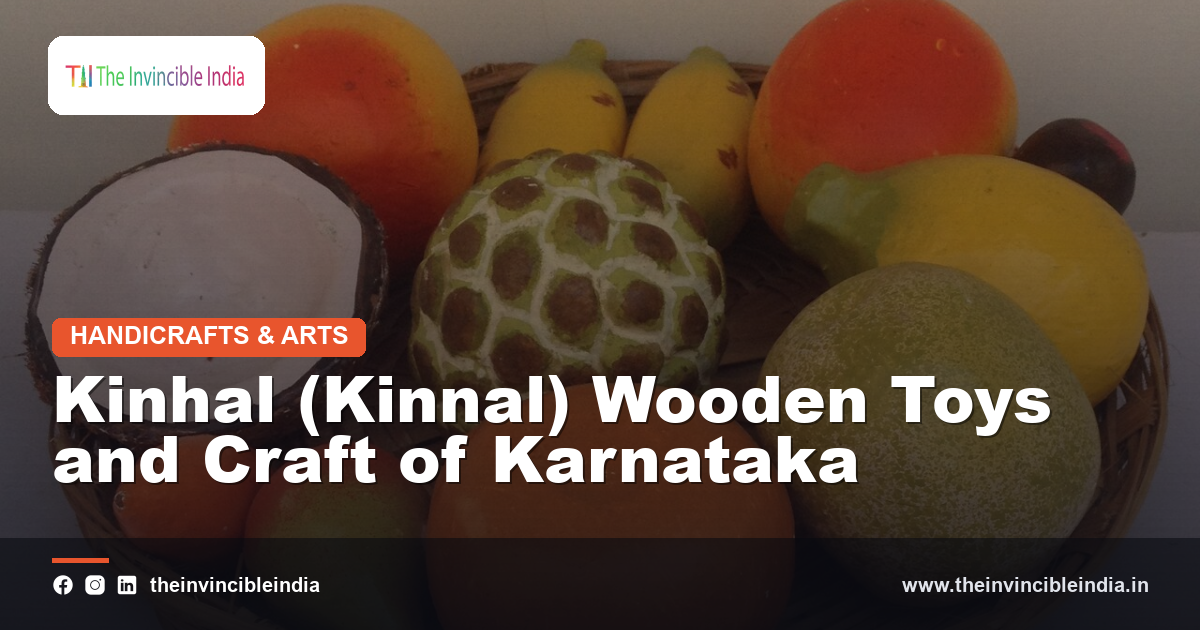
Kinhal toys, from the craft also called Kinnal, are traditional lightweight wooden toys and figures made in the village of Kinhal, also spelled Kinnal, in the Koppal district of Karnataka. The craft shapes soft, light wood into dolls, religious figures and decorative items, then builds up detail with a paste made of fine wood dust and tamarind-seed paste, together with cloth and paper, before the pieces are smoothed and brightly painted. The figures are known for their rich colours, their rounded, expressive forms and their religious and festive subjects, and they are made chiefly by the Chitragar community of artisans. Readers who enjoy the broad variety of traditional handicrafts of Rajasthan will find in Kinhal one of South India’s distinctive toy and image-making traditions. This guide describes the craft, its home, its history, its materials, its technique, its motifs, its artisans and its present-day place.
Quick answer: Kinhal craft, also spelled Kinnal, is a traditional Karnataka craft of lightweight painted wooden toys and figures made in Kinhal village in the Koppal district. Soft, light wood is shaped and then modelled with a paste of wood dust and tamarind-seed paste, cloth and paper, before being brightly painted. The figures depict deities, dolls and decorative subjects and are made chiefly by the Chitragar community.
Key Takeaways
- Kinhal craft, also spelled Kinnal, is a traditional craft of lightweight painted wooden toys and figures from Karnataka.
- It is made in Kinhal (Kinnal) village in the Koppal district of Karnataka, India.
- Figures are shaped from soft, light wood and modelled with a paste of wood dust and tamarind-seed paste, cloth and paper.
- The finished pieces are smoothed and brightly painted in rich colours.
- Typical subjects include religious figures, dolls and decorative items.
- The craft is made chiefly by the Chitragar community of artisans.
The sections below explain what Kinhal craft is, where it is made, how the figures are built up and painted, who makes them and why they still matter.
Quick Facts
| Detail | Information |
|---|---|
| Craft type | Lightweight painted wooden toys and figures |
| Region of origin | Kinhal (Kinnal) village, Koppal district, Karnataka |
| Also known as | Kinnal craft, Kinhal kalegalu |
| Materials | Soft light wood, wood-dust and tamarind-seed paste, cloth, paper, paint |
| Technique | Carving, modelling with paste, cloth and paper, then painting |
| Known for | Brightly painted religious figures and dolls |
| GI status | A recognised traditional Karnataka handicraft |
| Community | Chitragar artisan community |
What Is Kinhal Craft?
Kinhal craft, also spelled Kinnal, is a traditional Karnataka craft of lightweight wooden toys and figures that are shaped, modelled with paste, cloth and paper, and then brightly painted. The craft begins with soft, light wood, which is carved into the basic form of a doll, deity or decorative figure, and detail is then built up using a paste of fine wood dust and tamarind-seed paste, along with cloth and paper, to create a smooth, mouldable surface. Once the form is finished and dried, it is painted in rich, cheerful colours with decorative detail. The figures are valued as toys, as religious images and as decorative objects. The craft takes its name from Kinhal village and is made chiefly by the Chitragar community. Kinhal craft is one of Karnataka’s distinctive image-making traditions. Its bright colours and rounded forms define its character.
Where Is Kinhal Made?
Kinhal craft is made in the village of Kinhal, also spelled Kinnal, in the Koppal district of Karnataka, in the northern part of the state. The village has long been the home of the craft, giving it its name, as is common with Indian crafts that are known by their place of origin. Koppal district lies in a region with its own traditions of temple worship, folk art and craft, which provided both the subjects and the demand for Kinhal figures. The craft became identified with the village because communities of image-makers settled and worked there over generations, supplying toys and religious figures to the surrounding area. The concentration of skilled artisans in Kinhal helped the craft develop its recognisable style. The village and the craft are closely bound together. Kinhal is therefore both a place and a byword for its painted figures.
What Is the History of Kinhal Craft?
Kinhal craft has a long history as a hereditary craft of its village, tied to the making of religious figures, temple decoration and toys, though its precise early origins are not documented in exact detail. The craft is associated with the Chitragar community of image-makers and painters, whose skills in carving, modelling and painting served the needs of temples, festivals and households over generations. Making deities, dolls and decorative figures was part of the wider tradition of religious and folk art in the region. Because much of the early story rests on tradition, it is best described in general terms as part of Karnataka’s craft heritage. What is clear is that Kinhal became firmly established as a centre of toy and image making. Its history reflects the enduring demand for painted figures. The craft’s roots lie deep in village and temple life.
What Materials Are Used in Kinhal Craft?
Kinhal craft uses soft, light wood as its base, together with a special paste, cloth, paper and bright paints. The wood is chosen for being light and easy to carve, which suits the making of toys and figures that are not heavy. A key material is a paste made from fine wood dust mixed with tamarind-seed paste, which is used to build up and model detail over the carved wood, giving a smooth, workable surface. Cloth and paper are also applied to strengthen the figure and to create a fine finish before painting. Paints give the figures their characteristic rich, bright colours, and decorative detail may be added by hand. Because practices vary between artisans, the exact materials and recipes differ. These simple natural materials are transformed into colourful figures. The paste and the light wood are central to the craft.
How Are Kinhal Figures Made?
Kinhal figures are made by carving a light wooden core, modelling detail over it with paste, cloth and paper, and then smoothing and painting the finished form. The artisan first shapes the basic figure from soft wood, forming the body, head and limbs of a doll or deity. Detail is then built up using the paste of wood dust and tamarind-seed paste, along with cloth and paper, to model features such as faces, ornaments and costume and to create a smooth surface. Once the figure is dry, it is smoothed and primed, then painted in bright colours with fine decorative detail added by hand. Larger or finer figures may be more elaborately modelled and decorated than simple toys. The whole process relies on the artisan’s skill in carving, modelling and painting. Each stage demands care and experience.
What Is the Role of the Tamarind-Seed Paste?
The tamarind-seed paste, mixed with fine wood dust, plays a central role in Kinhal craft by allowing artisans to model fine detail over the carved wooden core. This paste provides a smooth, workable material that can be shaped into features such as faces, jewellery, crowns and costume detail, which would be difficult to carve directly in the soft wood. Together with cloth and paper, the paste builds up and strengthens the figure, creating a fine, even surface that takes paint well. Because it can be moulded and refined, the paste gives Kinhal figures their rounded, well-detailed forms. The use of this paste is one of the distinctive technical features of the craft. It bridges the gap between rough carving and the finished painted figure. The paste is essential to the craft’s characteristic look.
What Subjects and Motifs Does Kinhal Depict?
Kinhal craft depicts a range of subjects, with religious figures, dolls and decorative items among the most common. Images of deities and figures from Hindu mythology and religious tradition are a major part of the craft, serving worship, festivals and temple decoration. Dolls, animals, birds and figures drawn from everyday life and folklore are also made as toys and decorative objects. The figures are given bright colours and decorative detail, with painted ornaments, costume and features that bring them to life. The subjects reflect the religious and cultural life of the region, as well as the demand for toys and ornaments. This range allows the craft to serve both devotional and playful purposes. Whatever the subject, the hallmark is a brightly painted, rounded figure. These motifs give Kinhal craft its festive, devotional character.
What Makes Kinhal Craft Distinctive?
Kinhal craft is distinctive for its lightweight construction, its modelling with wood-dust and tamarind-seed paste, and its rich, bright painting. Because the figures are built on a light wooden core and modelled with paste, cloth and paper, they are relatively light and have smooth, rounded, well-detailed forms rather than the hard look of solid carving. The bright, cheerful colours and the fine painted detail of faces, ornaments and costume give the figures their lively character. The craft’s focus on religious figures and dolls links it to the devotional and festive life of the region. Its long association with Kinhal village and the Chitragar community adds to its identity. These qualities together make Kinhal figures recognisable and valued. Their combination of light modelling and bright colour is central to their appeal. The craft is a proud example of Karnataka image-making.
What Types of Kinhal Objects Are Made?
Kinhal makes a range of objects, from religious figures and dolls to decorative and festive items. Images of deities and mythological figures form an important part of the craft, used in worship, festivals and temple decoration. Dolls, animals, birds and figures from folklore and daily life are made as toys and ornaments, and these have long delighted children and decorated homes. Decorative pieces and figures suited to festive display, including items associated with the seasonal doll arrangements of the region, are also produced. Some objects are simple toys, while others are larger, finer and more elaborately modelled and painted. The range allows the craft to serve devotion, play and decoration alike. Whatever the object, the hallmark remains the light, brightly painted figure. This variety shows the craft’s versatility. It allows Kinhal to suit many needs and occasions.
Who Are the Chitragar Artisans?
The Chitragar artisans are the traditional image-makers and painters of Kinhal who carry on the craft, their very name linked to the making of pictures and figures. The craft requires skill in carving the wooden core, modelling detail with paste, cloth and paper, and painting the figure with bright colours and fine detail, and this knowledge is passed down within families through long practice. Different members of a household may share the stages of carving, modelling, finishing and painting. The artisans supply religious, festive and household demand, and craft cooperatives and government bodies have supported them with recognition and access to buyers. Like many traditional crafts, Kinhal depends on keeping skilled artisans in the trade amid other opportunities. The knowledge held by the Chitragar makers is the craft’s living heart. Their skill keeps the painted figures alive. The community sustains the tradition.
Is Kinhal a Recognised Karnataka Craft?
Kinhal craft is recognised as a traditional handicraft of Karnataka and is valued as part of the state’s heritage of toy-making, image-making and folk art. It is promoted and supported as a distinctive Karnataka craft, admired for its lightweight painted figures and its devotional subjects. Whether the craft holds a specific Geographical Indication of its own is best confirmed with the official Geographical Indications Registry and the Karnataka handicraft authorities, since the status of individual crafts can vary and change over time. Whatever the formal position, Kinhal is clearly identified with its village and the Chitragar community. Recognition and heritage interest help protect the craft and sustain its makers. They also encourage the making and collecting of genuine figures. The bond between the craft and its region remains central to its identity. The craft is a cherished emblem of Karnataka craftsmanship.
How Does Kinhal Relate to Temple and Festive Life?
Kinhal craft is closely tied to the temple and festive life of its region, where painted figures of deities and festive objects play an important part. The making of religious images served the needs of worship, temple decoration and household shrines, and the Chitragar community has long been associated with such devotional art. During festivals, brightly coloured figures and dolls brought by the craft add colour and meaning to celebrations and displays. The craft is also linked to the seasonal doll-display tradition of the region, in which painted figures are arranged in homes. This devotional and festive role gave the craft steady purpose and demand over generations. The figures are therefore not merely toys but objects with cultural and religious significance. This connection keeps the craft rooted in community life. Kinhal belongs to the religious and festive world of its region.
How Does Kinhal Compare with Other Indian Toy Crafts?
Kinhal craft differs from other Indian wooden toy traditions in its use of a light wooden core modelled with paste, cloth and paper, and its focus on brightly painted religious figures. India has several famous wooden toy crafts, including those that turn and lacquer solid wood on a lathe and those that carve figures directly from timber. Kinhal stands apart because its figures are built up and modelled with the characteristic wood-dust and tamarind-seed paste, giving smooth, rounded, detailed forms, and because of its strong devotional subject matter. Comparing these traditions shows the variety of Indian toy and image-making crafts. Kinhal contributes a distinctive modelling-and-painting voice from northern Karnataka. Each regional craft has its own materials and character. Kinhal’s light modelling and bright religious figures are distinctly its own.
What Challenges Does the Craft Face Today?
Kinhal craft faces challenges common to many traditional toy and image crafts, including competition from cheap plastic and factory-made toys and idols, fair pricing for artisans and the difficulty of keeping young makers in the trade. Mass-produced figures and imitations can undercut handmade work and mislead buyers who do not know the difference. The labour-intensive nature of carving, modelling and painting each figure by hand adds pressure on artisan incomes. Younger members of craft families sometimes seek other livelihoods, which threatens the passing on of skills. At the same time, interest in handmade and heritage crafts, festive and devotional demand, and support from craft bodies offer encouragement. Fair pricing and honest labelling help genuine artisans. The craft’s survival depends on continued demand for real handmade figures. Meeting these challenges is essential for its future.
How Can You Buy Authentic Kinhal Figures?
Authentic Kinhal figures can be bought from Karnataka handicraft emporiums, recognised artisan cooperatives, craft fairs and trusted stores that name Kinhal or Kinnal and the Koppal region as the source. A genuine piece is light, built on a wooden core and modelled with the characteristic paste, cloth and paper, and shows bright hand-painting with slight natural variation that marks it as handwork. Cheap plastic or factory-made imitations may feel uniform or heavier, lack the fine modelled detail, or show a printed rather than hand-painted finish. Buyers can judge the weight, examine the modelling and painting closely and ask about the maker and materials. Buying directly from artisan societies helps income reach the Chitragar makers. Gentle handling and dry storage protect the figures. Careful buying rewards genuine craftsmanship. It also ensures a true example of the craft.
Kinhal Craft Today
Kinhal craft today remains a valued toy and image tradition of Karnataka and a proud emblem of the Chitragar community’s artistry. The village’s artisans continue to carve, model and paint lightweight figures of deities, dolls and decorative subjects, serving devotional, festive and collector demand. Recognition as a heritage craft, interest in handmade objects and the festive and devotional role of the figures have brought the craft renewed attention. At the same time, it faces real challenges of competition from factory-made toys and idols, fair pricing and the need to attract young artisans to a demanding trade. Readers can support Kinhal by learning about its distinctive modelling technique, visiting craft outlets and choosing authentic handmade figures. The craft endures as a bright expression of Karnataka image-making. Kinhal continues to carry the name of its village with pride. Its colourful figures keep the tradition alive.
Sources & Further Reading
- Development Commissioner (Handicrafts), Ministry of Textiles, Government of India (handicrafts.nic.in).
- Geographical Indications Registry, Government of India (ipindia.gov.in).
Frequently Asked Questions
What is Kinhal or Kinnal craft?
Kinhal craft, also spelled Kinnal, is a traditional Karnataka craft of lightweight painted wooden toys and figures made in Kinhal village in the Koppal district. Soft, light wood is shaped and then modelled with a paste of wood dust and tamarind-seed paste, along with cloth and paper, before being brightly painted. The figures depict deities, dolls and decorative subjects.
Who makes Kinhal toys?
Kinhal toys are made chiefly by the Chitragar community, the traditional image-makers and painters of the village. The craft requires skill in carving, modelling with paste, cloth and paper, and painting, and this knowledge is passed down within families. Different members of a household often share the stages of the work.
What are Kinhal figures made of?
Kinhal figures are built on a core of soft, light wood, over which detail is modelled using a paste of fine wood dust and tamarind-seed paste, together with cloth and paper. The finished form is smoothed, primed and brightly painted. This method gives the figures their light weight and smooth, rounded detail.
What subjects do Kinhal toys depict?
Kinhal toys and figures depict religious images of deities, dolls, animals, birds and decorative subjects drawn from mythology, folklore and daily life. Religious figures for worship and festivals are an important part of the craft, alongside toys and ornaments. All are given bright colours and fine painted detail.
Does Kinhal craft have a GI tag?
Kinhal is recognised as a traditional handicraft of Karnataka, closely tied to Kinhal village and the Chitragar community. Whether it holds a specific Geographical Indication of its own is best confirmed with the official Geographical Indications Registry and the Karnataka handicraft authorities, as the status of individual crafts can vary.
How can I identify authentic Kinhal figures?
Authentic Kinhal figures are light, built on a wooden core and modelled with the characteristic wood-dust and tamarind-seed paste, cloth and paper, and show bright hand-painting with slight natural variation. Cheap plastic or factory imitations feel uniform or heavier and lack fine modelled detail. Buying from Karnataka emporiums or recognised cooperatives helps ensure authenticity.


