

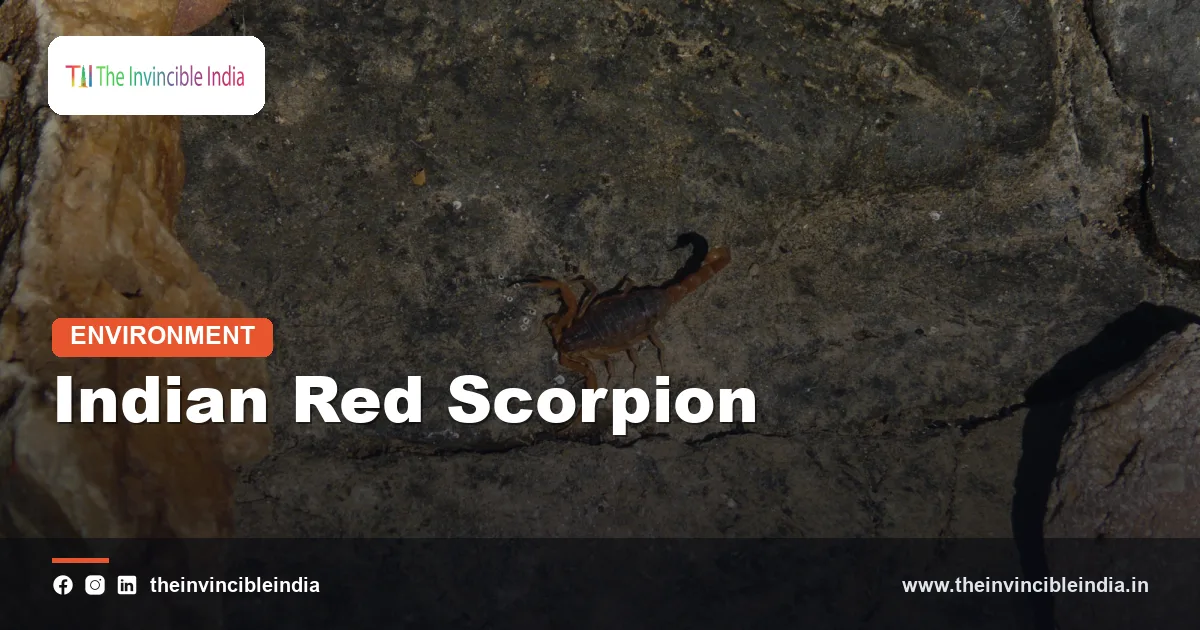
The Indian red scorpion (Hottentotta tamulus) is a small, reddish-brown scorpion of peninsular India whose sting can cause a life-threatening medical emergency, particularly in children, and it is frequently listed among the most dangerous scorpions in the world. Most stings from the Indian red scorpion are survivable when treated early, but a small proportion trigger a severe “autonomic storm” that can lead to heart and lung complications within hours.
The species is common in rural and semi-urban areas of western, southern and central India, especially in the Konkan coast of Maharashtra, parts of Tamil Nadu, Andhra Pradesh, Telangana, Karnataka, Kerala and Gujarat. This explainer sets out what the Indian red scorpion is, how its venom acts, what the symptoms look like, what first aid is appropriate, how doctors commonly treat serious cases, and how households can lower their risk. It is general information and does not replace medical advice.
| Attribute | Detail |
|---|---|
| Common name | Indian red scorpion (also called the Eastern Indian scorpion; “bichhu” in Hindi, “vinchu” in Marathi) |
| Scientific name | Hottentotta tamulus (earlier classified as Mesobuthus tamulus) |
| Family | Buthidae, the family that contains most medically important scorpions |
| Typical size | Roughly 6 to 9 cm in adult body length, with slender claws and a thick tail |
| Colour | Reddish-brown to orange-red body with a darker tail tip and sting |
| Range | Peninsular India, with related populations reported in neighbouring countries such as Sri Lanka, Nepal and Pakistan |
| Activity | Nocturnal; shelters in crevices, rubble, thatch, bricks and stored goods by day |
| Medical importance | Severe envenoming mainly in children; treated with supportive care, prazosin and, in some protocols, antivenom |
Key Takeaways
- The Indian red scorpion (Hottentotta tamulus) is a small reddish scorpion whose venom can cause a life-threatening autonomic storm, mostly in children under about ten years.
- A sting from the Indian red scorpion should be treated as a medical emergency, and the person should be taken to a hospital quickly even if the first symptoms appear mild.
- Severe Indian red scorpion envenoming can involve a surge of adrenaline-like hormones, abnormal blood pressure and heart rate, and fluid in the lungs known as pulmonary oedema.
- Doctors in India commonly use the drug prazosin, along with intensive supportive care, to manage serious Indian red scorpion stings, and this approach is associated with a large drop in deaths.
- Folk remedies, cutting the wound, sucking out venom, tight tourniquets and delay in seeking hospital care are not recommended and can be harmful.
- Simple measures such as wearing footwear, shaking out clothes and shoes, sleeping off the floor and sealing wall cracks reduce the risk of an Indian red scorpion sting.
What is the Indian red scorpion?
The Indian red scorpion is a species of scorpion in the family Buthidae, scientifically named Hottentotta tamulus, that is native to the Indian subcontinent and is known for its potent neurotoxic venom. The species was long placed in the genus Mesobuthus, and older medical papers and textbooks still use the name Mesobuthus tamulus. The two names refer to the same animal.
An adult Indian red scorpion is small compared with the black forest scorpions of India. It has a reddish or orange-brown body, relatively thin pincers (pedipalps) and a thick, muscular tail ending in a bulb-like sting. Like other scorpions, it is an arachnid, related to spiders and ticks, with four pairs of legs. It is nocturnal and feeds on insects and other small invertebrates.
Scorpions reproduce by giving birth to live young, and the Indian red scorpion follows this pattern. The newborn scorpions climb onto the mother’s back for a short period before dispersing. Under ultraviolet light, scorpions of this kind glow a pale blue-green, a feature that field workers and researchers sometimes use to locate them at night.
Where is the Indian red scorpion found?
The Indian red scorpion is found mainly across peninsular India, from the Konkan and Deccan regions of Maharashtra through Karnataka, Andhra Pradesh, Telangana, Tamil Nadu and Kerala, and into parts of Gujarat and central India. Its medical burden is most heavily documented along the coastal belt of Maharashtra, in districts such as Ratnagiri and Raigad, and in certain areas of Tamil Nadu and Andhra Pradesh.
The scorpion favours dry, warm habitats with plenty of hiding places. In villages it is commonly found in:
- Piles of bricks, stones, firewood and agricultural waste around homes
- Thatched or tiled roofs and mud-plastered walls with cracks
- Stored grain, sacks, clothes, shoes and bedding left on the floor
- Paddy fields, sugarcane fields and cashew or mango orchards, where farm workers may be stung while working barefoot or handling crops
Stings rise in the monsoon and the weeks around it, when heavy rain floods burrows and drives scorpions into houses. Seasonal harvesting activity also increases contact between people and scorpions. Because reporting systems for scorpion stings in India are patchy, the true number of stings and deaths is uncertain and is generally thought to be underestimated.
Why is the sting of the Indian red scorpion so dangerous?
The sting of the Indian red scorpion is dangerous because its venom contains small neurotoxic proteins that interfere with sodium and potassium channels in nerve and muscle cells, which causes a sudden and massive release of the body’s own stress hormones. These hormones, called catecholamines (adrenaline and noradrenaline), are the main driver of the dangerous symptoms.
The result is often described as an “autonomic storm” because both arms of the autonomic nervous system, the body’s automatic control system, are driven to extremes. Blood pressure and heart rate may swing sharply, and the heart muscle can be stressed and weakened. In severe cases the left side of the heart fails to pump effectively, and fluid backs up into the lungs.
The venom is not only a local irritant. Local effects are usually modest compared with the whole-body effects, and a sting site that looks only slightly red or swollen can still be associated with serious systemic poisoning. This mismatch is one reason why medical advice stresses watching the whole patient, not just the sting site.
Not every sting leads to severe envenoming. Scorpions can deliver a dry or partial sting, and the amount of venom varies. Even so, because there is no easy way for a family to tell which sting will become severe, medical practice treats every suspected Indian red scorpion sting in a child as potentially serious until a doctor decides otherwise.
What are the symptoms of an Indian red scorpion sting?
The symptoms of an Indian red scorpion sting begin with intense, burning local pain at the sting site and may progress within minutes to hours to sweating, vomiting, excessive salivation, restlessness and cold, clammy skin. These early signs reflect the initial wave of nervous system stimulation and are warning signs that the venom has entered the circulation in meaningful amounts.
Early and moderate features
- Severe local pain, tingling or a burning sensation, sometimes with a numb feeling spreading up the limb
- Profuse sweating, a cold and clammy skin, and goose bumps
- Repeated vomiting, abdominal discomfort and heavy salivation
- Restlessness, anxiety, irritability or an unusual cry in infants
- Fast heart rate or, at times, an abnormally slow one, and high blood pressure
Severe features that signal an emergency
- Difficulty in breathing, rapid breathing, frothy or pink-tinged sputum, and a bluish tinge to the lips (signs of pulmonary oedema)
- Very low or very high blood pressure, weak pulse, cold extremities and shock
- Irregular heartbeat and signs of heart muscle weakness
- Persistent, painful erection (priapism), which is a recognised sign of autonomic overactivity in male patients
- Drowsiness, convulsions or loss of consciousness in a small number of cases
Symptoms can evolve quickly. A child who seems stable at the time of the sting may deteriorate several hours later, which is why observation in a hospital is generally preferred over waiting at home.
Why are children at greater risk from Indian red scorpion stings?
Children are at greater risk from Indian red scorpion stings because a given dose of venom is spread over a much smaller body, so the same sting produces a stronger effect on a child’s heart and circulation than on an adult’s. Children also play on the floor, walk barefoot and sleep near the ground, which raises the chance of contact with scorpions.
Medical studies from western India have repeatedly shown that fatal and severe cases cluster in younger children, and that deaths often occur when treatment is delayed. In rural areas, delays have several causes: long travel distances to hospitals with intensive care, the first visit to a traditional healer or local practitioner, and a lack of awareness that a seemingly minor sting can turn dangerous.
Adults are not immune. Older people and those with existing heart disease, diabetes or hypertension can also develop severe symptoms. Pregnant women who are stung need urgent medical assessment as well. However, the most feared complications of the Indian red scorpion, such as pulmonary oedema and shock, are reported far more commonly in children.
What should you do after an Indian red scorpion sting?
After an Indian red scorpion sting, the most important step is to keep the person calm and still and get them to the nearest hospital as quickly as possible, without waiting to see whether symptoms develop. Prompt access to a facility that can monitor the heart and breathing is the single factor most strongly linked to survival.
Sensible first-aid steps
- Keep the patient calm, lying down or in a comfortable position, and limit movement, since panic and exertion can speed the spread of venom and raise the heart rate.
- Arrange transport to a hospital immediately. Call an ambulance service if available, and inform the hospital that a scorpion sting is being brought in.
- Clean the area gently with water and soap, and if the pain is severe, a wrapped cold pack applied briefly to the sting site may ease discomfort, as commonly advised in first-aid guidance. Do not place ice directly on bare skin.
- Note the time of the sting and any symptoms, and if it can be done safely, bring or photograph the scorpion for identification. Do not take risks to capture it.
- Do not give food or drink to a child who is vomiting or drowsy, and do not give medicines unless a doctor advises it.
Pain relief should be left to the medical team. Doctors may use local anaesthetic infiltration around the sting site for pain, which is a medical procedure and not a home remedy.
How do doctors treat Indian red scorpion envenoming?
Doctors treat serious Indian red scorpion envenoming mainly by monitoring the patient closely, giving supportive care for the heart and lungs, and commonly using the drug prazosin to counter the effects of the venom-driven hormone surge. Prazosin is an alpha-blocker that relaxes blood vessels and eases the strain on the heart, and Indian clinical protocols widely regard it as the mainstay of management for patients with significant symptoms.
The role of prazosin in this setting was popularised by Indian physicians working in the Konkan region, notably Dr Himmatrao Bawaskar and colleagues, whose clinical reports in the late twentieth century described a marked fall in deaths after prazosin was introduced. Since then, it has become standard in many Indian guidelines. This article does not give doses or prescribe treatment; the drug and its timing must be decided by a doctor.
Other elements of hospital care
- Continuous monitoring of pulse, blood pressure, oxygen saturation and heart rhythm
- Oxygen and, where needed, breathing support for patients with pulmonary oedema
- Careful fluid management, since too much intravenous fluid can worsen lung congestion
- Treatment of heart rhythm problems and heart failure when they occur
- Scorpion antivenom in some centres, usually for patients with systemic features
The role of antivenom is debated. Specific scorpion antivenoms have been produced in India, and some doctors use them, especially when patients present early with systemic symptoms. Clinical trials and reviews have given mixed results on whether antivenom adds much beyond prazosin and good supportive care. Practice therefore differs between hospitals, and doctors decide case by case.
What should you avoid doing after a scorpion sting?
After a scorpion sting you should avoid folk remedies, cutting or sucking the wound, applying a tight tourniquet and delaying hospital care to try home treatments, because none of these has been shown to neutralise venom and several can cause harm. Delay is the most dangerous mistake, since the window for early monitoring and treatment can be short.
- Do not cut, burn or suck the wound. This increases the risk of infection and tissue damage and does not remove meaningful venom.
- Do not tie a tight tourniquet. A very tight band can cut off blood supply and cause injury without stopping the spread of the neurotoxic venom.
- Do not apply herbal pastes, chillies, onions, kerosene, mud, ash or similar substances. These have no proven benefit and may infect the wound.
- Do not rely on charms, chanting or untrained healers instead of a hospital. Spending hours on such measures has been linked in medical reports to avoidable deaths.
- Do not give alcohol, sedatives or unprescribed tablets. They can mask symptoms or interfere with treatment.
Respect for local traditions is understandable, but the medical evidence is clear that the safest response is rapid transfer to a hospital. Health workers in affected districts increasingly stress this message in community awareness drives.
How can people prevent Indian red scorpion stings?
People can prevent Indian red scorpion stings by reducing hiding places around the home, keeping bedding and clothes off the floor, and wearing footwear and gloves when moving stones, firewood or crops. Because the scorpion is nocturnal and hides by day, most stings occur at night or during work that disturbs its shelter.
Practical household measures
- Seal cracks and holes in walls, floors and around doors, and repair damaged roofs and plaster.
- Clear piles of bricks, stones, firewood, rubbish and cow-dung cakes away from the walls of the house.
- Sleep on a raised cot or bed, tuck mosquito nets under the mattress, and keep beds away from walls.
- Shake out shoes, clothes, towels and bedding before use, especially in the monsoon.
- Use a torch when moving around at night and wear closed footwear outdoors.
- Store grain and sacks off the floor and keep the compound tidy.
Health departments in some states run training for local health workers and village volunteers on recognising scorpion stings and referring patients early. Community-level awareness, availability of prazosin at primary health centres and quick referral systems together matter more than any single household measure.
How does the Indian red scorpion compare with other Indian scorpions?
The Indian red scorpion is far more medically dangerous than the large black scorpions common in India, because its venom is potently neurotoxic, whereas the bigger forest species deliver painful but typically less dangerous stings. Size is a poor guide to danger: the small red scorpion is the more serious threat to health.
| Scorpion | Appearance | Typical sting severity |
|---|---|---|
| Indian red scorpion (Hottentotta tamulus) | Small, reddish-brown, thin claws, thick tail | Can cause severe systemic envenoming, mostly in children |
| Asian forest scorpion (Heterometrus species) | Large, glossy black, thick claws, slender tail | Painful local sting; serious systemic effects uncommon |
| Lychas species (small buthid scorpions) | Small, pale to yellowish, slender | Local pain; occasional mild to moderate effects |
As a rule of thumb used by field biologists, scorpions with thick, powerful claws and a thin tail tend to rely on strength and have milder venom, while those with thin claws and a thick tail often rely on venom. Even so, identification by appearance alone is unreliable, and any sting that produces severe pain, sweating, vomiting or breathing difficulty should be taken to a hospital regardless of the scorpion’s size.
Bottom Line
The Indian red scorpion is a small animal with a venom powerful enough to cause a medical emergency, but deaths are largely preventable through quick hospital care, supportive treatment and the commonly used drug prazosin. Households can lower their risk through simple habits, and families should skip folk remedies and head straight for medical help.
Frequently Asked Questions
Is the Indian red scorpion really one of the most dangerous scorpions in the world?
Yes, the Indian red scorpion is generally listed among the most dangerous scorpions in the world because of its potent neurotoxic venom and its record of causing deaths in children. Its danger is greatest where medical help is far away or delayed. With prompt hospital treatment, most patients recover.
What should I do if a child is stung by an Indian red scorpion?
Keep the child calm and still and take the child to the nearest hospital immediately. Do not wait for symptoms to worsen, do not cut or suck the wound and do not use home or herbal remedies. Tell the doctors about the scorpion sting and the time it happened.
How is an Indian red scorpion sting treated in hospital?
Doctors treat a serious sting with close monitoring, oxygen and heart and lung support, and they commonly use the drug prazosin to counter the venom’s effects. Some hospitals also use scorpion antivenom, although its benefit is debated. The exact treatment is decided by the doctor for each patient.
What are the warning signs of a severe Indian red scorpion sting?
The warning signs include severe pain, heavy sweating, repeated vomiting, restlessness, cold clammy skin, fast or very slow heartbeat and breathing difficulty. Frothy sputum, a bluish tinge to the lips and drowsiness suggest a life-threatening complication. Anyone showing these signs needs emergency care.
Where in India is the Indian red scorpion most common?
The Indian red scorpion is most common in peninsular India, especially the Konkan coast of Maharashtra and parts of Tamil Nadu, Andhra Pradesh, Karnataka, Kerala and Gujarat. It lives in dry, rubble-rich areas, village homes and farmland. Stings usually rise around the monsoon season.
How can I protect my home from scorpions?
Seal cracks in walls and floors, clear piles of bricks, wood and rubbish near the house, and keep clothes, shoes and bedding off the floor. Sleep on a raised bed with a tucked-in net and shake out shoes and clothing before wearing them. Wear footwear and use a torch at night.
{“@context”:”https://schema.org”,”@graph”:[{“@type”:”FAQPage”,”mainEntity”:[{“@type”:”Question”,”name”:”Is the Indian red scorpion really one of the most dangerous scorpions in the world?”,”acceptedAnswer”:{“@type”:”Answer”,”text”:”Yes, the Indian red scorpion is generally listed among the most dangerous scorpions in the world because of its potent neurotoxic venom and its record of causing deaths in children. Its danger is greatest where medical help is far away or delayed. With prompt hospital treatment, most patients recover.”}},{“@type”:”Question”,”name”:”What should I do if a child is stung by an Indian red scorpion?”,”acceptedAnswer”:{“@type”:”Answer”,”text”:”Keep the child calm and still and take the child to the nearest hospital immediately. Do not wait for symptoms to worsen, do not cut or suck the wound and do not use home or herbal remedies. Tell the doctors about the scorpion sting and the time it happened.”}},{“@type”:”Question”,”name”:”How is an Indian red scorpion sting treated in hospital?”,”acceptedAnswer”:{“@type”:”Answer”,”text”:”Doctors treat a serious sting with close monitoring, oxygen and heart and lung support, and they commonly use the drug prazosin to counter the venom’s effects. Some hospitals also use scorpion antivenom, although its benefit is debated. The exact treatment is decided by the doctor for each patient.”}},{“@type”:”Question”,”name”:”What are the warning signs of a severe Indian red scorpion sting?”,”acceptedAnswer”:{“@type”:”Answer”,”text”:”The warning signs include severe pain, heavy sweating, repeated vomiting, restlessness, cold clammy skin, fast or very slow heartbeat and breathing difficulty. Frothy sputum, a bluish tinge to the lips and drowsiness suggest a life-threatening complication. Anyone showing these signs needs emergency care.”}},{“@type”:”Question”,”name”:”Where in India is the Indian red scorpion most common?”,”acceptedAnswer”:{“@type”:”Answer”,”text”:”The Indian red scorpion is most common in peninsular India, especially the Konkan coast of Maharashtra and parts of Tamil Nadu, Andhra Pradesh, Karnataka, Kerala and Gujarat. It lives in dry, rubble-rich areas, village homes and farmland. Stings usually rise around the monsoon season.”}},{“@type”:”Question”,”name”:”How can I protect my home from scorpions?”,”acceptedAnswer”:{“@type”:”Answer”,”text”:”Seal cracks in walls and floors, clear piles of bricks, wood and rubbish near the house, and keep clothes, shoes and bedding off the floor. Sleep on a raised bed with a tucked-in net and shake out shoes and clothing before wearing them. Wear footwear and use a torch at night.”}}]}]}


