

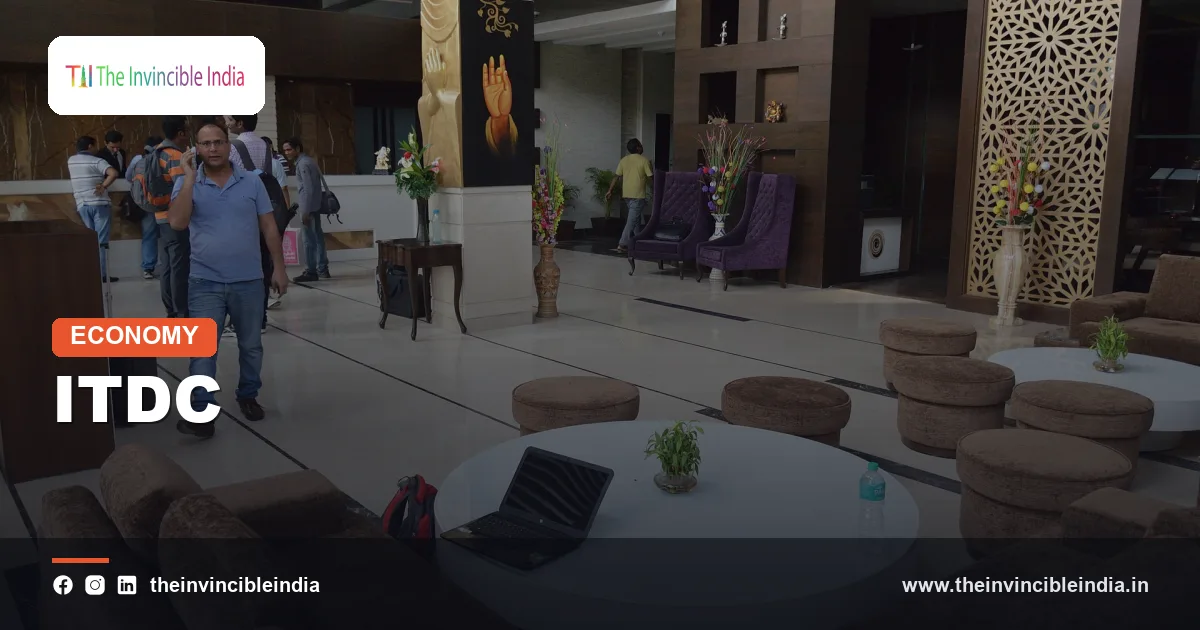
The India Tourism Development Corporation (ITDC) is a government-owned public-sector enterprise, set up in 1966 under the Ministry of Tourism, that was created to build and run tourism infrastructure such as hotels, transport services, duty-free shops and monument-based entertainment at a time when private investment in Indian tourism was thin. The India Tourism Development Corporation became best known through its Ashok Group of hotels, headed by the Hotel Ashok in New Delhi, and through Ashok Travels & Tours.
Over the decades the ITDC portfolio shrank as the state withdrew from commercial hospitality, with many hotels sold, leased or transferred, especially from 2017 onward. Today the corporation is a smaller, more focused enterprise that still operates selected properties and also works in consultancy, events and hospitality training. This explainer sets out what ITDC was designed to do, what it ran, what changed and where it stands now. Figures that change over time are described in general terms and should be checked against the latest official sources.
Quick Facts
| Attribute | Details |
|---|---|
| Full name | India Tourism Development Corporation Limited (ITDC) |
| Established | 1966 (commonly cited as 1 October 1966) |
| Type | Central public-sector enterprise (government company under the Companies Act) |
| Administrative ministry | Ministry of Tourism, Government of India |
| Headquarters | New Delhi |
| Best-known brand | Ashok Group of hotels, including the Hotel Ashok, Chanakyapuri, New Delhi |
| Other historic activities | Ashok Travels & Tours, duty-free retail, catering, sound-and-light shows, event services |
| Training arm | Ashok Institute of Hospitality and Tourism Management, New Delhi |
| Major structural change | Disinvestment, leasing and transfer of many Ashok hotels, notably from 2017 onward |
Key Takeaways
- The India Tourism Development Corporation (ITDC) was established in 1966 as a government-owned company to create tourism infrastructure in India.
- ITDC built its public identity around the Ashok Group of hotels, whose flagship was the Hotel Ashok in the Chanakyapuri diplomatic enclave of New Delhi.
- ITDC historically ran several travel-related businesses beyond hotels, including Ashok Travels & Tours, airport duty-free retail, catering and sound-and-light shows at monuments.
- From 2017 onward the Government of India disinvested, leased or transferred many ITDC hotels, including to state governments, shrinking the Ashok chain considerably.
- ITDC today combines a reduced hotel portfolio with consultancy, event management and hospitality education through the Ashok Institute of Hospitality and Tourism Management.
- ITDC is a commercial company, so it is distinct from the Ministry of Tourism, which makes tourism policy, and from the state tourism corporations, which run tourism services within individual states.
What is the India Tourism Development Corporation (ITDC)?
The India Tourism Development Corporation is a central public-sector undertaking of the Government of India, incorporated as a company in 1966 to develop, promote and operate tourism facilities across the country. ITDC functions under the administrative control of the Ministry of Tourism, and its shares are mostly held by the central government, with a minority of shares traded on Indian stock exchanges following a public offering.
The company is often described as the commercial arm of the central tourism system. The Ministry of Tourism frames policy, runs promotional campaigns and sanctions funding, whereas ITDC was meant to build and operate things: rooms, restaurants, vehicles, shops and shows. This division of roles between policy-maker and operator explains why ITDC carries the profile of a business enterprise, with accounts, boards and balance sheets, and not that of a government department.
ITDC is commonly referred to by its abbreviation, and its hotels carry the “Ashok” name, which echoes the Mauryan emperor Ashoka and the Ashoka Chakra that appears on the national flag. The brand therefore signalled a state-run, national identity rather than a purely commercial one.
Why was ITDC set up in 1966?
ITDC was set up in 1966 because the Government of India wanted quality accommodation and travel services for foreign visitors and domestic travellers, and private capital was not building them in sufficient numbers or in the locations the country needed. In the early decades after independence, India had few international-standard hotels, limited organised transport for tourists and little marketing of its heritage sites.
Before 1966, the government had already moved into hospitality. The Hotel Ashok in New Delhi was built in the mid-1950s, in time for a major international conference held in the capital in 1956, and it was later brought under ITDC management. The creation of ITDC consolidated existing government-run hotels, transport and catering units under one corporate roof, with a mandate to expand into new destinations.
Three ideas shaped the founding logic:
- Infrastructure gap: tourist circuits needed hotels and vehicles where none existed commercially.
- Foreign exchange: international tourism was seen as a source of foreign currency and national visibility.
- Demonstration effect: a public-sector pioneer could prove that a destination was viable and encourage private investors to follow.
What is the Ashok Group of hotels?
The Ashok Group is the hotel chain brand operated by ITDC, comprising government-owned hotels, resorts and lodges across Indian cities, pilgrimage towns, beaches and heritage destinations. The chain ranged from large deluxe city hotels to smaller properties in secondary destinations, with the aim of giving travellers a reliable standard of service on a national network.
Properties associated with the Ashok brand over the years have included hotels in Delhi, resort and heritage-style properties in places such as Kovalam in Kerala, and city hotels in several state capitals. The exact list has changed repeatedly because of leasing, transfer and sale, so any fixed list is likely to go out of date quickly.
Why the Ashok brand mattered
The Ashok name mattered because, for many years, it was one of the few Indian hotel brands with a pan-India footprint and an official character. Delegations, ministries and public-sector organisations frequently used Ashok hotels for events, which gave the chain steady institutional business.
Why the chain struggled
The Ashok chain faced mounting pressure from the late 1980s and especially after the economic liberalisation of 1991, when private Indian and international hotel groups expanded rapidly. Ageing buildings, the cost of maintaining large heritage-era properties and the constraints that come with public ownership made it harder for many Ashok hotels to compete on service and yield.
What is the Hotel Ashok in Delhi?
The Hotel Ashok is a large, historic hotel in the Chanakyapuri diplomatic enclave of New Delhi, built in the mid-1950s and long regarded as the flagship of the Ashok Group and of ITDC. It was designed to host international delegates and has been associated with many state occasions, conferences and receptions.
Chanakyapuri, where the hotel stands, is the area that houses many foreign embassies and high commissions, which made the location convenient for diplomatic gatherings. The hotel became part of the capital’s institutional landscape, known as much for hosting official functions as for ordinary guest stays.
Over time, the hotel’s large size and operating costs, and the arrival of newer luxury hotels in Delhi, led to repeated discussion about its future. Public statements and policy proposals about redevelopment, leasing or partnership have come up at various points, and readers should consult current official announcements for the present arrangement rather than rely on older press coverage.
What did Ashok Travels & Tours do?
Ashok Travels & Tours (ATT) was the travel and ground-handling business of ITDC, offering transport, sightseeing, tour packages and related services to visitors. Its role was to complement the hotel chain by moving guests between airports, hotels and monuments, and by packaging itineraries for groups and individuals.
ITDC historically operated vehicle fleets, coaches and tour services in major tourist cities, as well as information and booking support. The unit gave the corporation a presence across the tourist journey, from arrival to departure, instead of only at the hotel stay.
Like the hotels, travel services faced strong competition from private tour operators, online travel agencies and cab aggregators, and the importance of the public-sector transport arm declined as the market became more fragmented and digital.
What role did ITDC play in duty-free retail, catering and events?
ITDC historically ran duty-free shops at Indian international airports, provided institutional and outdoor catering, and managed events and conferences, all as extensions of its hospitality expertise. These businesses used the same core skills as the hotels: purchasing, food and beverage production, guest handling and logistics.
- Duty-free retail: ITDC was long associated with duty-free outlets for international travellers, selling items such as liquor, perfumes and confectionery without the usual domestic duties. The sector was later opened to private operators through competitive bidding, so ITDC’s historical role should be read as past activity.
- Catering: ITDC ran restaurants, banquets and catering counters, including services connected with government events and visitor sites.
- Events and conferences: The Hotel Ashok and other Ashok properties offered banquet and convention spaces, and ITDC developed event-management capabilities for exhibitions, receptions and official functions.
The public-sector role in these segments gradually reduced as markets were liberalised and specialist private firms entered each segment.
How did ITDC run sound-and-light shows at monuments?
ITDC was among the organisations that staged sound-and-light shows at historic monuments, using narration, music and illumination to tell the story of a site after dark. These evening shows were designed to extend the tourist day, create a paid cultural product and bring history to visitors who might not read plaques or guidebooks.
Sound-and-light productions were developed at well-known monuments, with Delhi’s Red Fort among the most prominent examples, and similar shows were planned at other heritage sites. Scripts typically dramatised a monument’s history through a narrated storyline supported by lighting on the structure itself.
The format needed close coordination with heritage authorities, because monuments protected by the Archaeological Survey of India (ASI) have conservation rules. Over time, monument lighting and shows have been handled through different agencies and arrangements, so the specific operator of a given show can vary by period.
What happened to ITDC hotels after disinvestment and transfers from 2017?
From 2017 onward, the Government of India disinvested, leased or transferred a large share of ITDC’s hotels, with several properties handed to state governments or taken up through other arrangements. This marked a shift from a government-run national chain to a much smaller portfolio.
The wider trend had begun earlier. In the early 2000s, the Government of India’s disinvestment programme had already seen some ITDC hotels sold to private buyers. Later policy discussions leaned towards monetising land and buildings, partnering with the private sector or moving non-core hotels out of central ownership.
Why transfers and disinvestment took place
- Policy view: the central government has argued that running hotels is not a core government function in a market with many private providers.
- Financial pressure: several properties required heavy investment for renovation and faced stiff competition.
- State interest: some state governments preferred to run or repurpose local ITDC hotels for tourism promotion in their own territory.
The details differ from property to property, including who now operates each hotel, the form of the arrangement and the terms. Anyone needing property-level information should consult the latest notices from ITDC, the Ministry of Tourism or the relevant state government.
What does ITDC do today?
ITDC today operates a reduced set of hotels and tourism facilities, offers consultancy and project management for tourism and hospitality, runs event and catering services and supports hospitality training. Its identity has moved from a chain-builder to a specialised public-sector service provider.
The main current activity areas are summarised below.
| Area | What ITDC does |
|---|---|
| Hospitality | Operates selected Ashok hotels and related facilities, directly or through arrangements with partners |
| Consultancy | Offers advisory and project-management support for tourism infrastructure and hospitality projects |
| Events and catering | Provides event management, conferences, banquets and catering, including for government functions |
| Training | Runs the Ashok Institute of Hospitality and Tourism Management for skills and education |
| Land and assets | Holds hotel land and buildings whose use may involve redevelopment or partnerships |
The exact scale of each activity changes with contracts and policy, so the table describes categories of work rather than fixed output.
What is the Ashok Institute of Hospitality and Tourism Management?
The Ashok Institute of Hospitality and Tourism Management (AIHTM) is ITDC’s training and education institution in New Delhi, offering courses and skill programmes for people entering hotels, catering and travel. It draws on ITDC’s long experience in running hotels and kitchens to train students in front-office work, food production, food and beverage service and housekeeping.
Hospitality institutes of this kind are important to the sector because the industry depends on trained workers, from chefs and stewards to front-desk executives. ITDC’s institute links training with the working environment of Ashok hotels, which has traditionally given students practical exposure alongside classroom learning.
Prospective students should verify the institute’s current courses, affiliations, eligibility rules and fees directly with the institution, because programme offerings and recognitions are updated from time to time.
How is ITDC different from other tourism bodies?
ITDC differs from other tourism bodies because it is an operating company, whereas the Ministry of Tourism is a policy ministry and state tourism corporations operate only within their own states. Understanding the distinction helps readers know whom to approach for hotel bookings, policy queries or local services.
| Body | Level | Main role |
|---|---|---|
| Ministry of Tourism | Central government ministry | Tourism policy, promotion and schemes |
| ITDC | Central public-sector company | Operating hotels, services, consultancy and training |
| State tourism development corporations | State government companies | Running tourism services and promoting travel within a state |
| Archaeological Survey of India (ASI) | Central government body | Protecting and conserving monuments |
| Indian Railway Catering and Tourism Corporation (IRCTC) | Central public-sector company | Railway ticketing, catering and tourism products |
ITDC should also not be confused with the Indian Institute of Tourism and Travel Management (IITTM), which is a separate institution under the Ministry of Tourism focused on tourism education and research.
Bottom Line
The India Tourism Development Corporation was created in 1966 to build tourism infrastructure when the market could not, and it did so most visibly through the Ashok Group of hotels, travel services, duty-free retail and monument shows. As the private sector grew and policy moved away from state-run hotels, ITDC shrank its hotel portfolio, especially from 2017, and now emphasises consultancy, events and training alongside selected properties.
Frequently Asked Questions
What is the India Tourism Development Corporation?
The India Tourism Development Corporation (ITDC) is a government-owned public-sector company established in 1966 under the Ministry of Tourism. It was set up to build and run tourism infrastructure such as hotels, travel services and monument-based entertainment. It is best known for the Ashok Group of hotels.
When was ITDC established and where is it headquartered?
ITDC was established in 1966, and the date is commonly cited as 1 October 1966. Its headquarters are in New Delhi. It operates as a company under the administrative control of the Ministry of Tourism.
What is the Hotel Ashok in Delhi?
The Hotel Ashok is a large historic hotel in the Chanakyapuri area of New Delhi that served as the flagship of the Ashok Group. It was built in the mid-1950s to host international delegates and later came under ITDC. It has hosted many official events, though its future arrangements have been discussed over the years.
Why were many ITDC hotels sold or transferred?
Many ITDC hotels were sold, leased or transferred because the government judged that running hotels was not a core government function and because several properties faced financial and competitive pressure. The process included early-2000s disinvestment and a wider shift from 2017 onward, with some hotels going to state governments. The details vary by property.
Does ITDC still run duty-free shops and sound-and-light shows?
ITDC historically ran airport duty-free shops and was involved in sound-and-light shows at monuments, but these roles have changed as markets opened to private operators and as monument arrangements shifted. The present operator of any given duty-free outlet or show can differ. Readers should check current official notices for specifics.
What is the Ashok Institute of Hospitality and Tourism Management?
The Ashok Institute of Hospitality and Tourism Management (AIHTM) is the hospitality training institution run by ITDC in New Delhi. It trains students in areas such as food production, food and beverage service, front office and housekeeping. Current courses, fees and recognitions should be confirmed with the institute.
{“@context”:”https://schema.org”,”@graph”:[{“@type”:”FAQPage”,”mainEntity”:[{“@type”:”Question”,”name”:”What is the India Tourism Development Corporation?”,”acceptedAnswer”:{“@type”:”Answer”,”text”:”The India Tourism Development Corporation (ITDC) is a government-owned public-sector company established in 1966 under the Ministry of Tourism. It was set up to build and run tourism infrastructure such as hotels, travel services and monument-based entertainment. It is best known for the Ashok Group of hotels.”}},{“@type”:”Question”,”name”:”When was ITDC established and where is it headquartered?”,”acceptedAnswer”:{“@type”:”Answer”,”text”:”ITDC was established in 1966, and the date is commonly cited as 1 October 1966. Its headquarters are in New Delhi. It operates as a company under the administrative control of the Ministry of Tourism.”}},{“@type”:”Question”,”name”:”What is the Hotel Ashok in Delhi?”,”acceptedAnswer”:{“@type”:”Answer”,”text”:”The Hotel Ashok is a large historic hotel in the Chanakyapuri area of New Delhi that served as the flagship of the Ashok Group. It was built in the mid-1950s to host international delegates and later came under ITDC. It has hosted many official events, though its future arrangements have been discussed over the years.”}},{“@type”:”Question”,”name”:”Why were many ITDC hotels sold or transferred?”,”acceptedAnswer”:{“@type”:”Answer”,”text”:”Many ITDC hotels were sold, leased or transferred because the government judged that running hotels was not a core government function and because several properties faced financial and competitive pressure. The process included early-2000s disinvestment and a wider shift from 2017 onward, with some hotels going to state governments. The details vary by property.”}},{“@type”:”Question”,”name”:”Does ITDC still run duty-free shops and sound-and-light shows?”,”acceptedAnswer”:{“@type”:”Answer”,”text”:”ITDC historically ran airport duty-free shops and was involved in sound-and-light shows at monuments, but these roles have changed as markets opened to private operators and as monument arrangements shifted. The present operator of any given duty-free outlet or show can differ. Readers should check current official notices for specifics.”}},{“@type”:”Question”,”name”:”What is the Ashok Institute of Hospitality and Tourism Management?”,”acceptedAnswer”:{“@type”:”Answer”,”text”:”The Ashok Institute of Hospitality and Tourism Management (AIHTM) is the hospitality training institution run by ITDC in New Delhi. It trains students in areas such as food production, food and beverage service, front office and housekeeping. Current courses, fees and recognitions should be confirmed with the institute.”}}]}]}


