


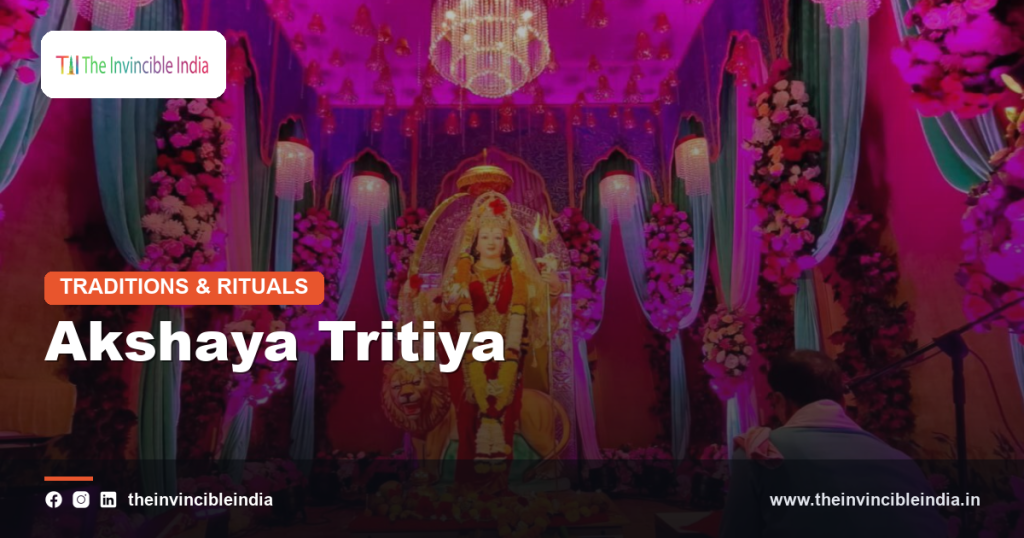
Akshaya Tritiya is regarded in Hindu and Jain tradition as one of the most auspicious days of the year, its name derived from the Sanskrit word for “imperishable” or “never diminishing”. Much like Makar Sankranti, another day considered especially favourable for new beginnings, Akshaya Tritiya is associated with prosperity, fresh starts and acts of charity. It is widely observed as a favourable occasion for purchasing gold, beginning new ventures and performing charitable deeds, believed to yield lasting benefit. This guide explains the day’s meaning, mythology and the many customs associated with it across India.
Quick Facts
| Detail | Information |
|---|---|
| Also Known As | Akha Teej |
| Significance | Imperishable prosperity and auspicious new beginnings |
| Type of Observance | Hindu and Jain auspicious day |
| General Timing | Shukla Paksha Tritiya of Vaishakha (April-May) |
| Key Practices | Gold purchase, charitable giving, new ventures |
| Region of Prominence | Observed across India, especially by trading communities |
Meaning and Significance
Akshaya Tritiya derives its name from “akshaya”, meaning imperishable or never-diminishing, reflecting the belief that actions undertaken on this day, whether charitable giving, new ventures or purchases, carry lasting and undiminished benefit. This underlying idea of permanence gives the day a distinct character among Hindu observances built around cyclical renewal.
The day is regarded as universally auspicious, meaning it does not require consultation of a panchang, or astrological almanac, to determine a favourable moment, unlike many other significant undertakings in Hindu tradition. This quality of being inherently auspicious is central to why the day holds such broad appeal for new beginnings.
The Concept of Akshaya (Imperishability)
The concept of akshaya, or imperishability, runs through the day’s associated customs, reflected in the belief that wealth, merit or blessings acquired or created on this day will not diminish over time. This idea is often cited as the reason behind the popular custom of purchasing gold, an object itself associated with permanence and enduring value.
The theme also extends to acts of charity performed on the day, which are believed to yield especially lasting spiritual merit. This emphasis on permanence situates Akshaya Tritiya as a day oriented toward the future, in contrast with festivals more centred on marking a particular past event or seasonal transition.
Mythological Associations
Several mythological narratives are associated with Akshaya Tritiya, including traditions linking the day to the descent of the river Ganga to earth and to episodes involving the sage Vyasa and the elephant-headed deity Ganesha in the composition of the Mahabharata. The day is also associated in some traditions with the birth of Parashurama, an avatar of Vishnu.
As with other festival mythologies, these associations belong to devotional and oral tradition rather than historical record, and are understood by devotees as expressions of the day’s broader auspicious character rather than as literal historical claims. Their variety reflects the many strands of tradition that have converged on this single occasion.
Position in the Hindu Calendar
Akshaya Tritiya falls on the third day of the bright fortnight of the lunar month of Vaishakha, generally corresponding to April or May in the Gregorian calendar. As with other lunar observances, the precise Gregorian date shifts annually, though the day is widely publicised each year given its popularity for commercial and ceremonial activity.
Its position in late spring, ahead of the main monsoon season in much of India, is sometimes noted in relation to agricultural planning, with the day traditionally regarded as favourable for beginning preparations connected to the coming agricultural cycle in various regions.
Association with Prosperity and New Beginnings
Akshaya Tritiya is widely regarded as an auspicious day for beginning new ventures, whether a business, a construction project, a marriage or another significant undertaking, owing to the belief that endeavours started on this day carry particularly favourable prospects. This broad association with fresh starts has made the day significant well beyond any single community or profession.
The day’s reputation for prosperity is reinforced by its coincidence with agricultural and commercial planning cycles in many regions, linking its spiritual significance to practical considerations of timing for those beginning new undertakings during this period of the year.
The Tradition of Buying Gold
One of the most widely recognised customs associated with Akshaya Tritiya is the purchase of gold, jewellery or other precious metals, considered an auspicious way to invite lasting prosperity into the household. Jewellers and markets across India typically see a marked increase in activity in the lead-up to and on the day itself.
This custom is closely tied to the day’s underlying theme of imperishability, since gold is widely regarded as a stable and enduring store of value. The tradition has become so strongly associated with the day that Akshaya Tritiya is now widely recognised in commercial contexts primarily through this single custom.
Akshaya Tritiya and Business Communities
Trading and business communities across India place particular importance on Akshaya Tritiya, often choosing the day to open new account books, launch new ventures or make significant purchases related to their trade. The day’s association with lasting prosperity makes it a favoured occasion for decisions with long-term financial implications.
This commercial significance runs alongside the day’s religious and charitable associations, illustrating a broader pattern in Indian festival tradition where spiritual and economic life are closely interwoven, with auspicious timing playing a meaningful role in business custom and decision-making.
Charitable Giving and Daan
Charitable giving, or daan, is strongly encouraged on Akshaya Tritiya, with many devotees choosing to donate food, clothing, money or other essentials to those in need, believing that such acts performed on this day yield especially enduring spiritual merit. Temples and community organisations often arrange charitable distributions timed to coincide with the occasion.
This emphasis on charity reflects the day’s broader theme of permanence, extending the idea of lasting benefit from material wealth to acts of generosity, and reinforcing a value found across many Hindu festivals in which personal prosperity is understood as linked to responsibility toward the wider community.
Agricultural and Sowing Associations
In parts of rural India, Akshaya Tritiya is traditionally associated with the sowing of new crops, particularly in regions where the agricultural calendar aligns with the day’s position in late spring. Farmers in some areas consider the day favourable for beginning sowing activities connected to the approaching agricultural season.
This agricultural dimension connects the day’s themes of prosperity and lasting benefit to the practical rhythms of rural life, situating Akshaya Tritiya among a number of Indian observances whose auspicious associations are closely tied to seasonal and agricultural timing rather than purely commercial or religious considerations.
Akshaya Tritiya in Jain Tradition
Akshaya Tritiya holds particular significance in Jain tradition, associated with the memory of Rishabhanatha, the first Tirthankara, and traditions describing the end of a long period of fasting through the offering of sugarcane juice. The day is observed by Jain communities with fasting, temple worship and charitable giving.
This Jain observance runs parallel to Hindu customs surrounding the same day, illustrating how Akshaya Tritiya, like several other occasions in the Indian calendar, is shared across related religious traditions even as each brings its own specific historical and devotional associations to the day.
Temple Worship and Rituals
Temples across India, particularly those dedicated to Vishnu and his avatars, hold special prayers and rituals on Akshaya Tritiya, with devotees visiting to seek blessings for prosperity and wellbeing. Some temples also mark the day with specific rituals connected to their own regional traditions and historical associations with the occasion.
Devotees commonly perform worship at home as well, offering prayers and, in many households, undertaking small acts of charity or the purchase of a modest gold item as part of the day’s observance, translating the day’s broader themes into concrete household ritual.
Regional Observances Across India
While Akshaya Tritiya is observed nationally, regional customs vary considerably, from specific temple traditions in South India to distinct household rituals in the north and west. Some regions place particular emphasis on charitable acts, while others focus more heavily on the commercial custom of gold purchase.
These regional variations reflect the broader pattern found across many Indian auspicious days, in which a shared belief in the day’s favourable character is expressed through locally rooted customs shaped by regional tradition, economic activity and community practice.
Weddings and Auspicious Beginnings
Because Akshaya Tritiya is considered universally auspicious, it is a popular day for weddings and other significant life ceremonies, particularly in regions and communities where astrological timing plays an important role in scheduling such events. Its status as an inherently favourable day removes the need for separate astrological consultation regarding timing.
This practical convenience, combined with the day’s symbolic associations with lasting prosperity, has made it one of the most popular dates in the Hindu calendar for marriages and other ceremonial beginnings, particularly in years when few other widely recognised auspicious dates are available.
Association with Pilgrimage Traditions
Akshaya Tritiya is traditionally associated in parts of northern India with the opening of certain Himalayan pilgrimage routes for the season, as winter snow recedes and travel becomes feasible once again. This general association situates the day within a broader annual pilgrimage calendar observed by many devotees each year.
The precise details of any single pilgrimage’s opening vary by location and year, and are set by the relevant temple authorities rather than fixed permanently to this date alone, but the broad association between Akshaya Tritiya and the resumption of Himalayan pilgrimage remains a widely recognised part of the day’s significance.
Modern Commercial Associations
In recent decades, Akshaya Tritiya has taken on a heightened commercial profile, particularly around the jewellery and real estate sectors, which actively promote the day through advertising and special offers tied to its association with prosperity. This commercial dimension has reinforced the day’s visibility, particularly in urban and media contexts.
While this modern commercial emphasis is a relatively recent development, it builds directly on the day’s long-standing traditional association with auspicious purchases and new beginnings, illustrating how established religious customs can be extended and amplified within a contemporary market economy.
Household Customs and Personal Observance
Beyond temple visits and gold purchases, many households mark Akshaya Tritiya through smaller personal customs, such as cleaning and decorating the home, preparing a special meal, or setting aside a modest sum for saving as a symbolic gesture toward the day’s theme of lasting prosperity. These small acts allow families without significant means to participate meaningfully in the day’s spirit.
Elders in many households also use the occasion to pass on informal guidance about financial discipline and generosity to younger family members, linking the day’s traditional themes to practical lessons about saving and giving. This personal, domestic dimension complements the day’s more visible commercial and temple-based observances, rounding out its significance as an occasion equally at home in private family life.
Akshaya Tritiya Today
Today, Akshaya Tritiya continues to be marked through a blend of religious observance, charitable giving and commercial activity, with households, temples and markets all reflecting different aspects of the day’s long-standing significance. Many families combine a simple prayer or temple visit with a modest purchase or charitable gesture.
This combination of the devotional, the charitable and the commercial illustrates how a centuries-old occasion can remain vibrant and relevant by accommodating a range of contemporary practices, all while preserving its central theme of imperishable, lasting benefit associated with actions taken on this auspicious day.
Sources & Further Reading
- Ministry of Culture, Government of India (indiaculture.gov.in).
- Sahitya Akademi.
Frequently Asked Questions
What does Akshaya Tritiya mean?
Akshaya Tritiya means “imperishable third”, referring to the belief that actions undertaken on this day, including charity and new ventures, carry lasting and undiminished benefit.
Why do people buy gold on Akshaya Tritiya?
Gold is regarded as a stable, enduring store of value, making its purchase a popular way to symbolically invite lasting prosperity on this auspicious day.
Is Akshaya Tritiya significant in Jain tradition?
Yes, it is associated with the memory of Rishabhanatha, the first Tirthankara, and is observed by Jain communities with fasting and charitable giving.
Why is Akshaya Tritiya considered good for new ventures?
It is regarded as universally auspicious, meaning it does not require separate astrological consultation, making it a convenient and favoured day for weddings and new beginnings.
When does Akshaya Tritiya fall?
It falls on the third day of the bright fortnight of the lunar month of Vaishakha, generally in April or May.