


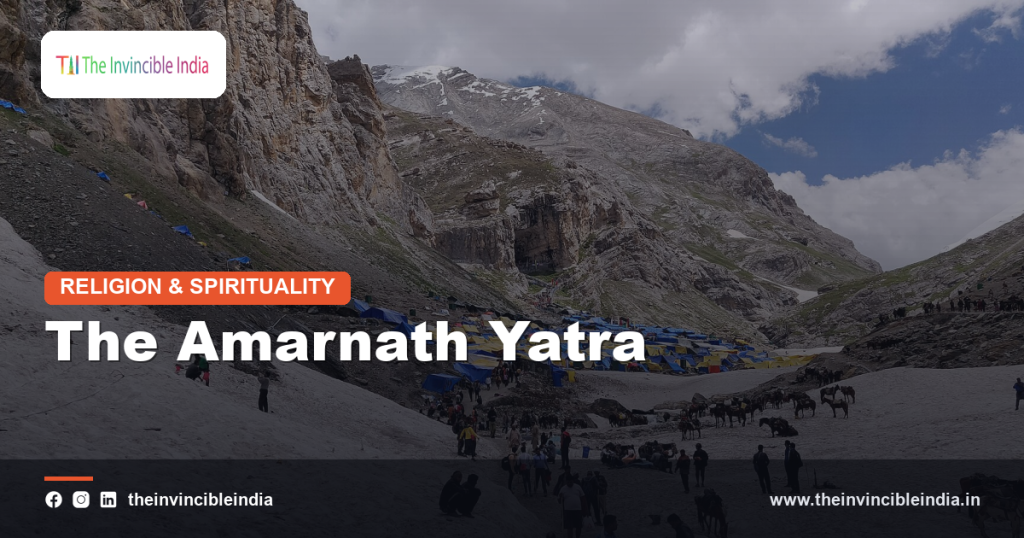
Each year, thousands of pilgrims undertake a demanding high-altitude journey through the Himalayas to reach the Amarnath cave, one of the most revered pilgrimage sites associated with the worship of Shiva. Located in the union territory of Jammu and Kashmir, the shrine forms part of the broader landscape of pilgrimage in India, drawing devotees from across the country despite the physical challenges of the route. The pilgrimage, known as the Amarnath Yatra, combines devotional practice with a test of physical endurance, unfolding over a period each summer when weather conditions make the high mountain route passable. This overview surveys the site’s religious significance, the pilgrimage route, its associated rituals, and its place within the broader tradition of Shaivite pilgrimage in India.
Quick Facts
| Detail | Information |
|---|---|
| Location | Jammu and Kashmir, Himalayas |
| Deity | Shiva |
| Notable feature | Natural ice lingam formation |
| Season | Summer, concludes near Raksha Bandhan |
| Main routes | Pahalgam and Baltal |
| Tradition type | Shaivite Hindu pilgrimage |
Geographic Setting
The Amarnath cave is situated high in the Himalayas within the union territory of Jammu and Kashmir, at an elevation that places it among the more physically demanding pilgrimage destinations in India. The cave lies amid rugged mountain terrain, accessible only during a limited window each year when snow conditions along the approach routes make travel feasible. Its remote and dramatic setting, surrounded by glaciers, mountain streams, and alpine meadows, is often described by pilgrims and visitors as contributing to the site’s sense of sanctity and separation from ordinary life. The journey to reach the cave, whether on foot, pony, or palanquin, takes travelers through some of the most striking mountain landscapes in northern India. This combination of natural grandeur and physical challenge has long been central to the character of the pilgrimage associated with the site.
Religious Significance in Shaivism
Within the broader tradition of Shaivism, the worship of Shiva, the Amarnath cave holds an important place as one of several major pilgrimage sites associated with the deity across the Indian subcontinent. Devotees regard the site as sacred to Shiva in his form as the eternal ascetic and cosmic lord, and pilgrimage to the cave is understood as an act of devotion offering the opportunity for spiritual merit and closeness to the divine. The pilgrimage is often discussed alongside other major Shiva-associated sites found throughout India, reflecting the deity’s widespread veneration in diverse regional forms and locations. For many pilgrims, undertaking the demanding journey itself is considered a significant part of the devotional practice, understood as a form of discipline and sacrifice offered in devotion to Shiva.
The Cave and Its Natural Ice Formation
The Amarnath cave is particularly noted for a naturally occurring ice formation that develops within it during certain months of the year, which devotees regard as a symbolic representation of Shiva in the form of a lingam. This ice formation grows and recedes according to seasonal temperature changes, a natural process that has long been the focus of devotional attention and religious significance for pilgrims visiting the site. The timing of the pilgrimage season is closely tied to the periods when this ice formation is most fully developed, drawing large numbers of visitors hoping to view it during their visit. While the formation is a natural phenomenon shaped by the cave’s particular temperature and moisture conditions, it holds deep symbolic and devotional meaning within the pilgrimage tradition associated with the site.
Legends Associated with the Shrine
The Amarnath cave is associated with several traditional narratives passed down through generations of pilgrims and local communities, which describe the site’s connection to Shiva and its discovery as a place of pilgrimage. These accounts, transmitted primarily through oral tradition and popular retelling rather than a single fixed textual source, describe the cave as a place where Shiva is said to have shared profound spiritual teaching, and they explain the sacred character attributed to the site by devotees. As with many pilgrimage traditions rooted in oral narrative, specific details vary between different tellings and communities. What remains consistent across these accounts is the cave’s association with Shiva and its standing as a place of deep sanctity, a reputation that has sustained continuous pilgrimage to the site across a very long span of time.
History of the Pilgrimage
Historical records indicate that pilgrimage to the Amarnath cave has continued for many centuries, with the site recognized as a place of religious significance by travelers and local communities across a long historical span. Accounts by various historical travelers and chroniclers who visited or wrote about the Kashmir region make reference to the shrine and its pilgrimage tradition, indicating its long-standing place within the region’s religious landscape. Over time, the organization and management of the pilgrimage evolved, particularly as growing numbers of pilgrims from across India began undertaking the journey in more recent centuries. Today, the pilgrimage is coordinated through a dedicated administrative body responsible for facilitating the annual yatra, reflecting both its historical continuity and its contemporary scale as one of India’s most significant pilgrimage events.
The Pilgrimage Season
The Amarnath Yatra takes place annually during a defined window in the summer months, timed to coincide with periods when snow and weather conditions render the high-altitude route safe enough for large numbers of pilgrims to travel. The precise dates are determined each year based on the Hindu lunar calendar and prevailing conditions, with the pilgrimage typically concluding around the festival of Raksha Bandhan. This seasonal timing reflects the practical realities of travel through high Himalayan terrain, where weather can change rapidly and conditions outside the designated pilgrimage window are considered too hazardous for organized travel. Pilgrimage authorities monitor weather and route conditions closely throughout the season, occasionally adjusting arrangements in response to changing circumstances to help ensure the safety of the large number of pilgrims undertaking the journey each year.
Traditional Routes: Pahalgam and Baltal
Pilgrims traditionally reach the Amarnath cave via one of two main routes, each beginning from a different base location and offering a different balance of distance, difficulty, and travel time. The route from Pahalgam is longer and more gradual, following a traditional path that has been used by pilgrims for a very long time and passing through a series of scenic halting points along the way. The alternative route from Baltal is shorter in distance but considerably steeper, offering a quicker but more physically demanding ascent to the cave. Pilgrims choose between these routes based on personal fitness, available time, and preference for either the traditional, more gradual pilgrimage experience or a faster, more direct journey. Both routes require careful preparation given the high altitude and challenging terrain involved.
The Chhari Mubarak Tradition
An important traditional element of the pilgrimage is the Chhari Mubarak, a ceremonial mace associated with the yatra that is carried in procession to the cave shrine, traditionally arriving on the day considered most auspicious for the pilgrimage’s culmination. This ceremonial procession, maintained by custodians associated with a shrine in Srinagar, is regarded as symbolically inaugurating the most significant point of the pilgrimage season and draws its own body of devoted participants and observers. The tradition reflects the broader ceremonial and communal dimensions of the Amarnath Yatra, which extends beyond individual devotional practice to include organized processions, rituals, and communal observances involving pilgrims, local communities, and religious authorities. The Chhari Mubarak tradition is one of the pilgrimage’s most visible and historically rooted ceremonial customs.
Preparations and Registration
Given the physically demanding nature of the route and the large numbers of pilgrims involved, the Amarnath Yatra today requires formal registration and preparation before pilgrims are permitted to undertake the journey. Prospective pilgrims are generally required to obtain a medical certificate confirming their fitness for high-altitude travel, reflecting the genuine physical risks associated with the pilgrimage’s elevation and terrain. Registration is coordinated through the administrative body responsible for managing the yatra, which also arranges for permits, scheduling, and coordination with the security and logistical arrangements along the route. These preparatory requirements reflect lessons learned over years of organizing a pilgrimage that draws very large numbers of participants to a remote and challenging high-altitude environment, aiming to balance open access to the pilgrimage with reasonable safeguards for pilgrim welfare.
Rituals at the Shrine
Upon reaching the cave, pilgrims typically perform darshan, a ritual viewing and offering of respect before the ice formation regarded as a manifestation of Shiva, often accompanied by prayer, the offering of flowers, or other simple devotional gestures. Given the large numbers of pilgrims arriving during the peak of the season, visits to the inner shrine area are generally organized to allow an orderly flow of devotees through the cave. Many pilgrims also observe fasting or other forms of ritual discipline in the days leading up to their visit, treating the physical hardship of the journey itself as a component of their devotional practice. The combination of ritual observance, physical endurance, and the natural setting of the cave together shape the distinctive character of worship associated with the Amarnath pilgrimage.
Role of Security and Logistics
Given the scale of the pilgrimage and the sensitive geographic and political context of the Kashmir region, the Amarnath Yatra involves substantial coordination between religious, administrative, and security authorities each year. Security arrangements along the pilgrimage routes are organized to help protect the large numbers of pilgrims traveling through remote mountain terrain, while logistical arrangements address matters such as medical facilities, langar or free community kitchens, temporary shelters, and communication infrastructure along the route. This extensive coordination reflects the scale of the undertaking, which brings a very large number of pilgrims into a remote high-altitude area over a relatively short and clearly defined period each year. The combined efforts of government bodies, volunteer organizations, and local communities are central to the pilgrimage’s practical operation.
Role of Local Communities
Local communities in the vicinity of the pilgrimage routes play an important supporting role in the operation of the Amarnath Yatra each year, providing services ranging from portering and pony transport to the operation of shops, shelters, and food stalls along the route. Many residents of the surrounding areas depend on the seasonal pilgrimage economy as an important source of income, and the yatra has long been associated with cooperative relationships between pilgrims and local service providers of different communities. This pattern of local involvement reflects a longstanding tradition of shared participation in the pilgrimage’s practical operation, extending beyond the purely religious dimension of the yatra to include the economic and social contributions of communities living along its route.
Environmental and Ecological Concerns
The scale of the Amarnath Yatra has raised ongoing concerns about its environmental and ecological impact on the fragile high-altitude landscape through which it passes. The large number of pilgrims, along with the associated infrastructure of camps, kitchens, and waste generated along the route, places considerable pressure on an environment that is otherwise sparsely populated and ecologically sensitive. In response, pilgrimage authorities and environmental groups have introduced various measures aimed at reducing waste, managing sanitation, and limiting damage to vegetation and water sources along the pilgrimage path. These efforts reflect a broader, ongoing conversation about how to balance the continuation of a historically significant and widely valued pilgrimage tradition with the need to protect the delicate Himalayan environment in which it takes place.
Amarnath in Kashmiri Shaivite Culture
The Amarnath cave holds a particular place within the broader tradition of Kashmiri Shaivism, a distinct and historically significant school of Shaiva philosophy that developed in the Kashmir region. While the pilgrimage today draws devotees associated with many different strands of Shiva worship from across India, its location within Kashmir connects it to this region’s long history of Shaivite philosophical and devotional thought. The presence of the shrine has contributed to Kashmir’s broader historical identity as a significant center of Hindu religious and philosophical life, alongside its equally significant place in the history of Kashmiri Sufi and Islamic tradition. This layered religious history is part of the broader cultural context within which the Amarnath Yatra continues to take place each year.
Amarnath and the Broader Shiva Pilgrimage Tradition
The Amarnath Yatra is often discussed alongside other major pilgrimage traditions associated with Shiva found across India, including sites linked to the twelve Jyotirlinga shrines and other prominent centers of Shaiva devotion. While each of these sites has its own distinct history, legends, and ritual practices, they share a common thread in drawing devotees who see pilgrimage to sacred sites associated with Shiva as an important form of religious practice. The Amarnath cave’s remote high-altitude setting and its natural ice formation give it a distinctive character among these sites, contributing to its particular reputation among pilgrims as an especially demanding and spiritually significant journey. This place within the wider landscape of Shaiva pilgrimage helps explain the continued draw of the Amarnath Yatra for devotees from across the country.
Challenges and Safety
Despite careful planning and organization, the Amarnath Yatra continues to present genuine challenges related to altitude, weather, and terrain, and pilgrimage authorities place considerable emphasis on safety measures each year. Sudden changes in weather, the physical strain of high-altitude trekking, and the remoteness of parts of the route mean that medical readiness and clear safety protocols remain essential parts of the pilgrimage’s organization. Authorities have progressively strengthened medical facilities, communication systems, and evacuation procedures along the route in response to lessons learned over past pilgrimage seasons. Pilgrims are generally encouraged to prepare physically in advance, follow official guidance on timing and equipment, and heed instructions from authorities along the route, reflecting a shared recognition that the pilgrimage’s spiritual rewards come together with real physical demands.
The Amarnath Yatra Today
Today, the Amarnath Yatra continues as one of India’s most significant annual pilgrimages, drawing large numbers of devotees each summer to the Himalayan cave shrine despite the considerable physical and logistical demands of the journey. Its organization now involves an extensive coordinated effort among religious authorities, government bodies, security personnel, and local communities, reflecting both the scale of contemporary participation and the pilgrimage’s long historical roots. The site continues to hold deep religious significance for devotees of Shiva, while also serving as an important economic and social touchstone for communities in the surrounding region. As with many of India’s most enduring pilgrimage traditions, the Amarnath Yatra persists as a living practice, continuing to draw pilgrims who see in the demanding mountain journey and the sacred cave at its end a profound expression of devotion.
Sources & Further Reading
- Ministry of Culture, Government of India (indiaculture.gov.in).
- Ministry of Home Affairs, Government of India (mha.gov.in).
Frequently Asked Questions
What is the Amarnath Yatra?
The Amarnath Yatra is an annual Hindu pilgrimage to the Amarnath cave shrine in Jammu and Kashmir, a site sacred to devotees of Shiva, undertaken each summer along a high-altitude Himalayan route.
What is significant about the Amarnath cave?
The cave contains a naturally forming ice structure that devotees regard as a symbolic representation of Shiva, and its formation is closely tied to the timing of the pilgrimage season.
When does the Amarnath Yatra take place?
The pilgrimage occurs annually during a defined summer window, generally concluding around the festival of Raksha Bandhan, when weather conditions make the mountain route passable.
What are the main routes to the Amarnath cave?
Pilgrims typically travel via the longer, more gradual Pahalgam route or the shorter but steeper Baltal route, choosing based on fitness, time, and preference.
Is the Amarnath Yatra physically demanding?
Yes. The pilgrimage involves high-altitude trekking through rugged Himalayan terrain, so pilgrims are required to obtain medical fitness certification and follow official safety guidance.