


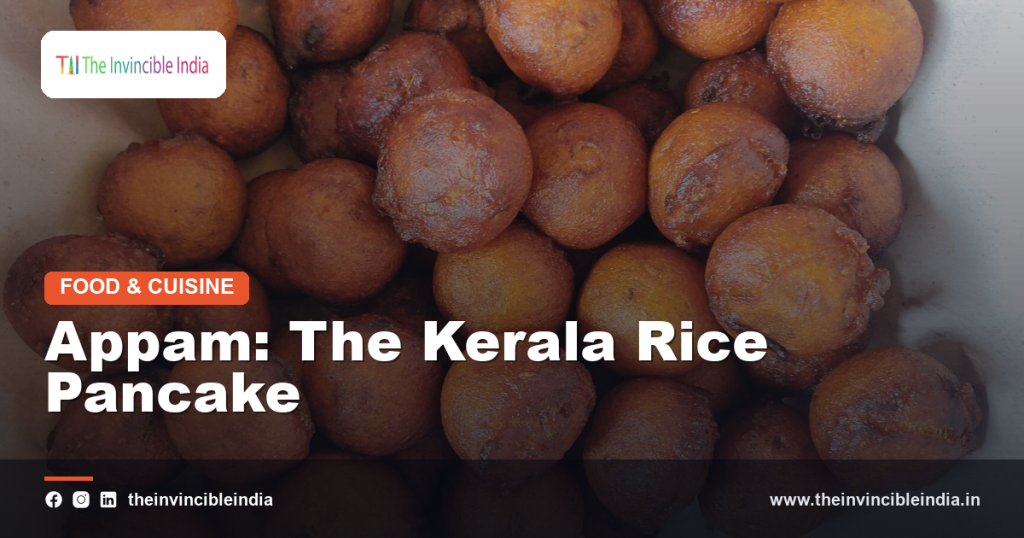
Appam is a soft, lacy rice pancake from Kerala, instantly recognisable for its thin, crisp edges and its thick, spongy centre that rises gently into a shallow bowl shape as it cooks. Made from a fermented batter of rice and coconut, appam occupies a cherished place at the Kerala breakfast and dinner table, prized for the delicate contrast between its crisp lace and its soft, slightly sweet middle. It belongs to the same wider family of fermented rice preparations found across Kerala cuisine, sharing its reliance on rice, coconut and patient fermentation. This guide explores appam, its origins, its preparation and its enduring place among the great breakfast dishes of South India.
Quick Facts
| Detail | Information |
|---|---|
| Type | A fermented rice and coconut pancake |
| Origin | Kerala, South India |
| Also known as | Palappam, vellayappam |
| Key ingredients | Rice, coconut, yeast or toddy |
| Usually served with | Vegetable stew, egg curry or sugar |
| Texture | Crisp lacy edges, soft spongy centre |
What Is Appam
Appam is a soft, bowl-shaped pancake made from a fermented batter of rice and coconut, cooked in a small, rounded pan until its edges turn thin and lacy while its centre remains soft and slightly spongy. This distinctive shape and texture set it apart from most other rice-based pancakes found across India, giving it an appearance and a mouthfeel entirely its own. It is eaten plain or filled with a savoury or sweet accompaniment. As a fermented rice and coconut pancake with a uniquely lacy, bowl-like form, appam stands as one of the most immediately recognisable dishes of Kerala cuisine, admired equally for its delicate texture and its comforting, mildly sweet flavour.
Origins in Kerala
Appam has long been associated with the coastal state of Kerala, where rice cultivation and coconut cultivation together shaped much of the region’s everyday cooking. The dish grew out of a broader South Indian tradition of fermenting rice batters, but it developed its own particular form and technique within Kerala’s kitchens, becoming closely tied to the rhythms of both Hindu and Christian households across the state. Its preparation was passed down through generations of home cooks. Rooted in Kerala’s rice-and-coconut food culture and refined over a long history of home cooking, appam has grown into one of the state’s most cherished and widely recognised culinary contributions.
Rice and Coconut Batter
The foundation of appam is a batter made from soaked, ground rice combined with coconut, usually in the form of coconut milk or freshly grated coconut blended with water. This combination gives the batter its characteristic mild sweetness and its slightly thick, pourable consistency, which is essential to forming the dish’s signature bowl shape when poured into a hot pan. A small amount of cooked rice is sometimes added for extra softness. Built from rice and coconut in careful proportion, this batter is the single most important element behind appam’s flavour and texture, and getting its consistency right is considered the first mark of a skilled cook.
The Fermentation Process
Fermentation gives appam its light texture and faintly tangy, yeasty flavour, achieved traditionally by leaving the rice and coconut batter to rest overnight, often with a small amount of toddy, yeast or a portion of older batter added to encourage the process. This resting period allows natural fermentation to soften the rice starches and introduce tiny air bubbles that later create the pancake’s lacy edges. The batter is judged ready when it has risen and turned slightly frothy. This overnight fermentation process, patient and largely left to nature, is what transforms a simple rice and coconut mixture into the airy, faintly tangy batter that defines proper appam.
The Distinctive Bowl Shape
Appam is instantly recognisable for its bowl-like shape, a form achieved by swirling the batter around the sides of a small, curved pan called an appachatti as soon as it is poured in, leaving a thicker pool in the centre. As the pancake cooks, covered briefly to trap steam, the edges crisp into a delicate lace while the centre rises into a soft, spongy cushion. This shape is essential for holding a serving of stew or curry within it. This distinctive bowl shape, formed by a simple swirling technique passed down through generations, is one of the most visually appealing and functional features of appam among South Indian pancakes.
Palappam and Vellayappam
Appam is known by several closely related names depending on its preparation, with palappam referring to the version enriched with coconut milk for a richer, slightly sweeter flavour, and vellayappam describing a plainer variant made without added coconut milk in the batter itself. Both share the same lacy, bowl-shaped form and the same fermentation technique, differing mainly in richness and sweetness. Regional households often favour one version over the other. This family of related preparations, palappam and vellayappam among them, shows the flexibility of the appam tradition while preserving the essential character that makes the dish so widely loved across Kerala.
Cooking on the Appachatti
Appam is traditionally cooked on an appachatti, a small, deep, rounded pan designed specifically to give the pancake its characteristic curved shape, distinct from the flat griddles used for dosa and similar dishes. The pan is heated, lightly greased, and the batter poured in with a quick swirling motion before a lid is placed on top to let the centre steam through while the edges crisp in the heat. Skilled cooks judge readiness by sight and smell alone. This dedicated appachatti, shaped precisely for the dish, remains an essential piece of equipment in any Kerala kitchen that prepares appam on a regular basis.
Pairing with Kerala Stew
One of the most beloved pairings in Kerala cuisine is appam served alongside a mild vegetable or chicken stew flavoured gently with coconut milk, whole spices and a hint of pepper rather than heavy chilli. The soft centre of the appam soaks up the thin, fragrant gravy of the stew, while its crisp edges provide contrast in texture, creating a breakfast combination cherished across the state. This pairing is especially popular during festive mornings. This classic combination of appam and stew, gentle in spice yet rich in flavour, is often considered the definitive way to enjoy the dish and a hallmark of Kerala’s breakfast table.
Appam with Egg Curry
Alongside vegetable stew, appam is very commonly served with a spiced egg curry, in which boiled eggs are simmered in a coconut-based gravy flavoured with onion, ginger, curry leaves and a moderate blend of spices. The soft, absorbent centre of the appam works particularly well with this slightly thicker, more robustly spiced gravy, offering a heartier alternative to the milder vegetable stew. This pairing is a favourite for both breakfast and dinner. This popular combination of appam with egg curry, comforting and satisfying in equal measure, remains one of the most requested dishes in Kerala households and restaurants alike.
Appam in Syrian Christian Cuisine
Appam holds a particularly prominent place within the food traditions of Kerala’s Syrian Christian community, where it is a staple of festive breakfasts, especially around Christmas and other important family occasions, often paired with stew, duck roast or mutton curry. Its preparation and pairing within this community reflect a long culinary heritage shaped by both local ingredients and the community’s own customs. Large family gatherings often centre around a shared appam breakfast. This cherished role within Syrian Christian cuisine, where appam accompanies rich festive dishes, highlights the dish’s importance well beyond the everyday and into the celebratory life of Kerala’s communities.
Regional Variations Across Kerala
While the essential technique for appam remains consistent, small regional variations exist across Kerala, with some households favouring a sweeter batter enriched with extra coconut milk, and others preferring a thinner, more neutral version suited to savoury pairings. Certain areas also add a touch of cooked rice or a small quantity of sugar to the batter for added softness and flavour. Coastal and inland households sometimes differ slightly in their preferred pairing. These regional variations in appam, subtle yet meaningful, show how a single dish can be adapted to local taste while retaining its core identity across the length of Kerala.
Appam and Hoppers Beyond Kerala
Fermented, bowl-shaped rice pancakes closely related to appam are also found beyond Kerala, most notably as hoppers in Sri Lanka, where a very similar preparation and cooking technique produce a comparable lacy, cup-shaped pancake. This shared culinary thread reflects long-standing food connections across the coastal communities of the wider region. Variants also appear in parts of Tamil Nadu under different local names. This wider presence of appam-like dishes beyond Kerala, appearing under names such as hoppers, shows how a single technique of fermenting and shaping rice batter has travelled and taken root across neighbouring food cultures.
Nutritional Character
Appam offers a light, easily digestible meal thanks to its fermentation, which breaks down some of the rice’s starches before cooking and is thought to make the dish gentler on digestion than many unfermented alternatives. Made mainly from rice and coconut, it provides a moderate source of energy along with a small amount of fat from the coconut, making it well suited as a breakfast dish eaten alongside a protein-rich stew or curry. Portion sizes are typically modest per pancake. This light and fermented nutritional character, easy to digest and adaptable to different accompaniments, is part of why appam has remained a dependable, everyday breakfast choice across generations in Kerala.
Street and Restaurant Appam
Appam is widely available beyond the home kitchen, served in small breakfast eateries and toddy shops across Kerala as well as in restaurants specialising in South Indian food throughout India and abroad. Restaurant versions are often prepared to order in appachattis kept ready over a steady flame, allowing the pancake to be served hot and fresh with a choice of stew, curry or sugar and banana. Toddy shops in particular are known for pairing appam with spiced meat dishes. This ready availability of appam in both humble eateries and larger restaurants has helped carry the dish’s reputation well beyond Kerala’s own borders.
Festive and Everyday Role
Appam occupies a comfortable place in both the everyday and the festive life of Kerala, served as a simple breakfast on ordinary mornings and equally at home on the table during Onam, Christmas or family celebrations, when it is paired with richer, more elaborate accompaniments. Its ability to move easily between the humble and the celebratory speaks to its deep integration into Kerala’s food culture. Large batches are often prepared for guests during festive gatherings. This dual role, comfortable on both quiet mornings and festive occasions, reflects the versatility of appam and its lasting place at the heart of Kerala’s culinary life.
Making Appam at Home
Preparing appam at home requires patience above all, since the rice must be soaked, ground and left to ferment for several hours or overnight before it is ready to cook, and the technique of swirling the batter in the appachatti takes some practice to master fully. Once the batter and pan are ready, however, each pancake cooks quickly, making appam practical for feeding a family once the initial preparation is complete. Many households prepare a large batch of batter to use across several days. This process of home preparation, demanding patience in the batter but quick at the stove, keeps appam a regularly made dish in Kerala kitchens rather than an occasional treat.
Appam Today
Today appam continues to be prepared daily in homes across Kerala and served proudly in restaurants across India and in Indian communities abroad, its lacy edges and soft centre remaining as appealing as ever to new generations of diners. Modern kitchens have made small adaptations, such as blenders replacing traditional grinding stones, yet the essential fermented rice and coconut batter and the appachatti pan remain unchanged. Its popularity continues to grow alongside interest in South Indian cuisine generally. As Kerala’s cherished bowl-shaped rice pancake, delicate in texture and gentle in flavour, appam stands as one of the finest and most enduring breakfast dishes in Indian cuisine.
Sources & Further Reading
- Ministry of Tourism, Government of India, on the cuisines of India (tourism.gov.in).
- Culinary references on the food traditions of Kerala.
Frequently Asked Questions
What is appam made of?
Appam is made from a fermented batter of rice and coconut, usually in the form of coconut milk, left to rest and ferment before being cooked in a small, curved pan called an appachatti.
What is the difference between appam and dosa?
Appam is made from a fermented rice and coconut batter and cooked in a curved pan to form a soft, bowl-shaped pancake with lacy edges, while dosa uses a rice and lentil batter cooked flat and thin on a griddle.
What is appam usually eaten with?
Appam is most commonly served with a mild coconut-based vegetable stew or a spiced egg curry, and it is also enjoyed sweet, paired simply with sugar or ripe banana.
Why does appam have a lacy, crisp edge?
The lacy, crisp edge forms because the fermented batter is thin and bubbly, and when it hits the hot, swirled surface of the appachatti it spreads out and crisps quickly while the thicker centre remains soft.
Is appam the same as a Sri Lankan hopper?
Appam and the Sri Lankan hopper are closely related, both being fermented, bowl-shaped rice pancakes cooked in a similar curved pan, reflecting shared culinary traditions across the wider coastal region.