


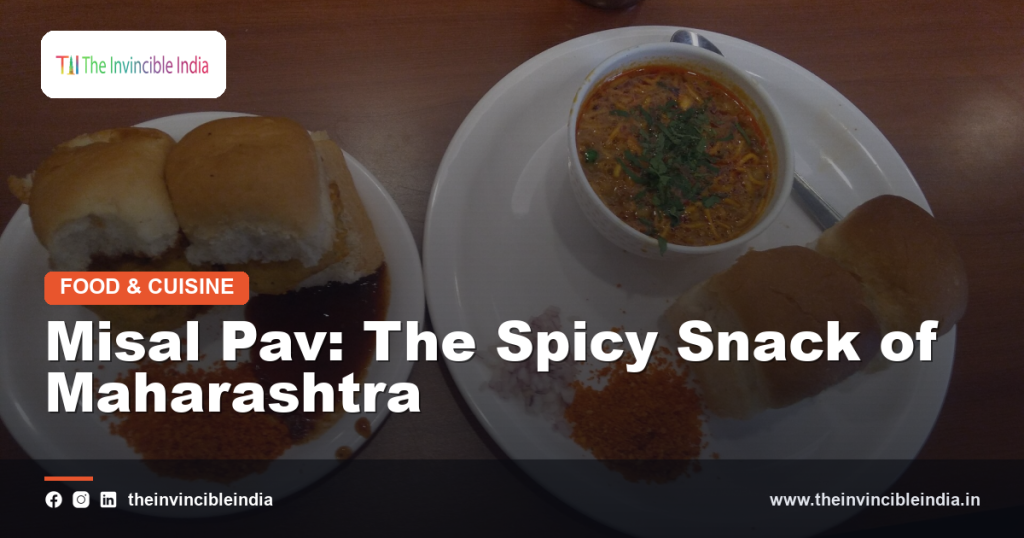
Misal pav is a fiery, sprouted lentil curry from Maharashtra, topped with a generous scattering of crunchy farsan, chopped onion, coriander and a squeeze of lime, and served alongside a pair of soft pav bread rolls for dipping. Best known as a breakfast and street food favourite, it brings together textures and temperatures in a single bowl, the crisp topping softening gradually into the hot, spicy gravy beneath. As one of the most distinctive dishes within the wider spread of Maharashtrian cuisine, misal pav shows the state’s fondness for bold spice paired with humble, everyday ingredients. This guide explores misal pav, its origins, its regional styles and its enduring popularity across India.
Quick Facts
| Detail | Information |
|---|---|
| Type | A spicy sprouted lentil curry with bread |
| Origin | Maharashtra, western India |
| Key ingredients | Sprouted moth beans, farsan, pav bread |
| Famous styles | Kolhapuri misal, Puneri misal |
| Usually eaten | As breakfast or a hearty snack |
| Character | Fiery, tangy and richly textured |
What Is Misal Pav
Misal pav is a spicy Maharashtrian dish built around misal, a curry of sprouted lentils or beans cooked in a fiery, well-spiced gravy, topped generously with crunchy farsan, raw onion and coriander, and served with pav, a soft, slightly sweet bread roll used for dipping and scooping. The dish is loved for the contrast it offers between the hot, tangy curry and the crisp texture of its toppings. It is eaten with a spoon, often accompanied by extra pav on the side. As a fiery sprouted lentil curry served with soft bread, misal pav stands as one of Maharashtra’s most celebrated and widely loved street food dishes.
Origins in Maharashtra
Misal pav developed within Maharashtra as a hearty, affordable dish built from sprouted beans, reflecting a resourceful style of cooking that transformed simple, protein-rich ingredients into a satisfying and flavourful meal. Over time it grew from a humble home preparation into a widely recognised regional specialty, with towns and cities across the state developing their own particular versions of the dish. Its popularity spread through small eateries known for serving it fresh each morning. Rooted in Maharashtra’s everyday cooking and its fondness for bold spice, misal pav has grown into one of the state’s most iconic and instantly recognisable culinary exports.
The Misal: Sprouted Lentil Curry
At the heart of the dish lies the misal itself, a curry made from sprouted moth beans or a similar lentil, simmered in a spiced gravy built on onion, garlic, ginger and a blend of chillies that gives the dish its characteristic heat. The sprouting process softens the beans while retaining a pleasant bite, and it is thought to make them easier to digest than their unsprouted form. The gravy itself can range from thin and fiery to thicker and more robust. This sprouted lentil curry, spiced with real intensity, forms the essential base upon which every other element of misal pav is built.
The Pav: Soft Bread Roll
Pav, the soft, slightly sweet bread roll served alongside misal, plays an essential role in balancing the dish’s heat, its mild flavour and pillowy texture offering relief between spoonfuls of the fiery curry. Introduced to the region through colonial-era bakeries, pav has since become thoroughly integrated into Maharashtrian food culture, appearing not only with misal but across a range of other popular snacks. It is typically served lightly toasted with a touch of butter. This soft pav, gentle and unassuming beside the fiery misal, completes the dish and gives misal pav its familiar, comforting name.
Farsan and Crunchy Toppings
A generous topping of farsan, a mixture of crisp fried snacks such as sev, gathiya and small fried noodles, is scattered over the misal just before serving, adding a crucial layer of crunch that contrasts with the hot, liquid curry beneath. As the dish sits, the farsan gradually softens, changing texture as it is eaten and adding another dimension to the overall experience. Chopped onion and fresh coriander are typically added alongside it. This crunchy farsan topping, contrasting sharply with the softness of the curry and pav, is one of the defining textural pleasures of a well-made misal pav.
Kolhapuri Misal
Kolhapuri misal, from the city of Kolhapur, is renowned as one of the most intensely spiced versions of the dish, built on a fiery red gravy flavoured with the region’s distinctive, robustly spiced masalas for which Kolhapur is broadly known. This version is often considered among the hottest available, appealing to those who particularly enjoy a strong chilli kick in their food. Its gravy is sometimes topped with a thin layer of spiced oil. This Kolhapuri style, fierce and deeply flavoured, has earned a strong reputation among misal pav enthusiasts as a benchmark for real heat and intensity.
Puneri Misal
Puneri misal, associated with the city of Pune, is often prepared with a somewhat different balance of spice, sometimes incorporating a layer of curd or a milder gravy alongside the traditional fiery elements to soften the overall heat slightly for a broader range of palates. Pune is home to several long-established eateries particularly known for their own take on the dish, each with a loyal following. Some versions also include a distinctive tarri, or spiced oil, poured on top. This Puneri style, balanced yet still robustly spiced, represents one of the most widely enjoyed regional variations of misal pav found across Maharashtra.
Nashik and Other Regional Styles
Beyond Kolhapur and Pune, other Maharashtrian cities and towns, including Nashik, maintain their own versions of misal pav, each shaped by local taste in spice, gravy consistency and choice of farsan topping. These regional variations reflect the dish’s adaptability and its deep integration into local food cultures across the state, with small differences in preparation carrying real significance for local diners. Family-run eateries often guard their particular recipe closely. This range of regional styles across Maharashtra, from Kolhapur’s fire to Pune’s balance, shows how a single dish can express considerable local character while remaining recognisably misal pav throughout.
The Role of Tarri
Many versions of misal pav feature a tarri, a thin, intensely spiced and often oily gravy poured over the dish just before serving, adding an extra layer of heat and flavour on top of the base curry. This tarri is frequently prepared separately from the main misal, allowing cooks to control the dish’s final level of spice according to individual preference or house style. Diners sometimes request extra tarri for additional heat. This distinctive tarri, poured generously over the finished dish, is one of the elements that gives certain regional styles of misal pav their especially fiery reputation.
Heat and Spice Level
Misal pav is widely regarded as one of the spicier dishes within Maharashtrian cuisine, its heat coming from a generous use of red chilli powder and chilli-based masalas built into both the base curry and any additional tarri poured on top. Eateries often offer different spice levels to accommodate a range of tolerances, from a milder version suitable for newcomers to an intensely fiery style favoured by regular enthusiasts. A glass of buttermilk is commonly served alongside to help temper the heat. This considerable heat, central to the dish’s identity, is part of what makes misal pav such a memorable and talked-about culinary experience.
Street Food and Breakfast Culture
Misal pav holds a firm place within Maharashtra’s street food and breakfast culture, served each morning at small stalls, tea stops and dedicated misal eateries where regular customers arrive for a hot, filling start to the day. Its combination of protein, spice and bread makes it a satisfying meal that can be eaten quickly, standing or seated, before continuing with the day’s work. Many eateries sell out of their prepared batch well before midday. This strong presence in everyday street food and breakfast culture has helped misal pav become one of the most familiar and beloved dishes across Maharashtra’s cities and towns.
Misal Pav as a Full Meal
Despite its street food origins, misal pav is substantial enough to serve as a complete meal on its own, combining protein-rich sprouted lentils, carbohydrate from the pav, and a generous helping of vegetables and spice within a single bowl. This makes it a popular choice not only for breakfast but also for lunch or a hearty evening snack, particularly among those seeking a filling vegetarian option. Extra farsan or pav can be added for a heartier serving. This capacity to function as a full and satisfying meal, rather than a light snack, is part of what has made misal pav so consistently popular across Maharashtra.
Nutritional Character
Misal pav derives much of its nutritional value from sprouted lentils or beans, which are considered a good source of plant protein and are thought to be more easily digested once sprouted than in their raw, unsprouted form. The dish also includes vegetables such as onion and coriander, though its generous use of oil and fried farsan means it is best regarded as an occasional indulgence rather than a light everyday meal. Portion sizes and toppings can be adjusted to suit different appetites. This combination of protein-rich sprouts and rich, spiced garnish gives misal pav both its nutritional substance and its reputation as a hearty, filling dish.
Accompaniments: Chutney, Onion and Lime
Misal pav is typically finished with a scattering of raw chopped onion, fresh coriander and a wedge of lime, each adding a fresh, sharp contrast to the rich, spiced curry beneath. A side of green chutney or a spoonful of curd is sometimes offered to those who prefer to temper the dish’s considerable heat, while extra farsan is often available for those who enjoy additional crunch. These accompaniments are usually added by the diner rather than the cook. These finishing touches, fresh and tangy against the fiery base, allow each diner to adjust misal pav to their own taste before the first bite.
Misal Pav in Restaurants and Homes
While closely associated with street stalls and dedicated misal eateries, the dish is also prepared in home kitchens across Maharashtra, particularly for family breakfasts or as a filling snack during gatherings. Restaurants across India, and increasingly abroad, now include misal pav on their menus as a representative dish of Maharashtrian cuisine, often adjusting the spice level for a broader audience. Packaged misal mixes have also made home preparation easier. This presence of misal pav in both humble homes and established restaurants reflects its journey from a regional specialty to a dish recognised well beyond Maharashtra’s borders.
Cultural Significance in Maharashtra
Misal pav carries genuine cultural weight in Maharashtra, often mentioned with pride as a dish that captures the state’s fondness for bold spice and its resourceful, no-frills approach to hearty, flavourful food. Competitions and informal debates over which city or eatery serves the best misal are common, reflecting the affection and loyalty the dish inspires among Maharashtrians. It is frequently recommended to visitors as a must-try regional specialty. This strong cultural significance, tied closely to regional identity and pride, elevates misal pav from a simple snack to a genuine symbol of Maharashtrian food culture.
Misal Pav Today
Today misal pav is enjoyed across Maharashtra and well beyond, served in dedicated eateries, general restaurants and home kitchens alike, its fiery reputation drawing both curious newcomers and devoted regulars. Regional styles from Kolhapur, Pune and Nashik continue to be prepared with pride, ensuring that the dish’s local variety remains very much alive alongside its growing national popularity. Its appearance on menus outside Maharashtra continues to expand each year. As Maharashtra’s fiery sprouted lentil curry served with soft pav, misal pav stands as one of India’s most distinctive and enthusiastically loved regional dishes.
Sources & Further Reading
- Ministry of Tourism, Government of India, on the cuisines of India (tourism.gov.in).
- Culinary references on the food traditions of Maharashtra.
Frequently Asked Questions
What is misal pav made of?
Misal pav is made of misal, a spicy curry of sprouted lentils or beans, topped with crunchy farsan, onion and coriander, and served with pav, a soft bread roll used for dipping into the curry.
Is misal pav very spicy?
Misal pav is generally considered one of the spicier Maharashtrian dishes, especially styles such as Kolhapuri misal, though many eateries offer milder versions and buttermilk is often served alongside to help balance the heat.
What is the difference between Kolhapuri and Puneri misal?
Kolhapuri misal is known for its fiery, intensely spiced red gravy, while Puneri misal often has a slightly milder or more balanced profile, sometimes including a layer of curd, appealing to a broader range of spice tolerance.
What is farsan in misal pav?
Farsan is a mixture of crunchy fried snacks, such as sev and gathiya, scattered over the misal curry just before serving, adding a crisp texture that contrasts with the hot, liquid curry beneath it.
Can misal pav be eaten as a full meal?
Yes, misal pav is substantial enough to serve as a complete meal, combining protein-rich sprouted lentils, bread and vegetables in one bowl, and it is commonly eaten for breakfast, lunch or a hearty evening snack.