


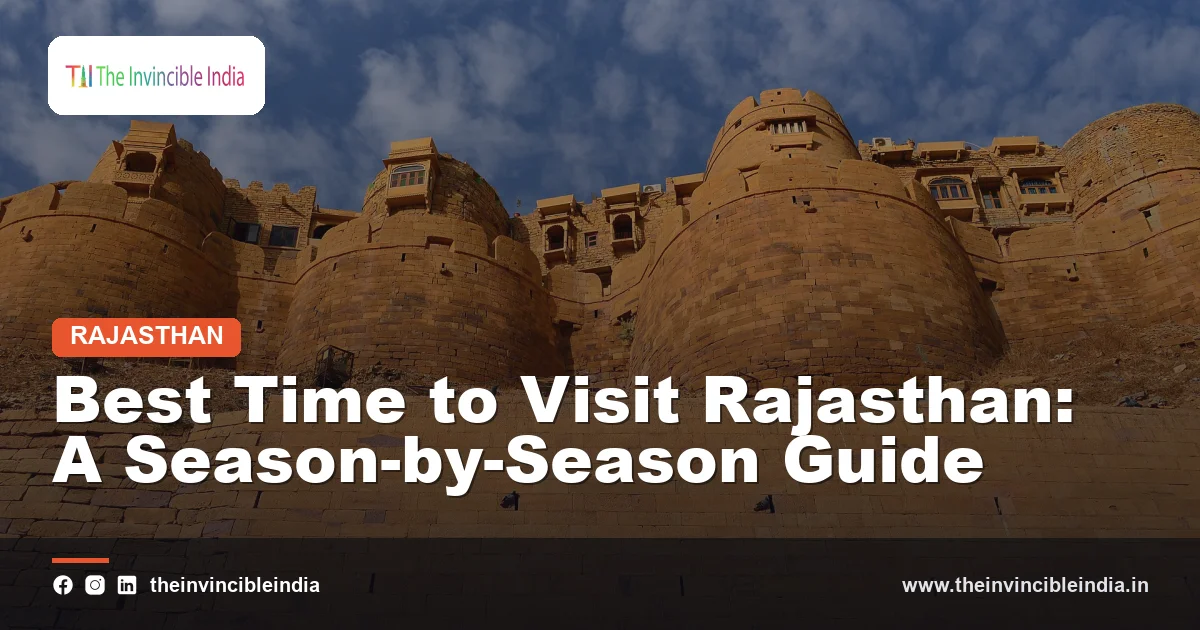
Rajasthan, the magnificent “Land of Kings”, is one of India’s most captivating destinations, famed for its majestic forts, opulent palaces, golden deserts, vibrant culture and colourful festivals. But with its extreme desert climate, choosing the right time to visit can make a significant difference to your experience. From the pleasant, cool winters ideal for sightseeing to the scorching summers and the vibrant monsoon, each season offers something different. This guide explores the best time to visit Rajasthan, what each season holds, and how to plan the perfect trip to this royal and enchanting state.
Quick Facts: Visiting Rajasthan
| Detail | Information |
|---|---|
| Best overall season | Winter (October to March) |
| Peak tourist months | November to February |
| Summer | April to June (very hot) |
| Monsoon | July to September |
| Famous for | Forts, palaces, desert, culture, festivals |
| Key cities | Jaipur, Udaipur, Jodhpur, Jaisalmer |
Winter: The Best Time to Visit (October to March)
Winter is unquestionably the best and most popular time to visit Rajasthan, when the harsh desert climate gives way to pleasant, cool and comfortable weather ideal for exploring the state’s many attractions. During these months, daytime temperatures are mild and enjoyable, perfect for touring forts, palaces and markets, while nights can be quite cold, especially in the desert regions. This is the peak tourist season, when the famous cities of Jaipur, Udaipur, Jodhpur and Jaisalmer are at their most inviting, and when many of the state’s grandest festivals and fairs take place, making it the ideal time for a memorable Rajasthan experience.
Summer: The Off-Season (April to June)
Summer in Rajasthan is intense, with temperatures in many areas soaring to extreme highs, particularly in the desert regions, making daytime sightseeing challenging. For this reason, it is generally considered the off-season for tourism. However, summer is not without its advantages: hotel rates, including those of luxury heritage palaces, are often significantly lower, and popular sites are far less crowded. Travellers who can tolerate the heat, plan their sightseeing for the early mornings and evenings, and seek out the cooler hill station of Mount Abu can still enjoy the state, benefiting from better deals and a quieter, more relaxed atmosphere.
Monsoon: A Different Charm (July to September)
The monsoon brings a welcome respite from the summer heat and transforms the usually arid landscape of Rajasthan into a greener, more refreshed version of itself. While rainfall is generally moderate compared to other parts of India, the season lends a special charm to the state, with cooler temperatures, dramatic skies and the desert coming to life. The lakes of Udaipur are especially beautiful during this time, and the famous Teej festival, celebrating the monsoon, adds vibrant colour and festivity. For travellers seeking fewer crowds, lush scenery and pleasant temperatures, the monsoon can be a rewarding and romantic time to explore Rajasthan.
Festivals and Timing Your Visit
Rajasthan’s calendar is filled with spectacular festivals and fairs, and timing your visit to coincide with one can greatly enrich your experience. The world-famous Pushkar Camel Fair, usually held in November, is a dazzling spectacle of livestock trading, culture and colour. The Desert Festival in Jaisalmer, the Jaipur Literature Festival, the Elephant Festival, Teej and Gangaur are among the many vibrant celebrations that showcase the state’s rich heritage. Most of these festivals fall during the pleasant winter and monsoon months, making these seasons doubly rewarding, offering both comfortable weather and the chance to witness Rajasthan’s legendary culture at its most vivid.
Region by Region: When to Go Where
Rajasthan is a large and varied state, and the ideal timing can differ slightly depending on which regions you plan to visit. The desert cities of Jaisalmer and Bikaner, with their extreme climate, are best enjoyed in the cool winter months, when a desert safari and a night under the stars are truly magical. The lake city of Udaipur is beautiful in winter but also enchanting during the monsoon, when its lakes are full and the surroundings turn green. Jaipur, Jodhpur and the other major cities are all at their best in winter. The hill station of Mount Abu offers a cooler retreat and can be pleasant even in summer, making it a welcome escape from the heat of the plains.
Winter Highlights and What to Pack
Travelling in Rajasthan during winter means comfortable days ideal for exploring, but it is important to be prepared for the significant drop in temperature at night, especially in the desert, where it can become quite cold. Visitors should pack light, breathable clothing for the daytime along with warm layers, a jacket and perhaps a shawl for the chilly evenings and early mornings. Comfortable walking shoes are essential for exploring the vast forts and palaces, and sun protection remains important even in winter. With the right preparation, the winter months offer the perfect conditions to experience the full splendour of Rajasthan’s royal heritage and desert landscapes in comfort.
Experiencing the Desert
One of the quintessential experiences of Rajasthan is a journey into the Thar Desert, and the timing of such a trip is crucial to enjoying it fully. The cool winter months, from November to February, are by far the best time for a desert safari, whether on camelback or by jeep, and for spending a night at a desert camp near Jaisalmer. During this period, the days are pleasant for exploring the golden dunes and the nights are cool and clear, perfect for stargazing and enjoying traditional folk music and dance around a campfire. Visiting the desert in summer, by contrast, is extremely challenging due to the intense heat, making winter the ideal season for this magical experience.
Planning the Perfect Rajasthan Itinerary
To make the most of a trip to Rajasthan, it helps to plan an itinerary that balances the state’s many attractions with the realities of its climate and distances. A classic route might include Jaipur, Udaipur, Jodhpur and Jaisalmer, each offering its own distinctive forts, palaces and culture, ideally spread over one to two weeks. During the cooler months, longer days of sightseeing are comfortable, while in warmer seasons it is wise to schedule outdoor activities for the early mornings and evenings. Booking heritage hotels, planning around major festivals, and allowing time to soak in the state’s rich culture, cuisine and crafts all contribute to a memorable and rewarding Rajasthan experience.
Why Rajasthan Enchants in Every Season
While winter is undoubtedly the best time to visit, Rajasthan holds a special charm in every season for those who know what to expect. The cool winters bring perfect sightseeing weather and vibrant festivals; the hot summers offer bargains, fewer crowds and the cool refuge of Mount Abu; and the monsoon transforms the landscape with greenery, full lakes and the joyous Teej celebrations. Whatever the season, the timeless appeal of Rajasthan, its magnificent forts and palaces, its colourful culture, its warm hospitality and its golden deserts, endures. Choosing the right time simply ensures that you experience this royal land at its most comfortable and rewarding, ready to create memories that last a lifetime.
Festivals Through the Year
Rajasthan’s vibrant festival calendar offers a wonderful reason to time a visit around a particular celebration. Beyond the famous Pushkar Camel Fair in November, the state hosts the colourful Jaisalmer Desert Festival in winter, filled with folk music, dance, camel races and cultural displays; the Elephant Festival and the Gangaur festival in Jaipur celebrating spring and devotion; the Mewar Festival in Udaipur; and the monsoon festival of Teej. The internationally renowned Jaipur Literature Festival draws writers and readers from around the world. Each of these events showcases a different facet of Rajasthan’s rich culture, and planning a trip to coincide with one adds an unforgettable dimension of colour, music and tradition to the experience.
Wildlife and the Best Viewing Season
Rajasthan is not only about forts and deserts; it is also home to remarkable wildlife, and timing is important for those hoping to see it. The famous Ranthambore National Park, one of the best places in India to spot tigers in the wild, along with Sariska Tiger Reserve, is best visited during the cooler months when the parks are open and animals are more active. The Keoladeo National Park at Bharatpur, a paradise for birdwatchers and a UNESCO World Heritage Site, is especially rewarding in winter, when large numbers of migratory birds arrive. For wildlife enthusiasts, the winter and the periods just before and after it offer the best opportunities to combine cultural sightseeing with memorable encounters with nature.
Making the Most of Your Visit
Whatever season you choose, a little planning helps ensure a rewarding Rajasthan experience. Booking accommodation and popular tours in advance is wise during the busy winter season, when the state attracts the most visitors. Staying in one of Rajasthan’s many heritage hotels, converted forts and palaces offers a uniquely royal experience. Sampling the rich local cuisine, shopping for the state’s famous handicrafts and textiles, and taking time to enjoy cultural performances of folk music and dance all enrich a journey through this remarkable land. With thoughtful timing and preparation, a trip to Rajasthan becomes an immersion into a world of history, colour, culture and hospitality unlike anywhere else.
A Timeless Royal Destination
Rajasthan remains one of the most enchanting and rewarding destinations in India, a land where every fort tells a story, every palace whispers of royalty, and every desert sunset lingers in the memory. Choosing the right time to visit, ideally the cool and vibrant winter months, ensures that you can explore its magnificent heritage in comfort and witness its colourful festivals at their finest. Yet whatever the season, the timeless magic of the Land of Kings, its grandeur, colour, culture and legendary hospitality, awaits every traveller, promising an unforgettable journey through one of the most captivating corners of India.
Plan Ahead for the Perfect Trip
Timing truly is everything when it comes to Rajasthan, and a little forethought about the season can transform a good trip into an unforgettable one. By aligning your visit with the pleasant weather and the state’s spectacular festivals, you can experience the Land of Kings at its very best, comfortable, colourful and full of life.
Frequently Asked Questions
What is the best time to visit Rajasthan?
The best time to visit Rajasthan is during the winter months, from October to March, when the weather is cool and pleasant, ideal for sightseeing, with November to February being the peak season.
Is it worth visiting Rajasthan in summer?
Summer (April to June) is very hot in Rajasthan, but it offers lower hotel rates and fewer crowds. Travellers who plan sightseeing for early mornings and evenings, or visit the hill station of Mount Abu, can still enjoy the state.
What is the weather like in Rajasthan during the monsoon?
The monsoon (July to September) brings moderate rain, cooler temperatures and greener landscapes, along with festivals like Teej. It can be a pleasant and less crowded time to visit.
When is the Pushkar Camel Fair held?
The famous Pushkar Camel Fair is usually held in November, during the pleasant winter season, and is one of Rajasthan’s most spectacular cultural events.