


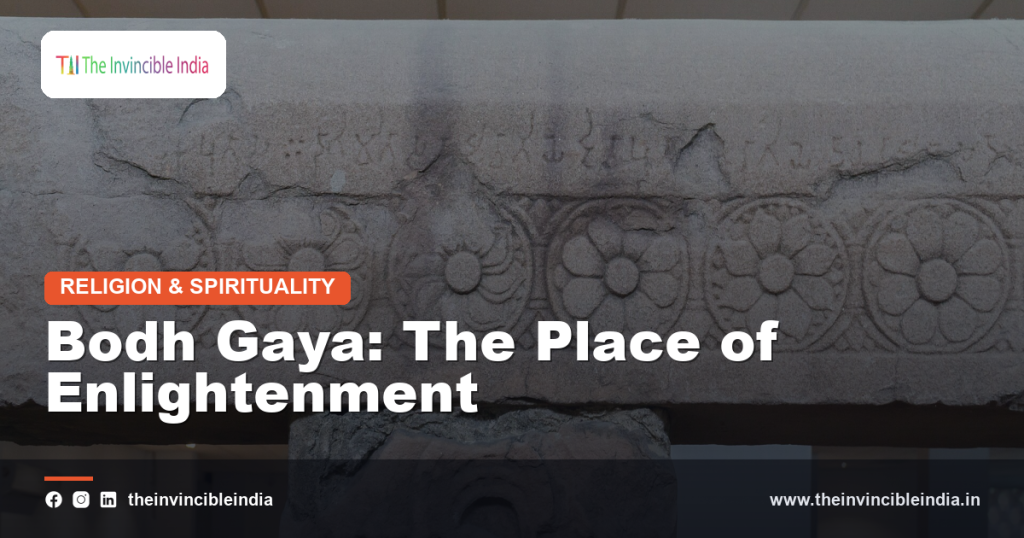
Bodh Gaya, a small town in the eastern Indian state of Bihar, is revered as one of the holiest places in the world for followers of Buddhism, for it is here that the Buddha is believed to have attained enlightenment beneath the Bodhi Tree. The site today is dominated by the Mahabodhi Temple, a UNESCO World Heritage monument surrounded by monasteries built by Buddhist communities from across the globe, making Bodh Gaya a vibrant centre of international pilgrimage. As the place associated with the founding moment of Buddhism, Bodh Gaya holds unparalleled sanctity for the global Buddhist community. This guide explores the history, monuments, traditions and living heritage of Bodh Gaya, the place of enlightenment.
Quick Facts
| Detail | Information |
|---|---|
| Location | Bihar, in eastern India |
| Significance | Site of the Buddha’s enlightenment |
| Main monument | The Mahabodhi Temple |
| Sacred tree | A descendant of the original Bodhi Tree |
| Heritage status | A UNESCO World Heritage Site |
| Pilgrimage role | One of the holiest sites in Buddhism |
What Is Bodh Gaya
Bodh Gaya is a small town in the eastern Indian state of Bihar, revered as one of the holiest places in the world for followers of Buddhism, for it is here that the Buddha is believed to have attained enlightenment. This event, regarded as the central turning point in the life of the Buddha and the founding moment of Buddhism as a religion, gives Bodh Gaya its unparalleled sanctity within the Buddhist tradition. The site today is dominated by the Mahabodhi Temple complex, built to commemorate this sacred event, and it draws pilgrims and visitors from across the Buddhist world. As the place where the Buddha’s enlightenment occurred, Bodh Gaya holds a place of unique and enduring importance within the global Buddhist community.
The Buddha's Enlightenment
According to Buddhist tradition, it was at Bodh Gaya that Siddhartha Gautama, after years of spiritual searching, sat down beneath a tree and resolved to remain there until he attained the truth he sought. Through deep and sustained meditation, he attained enlightenment, awakening to a profound understanding of the nature of existence and the causes and cessation of suffering, and thereby becoming the Buddha, the awakened one. This moment is regarded as the central and defining event of the Buddha’s life, from which flowed his subsequent decades of teaching and the establishment of Buddhism as a religion. The sanctity of Bodh Gaya rests entirely upon this belief in its being the very place where this transformative awakening occurred.
The Bodhi Tree
A tree at Bodh Gaya, known as the Bodhi Tree, is revered as marking the very spot beneath which the Buddha is believed to have attained enlightenment, making it one of the most sacred trees in the world for Buddhists. The tree that stands at the site today is understood to be a descendant of the original tree, propagated and preserved across many centuries through careful cultivation and religious devotion. Pilgrims travel to Bodh Gaya specifically to see and pay homage to this tree, regarding it as a living link to the moment of the Buddha’s awakening. The continued presence and veneration of the Bodhi Tree at the site is one of the most cherished and symbolically significant features of Bodh Gaya for Buddhist pilgrims.
The Mahabodhi Temple
The Mahabodhi Temple stands beside the Bodhi Tree at Bodh Gaya, a soaring structure that has become the principal monument marking the site of the Buddha’s enlightenment. The temple houses a large image of the Buddha and forms the focal point of worship and pilgrimage at the site, drawing devotees who come to offer prayers and pay homage at this most sacred of Buddhist locations. Its distinctive tall, tapering form has become one of the most recognisable images associated with Buddhist sacred architecture around the world. As the central monument commemorating the Buddha’s enlightenment, the Mahabodhi Temple stands at the very heart of the religious significance of Bodh Gaya for the global Buddhist community.
History and Architecture of the Temple
The Mahabodhi Temple has a long and layered history, having been built, modified and restored across many centuries by successive generations of devotees and rulers who sought to honour and preserve this sacred site. Its architecture reflects a distinctive style of ancient Indian temple building, combining a soaring central tower with surrounding smaller structures and richly carved decorative elements. Over the long history of the site, the temple has undergone various periods of decline and subsequent restoration, reflecting the changing fortunes of Buddhism in India across the centuries. This layered architectural and historical legacy makes the Mahabodhi Temple not only a place of active worship but also a monument of great historical and archaeological interest and significance.
The Vajrasana: The Diamond Throne
Within the Mahabodhi Temple complex lies the Vajrasana, or Diamond Throne, traditionally identified as marking the precise spot where the Buddha sat in meditation at the moment of his enlightenment. This sacred marker is treated with the greatest reverence by Buddhist pilgrims, who regard it as the exact point of contact between the historical event of the Buddha’s awakening and the physical site that commemorates it today. The Vajrasana, positioned beneath the Bodhi Tree and beside the temple, forms a focal point for meditation and devotion for visitors to the site. Its presence reinforces the profound sense of sacred continuity that pilgrims experience when visiting Bodh Gaya, connecting them directly to the foundational moment of Buddhist history.
UNESCO World Heritage Status
In recognition of its outstanding religious, historical and architectural significance, the Mahabodhi Temple complex at Bodh Gaya has been designated a UNESCO World Heritage Site, an international acknowledgement of its exceptional and universal value. This status reflects both the temple’s ancient architectural heritage and its unbroken significance as a place of active worship and pilgrimage across many centuries. World Heritage recognition has also supported ongoing efforts to conserve and protect the site for future generations, ensuring that its historical and religious value is preserved amid the pressures of time and increasing visitor numbers. This international recognition affirms the global importance of Bodh Gaya, not only for Buddhists but for humanity’s shared cultural and religious heritage.
Monasteries of Different Nations
Surrounding the Mahabodhi Temple, Bodh Gaya is home to a remarkable array of monasteries and temples built by Buddhist communities from many different countries, each reflecting the distinctive architectural and artistic traditions of its country of origin. These international monasteries, established by devotees from across the Buddhist world, give Bodh Gaya a uniquely cosmopolitan religious atmosphere, in which diverse expressions of Buddhist art, architecture and practice exist side by side around the central sacred site. Pilgrims and visitors can observe this rich diversity of Buddhist tradition within a relatively small area, making Bodh Gaya not only a place of pilgrimage but also a living showcase of the global spread and variety of Buddhism. This international presence adds greatly to the character and significance of the site.
Pilgrimage and the Global Buddhist Community
Bodh Gaya draws pilgrims from across the entire global Buddhist community, representing the many different traditions and nationalities that make up contemporary Buddhism, all united by reverence for this common sacred site. For many pilgrims, a visit to Bodh Gaya represents the fulfilment of a long-held spiritual aspiration, an opportunity to meditate, pray and pay homage at the very place associated with the founding event of their faith. This shared pilgrimage to a single sacred location serves as a powerful expression of the unity of the global Buddhist community, despite its great diversity of language, culture and tradition. The continuous flow of international pilgrims to Bodh Gaya underscores its unparalleled and enduring status as the most sacred site in the Buddhist world.
Festivals at Bodh Gaya
Bodh Gaya is the setting for significant religious festivals and observances throughout the year, particularly those connected with major events in the life of the Buddha, which are marked with special ceremonies, prayer gatherings and celebrations at the site. During these occasions, the town and temple complex draw especially large numbers of pilgrims, monks and visitors, creating a vibrant atmosphere of devotion and celebration. Such festivals provide occasions for communal worship, teaching and reflection, drawing together Buddhist communities from different traditions and countries in shared observance. The rich festival life associated with Bodh Gaya adds a further dimension to its significance, transforming the site periodically into a vibrant centre of collective religious celebration alongside its role as a place of quiet, personal pilgrimage.
Archaeological and Historical Importance
Beyond its religious significance, Bodh Gaya holds great archaeological and historical importance, with extensive remains and artefacts at the site testifying to its long history as a centre of Buddhist worship and architecture. Archaeological study of the temple complex and surrounding area has contributed significantly to scholarly understanding of the historical development of Buddhist architecture and religious practice in ancient India. The layered history of construction, decline and restoration visible at the site provides valuable evidence for historians and archaeologists studying the broader history of Buddhism on the Indian subcontinent. This archaeological dimension complements the religious significance of Bodh Gaya, making it a site of great interest and importance for the scholarly study of India’s Buddhist heritage.
Bodh Gaya Through the Centuries
The history of Bodh Gaya as a sacred site spans many centuries, during which it has experienced periods of great prominence as a centre of Buddhist worship and learning, as well as periods of decline, particularly as Buddhism itself waned in India in later centuries. Despite these fluctuations, the site retained its sacred status and continued to be recognised and, at various points, restored by devoted patrons and communities who recognised its unique religious significance. This long and eventful history reflects the broader story of Buddhism in India, its flourishing, its decline and its enduring symbolic importance even during periods when active worship at the site diminished. The survival of Bodh Gaya through these many centuries testifies to the deep and lasting reverence in which it has always been held.
Conservation Efforts
Considerable effort has been devoted, particularly in more recent times, to the conservation and restoration of the Mahabodhi Temple and the wider site at Bodh Gaya, ensuring that this precious heritage is preserved for future generations of pilgrims and visitors. These conservation efforts involve careful archaeological and architectural work aimed at protecting the historic structure while accommodating the needs of the large numbers of pilgrims who visit the site each year. International cooperation and support, reflecting the site’s significance to the global Buddhist community, have contributed to these ongoing preservation efforts. Such careful conservation work is essential to maintaining the historical integrity and continued accessibility of this uniquely important sacred site for the generations of pilgrims yet to come.
Bodh Gaya as a Symbol of Peace
Beyond its specific religious significance for Buddhists, Bodh Gaya has come to be regarded more broadly as a symbol of peace, reflecting the values of compassion, wisdom and non-violence associated with the teachings of the Buddha that originated at this site. Visitors of many different backgrounds and beliefs, not only practising Buddhists, are drawn to Bodh Gaya by its atmosphere of tranquillity and its association with the pursuit of spiritual insight and inner peace. This broader symbolic significance has helped to establish Bodh Gaya as a site of interest not only for religious pilgrimage but also for those interested in meditation, philosophy and the pursuit of peace more generally. This wider resonance adds to the universal importance of Bodh Gaya beyond its specifically Buddhist religious context.
Visiting Bodh Gaya
Visitors to Bodh Gaya today can explore the Mahabodhi Temple complex, view the sacred Bodhi Tree and the Vajrasana, and walk among the numerous international monasteries that surround the central site, each offering its own distinctive architecture and atmosphere. Many visitors choose to spend time in quiet meditation or reflection at the site, drawn by its sacred history and tranquil environment. The town of Bodh Gaya has developed considerable infrastructure to accommodate the steady flow of pilgrims and visitors from around the world, while efforts continue to preserve the reverent and contemplative character of the site. A visit to Bodh Gaya offers travellers the opportunity to engage directly with one of the most historically and spiritually significant places in the Buddhist world.
Bodh Gaya Today
Today Bodh Gaya remains a living and vibrant centre of Buddhist pilgrimage, worship and international community, continuing to draw devotees, scholars and visitors from across the globe to the place where the Buddha attained enlightenment. Its status as a UNESCO World Heritage Site, its ongoing conservation, and the vibrant presence of monasteries representing many nations all attest to its enduring and universally recognised significance. As a site that connects the ancient historical moment of the Buddha’s awakening with a continuously active and evolving international religious community, Bodh Gaya occupies an unparalleled place in the geography of world religion. It remains, above all, a place of profound sanctity, reflection and enduring inspiration for the global Buddhist community.
Sources & Further Reading
- Ministry of Culture, Government of India, on the Buddhist heritage of India (indiaculture.gov.in).
- Archaeological Survey of India, on the Mahabodhi Temple complex (asi.nic.in).
Frequently Asked Questions
Why is Bodh Gaya significant?
Bodh Gaya is significant because it is the place where the Buddha is believed to have attained enlightenment, making it one of the holiest sites in Buddhism and the location of the historic Mahabodhi Temple.
What is the Mahabodhi Temple?
The Mahabodhi Temple is the principal monument at Bodh Gaya, built to commemorate the Buddha’s enlightenment. It stands beside the sacred Bodhi Tree and is recognised as a UNESCO World Heritage Site.
What is the Bodhi Tree?
The Bodhi Tree at Bodh Gaya is revered as marking the spot where the Buddha attained enlightenment. The tree at the site today is a descendant of the original tree, preserved through careful cultivation over many centuries.
Where is Bodh Gaya located?
Bodh Gaya is located in the eastern Indian state of Bihar. It has been a centre of Buddhist pilgrimage since ancient times and remains one of the most sacred sites in the Buddhist world.
Who visits Bodh Gaya today?
Bodh Gaya draws Buddhist pilgrims and monks from countries across the world, as well as scholars and visitors interested in its history, architecture and its broader symbolism of peace and spiritual insight.