


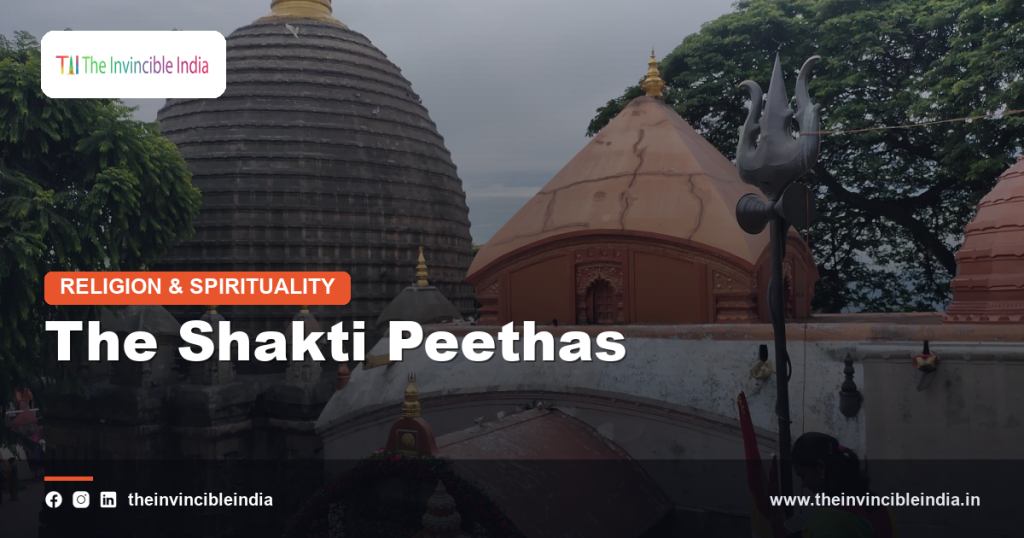
The Shakti Peethas are a network of sacred shrines spread across India and neighbouring regions, dedicated to the worship of the Goddess and regarded among the holiest pilgrimage sites within the Hindu tradition of Goddess worship. Each shrine is understood as a seat of Shakti, the divine feminine power, and the sites are united by a shared legend that gives the entire network its profound devotional and mythological foundation. Closely connected to the wider veneration of Hindu deities, the Shakti Peethas, including the renowned Kamakhya Temple, draw pilgrims from across the subcontinent. This guide explores the meaning, legend, spread, architecture and living pilgrimage tradition of the Shakti Peethas, one of India’s most revered sacred networks.
Quick Facts
| Detail | Information |
|---|---|
| Meaning | Seats of Shakti, the divine feminine power |
| Legend | Associated with the story of the goddess Sati |
| Traditional count | Commonly said to number around fifty-one |
| Spread | Found across India and neighbouring regions |
| Famous example | Kamakhya Temple in Assam |
| Significance | Among the holiest pilgrimage sites of the Goddess tradition |
What Are the Shakti Peethas
The Shakti Peethas are a network of sacred shrines dedicated to the Goddess, spread across India and parts of neighbouring regions, regarded among the holiest pilgrimage sites within the Hindu tradition of Goddess worship. The word peetha means seat or foundation, and each of these shrines is understood as a seat of Shakti, the divine feminine power, believed to be especially manifest at these particular sacred locations. Woven together by a shared legend and united by the worship of the Goddess in her many forms, the Shakti Peethas form one of the most extensive and revered pilgrimage networks in Hindu religious geography. Together, these shrines express the deep and widespread devotion to the Goddess that runs throughout Hindu religious life across the diverse regions of the Indian subcontinent.
The Meaning of Shakti
Shakti, meaning power or energy, refers in Hindu philosophy to the dynamic, creative and sustaining force of the universe, personified as the Goddess in her many forms. Shakti is understood as the active power through which the divine engages with and animates the world, often conceived as complementary to a more passive, transcendent aspect of ultimate reality. Worship of the Goddess as Shakti is a major and ancient current within Hinduism, expressed through countless forms, names and local traditions across the subcontinent. The Shakti Peethas, as seats particularly associated with this divine power, occupy a central place within this broader tradition of Goddess worship, embodying the belief that the sacred feminine power is present and accessible at these hallowed sites.
The Legend Associated with the Peethas
The Shakti Peethas are traditionally connected to a well-known legend concerning the goddess Sati, whose story is recounted in Hindu mythological literature as an account of profound devotion and divine grief. According to this widely known tradition, the sites of the Shakti Peethas came to be sanctified through events connected with Sati and her consort Shiva, giving each shrine a mythological association with a particular aspect of the Goddess. This shared legend binds the many individual shrines into a single sacred network, each location understood to hold a special connection to the divine feminine through this ancient story. The legend, retold and cherished across generations, gives the Shakti Peethas their profound narrative and devotional foundation within the wider Goddess tradition.
Number and Spread of the Peethas
The Shakti Peethas are traditionally said to number around fifty-one, though different textual traditions and regional lists vary somewhat in their precise count and identification of individual sites. These shrines are spread widely across the Indian subcontinent, extending into neighbouring countries as well, reflecting the broad geographical reach of Goddess worship within the Hindu tradition. This wide distribution has helped to unite diverse regions within a shared devotional network, as pilgrims travel across considerable distances to visit these sacred sites. The traditional counting and mapping of the Shakti Peethas, even amid some variation between textual sources, reflects the richness and antiquity of this pan-Indian tradition of Goddess worship and its enduring importance across many centuries.
Kamakhya Temple
Among the most renowned of the Shakti Peethas is the Kamakhya Temple, situated on a hill near Guwahati in the north-eastern state of Assam, regarded as one of the most important centres of Goddess worship and Tantric practice in India. The temple draws large numbers of pilgrims and devotees throughout the year, and it holds a distinctive place among the Shakti Peethas for its long association with Tantric traditions of worship. Its architecture and ritual practices reflect the particular regional character of Goddess worship in this part of India, while its inclusion among the Shakti Peethas connects it to the wider pan-Indian network. Kamakhya remains one of the most visited and celebrated of all the Shakti Peethas today.
Other Notable Shakti Peethas
Beyond Kamakhya, numerous other Shakti Peethas are found across India, each associated with its own local traditions, temple architecture and forms of worship of the Goddess. These shrines are located in diverse regions of the subcontinent, from the mountains to the plains and coastal areas, reflecting the widespread devotion to the Goddess across different Indian communities and cultures. Each site typically maintains its own particular rituals, festivals and local legends, layered upon the shared mythological framework that unites all the Shakti Peethas. This combination of a shared sacred network with distinctive local traditions at each individual site reflects the way in which pan-Indian religious traditions have historically adapted to and enriched the specific cultures of India’s many regions.
Architecture of Shakti Temples
The temples built at the Shakti Peethas reflect a range of regional architectural styles, shaped by the particular traditions, materials and artistic conventions of the areas in which they are located. Common features often include a central sanctum housing the image or symbol of the Goddess, spaces for ritual worship and circumambulation, and decorative elements reflecting local artistic traditions and the specific form of the Goddess venerated at each site. Many of these temples have been rebuilt, renovated or expanded over long periods of history, reflecting continuous traditions of patronage and devotion across the centuries. This architectural diversity, unified by the shared purpose of honouring the Goddess, illustrates the rich and varied heritage of temple building associated with the Shakti Peethas across India.
Worship and Ritual at the Peethas
Worship at the Shakti Peethas typically involves the offering of prayers, flowers, food and other items to the Goddess, along with rituals specific to each individual shrine and its particular tradition of Goddess worship. Devotees often undertake these visits with great devotion, seeking blessings, fulfilment of vows, or spiritual growth through their connection with the divine feminine power believed to reside at these sacred sites. Ritual practices may vary considerably between different Shakti Peethas, reflecting local traditions and, in some cases, specific Tantric or devotional lineages associated with particular shrines. This rich and varied ritual life, expressed through both shared and locally distinctive practices, is central to the living religious tradition sustained at the Shakti Peethas across India.
The Pilgrimage Tradition
Pilgrimage to the Shakti Peethas forms an important part of Hindu devotional life, with many devotees aspiring to visit as many of these sacred sites as possible over the course of their lives, undertaking often long and arduous journeys to reach shrines in different and sometimes remote parts of the subcontinent. Such pilgrimages are considered spiritually meritorious and are undertaken for a variety of reasons, including personal devotion, the fulfilment of vows, and the pursuit of blessings for particular life events or challenges. The pilgrimage tradition associated with the Shakti Peethas has, over many centuries, helped to connect distant regions of India through shared religious practice and travel. This enduring tradition of pilgrimage remains a vital and living expression of devotion to the Goddess today.
Tantric Associations
Several of the Shakti Peethas, most notably Kamakhya, hold strong associations with Tantric traditions of worship, which emphasise the direct engagement with divine energy, Shakti, through specific ritual practices and philosophical teachings. Tantric traditions regard the divine feminine power as central to spiritual attainment, and the Shakti Peethas, as seats particularly associated with this power, hold special importance within this stream of religious thought. This connection has shaped the particular character of worship and ritual at certain of the Peethas, distinguishing them within the broader landscape of Hindu temple worship. The Tantric associations of some Shakti Peethas add a distinctive and historically significant dimension to their religious identity within the wider tradition of Goddess worship.
Festivals at the Shakti Peethas
The Shakti Peethas are the focus of important religious festivals throughout the year, drawing large numbers of pilgrims and devotees to celebrate the Goddess in her various forms. Festivals dedicated to the divine feminine, observed with particular fervour at these sacred sites, involve elaborate worship, processions, music and communal celebration, reflecting the deep devotion associated with Goddess worship across India. These occasions often mark significant points in the Hindu religious calendar and provide opportunities for communities to gather in shared celebration and devotion. The vibrant festival life associated with the Shakti Peethas is one of the most visible and joyous expressions of the living tradition of Goddess worship sustained at these ancient and revered shrines.
The Goddess Tradition in Hinduism
The Shakti Peethas represent one important expression of the wider and ancient tradition of Goddess worship within Hinduism, a tradition that honours the divine feminine in numerous forms across the subcontinent. This broader tradition encompasses gentle and nurturing aspects of the Goddess as well as fierce and protective forms, reflecting the full range of qualities attributed to the divine feminine power in Hindu thought. The Shakti Peethas, as a network of sites particularly sacred to this tradition, embody and localise this widespread devotion in specific, cherished places of pilgrimage. Understanding the Shakti Peethas within this broader context of Goddess worship helps to appreciate their significance as expressions of one of the oldest and richest devotional currents within Hindu religious life.
Regional Variations Across India
Because the Shakti Peethas are spread across such a wide geographical area, they display considerable regional variation in language, ritual practice, architectural style and local legend, even while sharing the unifying framework of the Goddess tradition and its associated mythology. Communities in different parts of India have developed their own particular ways of honouring the Goddess at their local Peetha, incorporating regional customs, festivals and artistic traditions into their worship. This regional diversity enriches the overall tradition of the Shakti Peethas, demonstrating how a shared pan-Indian religious framework can accommodate and celebrate the particular cultural character of India’s many regions. The Shakti Peethas thus serve as a living example of unity in diversity within Hindu religious practice.
Shakti Peethas and Sacred Geography
The Shakti Peethas form an important part of the sacred geography of India, a landscape understood by Hindu tradition to be marked by numerous holy places connected through shared mythology, pilgrimage and devotion. This sacred geography links distant regions of the subcontinent into a symbolic and devotional whole, encouraging pilgrims to travel across considerable distances and connecting communities through shared religious journeys. The Shakti Peethas, dedicated specifically to the Goddess, form one significant thread within this broader tapestry of sacred sites that also includes temples, rivers and mountains associated with other deities and traditions. This concept of sacred geography helps to explain the deep and enduring significance of pilgrimage within Hindu religious life and the special place of the Shakti Peethas within it.
Cultural and Historical Significance
Beyond their religious importance, the Shakti Peethas hold considerable cultural and historical significance, having served over many centuries as centres of art, architecture, learning and community life in the regions where they are located. Many of these temples have long historical associations with local ruling dynasties, artistic traditions and cultural practices, reflecting their role as significant institutions within their regional societies as well as places of worship. The preservation and continued veneration of these sites testifies to their enduring importance within Indian cultural heritage. As living monuments connecting religious devotion with regional history and culture, the Shakti Peethas occupy a valued place within the broader cultural heritage of India, extending their significance well beyond purely religious concerns.
The Shakti Peethas Today
Today the Shakti Peethas continue to be active centres of worship and pilgrimage, drawing devotees from across India and, in some cases, from abroad, to honour the Goddess at these ancient and revered sites. Many of these temples have been preserved, renovated and maintained through continuous religious patronage, and they remain integral to the religious calendars of their respective regions. The enduring devotion associated with the Shakti Peethas reflects the continuing vitality of Goddess worship within contemporary Hindu religious life. As a network of sacred sites connecting mythology, ritual, pilgrimage and regional culture across the Indian subcontinent, the Shakti Peethas remain among the most cherished and significant expressions of the Hindu tradition of honouring the divine feminine.
Sources & Further Reading
- Ministry of Culture, Government of India, on the temple heritage of India (indiaculture.gov.in).
- Archaeological Survey of India, on historic temple sites across India (asi.nic.in).
Frequently Asked Questions
What are the Shakti Peethas?
The Shakti Peethas are a network of sacred shrines across India and neighbouring regions dedicated to the Goddess, regarded as seats of Shakti, the divine feminine power, and among the holiest pilgrimage sites in Hindu tradition.
How many Shakti Peethas are there?
The Shakti Peethas are traditionally said to number around fifty-one, though different textual traditions and regional lists vary somewhat in their precise count and identification of individual sites.
What legend is associated with the Shakti Peethas?
The Shakti Peethas are traditionally connected to the legend of the goddess Sati, a well-known story in Hindu mythology that is said to have sanctified the various sites now honoured as Shakti Peethas.
What is Kamakhya Temple known for?
Kamakhya Temple in Assam is one of the most renowned Shakti Peethas, celebrated as an important centre of Goddess worship and long associated with Tantric traditions of ritual and practice.
Why do pilgrims visit the Shakti Peethas?
Pilgrims visit the Shakti Peethas seeking blessings, spiritual growth, and connection with the divine feminine power, often aspiring to visit multiple sites across India as an act of devotion to the Goddess.