


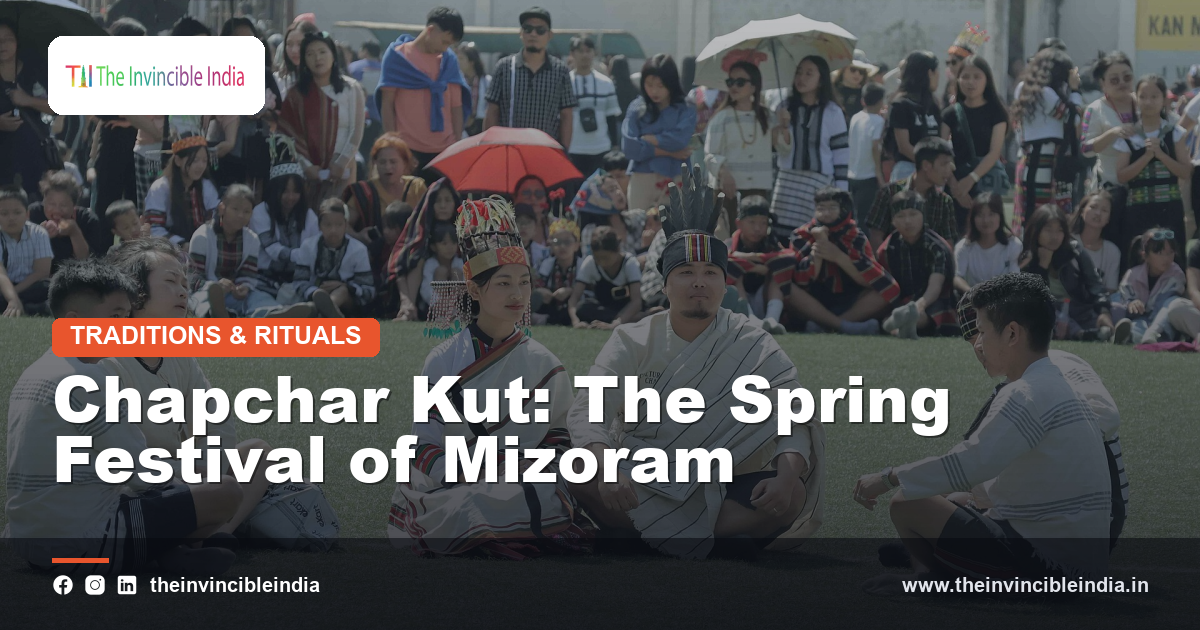
Chapchar Kut is a vibrant spring festival of the Mizo people of Mizoram, traditionally celebrated after the demanding work of clearing forest land for jhum cultivation, a seasonal rhythm echoed in the harvest observances of Bihu in neighbouring Assam. The festival brings communities together in a spirit of collective celebration following shared agricultural labour, marked by traditional dance, music, and generous communal feasting. Its most recognisable feature is the Cheraw, or bamboo dance, in which performers step gracefully between rhythmically clapping bamboo poles, a display of skill and coordination that has become emblematic of Mizo cultural identity. Once tied closely to the agricultural calendar, Chapchar Kut has grown into a broader celebration of Mizo heritage, observed today in villages and in large public gatherings in Aizawl.
Quick Facts
| Detail | Information |
|---|---|
| Festival Type | Mizo spring festival |
| Primary Region | Mizoram, especially among the Mizo community |
| Season | Spring, following the completion of jhum clearing |
| Central Dance | Cheraw, the bamboo dance |
| Main Participants | Mizo communities across villages and towns |
| Associated Practices | Communal feasting, folk dance, and traditional games |
Origins in Jhum Cultivation
Chapchar Kut has its roots in the traditional agricultural cycle of the Mizo people, particularly the practice of jhum, or shifting cultivation, which involves clearing forest land for farming. The festival traditionally marks the completion of the arduous task of felling and clearing the jungle in preparation for the next phase of cultivation, a period of relative rest before the labour of sowing begins. This agricultural connection situates Chapchar Kut within a broader pattern of harvest and seasonal festivals observed across India, each tied to a specific point in the farming calendar. For Mizo communities, the festival represented both a practical pause in the agricultural year and an opportunity for communal celebration after a period of intensive physical labour. This origin continues to shape the festival’s character as a celebration of collective effort and seasonal renewal.
Historical Background
The Chapchar Kut festival has long-standing roots within Mizo society, understood traditionally as one of several seasonal celebrations tied to different stages of the jhum cultivation cycle. Over time, as agricultural and social patterns evolved, some of these seasonal festivals became less prominent, while Chapchar Kut retained and, in some periods, grew in its cultural significance among the Mizo people. Its continued observance reflects the festival’s adaptability, allowing it to remain relevant even as the practical agricultural circumstances that originally shaped it have changed for many communities. Historical accounts describe the festival as a time of communal gathering, feasting, and celebration following the physically demanding work of jungle clearing, themes that remain central to its observance in the present day.
Timing and Seasonal Significance
Chapchar Kut is celebrated in the spring, typically in the period following the clearing of jhum fields and before the onset of sowing activities. This timing places the festival at a natural pause in the agricultural calendar, when communities have completed one demanding phase of labour and have some respite before the next begins. The arrival of spring itself, with its associations with renewal and the blossoming of the natural landscape, adds a further symbolic dimension to the celebration. This seasonal placement reflects a broader pattern found in agrarian societies worldwide, where festivals mark significant transitions in the farming year, providing structured occasions for rest, celebration, and communal bonding tied closely to the rhythms of the land.
Communal Labour and Celebration
The jhum cultivation cycle that underlies Chapchar Kut traditionally depended on cooperative labour, with village communities working together to clear forest land in preparation for planting. This communal approach to agricultural work fostered strong social bonds within Mizo villages, and the festival that followed served as a fitting celebration of this shared effort. Chapchar Kut thus carries within it a recognition of collective achievement, honouring not just individual households but the coordinated labour of the wider community. This emphasis on collective celebration following collective work remains a defining feature of the festival, reinforcing values of cooperation and mutual support that have long been central to traditional Mizo social organisation and rural life.
The Cheraw Bamboo Dance
The most iconic element of Chapchar Kut is the Cheraw, or bamboo dance, in which dancers move gracefully between pairs of horizontal bamboo poles that are rhythmically clapped together and apart by other participants seated on the ground. Dancers must time their steps precisely to avoid the closing poles, creating a visually striking display of coordination and skill. Traditionally performed by women in colourful Mizo attire, the Cheraw dance has become closely associated with Mizo cultural identity and is frequently showcased at cultural events beyond the festival itself. The dance is believed to have ancient origins within Mizo tradition, and its continued performance during Chapchar Kut represents one of the clearest living connections between the festival and the broader artistic heritage of the Mizo people.
Other Folk Dances and Music
Alongside the Cheraw, Chapchar Kut features a variety of other traditional Mizo dances and musical performances, each contributing to the festival’s vibrant cultural display. Group dances performed to traditional songs and instruments showcase different aspects of Mizo heritage, often performed by dancers in traditional costume representing various Mizo sub-groups and clans. Traditional instruments, including drums and gongs, provide rhythmic accompaniment to these performances, creating an atmosphere of collective celebration throughout the festival grounds. These musical and dance traditions serve not only as entertainment but as a means of preserving and transmitting cultural knowledge, ensuring that younger generations remain familiar with the songs, movements, and stories that have long been part of Mizo festive life.
Traditional Costumes and Attire
Participants in Chapchar Kut, particularly dancers, wear traditional Mizo attire that reflects the region’s distinctive textile traditions, including handwoven shawls, skirts, and ornaments specific to various Mizo communities. These garments, often featuring distinctive patterns and colours associated with particular clans or regions, are worn with pride during the festival’s public performances and processions. The preparation and maintenance of such traditional clothing represents an important craft tradition in its own right, sustained in part by the continued demand generated by festivals such as Chapchar Kut. The visual richness created by dancers and participants in full traditional dress contributes significantly to the festival’s appeal, both for local communities and for visitors interested in experiencing Mizo cultural heritage firsthand.
Communal Feasting and Hospitality
Communal feasting forms an essential part of Chapchar Kut, with villages preparing and sharing traditional Mizo dishes as part of the celebration. Meals are often prepared collectively, reflecting the same spirit of cooperation that characterised the jhum clearing labour the festival commemorates. Hospitality extended to guests and visitors during the festival period is considered an important social value within Mizo culture, and the sharing of food serves to reinforce community bonds during the celebration. These communal meals, often accompanied by music and dance, transform Chapchar Kut into an occasion of both cultural performance and social gathering, allowing extended families and neighbouring villages to come together in shared celebration of the season’s completed labour.
Traditional Games and Sports
Chapchar Kut celebrations often include traditional games and displays of physical skill, reflecting the broader festive and communal character of the occasion. These activities may include contests of strength, agility, or traditional sport specific to Mizo culture, providing entertainment and opportunities for friendly competition among participants. Such games complement the festival’s dance and musical performances, adding a further dimension of communal engagement to the celebration. Participation in these traditional contests is often open to community members of various ages, reinforcing the festival’s role as an inclusive occasion that brings together different generations. This blend of performance, feasting, and competitive activity reflects the well-rounded nature of Chapchar Kut as a comprehensive community celebration.
Chapchar Kut in Aizawl and Urban Centres
While Chapchar Kut originated as a rural agricultural festival, it has also become an important cultural event in Aizawl, the capital of Mizoram, and other urban centres within the state. Large public celebrations, often organised with government or cultural body support, bring together performers from across Mizoram to showcase traditional dances, including large-scale Cheraw performances, before sizeable public audiences. These urban celebrations have helped introduce the festival to a broader audience, including visitors from outside Mizoram, while providing a platform for cultural preservation and pride among Mizo communities living in urban settings removed from the agricultural practices that originally shaped the festival. This adaptation into a major urban cultural event reflects Chapchar Kut’s evolving role within contemporary Mizo society.
State Recognition and Cultural Promotion
Chapchar Kut has received recognition and support from the Mizoram state government as an important cultural event, with official celebrations organised to showcase the state’s traditional dances, music, and customs. This institutional support has helped elevate the festival’s profile, both within Mizoram and in broader Indian cultural awareness, positioning Chapchar Kut as a significant representation of Mizo heritage. Cultural departments and tourism bodies often use the occasion to promote Mizoram’s traditional arts and crafts, encouraging both preservation and wider appreciation of the state’s distinct cultural identity. This recognition reflects a broader pattern in which regional festivals gain enhanced visibility and institutional backing as symbols of state and community pride within India’s diverse cultural landscape.
Adaptation Amid Changing Agricultural Practices
As agricultural practices in Mizoram have gradually shifted away from traditional jhum cultivation in some areas, Chapchar Kut has adapted from a festival tied directly to a specific agricultural milestone into a broader celebration of Mizo cultural identity and heritage. This transition reflects a common pattern among festivals originally rooted in agrarian life, which often continue to hold cultural and social significance even as their original practical context evolves. For many Mizo communities today, Chapchar Kut is celebrated less as a direct marker of jhum clearing completion and more as an occasion for cultural expression, community gathering, and the continuation of traditional practices such as the Cheraw dance, ensuring the festival’s relevance continues despite changing economic circumstances.
Youth Participation and Cultural Transmission
Chapchar Kut plays an important role in transmitting Mizo cultural traditions to younger generations, who take part in learning and performing dances such as the Cheraw alongside older community members. Schools, cultural associations, and youth organisations in Mizoram often incorporate preparation for the festival into their activities, teaching traditional dance steps, songs, and the significance of associated customs. This active involvement of young people helps ensure that the skills and knowledge required for the festival’s performances continue to be passed down, rather than being confined to older generations alone. Such intergenerational participation reflects the broader importance placed on cultural continuity within Mizo society, with Chapchar Kut serving as a recurring occasion for this transmission to take place.
Chapchar Kut Among the Mizo Diaspora
Mizo communities living outside Mizoram, including in other parts of India and abroad, often continue to observe Chapchar Kut as a way of maintaining connection to their cultural heritage. Community associations in cities with significant Mizo populations may organise scaled-down versions of the festival, featuring traditional dance performances, music, and shared meals reflecting Mizo culinary traditions. These diaspora celebrations, while necessarily adapted to different circumstances and resources, help sustain a sense of cultural identity and community among Mizo people living away from their home region. The continuation of Chapchar Kut in these varied settings illustrates the festival’s capacity to serve as a unifying cultural touchstone regardless of geographic distance from Mizoram itself.
Tourism and Cultural Outreach
In recent years, Chapchar Kut has increasingly attracted interest from visitors seeking to experience Mizoram’s distinctive cultural traditions, prompting greater tourism promotion around the festival. State tourism authorities have highlighted the festival’s vibrant dance performances, traditional attire, and communal celebrations as key attractions for visitors interested in Northeast Indian culture. This growing outreach has brought increased visibility to Mizo traditions among audiences unfamiliar with the region’s cultural heritage, contributing to broader appreciation of Mizoram within India’s diverse cultural landscape. While tourism has added a new dimension to the festival’s public profile, its core significance as a community celebration rooted in Mizo tradition and history has remained the primary focus for local participants.
Chapchar Kut Today
Today, Chapchar Kut remains one of the most significant cultural celebrations in Mizoram, observed with enthusiasm in villages, towns, and the state capital of Aizawl alike. The festival continues to showcase the Cheraw bamboo dance and other traditional performances, drawing participation from across generations and, increasingly, attention from visitors and cultural observers beyond the state. While its original connection to the jhum cultivation cycle has evolved alongside changing agricultural practices, Chapchar Kut’s role as an expression of Mizo cultural identity, community cooperation, and artistic heritage remains as strong as ever. This enduring vitality reflects the festival’s successful adaptation from a specific agricultural milestone into a broader and lasting symbol of Mizo cultural pride.
Sources & Further Reading
- Ministry of Culture, Government of India (indiaculture.gov.in).
- Mizoram Tourism, Government of Mizoram (mizoramtourism.gov.in).
Frequently Asked Questions
What is Chapchar Kut?
Chapchar Kut is a spring festival of the Mizo people in Mizoram, traditionally celebrated after the clearing of jhum fields, marked by dance, music, and communal feasting.
What is the Cheraw dance?
The Cheraw, or bamboo dance, is Chapchar Kut’s signature performance, in which dancers step between clapping bamboo poles in a display of rhythm and precision.
When is Chapchar Kut celebrated?
Chapchar Kut is celebrated in spring, traditionally following the completion of jhum jungle clearing and before the sowing season begins.
Where is Chapchar Kut celebrated?
Chapchar Kut is celebrated across Mizoram, with large public performances held in the state capital, Aizawl, alongside village-level celebrations.
Why is Chapchar Kut culturally important?
Chapchar Kut showcases Mizo dance, music, and communal traditions, serving as an important occasion for cultural transmission and community bonding among the Mizo people.