


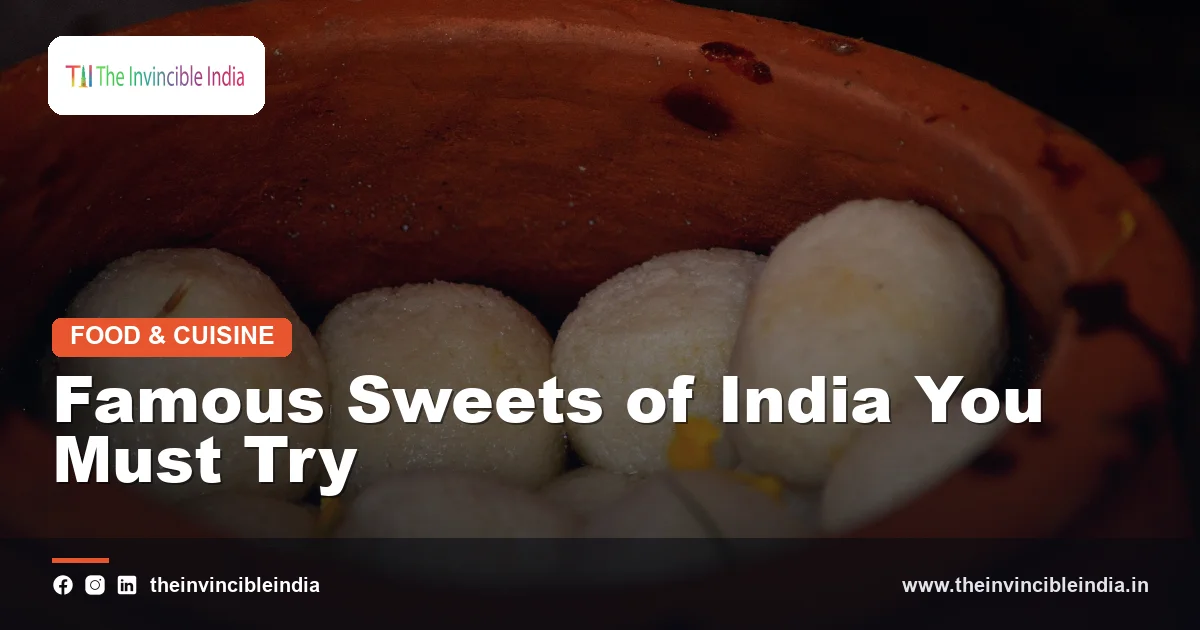
India’s love affair with sweets, or mithai, is legendary. In a country where no celebration, festival or auspicious occasion is complete without something sweet, the variety and richness of Indian desserts is astonishing. From the syrup-soaked gulab jamun and spongy rasgulla to the rich, nut-laden barfis and the beloved jalebi, every region boasts its own treasured specialities. Rooted in centuries of tradition and made with ingredients such as milk, ghee, sugar, nuts and fragrant spices, Indian sweets are a delicious expression of the country’s culture and hospitality. This guide explores the most famous sweets of India.
Quick Facts: Indian Sweets
| Detail | Information |
|---|---|
| Common name | Mithai |
| Key ingredients | Milk, khoya, ghee, sugar, nuts, spices |
| Iconic sweets | Gulab jamun, rasgulla, jalebi, barfi, laddu |
| Occasions | Festivals, weddings, celebrations, offerings |
| Famous region for sweets | West Bengal (milk-based sweets) |
| Common flavourings | Cardamom, saffron, rose water |
Gulab Jamun and Jalebi
Among the most beloved Indian sweets is the gulab jamun, soft, deep-fried balls of milk solids (khoya) soaked in a fragrant sugar syrup flavoured with cardamom and rose water. Warm, rich and melt-in-the-mouth, it is a favourite at weddings and festivals across the country. Equally iconic is the jalebi, a crisp, coil-shaped sweet made by deep-frying a fermented batter and soaking it in syrup, resulting in a delightful combination of crunch and sweetness. Often enjoyed hot, sometimes with rabri or milk, jalebi is a cherished treat found everywhere from street stalls to sweet shops.
The Milk Sweets of Bengal
West Bengal is renowned as the home of India’s finest milk-based sweets, crafted from chhena (fresh cheese curds). The most famous is the rasgulla, spongy white balls of chhena cooked in light sugar syrup, soft and juicy. Its close cousin, the rasmalai, features flattened chhena discs soaked in thickened, sweetened and cardamom-flavoured milk. The sandesh, a delicate sweet made from fresh chhena and sugar, comes in countless varieties and is considered the pride of Bengali confectionery. These sweets, light yet indulgent, are cherished across India.
Barfi, Laddu and Peda
Barfi is a dense, fudge-like sweet made from condensed milk and sugar, available in numerous varieties, from the plain and pista (pistachio) to the kaju katli (cashew) and the special silver-leaf-topped versions served at celebrations. Laddu, round sweet balls made from ingredients such as gram flour (besan), semolina or coconut, are among the most popular sweets, often prepared for festivals and offered in temples. Peda, a soft, rich sweet made from khoya and flavoured with cardamom and saffron, is another beloved classic, particularly associated with temple offerings and celebrations.
Regional Specialities
Every region of India has its own celebrated sweets. Maharashtra is famous for puran poli and modak, especially during Ganesh Chaturthi; Rajasthan for the rich ghewar and mawa kachori; the south for Mysore pak, payasam and the ghee-laden sweets of Tamil Nadu and Kerala; and the north for the winter delicacy gajar ka halwa (carrot pudding). Punjab offers pinni, Gujarat its varieties of halwa and shrikhand, and Odisha its unique chhena-based sweets. This astonishing regional diversity makes exploring India’s sweets a delicious journey across the entire country.
The Role of Sweets in Indian Culture
Sweets occupy a place of profound cultural and emotional significance in India that goes far beyond mere indulgence. No festival, wedding, birth, or auspicious occasion is considered complete without the sharing of mithai, and offering something sweet is a universal gesture of joy, celebration and goodwill. Sweets are distributed to mark good news, exchanged as gifts during festivals such as Diwali and Raksha Bandhan, and offered to deities in temples as prasad (blessed food). The phrase “let us have something sweet” (kuch meetha ho jaye) captures the deep association between sweetness and happiness in Indian life, making mithai an inseparable part of the country’s social and spiritual fabric.
The Craft of the Halwai
Behind India’s magnificent sweets stands the halwai, the traditional sweet-maker, whose skills have often been passed down through generations. Making mithai is a true craft, requiring patience, precision and experience, from the careful reduction of milk into khoya over many hours, to the exact timing needed for the perfect texture of a barfi or the ideal crispness of a jalebi. Many famous sweet shops across India have been run by the same families for a century or more, and their reputations rest on closely guarded recipes and techniques. Watching a skilled halwai stir a vast pot of simmering milk or coil jalebi batter into hot oil is to witness a living culinary tradition of remarkable artistry.
Festive and Seasonal Sweets
Many Indian sweets are closely associated with particular festivals and seasons, adding to their special character. During Diwali, homes and shops overflow with boxes of barfi, laddu, kaju katli and soan papdi. Modak is prepared for Ganesh Chaturthi, while Holi brings gujiya, a sweet stuffed pastry. Winter is the season for warming, ghee-rich treats such as gajar ka halwa (carrot pudding), gond ke laddu and the honeycomb-like ghewar. Sweets like sheer khurma mark Eid, and the harvest festivals bring their own specialities made from fresh jaggery and grains. This deep connection between sweets and the festive calendar makes each treat a marker of time, tradition and celebration.
The Diversity of Ingredients and Styles
The astonishing variety of Indian sweets stems from the diverse ingredients and techniques used across the country. Milk-based sweets, made from khoya, chhena or reduced milk, dominate in the north and east, giving us barfis, pedas, rasgullas and rasmalai. Sweets based on gram flour, semolina, lentils and flour produce laddus, halwas and mysore pak. Sugar and jaggery form the base of syrupy delights, while nuts, coconut, ghee and fragrant spices like cardamom and saffron add richness and aroma. Silver leaf (varak) often adds a festive touch. This diversity of ingredients, combined with countless regional recipes, ensures a virtually endless world of sweets to discover.
Sweets and Modern Innovation
While traditional sweets remain deeply cherished, India’s mithai culture continues to evolve with the times. Modern confectioners experiment with new flavours and fusion creations, from chocolate barfis and baklava-inspired sweets to sugar-free and healthier versions catering to changing tastes and dietary needs. Premium and artisanal sweet brands present traditional mithai in elegant packaging, popular as gifts, while the classic sweets continue to thrive in neighbourhood shops. This blend of reverence for tradition and openness to innovation ensures that Indian sweets remain as relevant and beloved as ever, delighting new generations while honouring centuries of culinary heritage.
The Sweets of North India
North India offers a rich array of beloved sweets, many with roots in the region’s Mughal and Punjabi heritage. Beyond gulab jamun and jalebi, the north is famous for barfi in its many forms, the winter delicacy gajar ka halwa (carrot pudding cooked slowly in milk and ghee), and the honeycomb-like ghewar of Rajasthan, especially popular during festivals. Punjab contributes pinni, a rich ball of flour, ghee and nuts, while the region’s milk-based pedas and the syrupy, crisp imarti are also cherished. Kulfi, the dense, traditional Indian ice cream flavoured with cardamom, saffron and pistachio, provides a cooling treat much loved across the north.
The Sweets of West and South India
Western and southern India contribute their own magnificent sweets to the country’s repertoire. Maharashtra is famous for puran poli, a sweet stuffed flatbread, and the steamed modak beloved of Lord Ganesha, while Gujarat offers the creamy, saffron-scented shrikhand and various halwas. In the south, Mysore pak, a rich, melt-in-the-mouth sweet of gram flour, ghee and sugar, is legendary, as is payasam (the southern kheer) served at festivals and temples. Kerala’s ada pradhaman, Tamil Nadu’s ghee-laden sweets, and the coconut-based treats of the coastal regions all showcase the distinctive flavours and ingredients of the south and west.
Sweets as Gifts and Offerings
The giving of sweets lies at the very heart of Indian social and religious life. During festivals such as Diwali, beautifully packaged boxes of mithai are exchanged among family, friends, neighbours and colleagues as tokens of affection and goodwill, and the sweet shops do a roaring trade in the festive season. Sweets are offered to deities in temples and then distributed as prasad, sacred blessed food, and they mark every happy milestone, from births and weddings to business successes and examination results. This tradition of sharing sweetness to spread joy and strengthen bonds makes mithai far more than a treat; it is a language of love, celebration and community.
A Sweet Journey Across India
To explore the sweets of India is to embark on a delicious journey across the length and breadth of the country, discovering the distinct flavours, ingredients and traditions of each region along the way. From the milk sweets of Bengal to the ghee-rich treats of the south, from the festive delicacies of the north to the coconut-based sweets of the coasts, every corner of India offers its own treasured specialities. United by their role in celebration, hospitality and devotion, and by the skill and love with which they are made, Indian sweets are far more than desserts; they are an expression of the country’s soul, spreading joy and sweetness wherever they are shared.
Sweets and the Festive Calendar
Indian sweets are so closely tied to the festive calendar that many have become inseparable from particular celebrations. The arrival of Diwali fills homes with laddus and barfis, Holi brings colourful gujiyas, Ganesh Chaturthi is marked by modaks, Raksha Bandhan by boxes of assorted mithai exchanged between siblings, and the harvest festivals by treats made from fresh jaggery. Weddings feature elaborate spreads of sweets, and even everyday good news calls for a quick trip to the sweet shop. This deep connection between mithai and the rhythms of the year ensures that Indian sweets remain a constant and joyful presence in the life of every family, marking the passage of seasons and celebrations alike.
The Sweetness of Tradition
In every gulab jamun offered to a guest, every laddu placed before a deity, and every box of mithai exchanged at Diwali, there lives a tradition of sweetness that has bound Indian families and communities together for generations. India’s sweets are a celebration of life’s happiest moments, a gesture of love and welcome, and a delicious link to centuries of culinary heritage. To taste them is to taste the very spirit of Indian hospitality, joy and togetherness, shared freely and enjoyed by all.
Frequently Asked Questions
What are the most famous Indian sweets?
Among the most famous Indian sweets are gulab jamun, jalebi, rasgulla, rasmalai, barfi, laddu, peda and sandesh, along with countless regional specialities.
Which region is most famous for sweets in India?
West Bengal is especially renowned for its milk-based sweets such as rasgulla, rasmalai and sandesh, though every region of India has its own celebrated specialities.
What are Indian sweets made from?
Indian sweets are typically made from ingredients such as milk, khoya (milk solids), chhena (fresh cheese), ghee, sugar, gram flour, semolina, nuts and fragrant flavourings like cardamom, saffron and rose water.
Why are sweets important in Indian culture?
Sweets are central to Indian celebrations, festivals, weddings and religious offerings, symbolising joy, auspiciousness and hospitality, and are shared to mark almost every happy occasion.