


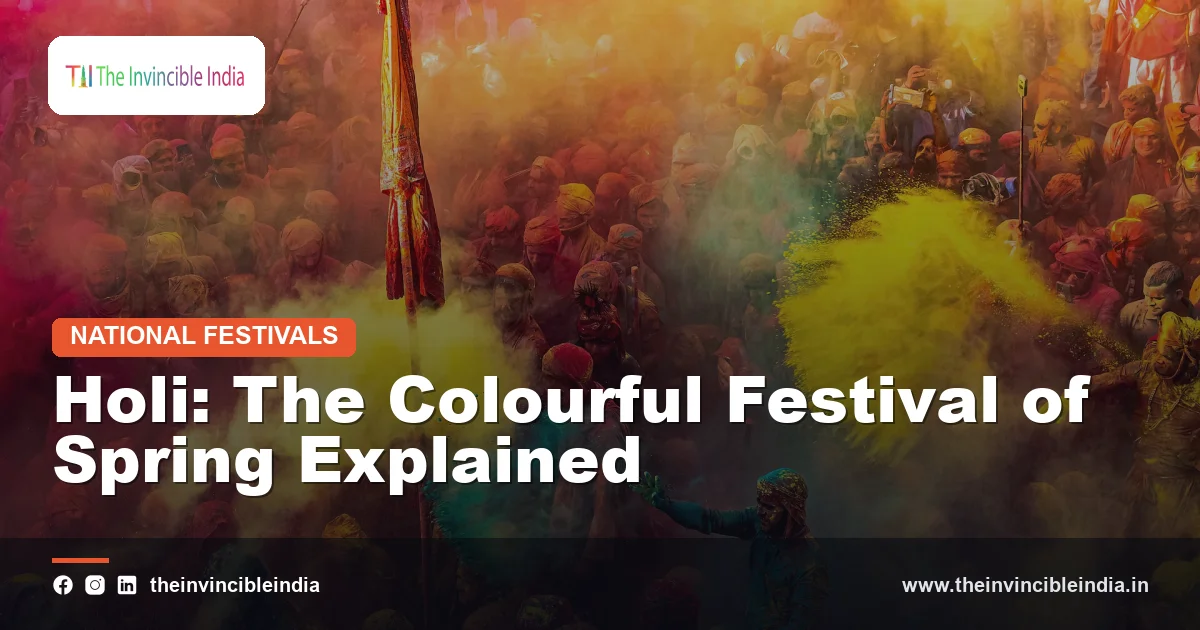
Holi, the “festival of colours,” is one of India’s most joyous, exuberant and instantly recognisable celebrations. Marking the arrival of spring and the triumph of good over evil, it dissolves social barriers as people of all ages and backgrounds come together in a riot of colour, music, dance and laughter. Celebrated mainly in February or March, Holi has spread far beyond India and is now enjoyed around the world. This detailed guide explores the legends, rituals, regional celebrations, foods and deeper meaning of Holi.
Quick Facts About Holi
| Also known as | Festival of Colours, Festival of Love, Festival of Spring |
| When | Full-moon day of Phalguna (February–March) |
| Duration | Two days (Holika Dahan and Rangwali Holi) |
| Symbolism | Victory of good over evil, arrival of spring |
The Legends Behind Holi
Holi is rooted in several ancient legends that give the festival its meaning. The most famous tells of the demon king Hiranyakashipu, who demanded to be worshipped as a god, and his devout son Prahlad, a devotee of Lord Vishnu. When the king’s sister Holika, who was believed to be immune to fire, sat in a blaze with Prahlad to kill him, it was Holika who perished while the faithful Prahlad emerged unharmed — symbolising the victory of devotion and good over evil, and giving rise to the bonfire ritual of Holika Dahan.
Holi and the Love of Radha and Krishna
Holi is also deeply associated with the divine and playful love of Radha and Krishna. According to legend, the young Krishna, self-conscious about his dark complexion, playfully applied colour to Radha’s face, and this act of loving mischief became the origin of the tradition of smearing colours. This is why the Braj region — Mathura, Vrindavan, Barsana and Nandgaon, associated with Krishna’s life — celebrates Holi with unrivalled fervour, and why the festival is also known as the “festival of love.”
Holika Dahan: The Bonfire Ritual
On the eve of Holi, communities gather to light large bonfires in a ritual called Holika Dahan (or Chhoti Holi). People sing, pray and perform parikrama (circumambulation) around the fire, offering grains and coconuts, and symbolically burning away evil, negativity and the past year’s troubles. The ritual reaffirms the triumph of good over evil and sets the stage for the joyful celebrations of the following day.
The Day of Colours
The main day, known as Rangwali Holi or Dhulandi, is a carnival of colour. From morning, people of all ages take to the streets and courtyards to smear one another with brightly coloured powders (gulal), splash coloured water using pichkaris (water guns) and balloons, dance to music, and greet friends, family and strangers alike. Social hierarchies dissolve as everyone becomes equal beneath the colours, and the day is filled with fun, forgiveness and reconciliation.
Regional Celebrations of Holi
Holi takes on spectacular and varied forms across India. The Lathmar Holi of Barsana, where women playfully beat men with sticks, is world-famous, as are the flower-filled and widow-inclusive celebrations of Vrindavan and Mathura. In West Bengal and Odisha, it is celebrated as Dol Jatra or Basanta Utsav, made famous by Rabindranath Tagore at Shantiniketan, with people dressed in yellow. In Punjab, the Sikh festival of Hola Mohalla features martial-arts displays; Manipur celebrates Yaosang; and Goa marks it as Shigmo with parades and folk performances.
Festive Foods of Holi
Food is central to the celebrations. The signature treat is gujiya, a sweet fried dumpling stuffed with khoya, coconut and dry fruits. The festival is also famous for thandai, a cooling, spiced milk drink often flavoured with nuts and saffron (and sometimes, traditionally, bhang). Other favourites include malpua, dahi bhalla, puran poli and an array of savoury snacks shared generously with visitors who go from house to house.
The Deeper Meaning of Holi
Beyond the colours and revelry, Holi carries profound significance. It celebrates the arrival of spring and the renewal of nature after winter, the triumph of good over evil, and the spirit of love and unity. It is a time to mend broken relationships, forgive grievances, and set aside differences of age, status and background. In smearing colour on friends and strangers alike, people affirm a sense of shared humanity and joy that lies at the heart of the festival.
Playing Holi Safely and Responsibly
With growing awareness of health and the environment, many now celebrate a more mindful Holi. Using natural, herbal or organic colours protects the skin and eyes and avoids the harsh chemicals of some synthetic dyes. Applying oil to the skin and hair beforehand makes colours easier to wash off, and being conscious of water use helps conserve a precious resource. Respecting the consent and comfort of others, and being gentle with elders, children and animals, ensures the festival remains joyful for everyone.
Holi Around the World
Holi has become a global celebration, embraced far beyond India. Across Nepal, and among Indian communities in countries such as the United States, the United Kingdom, Canada, Mauritius, Fiji, South Africa and the Caribbean, Holi is celebrated with colour, music and food. It has also inspired colour-run events and festivals worldwide, spreading its message of joy, unity and the arrival of spring to people of all cultures.
When Is Holi Celebrated?
Holi falls on the full-moon day (Purnima) in the Hindu month of Phalguna, which usually corresponds to late February or March in the Gregorian calendar. Holika Dahan takes place on the evening before, and the colourful main celebration follows the next day, heralding the joyful arrival of spring across the subcontinent.
The Colours and Their Meaning
The vivid colours of Holi are more than mere decoration; they carry symbolism and joy. Traditionally, the powders were made from natural sources — red from hibiscus and rose, yellow from turmeric and marigold, green from neem and spinach, and blue from the indigo plant. Each colour has come to carry associations: red for love and fertility, yellow for knowledge and happiness, green for new beginnings and nature, and blue for the divine, often linked with Lord Krishna. Playing with these colours is a way of casting off the greys of winter and welcoming the vibrancy of spring and life.
Holi for Families and Communities
Holi is very much a community celebration, bringing together neighbours, extended families and entire mohallas (neighbourhoods). Children look forward to it eagerly, arming themselves with water guns and balloons, while elders exchange sweets and greetings. Housing societies, colleges and organisations often host their own Holi gatherings with music, dance, rain-dance setups and communal feasts. This spirit of shared celebration, where everyone participates regardless of age or status, is central to the festival’s enduring appeal and its power to strengthen social bonds.
Green Holi and the Environment
As Holi has grown in scale, so has awareness of its environmental impact. Synthetic colours can contain harsh chemicals, and the festival’s traditional use of water raises concerns in a country where water is precious. In response, a strong “green Holi” movement has taken root, encouraging natural, plant-based colours, dry Holi celebrations that use minimal water, and mindfulness towards animals and the elderly. Many communities now organise eco-friendly celebrations, ensuring the festival’s joy does not come at a cost to health or the planet.
Holi in Films, Music and Popular Culture
Holi has long been a favourite subject of Indian cinema and music. Countless Bollywood films feature memorable Holi songs and scenes, capturing the colour, romance and exuberance of the festival, and these have helped spread its imagery around the world. The festival’s themes of love, unity and the triumph of good over evil resonate deeply, making Holi one of the most vividly depicted celebrations in Indian art, literature and popular culture.
A Day in a Holi Celebration
A typical Holi unfolds in stages. The evening before, families and neighbours gather around the Holika bonfire to sing and pray. The next morning, the streets erupt in colour as people of all ages emerge to smear gulal, spray coloured water and dance to the beat of drums and music. By midday, revellers, drenched and multicoloured, pause to share thandai, gujiya and festive meals. The afternoon brings a calmer mood, when people bathe, wear fresh clothes, and visit friends and relatives to exchange greetings and sweets — ending the day in a spirit of warmth, forgiveness and renewed relationships.
Holi Safety Tips
A little preparation makes Holi both safer and more enjoyable. Apply coconut or mustard oil to your skin and hair beforehand so that colours wash off more easily and do not damage them. Wear old, full-sleeved clothes and sunglasses to protect your eyes, and choose natural or herbal colours over cheap synthetic dyes, which can irritate the skin. Keep colours away from the eyes, nose and mouth, stay hydrated, and be gentle and respectful with children, elders, animals and anyone who prefers not to play. These simple steps ensure the festival remains a happy memory for everyone.
The Best Places to Experience Holi in India
For those who wish to experience Holi at its most spectacular, the Braj region — Mathura, Vrindavan, Barsana and Nandgaon — is unrivalled, with its week-long celebrations, flower Holi and the famous Lathmar Holi. Shantiniketan in West Bengal offers the graceful, cultural Basanta Utsav; Anandpur Sahib in Punjab hosts the martial Hola Mohalla; and Udaipur and Jaipur in Rajasthan combine royal traditions with public revelry. Each destination offers a distinct and unforgettable way to celebrate the festival of colours.
The Enduring Spirit of Holi
At its heart, Holi is a celebration of joy, renewal and togetherness. It reminds us that, like the arrival of spring after winter, hope and goodness will always return, and that differences of age, wealth and status can be set aside in a shared moment of colour and laughter. Whether played in a village lane, a city street or a diaspora gathering far from India, Holi carries a timeless message of love, forgiveness and unity that continues to bring people together across the world.
A Festival for All Seasons of Life
Part of what makes Holi so cherished is that it speaks to every stage and season of life. For children it is pure, giddy fun; for young people, a time of romance and celebration; for families, an occasion to reunite; and for elders, a moment to bless the young and reconcile old differences. Bridging generations and communities, Holi captures the Indian spirit of finding joy together, and its colours leave behind not just a stain on the skin but a warmth in the heart that lingers long after the day is done.
Frequently Asked Questions
Why is Holi celebrated?
Holi celebrates the victory of good over evil and the arrival of spring, drawing on legends of Prahlad and Holika and the love of Radha and Krishna.
When is Holi celebrated?
Holi falls on the full-moon day in the Hindu month of Phalguna, usually in February or March.
What is Holika Dahan?
Holika Dahan is the bonfire lit on the eve of Holi, symbolising the burning away of evil and negativity.
Where is the most famous Holi in India?
The Lathmar Holi of Barsana and the celebrations in Vrindavan and Mathura are among the most famous.
What foods are eaten during Holi?
Gujiya, thandai, malpua and dahi bhalla are among the most popular Holi foods.