


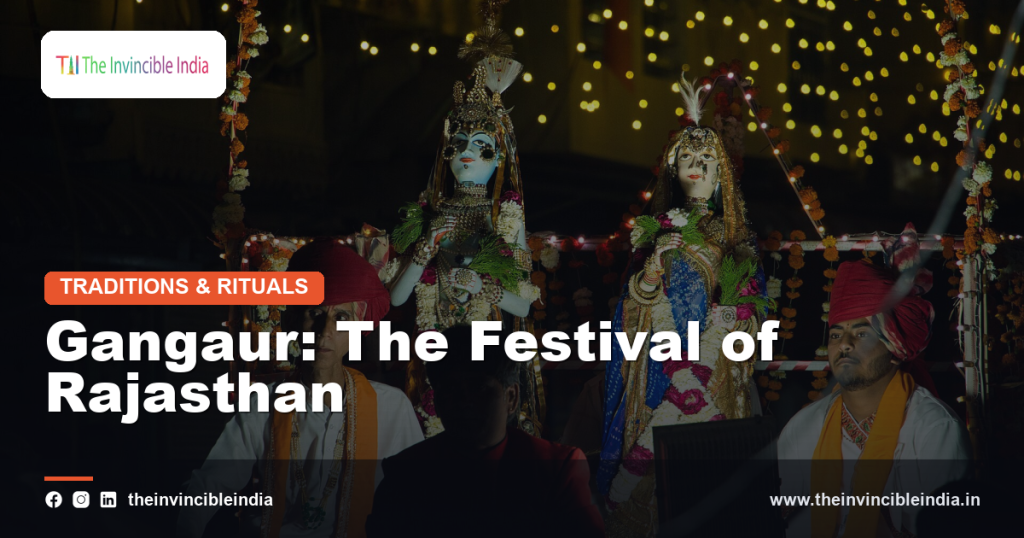
Gangaur is among the most cherished festivals of Rajasthan, celebrated with particular devotion in cities such as Jaipur, Udaipur, and Jodhpur. The festival honours Isar, a form of Shiva, and his consort Gauri, an embodiment of Parvati, and unfolds over several days following Holi. Women and young girls occupy the centre of the celebration, dressing in vivid traditional attire, singing folk songs passed down through generations, and carrying idols of the deities in colourful processions. For unmarried girls, Gangaur is an occasion to pray for a suitable life partner, while married women observe it for the wellbeing of their husbands, echoing themes found in Indian wedding traditions more broadly.
Quick Facts
| Detail | Information |
|---|---|
| Festival Type | Religious and cultural festival |
| Primary Region | Rajasthan, with observance across northern and western India |
| Deities Honoured | Isar (Shiva) and Gauri (Parvati) |
| Main Participants | Women and girls, married and unmarried |
| Duration | Around eighteen days, beginning shortly after Holi |
| Associated Practices | Clay idol worship, processions, folk songs, and henna application |
Origins and Mythological Roots
Gangaur draws its name from a combination of Gan, another name for Isar or Shiva, and Gaur, referring to Gauri, the fair-complexioned form of Parvati. The festival commemorates the mythological reunion and marital devotion of this divine couple, whose bond is regarded as an ideal of marital harmony in Hindu tradition. According to popular belief, Gauri returns to her natal home for a period each year to visit her parents and community before rejoining Isar, and the festival marks the days of her stay and eventual departure. This narrative gives the festival its emotional core, blending themes of familial affection, devotion, and conjugal loyalty. While the precise origins of the celebration are lost to time, its deep roots in Rajasthani society reflect a long-standing reverence for Gauri as a maternal and protective figure. The festival today continues to draw on this mythological foundation, even as its observance has expanded into a broader cultural celebration.
Isar and Gauri: The Central Deities
At the heart of Gangaur stand Isar and Gauri, worshipped throughout the festival as symbols of an ideal marital bond. Isar represents Shiva in his role as an ever-present, benevolent husband, while Gauri, as Parvati, embodies devotion, patience, and inner strength. Clay or wooden idols of the pair are lovingly crafted, dressed in miniature textiles, and adorned with jewellery before being carried through neighbourhoods in ceremonial processions. Households often maintain their own idols, passed down or newly made each year, which are worshipped daily with offerings of flowers, sindoor, and sweets. The relationship between Isar and Gauri is treated not merely as a religious narrative but as a living example that women invoke when praying for happiness in their own marital lives. This dual worship of a divine couple, rather than a single deity, distinguishes Gangaur from many other festivals and underscores its emphasis on partnership and mutual devotion.
Timing and Duration of the Festival
Gangaur begins shortly after Holi and extends over roughly eighteen days, making it one of the longer festival observances in the Rajasthani calendar. The festival unfolds in stages, beginning with the installation and daily worship of the Gauri idol within homes, and culminating in a grand public celebration marked by processions and communal gatherings. This extended timeline allows the festival to be woven into the daily rhythm of participating households, with rituals performed each morning or evening throughout the period. The final days see the most visible public activity, when idols are taken out in procession to be viewed, celebrated, and eventually immersed. The lengthy duration also reflects the festival’s agrarian associations, arriving as it does at the changeover between seasons in much of northern India. This gradual build-up distinguishes Gangaur from single-day festivals and gives communities ample opportunity for preparation, socialising, and shared devotion.
Preparations and Clay Idols
Preparation for Gangaur begins well before the public processions, as families and artisans set about crafting the idols of Isar and Gauri. Traditionally made from clay, though sometimes from wood or other materials, these figures are shaped with care and painted in bright colours before being dressed in miniature garments and adorned with small ornaments. Many households pass down heirloom idols through generations, while others commission new ones from local artisans each year. Alongside idol-making, women begin assembling the items needed for worship, including flowers, vermilion, incense, and festive sweets. Homes are cleaned and decorated in anticipation of the daily rituals that will follow. This preparatory phase is itself considered meaningful, as the effort invested in crafting and adorning the idols is seen as an expression of devotion. The careful artistry involved also keeps traditional idol-making skills alive within Rajasthani communities.
The Role of Women in Gangaur
Gangaur is, above all, a festival centred on women, who lead nearly every aspect of its observance. From the daily worship of the Gauri idol to the singing of festival songs and the organisation of processions, women take on the primary responsibility for keeping the traditions alive. Girls as young as children participate alongside their mothers and grandmothers, learning the songs, rituals, and significance of the festival through direct experience. This intergenerational participation ensures the continuity of Gangaur’s customs and strengthens bonds within extended families and communities. The festival also provides women with a rare public platform for collective celebration, as processions bring them out of their homes and into shared civic spaces dressed in vibrant attire. In this sense, Gangaur functions not only as a religious observance but also as an important social occasion that affirms the central role of women within Rajasthani cultural life.
Gangaur Songs and Oral Traditions
Music and song form an inseparable part of the Gangaur celebration, with a distinct repertoire of folk songs composed specifically for the occasion. These songs, passed down orally through generations of women, narrate the story of Isar and Gauri, express hopes for marital happiness, and celebrate the arrival of the festive season. Sung in local dialects during daily worship and communal gatherings, the songs often follow call-and-response patterns that allow groups of women to participate together. The melodies and lyrics vary somewhat by region within Rajasthan, reflecting local dialects and customs, yet they share common themes of devotion, longing, and celebration. Beyond their religious function, these songs serve as a repository of cultural memory, preserving language, idiom, and storytelling traditions that might otherwise fade. Their continued singing during Gangaur remains one of the clearest expressions of the festival’s living oral heritage.
The Gangaur Procession in Jaipur
Jaipur hosts one of the most elaborate public expressions of Gangaur, where a grand procession winds through the old city’s streets. The idols of Isar and Gauri, richly adorned, are carried from the City Palace through prominent routes, accompanied by decorated elephants, camels, folk dancers, and musicians. Women dressed in traditional Rajasthani attire walk in the procession or watch from balconies and rooftops, turning the event into a citywide spectacle. The procession draws large crowds of residents and visitors alike, reflecting Gangaur’s transformation from a private household ritual into a major public celebration. Local administration and cultural bodies often coordinate the event, ensuring that traditional elements are preserved even as the celebration attracts wider attention. This Jaipur procession has become emblematic of Gangaur in the popular imagination, frequently featured in depictions of Rajasthani culture and heritage.
Udaipur's Gangaur Ghat Celebrations
In Udaipur, Gangaur takes on a particularly picturesque character, centred around the city’s lakes and the ghat that bears the festival’s name. Boats decorated for the occasion carry the idols of Isar and Gauri across the water, accompanied by musicians and dancers, while spectators gather along the lakeside to watch the colourful spectacle unfold. The setting of Udaipur’s lakes lends the celebration a distinctive visual quality, blending the region’s natural and architectural beauty with festive tradition. Local women dressed in traditional finery participate in processions leading to the ghat, continuing rituals that have been observed for generations. The Gangaur Ghat celebrations have also become an important cultural touchstone for the city, drawing attention from visitors interested in experiencing Rajasthani festival traditions firsthand. This blend of devotion and scenic celebration exemplifies how Gangaur adapts to the particular geography and character of each Rajasthani city.
Ghudla Dance and Marwar Traditions
In the Marwar region of Rajasthan, Gangaur is marked by a distinctive practice known as the Ghudla dance, performed primarily by young unmarried girls. Participants balance an earthen pot with holes, inside which a lamp is lit, upon their heads while dancing to traditional songs composed for the occasion. The pot, known as the Ghudla, is carried through neighbourhoods as girls move from house to house, singing and receiving small gifts or sweets in return. This practice culminates with the ceremonial breaking of the pot, symbolically marking the conclusion of a phase of the festival. The Ghudla tradition highlights the regional diversity within Gangaur’s celebration, showing how the broader festival accommodates distinct local customs shaped by community history and geography. It also reinforces the festival’s emphasis on the participation of young girls, who are seen as inheritors of the tradition’s future observance.
Henna, Attire, and Adornment
Personal adornment plays a significant role in Gangaur, with women applying intricate henna designs to their hands as part of the festive preparation. This practice, shared with other Indian celebrations of marital significance, is regarded as an expression of joy and anticipation. Traditional Rajasthani attire, including brightly coloured lehengas, odhnis, and silver jewellery, is worn during processions and daily rituals, turning the festival into a visual celebration of regional textile and craft traditions. Bangles, often in shades of green and red associated with marital status, are commonly worn throughout the period. These sartorial customs are not merely decorative; they carry symbolic meaning tied to fertility, prosperity, and marital devotion. The collective sight of women in coordinated festive dress during public processions has become one of the most recognisable visual signatures of Gangaur, reinforcing its identity as a celebration of feminine devotion and cultural pride.
Rituals for Unmarried Girls
For unmarried girls, Gangaur carries the specific hope of securing a good life partner in the future, and much of their participation is directed toward this aspiration. Young girls join their mothers in the daily worship of the Gauri idol, learning the associated songs, prayers, and rituals as part of their upbringing. Some regional customs, such as the Ghudla dance in Marwar, are reserved specifically for unmarried participants, giving them a distinct role within the broader festival. Through these practices, girls are gradually introduced to the values the festival celebrates, including devotion, patience, and the importance of familial bonds. The festival thus serves an educational as well as religious function, transmitting cultural expectations and traditions across generations in an atmosphere of celebration rather than obligation. This aspect of Gangaur remains central to its enduring popularity among Rajasthani families.
Rituals for Married Women
Married women observe Gangaur with prayers focused on the health, prosperity, and long life of their husbands, mirroring themes found in other festivals of marital devotion observed across India. Daily worship of the Gauri idol during the festival period often includes fasting, the offering of flowers and sweets, and the singing of devotional songs. Many women also visit temples dedicated to Gauri or Parvati during this time, seeking blessings for their households. The festival provides married women an opportunity to publicly affirm their commitment to family life while also enjoying a period of social gathering with other women in their community. These communal aspects, including group singing and shared meals, help sustain a sense of solidarity among married women during the festival, reinforcing both religious devotion and social bonds within the wider community.
Culinary Traditions: Ghewar and Festive Foods
Food plays an important supporting role in Gangaur celebrations, with certain sweets and dishes closely associated with the season. Ghewar, a disc-shaped sweet made from flour and soaked in sugar syrup, is particularly linked to this period in Rajasthan and is often prepared or purchased specially for the festival. Households also prepare various traditional Rajasthani dishes to mark the occasion, sharing them with family, neighbours, and visiting relatives. These festive foods are typically distributed as part of the hospitality extended during Gangaur, reflecting the broader spirit of communal celebration that characterises the festival. The preparation and sharing of sweets also serves a social function, strengthening ties between households during the festival period. Culinary traditions such as these help anchor Gangaur within the sensory experience of Rajasthani life, connecting taste and memory to the festival’s broader cultural significance.
Gangaur and Rajasthani Folk Art
Gangaur has long served as a source of inspiration for Rajasthani folk art, appearing in miniature paintings, textile designs, and decorative crafts associated with the region. Depictions of women in festive procession, carrying idols or performing the Ghudla dance, feature prominently in traditional artistic representations of Rajasthani life. Artisans skilled in idol-making, embroidery, and jewellery craft find seasonal demand tied to the festival, sustaining traditional livelihoods within local communities. The visual richness of the festival, from vividly dressed participants to ornately decorated idols and processions, continues to inform contemporary Rajasthani design and tourism promotion. This close relationship between Gangaur and regional artistic traditions illustrates how festivals can shape and be shaped by a culture’s broader creative expression, linking religious observance with the preservation of traditional craft and artistic skill across generations.
Connection to the Agricultural Calendar
Gangaur falls at a transitional point in the agricultural calendar of northern India, arriving after the Holi festival and preceding the onset of the hotter summer months. In agrarian communities, this period historically marked a pause between harvest activities, allowing time for social and religious observance before the next agricultural cycle began. Some local traditions link Gangaur’s themes of fertility and renewal to this seasonal transition, associating the festival’s celebration of Gauri with broader hopes for prosperity and abundance in the year ahead. While the festival’s primary significance today is understood in religious and cultural terms, its timing within the agricultural year reflects the historical rhythms of rural life in Rajasthan. This connection between festival and season is a recurring feature of many Indian traditions, situating Gangaur within a wider pattern of celebrations tied to seasonal change.
Tourism and Contemporary Celebrations
In recent decades, Gangaur has become an important draw for domestic and international visitors interested in experiencing Rajasthani culture firsthand. Tourism boards and local authorities in cities such as Jaipur and Udaipur often promote the festival’s processions as signature cultural events, coordinating with communities to showcase traditional music, dance, and craft alongside the religious observance. This increased visibility has brought greater recognition to Gangaur beyond Rajasthan, even as the festival retains its core religious and social significance for local participants. Hotels, cultural organisations, and heritage sites frequently plan special programming around the festival period, reflecting its growing status as a symbol of Rajasthani identity. This expansion into a more publicly celebrated event has not diminished its religious core; rather, it has added a layer of cultural pride and shared celebration that includes visitors alongside longtime devotees.
Gangaur Today
Today, Gangaur remains one of the most vibrant expressions of Rajasthani culture, continuing to be observed with the same devotion that has defined it for generations while also adapting to changing times. Women across Rajasthan and in diaspora communities continue to perform its rituals, sing its songs, and participate in its processions, ensuring the festival’s traditions are passed on to younger generations. Increased travel and media coverage have broadened awareness of Gangaur beyond its traditional heartland, introducing new audiences to its songs, costumes, and ceremonies. At the same time, the festival’s essential character, rooted in devotion to Isar and Gauri and centred on the aspirations of women, has remained largely unchanged. This balance between continuity and gradual adaptation reflects the resilience of Gangaur as a living tradition, one that continues to hold deep meaning for the communities who celebrate it each year.
Sources & Further Reading
- Ministry of Culture, Government of India (indiaculture.gov.in).
- Rajasthan Tourism, Government of Rajasthan (tourism.rajasthan.gov.in).
Frequently Asked Questions
What is Gangaur?
Gangaur is a Rajasthani festival honouring Isar, a form of Shiva, and Gauri, a form of Parvati, celebrated chiefly by women for marital happiness and family wellbeing.
When is Gangaur celebrated?
Gangaur begins shortly after Holi and continues for around eighteen days, culminating in public processions in cities such as Jaipur and Udaipur.
Who celebrates Gangaur?
Gangaur is observed primarily by women and girls in Rajasthan, with married women praying for their husbands’ wellbeing and unmarried girls seeking a good future partner.
What is the Ghudla dance?
The Ghudla dance is a Marwar tradition in which young girls carry a lamp-lit earthen pot on their heads while dancing and singing through their neighbourhood during Gangaur.
Why is Ghewar associated with Gangaur?
Ghewar is a traditional Rajasthani sweet closely linked to the Gangaur season, commonly prepared and shared by families as part of the festival’s culinary customs.