


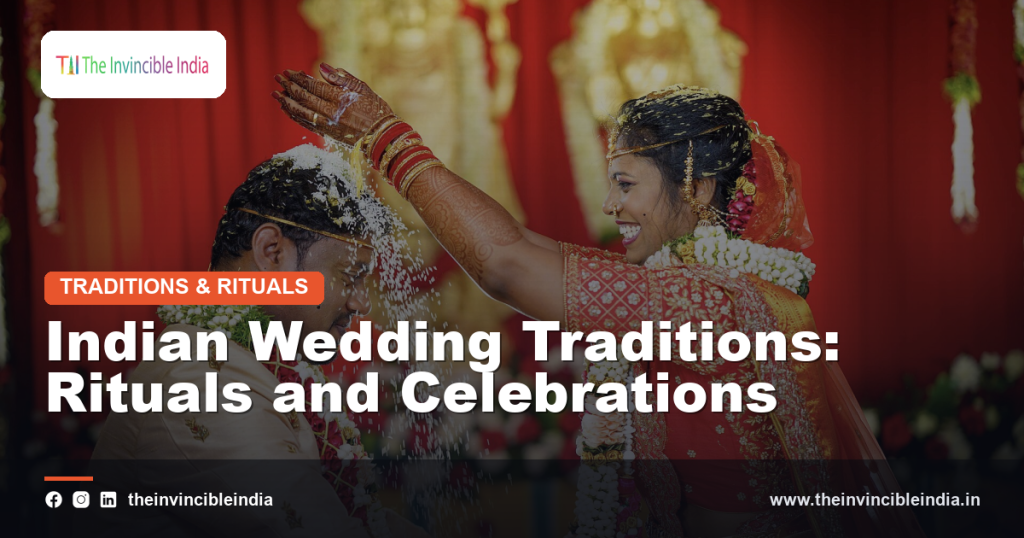
Indian wedding traditions are among the richest, most elaborate and most joyous in the world, celebrated over several days with a wealth of beautiful rituals, ceremonies and festivities full of meaning, colour and joy. An Indian wedding is far more than the union of two people; it is the coming together of two families, a great social and cultural occasion, and a celebration of love, family and tradition. While the customs vary greatly across the many regions, religions and communities of India, they share a common spirit of celebration, sacredness and family togetherness. This guide explores the rituals, ceremonies, customs and celebrations of Indian weddings, and their rich diversity and meaning, a beautiful part of India’s traditions.
Quick Facts
| Detail | Information |
|---|---|
| Character | Among the richest and most elaborate weddings in the world |
| Duration | Often celebrated over several days |
| More than a union | The coming together of two families |
| Common elements | Pre-wedding, wedding and post-wedding ceremonies |
| Sacred symbol | In Hindu weddings, the sacred fire as witness |
| Diversity | Customs vary across regions, religions and communities |
A Grand Celebration
Indian weddings are among the grandest, richest and most joyous celebrations in the world, elaborate events full of beautiful rituals, colour, festivity and meaning, often celebrated over several days. An Indian wedding is a great occasion, bringing together not only the bride and groom but their whole families and communities in a celebration of love, union, family and tradition. The richness of the customs, the beauty of the ceremonies, and the joy of the festivities make Indian weddings famous the world over. As grand and joyous celebrations full of beautiful rituals and deep meaning, Indian weddings are among the most elaborate and cherished of the country’s traditions and a wonderful expression of its culture of family and celebration.
The Union of Two Families
In Indian tradition, a wedding is understood as far more than the union of two individuals; it is the coming together of two families, joined in a new bond of kinship and celebration. The families of the bride and groom play a central role in the wedding and its arrangements, and the marriage creates a lasting bond between them, so that the wedding is a great family and social occasion as much as the union of the couple. This understanding of marriage as the joining of families is fundamental to Indian weddings. This conception of an Indian wedding as the union of two families, creating a new bond of kinship and celebration, is a fundamental feature of the tradition and shapes the whole character of the wedding as a great family and social occasion.
A Festival of Several Days
Indian weddings are typically celebrated not in a single ceremony but over several days, with a series of ceremonies, rituals and festivities leading up to and following the main wedding. The celebrations often include pre-wedding ceremonies and festivities, the main wedding ceremony itself, and post-wedding customs, together making up a rich and extended celebration. This multi-day character gives Indian weddings their grandeur and their variety of customs and festivities. This celebration of an Indian wedding over several days, with a series of ceremonies and festivities, is a characteristic feature of the tradition and gives Indian weddings their richness, grandeur and wealth of beautiful customs, from the joyous pre-wedding celebrations to the sacred main ceremony and beyond.
The Pre-Wedding Ceremonies
Indian weddings are preceded by a variety of joyous pre-wedding ceremonies and festivities, which build the excitement and celebration leading up to the main event. These often include ceremonies of engagement and blessing, musical and dance celebrations, and customs involving the adornment of the bride, all filled with joy, music and family togetherness. These pre-wedding celebrations are a cherished and festive part of the wedding. These joyous pre-wedding ceremonies and festivities, which precede the main wedding and build the excitement and celebration, are a cherished and festive part of Indian weddings, filled with music, dance, adornment and family togetherness, and they add greatly to the richness and joy of the celebration.
The Mehendi and Adornment
A beautiful pre-wedding custom in many Indian weddings is the application of mehendi, or henna, on the hands and feet of the bride, in intricate and elaborate designs, along with the adornment and beautifying of the bride. The mehendi ceremony is a joyous occasion, often celebrated with music and festivity among the women, and the beautiful henna designs are an important part of the bride’s adornment. This custom of the mehendi and the adornment of the bride is a cherished part of the celebration. This beautiful custom of the mehendi, the application of intricate henna designs on the bride, along with her adornment, is a joyous and cherished pre-wedding tradition in many Indian weddings and a lovely part of the beautifying of the bride and the celebration of the occasion.
Music and Dance
Music and dance are central to the joy of Indian weddings, and the celebrations are filled with festive music, singing and dancing, especially in the pre-wedding festivities. Families and friends come together to sing, dance and celebrate, and musical and dance celebrations are a joyous and much-loved part of the wedding, filling the occasion with energy, festivity and delight. This music and dance is a wonderful expression of the celebratory spirit of Indian weddings. This central place of music and dance in Indian weddings, filling the celebrations with festive singing and dancing, especially in the pre-wedding festivities, is one of the most joyous aspects of the tradition and a wonderful expression of the exuberant celebratory spirit of Indian weddings.
The Arrival of the Groom
A joyous custom of many Indian weddings, especially in the north, is the grand arrival of the groom and his party in a festive procession to the wedding venue. The groom often arrives in a colourful and celebratory procession, accompanied by his family and friends dancing to music, in a joyous and spectacular spectacle that is a highlight of the wedding. The arrival of the groom is greeted with celebration and welcome by the bride’s family. This joyous custom of the grand arrival of the groom in a festive procession, accompanied by dancing and music, is a highlight of many Indian weddings and a spectacular and celebratory part of the occasion, greeted with welcome and festivity by the bride’s family.
The Sacred Fire
In Hindu weddings, the central and most sacred element of the ceremony is the sacred fire, before which the most important rituals of the marriage are performed and which serves as the divine witness to the union. The couple performs the key rituals of the wedding around the sacred fire, which is honoured as a sacred presence and witness, and the marriage is solemnised in its presence. This sacred fire is at the heart of the Hindu wedding ceremony. This central place of the sacred fire in Hindu weddings, before which the most important rituals are performed and which serves as the divine witness to the marriage, is the sacred heart of the ceremony and expresses the deep religious and spiritual dimension of the union.
The Seven Steps
One of the most sacred and beautiful rituals of the Hindu wedding is the taking of the seven steps or rounds by the couple around the sacred fire, each accompanied by a vow or blessing. In this central ritual, the bride and groom take seven steps or make seven rounds around the sacred fire together, each representing a vow or aspiration for their married life, such as prosperity, strength, health and lasting friendship, and it is this ritual that solemnises the marriage. The seven steps are the heart of the wedding ceremony. This sacred ritual of the seven steps, in which the couple circles the sacred fire together, each step accompanied by a vow for their married life, is one of the most beautiful and central rituals of the Hindu wedding and the sacred act that solemnises the marriage.
Symbols of Marriage
Indian weddings involve a number of beautiful symbols and customs that mark the married state of the bride, especially in Hindu weddings. These include the tying of a sacred necklace, or mangalsutra, by the groom around the bride’s neck, and the application of vermilion, or sindoor, in the parting of her hair, both of which are cherished symbols of marriage that a married woman traditionally wears. These symbols mark the sacred union and the married state. These beautiful symbols of marriage, such as the tying of the mangalsutra and the application of sindoor in Hindu weddings, are cherished customs that mark the sacred union and the married state of the bride, and they are an important and meaningful part of the wedding ceremony.
The Bride and Groom
The bride and groom are the radiant centre of the Indian wedding, adorned in beautiful traditional attire and jewellery for the great occasion of their union. The bride is often dressed in a magnificent and richly adorned outfit, frequently in red or other auspicious colours, decorated with beautiful jewellery and mehendi, while the groom too is dressed in fine traditional attire, and the couple are the focus of the celebration and the rituals. The beauty of the bride and groom adds to the splendour of the wedding. This adornment of the bride and groom in beautiful traditional attire and jewellery, making them the radiant centre of the celebration, is a wonderful part of Indian weddings and adds greatly to the beauty and splendour of the great occasion of the union.
The Farewell of the Bride
A moving custom of Indian weddings, especially in Hindu tradition, is the emotional farewell of the bride as she leaves her parents’ home to begin her new life with her husband’s family. This farewell, in which the bride takes leave of her family, is a touching and emotional moment, filled with both the joy of the union and the poignancy of parting, as the bride leaves her childhood home. This emotional farewell is a deeply felt part of the wedding. This moving custom of the farewell of the bride as she leaves her parents’ home to begin her new life, is one of the most emotional moments of the Indian wedding, blending the joy of the union with the poignancy of parting and expressing the deep bonds of family.
Rich Regional Diversity
India’s many regions, religions and communities each have their own distinctive wedding traditions, customs and ceremonies, giving Indian weddings a wonderful diversity. While weddings across India share a common spirit of celebration, sacredness and family togetherness, the specific rituals, attire, foods and customs vary greatly from region to region and community to community, reflecting the rich diversity of the country. This variety is a wonderful feature of Indian weddings. This rich regional and communal diversity of Indian weddings, in which each region, religion and community has its own distinctive traditions and customs, is a wonderful feature of the tradition and reflects the great cultural diversity of India, so that Indian weddings, while sharing a common spirit, take countless beautiful forms.
Indian Weddings Today
Today Indian weddings remain among the richest, most elaborate and most joyous celebrations in the world, cherished across India and among Indian communities everywhere, and admired internationally for their beauty and grandeur. The beautiful rituals, the multi-day festivities, the music and dance, the sacred ceremonies and the rich diversity of regional customs all continue to be treasured, even as weddings adapt to modern times and tastes. The Indian wedding remains a great celebration of love, family, tradition and togetherness. In their rich rituals, their joyous festivities and their deep meaning, Indian wedding traditions endure as one of the most beautiful and cherished expressions of the country’s culture of family and celebration.
Sources & Further Reading
- Ministry of Culture, Government of India, on the customs and traditions of India (indiaculture.gov.in).
- Cultural records on the wedding traditions of the regions and communities of India.
Frequently Asked Questions
What are Indian wedding traditions like?
Indian wedding traditions are among the richest and most elaborate in the world, often celebrated over several days with a wealth of beautiful rituals, ceremonies and festivities. An Indian wedding is the coming together of two families and a great celebration of love, family and tradition.
What is the sacred fire in a Hindu wedding?
In Hindu weddings, the sacred fire is the central and most sacred element of the ceremony, before which the most important rituals are performed and which serves as the divine witness to the marriage. The couple performs the key rituals, including the seven steps, around it.
What are the seven steps in a Hindu wedding?
The seven steps are a central and sacred ritual of the Hindu wedding, in which the bride and groom take seven steps or rounds around the sacred fire together, each accompanied by a vow or blessing for their married life, and it is this ritual that solemnises the marriage.
Why are Indian weddings celebrated over several days?
Indian weddings are celebrated over several days because they include a series of ceremonies and festivities, from joyous pre-wedding celebrations to the sacred main wedding ceremony and post-wedding customs, together making up a rich and extended celebration.
Do Indian wedding traditions vary across India?
Yes. India’s many regions, religions and communities each have their own distinctive wedding traditions, customs and ceremonies. While weddings share a common spirit of celebration and family togetherness, the specific rituals, attire and customs vary greatly across the country.