


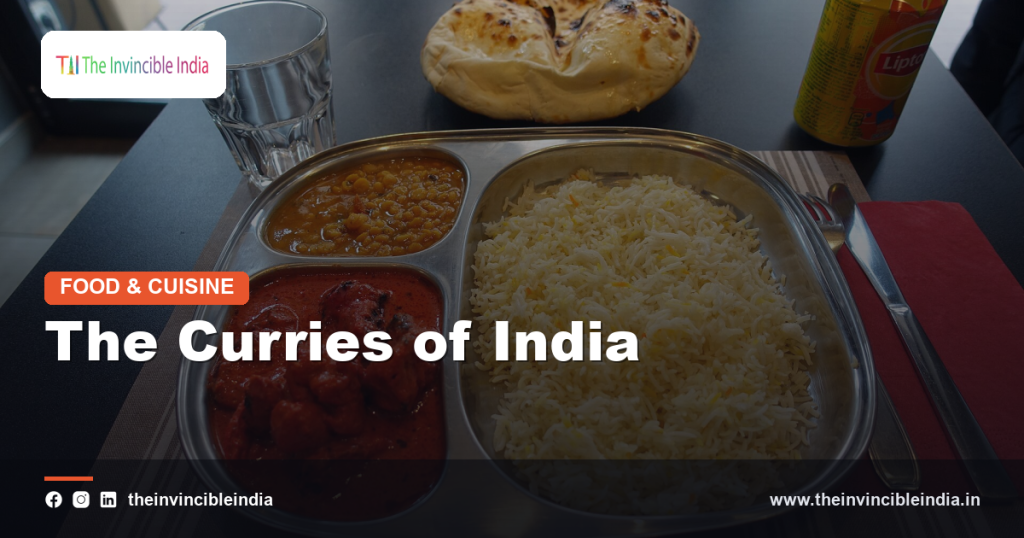
Curry, in its many forms, is the beating heart of Indian cooking, a broad and beautifully varied category of spiced, sauced dishes built around vegetables, lentils, meat or fish and cherished across the whole of the country’s regional cuisines. Far from being a single dish, an Indian curry can be thin or thick, mild or fiery, built on tomatoes, onions, yogurt, coconut or a host of other bases, each region bringing its own spices and techniques to the pot. What unites them is a deep tradition of building layered, complex flavour from spices and aromatics, simmered patiently until the gravy and its main ingredient become one harmonious dish. This guide explores the curries of India, their character, their variety and their central place at the country’s table.
Quick Facts
| Detail | Information |
|---|---|
| Category | Spiced, sauced dishes of vegetables, lentils, meat or fish |
| Bases | Tomato, onion, yogurt or coconut |
| Character | Enormously varied by region |
| Key element | Layered spice and aromatics |
| Served with | Rice or Indian breads |
| Fame | A defining feature of Indian cuisine |
The Curries of India
The curries of India represent one of the richest and most varied culinary traditions in the world, a vast family of spiced, sauced dishes that differ enormously from region to region, household to household, and even cook to cook. Far from a single recipe or style, curry in India encompasses everything from thin, brothy preparations to thick, rich gravies, built with vegetables, lentils, meat or fish and seasoned with an endless combination of spices. This variety is the tradition’s defining feature. This vast and varied tradition of Indian curries, differing enormously by region and household, is defined above all by this remarkable variety, and the countless forms that curry takes across the country together represent one of the great achievements of Indian cuisine.
What Is a Curry
The word curry, though widely used, covers an enormous range of Indian dishes united mainly by the presence of a spiced sauce or gravy surrounding a main ingredient, rather than any single fixed recipe. In India itself, cooks rarely think in terms of one dish called curry, but rather of countless individually named preparations, each with its own particular blend of spices, base and technique, all of which outsiders have come to group under this single broad term. This breadth is important to understand. This broad and varied meaning behind the word curry, covering countless individually named Indian dishes rather than one fixed recipe, is important to understand, and appreciating this breadth is the first step to appreciating the true richness of Indian curry traditions.
Regional Variety
Curries vary enormously across India’s regions, shaped by local climate, produce and taste, so that a curry from the north bears little resemblance to one from the south, east or west. Northern curries often favour rich, creamy gravies built on tomatoes, onions and dairy, while southern curries frequently turn to coconut, tamarind and curry leaves, and eastern curries make distinctive use of mustard, each regional style reflecting the ingredients and traditions of its home. This regional variety is a defining strength. This enormous regional variety of Indian curries, shaped by local climate, produce and taste, is a defining strength of the tradition, and exploring these differences is one of the great pleasures of discovering the country’s cuisine.
The Role of Spices
Spices lie at the very heart of every Indian curry, layered and combined with great skill to build the complex, aromatic flavours for which the country’s cooking is famous. Whole spices are often bloomed in hot oil to release their aroma, ground spice blends add depth and warmth, and fresh aromatics such as ginger, garlic and chillies bring brightness and heat, together forming the foundation on which every curry is built. This skilful layering of spice is essential. This essential and skilful layering of spices at the heart of every Indian curry is what gives the dishes their famous depth and aroma, and this careful building of flavour through spice remains the single most defining technique of Indian curry cooking.
Curry Bases
Indian curries are built on a variety of bases that shape their fundamental character, from the tomato and onion foundation common in the north to the coconut-based gravies favoured in parts of the south and west. Yogurt lends a tangy creaminess to certain curries, while tamarind brings a sharp sourness to others, and each of these bases interacts differently with the spices used, giving rise to the enormous diversity of flavour found across Indian curry traditions. This variety of bases shapes the cuisine. This variety of bases used in Indian curries, from tomato and onion to coconut, yogurt and tamarind, shapes the cuisine profoundly, and understanding these foundational ingredients is key to understanding the many distinct styles of curry found across the country.
North Indian Curries
North Indian curries are often characterised by rich, thick gravies built on tomatoes, onions and dairy such as cream or yogurt, producing dishes that are hearty, warming and often mildly sweet alongside their spice. Classic preparations simmer meat, paneer or vegetables in these rich bases, finished sometimes with butter or cream, resulting in curries prized for their comforting richness and full-bodied flavour. This richness is a hallmark of the region. This characteristic richness of North Indian curries, built on tomatoes, onions and dairy, is a hallmark of the region’s cuisine, and the hearty, comforting gravies of the north remain among the most widely recognised and beloved styles of curry in all of India.
South Indian Curries
South Indian curries frequently turn to coconut, tamarind and curry leaves, producing gravies that are lighter, tangier and often more fiery than their northern counterparts, reflecting the region’s abundant coconut groves and love of bold, tangy flavour. Fish and vegetable curries are especially prominent, simmered in coconut-based or tamarind-sharpened gravies tempered with mustard seeds and curry leaves for a distinctive fragrance. This tangy, coconut-forward style is distinctive. This distinctive style of South Indian curries, built on coconut, tamarind and curry leaves, sets the region’s cooking apart from the rest of the country, and the tangy, fragrant gravies of the south are cherished as some of the most flavourful curry traditions in India.
Vegetarian Curries
India’s vegetarian traditions have produced an extraordinary range of curries built around vegetables, lentils and paneer, proving that a meatless dish can be every bit as rich, complex and satisfying as one built on meat or fish. Vegetable curries make ingenious use of whatever produce is seasonally available, while lentil-based curries such as dal form a nourishing foundation of the daily meal across much of the country. This vegetarian richness is a great strength. This extraordinary range of vegetarian curries built around vegetables, lentils and paneer is a great strength of Indian cuisine, and the richness and satisfaction found in these meatless dishes reflect the deep skill and creativity of the country’s vegetarian cooking tradition.
Meat and Fish Curries
Alongside its vegetarian traditions, India offers a rich array of meat and fish curries, each region bringing its own preferred meats, spices and techniques to the pot. Coastal regions favour fish and seafood curries built on coconut or tamarind, while inland regions are known for rich mutton, chicken or goat curries simmered slowly to develop deep, complex flavour, together forming an equally cherished half of the country’s curry tradition. This variety of meat and fish curries is celebrated. This rich array of meat and fish curries found across India’s regions, each with its own preferred spices and techniques, is celebrated throughout the country, and these dishes stand as an equally treasured counterpart to India’s famous vegetarian curries.
Dal as Curry
Dal, the humble lentil preparation eaten daily across much of India, is itself a form of curry, simmered with spices and often tempered with hot oil and aromatics just before serving. Though simple, dal is treated with real care, its preparation varying widely by region and household, and it remains one of the most fundamental and beloved dishes in the whole of Indian cuisine, a curry in its own right despite its everyday humility. This everyday status belies its importance. This everyday status of dal as a beloved and fundamental curry, simmered with spices and tempered with aromatics, belies its true importance, and dal remains one of the most essential and comforting dishes across the length and breadth of India.
Curry and Rice
Across much of India, curry is eaten with rice, the two together forming one of the most fundamental and satisfying combinations in the country’s cuisine. The rice soaks up the flavourful gravy of the curry, while the curry gives the plain grain its flavour and character, and this pairing, whether a simple dal and rice or an elaborate fish curry with steamed rice, remains at the heart of countless daily meals across the country. This pairing is deeply satisfying. This fundamental pairing of curry and rice across much of India, deeply satisfying in its simplicity, remains at the heart of countless daily meals, and this combination is one of the most cherished and enduring in the whole of the country’s food culture.
Curry and Bread
In regions where wheat rather than rice is the staple, curry is instead eaten with bread, torn and used to scoop up the flavourful gravy in place of a spoon. Rotis, parathas and naans all serve this purpose, each bread bringing its own texture and flavour to the pairing, and this hands-on way of eating curry with bread is cherished across northern and western India as a satisfying and communal way to enjoy a meal. This pairing is equally beloved. This pairing of curry and bread across regions where wheat is the staple grain is equally beloved, and the hands-on, communal way of scooping up curry with bread remains one of the most enjoyable and characteristic ways of eating in northern and western India.
Regional Curry Pastes and Powders
Many Indian curries begin with a distinctive regional spice paste or powder, carefully prepared blends that give a particular curry its characteristic identity and flavour. These blends may combine dried spices, fresh aromatics, coconut or tamarind, ground together in proportions passed down through families and communities, forming the foundation upon which a region’s most beloved curries are built. This foundational role of spice blends is significant. This foundational role of distinctive regional spice pastes and powders in Indian curries, passed down through families and communities, is significant to the tradition, and these carefully guarded blends are often what gives a particular region’s curries their unmistakable and cherished identity.
Curry Beyond India
As Indian communities have settled across the world, curry has travelled with them, becoming one of the most recognised and beloved contributions of Indian cuisine to global food culture. Though often adapted and simplified abroad, the basic idea of a spiced, sauced dish inspired by Indian cooking has found devoted followings on every continent, introducing countless people to at least a version of India’s rich curry tradition. This global spread reflects its universal appeal. This global spread of curry, inspired by Indian cooking and embraced on every continent, reflects the universal appeal of spiced, sauced dishes, and this worldwide popularity stands as a fitting tribute to the depth and richness of India’s original curry traditions.
Home-Style Curries
Beyond restaurant menus, the true heart of Indian curry lies in home cooking, where recipes are passed down through generations and adapted to individual family tastes and the ingredients at hand. Home-style curries are often simpler and less rich than restaurant versions, relying on well-practised technique and familiar spice combinations rather than elaborate presentation, and it is in these home kitchens that the deepest and most authentic expressions of curry are found. This home tradition is the true heart. This home-style tradition of Indian curry, passed down through generations and adapted to family taste, is the true heart of the country’s curry cooking, and these familiar, well-loved recipes remain the most cherished expression of India’s vast curry heritage.
Indian Curries Today
Today the curries of India continue to be cherished in all their extraordinary variety, from rich northern gravies to tangy southern preparations, from humble everyday dal to elaborate festive meat curries. Across every region, curry remains built on the same foundation of carefully layered spice, patient simmering and a deep respect for flavour, uniting the country’s diverse regional cuisines around this single, beloved culinary idea. Its central place in Indian food endures. As the beating heart of Indian cooking, spanning countless regional styles built on vegetables, lentils, meat and fish alike, curry endures as one of the great and defining glories of the country’s rich and varied cuisine.
Sources & Further Reading
- Ministry of Tourism, Government of India, on the regional cuisines of India (tourism.gov.in).
- Culinary references on the regional food traditions of India.
Frequently Asked Questions
What is an Indian curry?
An Indian curry is a broad category of spiced, sauced dishes built around vegetables, lentils, meat or fish, rather than a single fixed recipe. Curries vary enormously by region, built on bases such as tomato, onion, yogurt or coconut and seasoned with layered combinations of spices.
How do North and South Indian curries differ?
North Indian curries typically favour rich, thick gravies built on tomatoes, onions and dairy, producing hearty, comforting dishes. South Indian curries more often use coconut, tamarind and curry leaves, resulting in lighter, tangier and sometimes spicier gravies distinctive to the region.
Is dal considered a curry?
Yes, dal, the everyday lentil preparation eaten across much of India, is itself a form of curry, simmered with spices and often finished with a tempering of hot oil and aromatics. Despite its everyday simplicity, it remains one of the most fundamental dishes in Indian cuisine.
What gives Indian curries their flavour?
The flavour of Indian curries comes from the careful layering of spices, both whole spices bloomed in hot oil and ground spice blends, combined with fresh aromatics such as ginger, garlic and chillies, all built upon a base such as tomato, onion, yogurt or coconut.
What is curry usually eaten with in India?
Curry is usually eaten with rice in regions where rice is the staple, or with breads such as roti, paratha or naan in regions where wheat predominates, with the accompaniment used to soak up and enjoy the flavourful gravy of the dish.