


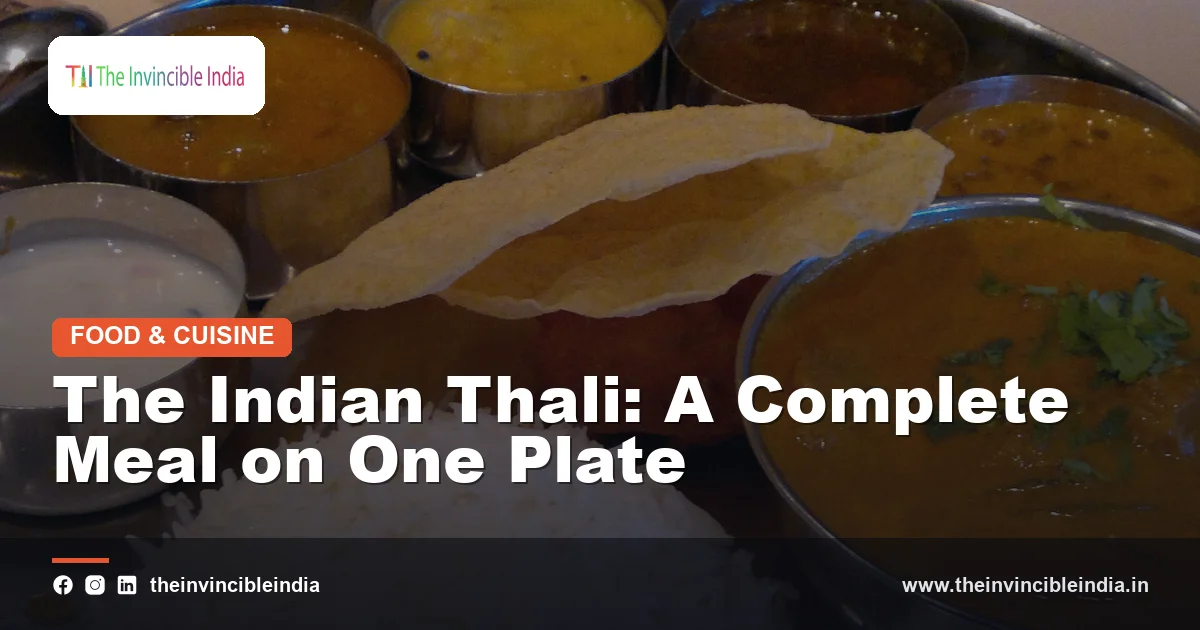
The Indian thali is one of the most beautiful expressions of the country’s culinary philosophy: a complete, balanced and satisfying meal served together on a single platter. Bringing together a variety of dishes in small portions, the thali offers a harmonious combination of flavours, textures and nutrients that reflects the wisdom of traditional Indian eating. From the lavish royal thalis of Rajasthan to the banana-leaf feasts of the south, every region has its own version. This guide explores the concept, components and regional varieties of the wonderful Indian thali.
Quick Facts: The Indian Thali
| Detail | Information |
|---|---|
| What it is | A complete meal served on one platter |
| Meaning | “Thali” means plate or platter |
| Philosophy | Balance of the six tastes and food groups |
| Typical components | Rice, bread, dal, vegetables, curd, pickle, sweet |
| Famous regional thalis | Rajasthani, Gujarati, South Indian, Bengali |
| Often | Served with unlimited refills |
The Concept of the Thali
The word “thali” simply means a plate or platter, and the meal takes its name from the round tray, often of steel or, traditionally, of other metals, on which it is served. The essence of the thali lies in its variety and balance: rather than a single dish, it presents an assortment of preparations in small bowls (katoris) arranged around a portion of rice or bread. This allows the diner to enjoy many different flavours in one meal, sampling a little of each, and to create their own combinations, making every mouthful a new experience.
The Philosophy of Balance
The Indian thali is deeply rooted in the traditional philosophy of a balanced meal, which holds that a good meal should include all the essential tastes and food groups for both nourishment and satisfaction. Classical Indian thought describes six tastes: sweet, sour, salty, bitter, pungent and astringent, and a well-composed thali aims to include them all, believed to make the meal wholesome and satisfying. The combination of grains, lentils, vegetables, dairy and other elements also ensures a good balance of carbohydrates, proteins and other nutrients, reflecting an intuitive wisdom about healthy and complete eating.
The Components of a Thali
While the exact contents vary widely, a typical Indian thali includes several standard elements. There is usually rice and one or more types of Indian bread, such as roti or puri; a portion of dal (lentils); one or more vegetable dishes (sabzi); and often a curry. Accompaniments typically include yoghurt or raita, a pickle (achaar), a papad (crisp wafer), and a chutney, while a small sweet dish rounds off the meal. Together, these components provide a satisfying interplay of flavours, from spicy and tangy to cooling and sweet, and textures from soft to crisp.
The Rajasthani Thali
The Rajasthani thali is a hearty and flavourful feast that reflects the rich culinary traditions of the desert state. It typically features the famous dal baati churma, a combination of lentils, baked wheat balls and a sweet crumbled dish, along with specialities such as gatte ki sabzi, ker sangri and various rich curries, breads and sweets. Reflecting the hospitable spirit of Rajasthan, these thalis are often generous and indulgent, offering a wonderful introduction to the bold and distinctive flavours of the region, and are a highlight for any visitor to the Land of Kings.
The Gujarati Thali
The Gujarati thali is renowned for its delightful balance of sweet, salty and spicy flavours and its almost entirely vegetarian character. A typical Gujarati thali offers an impressive array of dishes, including various vegetable preparations, dals and kadhi, along with different types of bread, rice, snacks such as dhokla and farsan, pickles, chutneys and sweets. Known for their generous, often unlimited servings, Gujarati thalis are a feast of variety and flavour, celebrated across India for their deliciousness and their reflection of the state’s rich vegetarian cuisine.
The South Indian Thali
The South Indian thali, often served on a banana leaf, is a fragrant and wholesome meal centred on rice, which is enjoyed with a succession of accompaniments. These typically include sambar, rasam, a variety of vegetable dishes (poriyal and kootu), curd, pickle, papad (appalam) and a sweet such as payasam. Eating from a banana leaf is considered both traditional and eco-friendly, and is said to add a subtle flavour to the food. The South Indian thali, or “meals” as it is often called, is a beloved everyday feast that showcases the distinctive flavours of the region.
The Bengali and Other Regional Thalis
Every region of India offers its own distinctive thali, reflecting local ingredients and tastes. The Bengali thali, for example, celebrates the region’s love of fish and features rice accompanied by dishes such as fish curry, along with vegetables, dal, chutney and the famous Bengali sweets. Maharashtra, the southern states, the north and the east all have their own versions, from simple everyday thalis to elaborate festive spreads. This wonderful diversity means that exploring the thalis of India is a delicious way to journey through the country’s incredibly varied regional cuisines.
The Experience of Eating a Thali
Eating an Indian thali is as much an experience as a meal, offering not just nourishment but a joyful exploration of flavour and tradition. In many restaurants, particularly those serving traditional thalis, the meal comes with unlimited refills, with servers moving from table to table replenishing the various dishes, embodying the Indian spirit of hospitality and abundance. Diners can mix and match the different elements to their taste, savouring the interplay of flavours and textures. Wholesome, varied and deeply satisfying, the thali offers a perfect and authentic taste of the richness of Indian cuisine.
The History of the Thali
The concept of the thali has deep roots in Indian tradition, reflecting a way of eating that has been practised for centuries. The idea of serving a variety of dishes together, offering a balance of flavours and nutrients, aligns with ancient Indian ideas about food, health and wellbeing found in traditional texts and customs. Across the country, from royal banquets to simple home meals and temple offerings, the practice of presenting a complete, balanced meal on a single platter became firmly established. Over time, each region developed its own distinctive thali, shaped by local ingredients, climate and culture, giving rise to the wonderful diversity seen today.
The Art of Arrangement
There is a quiet art to the arrangement of an Indian thali, which is not merely functional but also considered and, in its own way, beautiful. The various dishes are placed in a particular order around the platter, typically with rice or bread in the centre or at a set position, and the small bowls of dal, vegetables, curd, pickle and sweet arranged around them, each in its place. This thoughtful arrangement allows the diner to move easily between the different flavours and to combine them as they wish. The colourful array of dishes, from vivid curries to white curd and golden sweets, also makes the thali a feast for the eyes as well as the palate.
Thali and Festivals
The thali comes into its own during festivals and special occasions, when it is often expanded into a lavish and elaborate feast. Festive thalis feature a greater number and variety of dishes, including special preparations and sweets reserved for celebrations, reflecting the abundance and joy of the occasion. In many communities, grand thalis are served at weddings, religious festivals and family gatherings, embodying hospitality and togetherness. Temple thalis and the sacred community meals known as prasad or bhog also follow this tradition of the complete platter, making the thali central to the celebration of important events throughout the Indian year.
The Modern Thali
The Indian thali continues to thrive in the modern world, cherished both as an everyday meal and as a beloved dining experience. Restaurants across India and around the globe serve thalis, from simple, affordable “meals” that feed millions of working people each day to lavish speciality thalis that showcase the finest regional cuisines. The thali has also proven popular internationally as an appealing way to sample the variety of Indian food in a single meal. Even as tastes and lifestyles change, the timeless appeal of a balanced, varied and satisfying meal on one plate ensures that the thali remains a much-loved part of Indian food culture.
Thali and the Spirit of Sharing
The Indian thali embodies the spirit of hospitality, generosity and sharing that lies at the heart of Indian food culture. In homes across the country, the offering of a well-prepared thali to guests is an expression of warmth and care, and the tradition of unlimited refills in many eateries reflects the belief that no one should leave the table hungry. Eating together, sharing dishes and enjoying the variety of flavours brings people together, whether in family kitchens, community feasts or bustling restaurants. In this sense, the thali is not just a meal but a celebration of togetherness and the joy of sharing good food.
A Taste of India on One Plate
More than perhaps any other way of eating, the Indian thali offers a complete taste of the country’s incredible culinary richness in a single meal. In one platter, the diner can experience the interplay of sweet, sour, salty, spicy and more, sampling a variety of dishes that together tell the story of a region’s cuisine, ingredients and traditions. Wholesome, balanced, varied and deeply satisfying, the thali captures the essence of Indian food and hospitality. For anyone wishing to truly understand and enjoy the diversity of Indian cuisine, there is no better place to begin than with a generous and colourful thali.
Why the Thali Endures
The Indian thali endures because it captures, in a single meal, so much of what makes Indian food and culture special: variety, balance, generosity and the joy of sharing. It offers nourishment for the body and delight for the senses, adapts effortlessly to every region and occasion, and welcomes everyone to the table with its spirit of abundance. From humble daily meals to grand festive feasts, the thali continues to satisfy and delight millions, remaining a timeless and beloved expression of the richness, diversity and warmth of Indian cuisine.
Frequently Asked Questions
What is an Indian thali?
An Indian thali is a complete meal served on a single platter, consisting of a variety of dishes in small portions, including rice, bread, dal, vegetables, curd, pickle and a sweet, offering a balance of flavours and nutrients.
Why is the thali considered a balanced meal?
The thali is designed to include all the essential tastes and food groups, combining grains, lentils, vegetables and dairy to provide a wholesome and nutritionally balanced meal in keeping with traditional Indian philosophy.
What are some famous regional thalis?
Famous regional thalis include the hearty Rajasthani thali, the sweet-and-savoury Gujarati thali, the banana-leaf South Indian thali, and the fish-based Bengali thali, among many others.
Why are thalis often served on a banana leaf in the south?
In South India, serving food on a banana leaf is a traditional and eco-friendly practice that is believed to add a subtle flavour to the food and is considered auspicious and hygienic.