


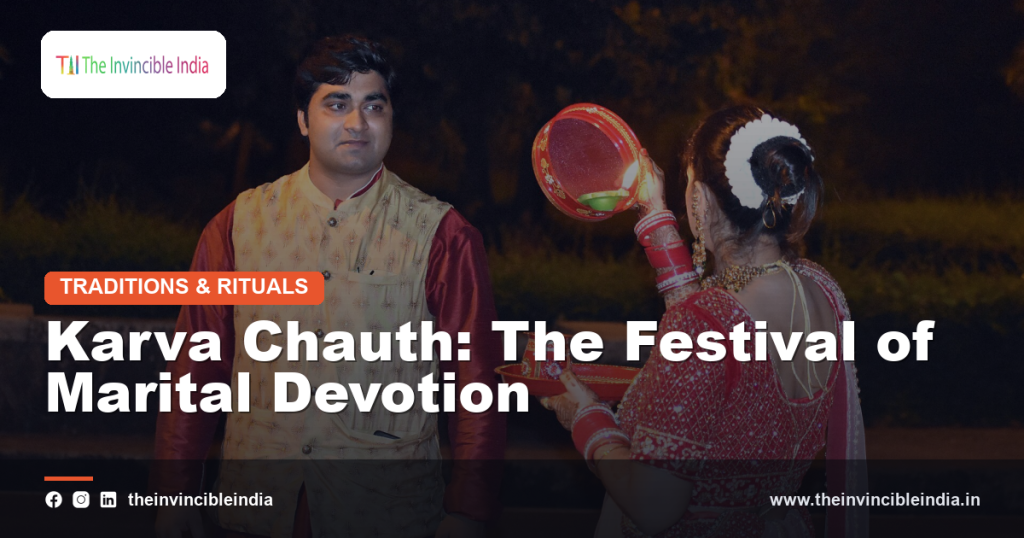
Karva Chauth is a beloved and beautiful festival celebrated especially in northern India, on which married women observe a day-long fast for the long life, health and well-being of their husbands. A festival of love, devotion and the bond of marriage, it is marked by a rigorous fast kept from before dawn until the sighting of the moon at night, by beautiful customs and adornment, and by the coming together of women in shared celebration. Rich in ritual, affection and festivity, Karva Chauth is a cherished expression of marital devotion and love. This guide explores the meaning, the fast, the customs, the sighting of the moon and the celebrations of Karva Chauth, a beloved festival of India’s traditions.
Quick Facts
| Detail | Information |
|---|---|
| Observed by | Married women, for their husbands’ well-being |
| Central custom | A day-long fast without food or water |
| The fast | Kept from before dawn until the sighting of the moon |
| Pre-dawn meal | The sargi, eaten before the fast begins |
| Broken after | Sighting the moon at night |
| Spirit | Marital love, devotion and togetherness |
A Festival of Marital Devotion
Karva Chauth is a beloved festival of marital devotion, on which married women observe a fast and offer prayers for the long life, health and well-being of their husbands. A beautiful expression of the love and bond of marriage, the festival is celebrated with a rigorous fast, cherished customs and joyous adornment, and it brings women together in shared devotion and celebration. Especially popular in northern India, Karva Chauth is a cherished occasion of love, devotion and festivity. As a festival of marital devotion, on which women express their love and pray for the well-being of their husbands, Karva Chauth holds a beloved place among the festivals of India and is a beautiful celebration of the bond of marriage.
The Meaning of the Festival
Karva Chauth takes its name from the karva, a traditional earthen pot used in the rituals, and the festival falls on a particular day in the lunar month, from which its name derives. The festival is an occasion for married women to express their love and devotion for their husbands and to pray for their long life and well-being, and its customs and rituals all express this theme of marital love and devotion. The name captures the connection to the ritual pot and the timing of the festival. This meaning of Karva Chauth, connected to the ritual karva pot and to the theme of marital love and devotion, is at the heart of the festival, and its beautiful customs all express the love of a wife for her husband and her prayers for his well-being.
The Day-Long Fast
The central custom of Karva Chauth is the rigorous day-long fast observed by married women, kept without food or water from before dawn until the sighting of the moon at night. This demanding fast, undertaken with faith and devotion, is the heart of the festival, and the women keep it as an expression of their love for their husbands and their prayers for their long life and well-being, enduring the day-long abstinence from food and water. The keeping of this fast is the central act of devotion. This central custom of the rigorous day-long fast, kept without food or water from before dawn until the moon is sighted, is the heart of Karva Chauth and a powerful expression of the love and devotion of a wife for her husband.
The Sargi
A cherished custom of Karva Chauth is the sargi, the pre-dawn meal eaten by the fasting women before the fast begins, which sustains them through the long day of fasting. The sargi, traditionally prepared and given with love, often by the mother-in-law, consists of special foods eaten in the early morning before dawn, after which the fast begins and no food or water is taken until the moon is sighted. The sargi is a beautiful and loving part of the festival. This custom of the sargi, the pre-dawn meal eaten before the fast begins, traditionally given with love, is a cherished part of Karva Chauth, sustaining the fasting women through the long day and expressing the bonds of love and care within the family.
Adornment and Henna
Karva Chauth is a festival of beautiful adornment, on which women dress in fine traditional attire and adorn themselves for the celebration, and the application of henna is a cherished custom. On the festival, women dress in beautiful clothes, often in festive colours, wear their finest jewellery and bridal adornments, and apply intricate and beautiful designs of henna on their hands, in a joyous celebration of the occasion and of marital love. This adornment adds to the beauty and festivity of the festival. This custom of beautiful adornment and the application of henna on Karva Chauth, as women dress in their finest attire and decorate their hands, is a joyous and beautiful part of the festival and adds to its celebration of love, beauty and festivity.
The Karva
The karva, the traditional earthen pot that gives the festival its name, plays an important role in its rituals and customs. The karva, often decorated for the occasion, is used in the worship and rituals of the festival and in the ceremony of breaking the fast, and it is an important symbol of the celebration. The use of the decorated karva is a traditional and meaningful part of the festival’s observance. This use of the karva, the traditional earthen pot that gives the festival its name and plays an important role in its rituals, is a meaningful part of Karva Chauth and connects the festival to its traditional customs and to the ceremonies of worship and the breaking of the fast.
Gathering of Women
Karva Chauth is a festival of togetherness among women, who gather together during the day to observe the customs, share stories and prayers, and celebrate the occasion in shared devotion and festivity. The fasting women often come together in the afternoon or evening for the rituals and the telling of the traditional stories associated with the festival, and this gathering of women is a joyous and supportive part of the celebration, bringing together family, friends and neighbours. This gathering of women is a cherished aspect of the festival. This gathering of women during Karva Chauth, to observe the customs, share the traditional stories, and celebrate together in shared devotion, is a joyous and supportive part of the festival and reflects its spirit of togetherness and community among women.
The Traditional Stories
An important part of Karva Chauth is the telling of the traditional stories associated with the festival, which illustrate the power of a wife’s devotion and the meaning of the fast. During the gathering, the women listen to the traditional tales of devoted wives whose faith and devotion protected and saved their husbands, stories that express the theme of marital devotion at the heart of the festival and inspire the fasting women. These stories are a cherished part of the observance. This telling of the traditional stories of devoted wives, which illustrate the power of devotion and the meaning of the fast, is an important and cherished part of Karva Chauth and connects the festival to its deeper meaning and to the theme of marital love and devotion.
The Sighting of the Moon
The great moment of Karva Chauth is the sighting of the moon at night, for it is only after the moon has been sighted that the fast is broken, bringing the long day of fasting to its joyous conclusion. The fasting women wait eagerly for the moon to rise, and when it appears, they view it, often through a sieve, and offer their prayers, before at last breaking their fast. The sighting of the moon is the awaited climax of the festival. This awaited moment of the sighting of the moon, after which the long fast is at last broken, is the joyous climax of Karva Chauth and a moving conclusion to the day of fasting and devotion, celebrated with prayers and the ending of the fast.
Breaking the Fast
After the sighting of the moon, the fasting woman breaks her fast, traditionally taking her first food and water from the hands of her husband, in a beautiful and tender ceremony that concludes the festival. The husband offers his wife water and food to break her long fast, in a loving gesture that expresses their bond and completes the day’s devotion, and the fast is joyously broken after the long day of abstinence. This tender ceremony of breaking the fast is a beautiful conclusion to the festival. This ceremony of breaking the fast after the sighting of the moon, when the wife takes her first food and water from the hands of her husband, is a beautiful and tender conclusion to Karva Chauth and a moving expression of the love and bond between husband and wife.
A Celebration of Love
At its heart, Karva Chauth is a beautiful celebration of love, the love between husband and wife and the bond of marriage, expressed through the devotion of the fast and the tender customs of the festival. The whole festival, from the loving sargi to the day-long fast, the beautiful adornment, and the tender breaking of the fast, expresses the love and devotion at the heart of marriage, making it a touching celebration of marital love. This theme of love is central to the appeal of the festival. This character of Karva Chauth as a celebration of love, expressing the bond between husband and wife through the devotion of the fast and the tender customs, is at the heart of the festival’s beauty and appeal and makes it a touching and cherished celebration of marital love.
A Changing Tradition
Like many traditions, Karva Chauth has evolved over time, and in modern times it is observed in a variety of ways, reflecting changing attitudes and relationships. While traditionally observed by wives for their husbands, in some modern families the festival is celebrated in a spirit of mutual love and devotion, with husbands also fasting or joining in the customs, as an expression of shared love. The festival continues to be cherished while adapting to changing times. This evolution of Karva Chauth, observed in a variety of ways in modern times and, in some families, celebrated in a spirit of mutual love, reflects the way the beloved tradition continues to be cherished while adapting to changing attitudes and relationships in contemporary society.
A Beloved Festival
Karva Chauth is a much-loved festival, cherished for its beauty, its tender celebration of marital love, and its joyous customs of adornment, togetherness and festivity. The beauty of the festival, its expression of love and devotion, the joy of the adornment and the gathering of women, and the tender moment of breaking the fast all make it a beloved occasion, awaited with anticipation and celebrated with affection. This deep love for the festival reflects its appeal and meaning. This character of Karva Chauth as a beloved festival, cherished for its beauty and its tender celebration of marital love, reflects the special place it holds in the hearts of those who observe it and the beauty of its expression of love, devotion and togetherness.
Karva Chauth Today
Today Karva Chauth remains a beloved and widely observed festival, celebrated with love, devotion and festivity across northern India and among Indian communities around the world. The day-long fast, the loving sargi, the beautiful adornment and henna, the gathering of women, the sighting of the moon, and the tender breaking of the fast all continue to be cherished, and the festival, while adapting to changing times, remains a beautiful celebration of marital love and devotion. In its tender celebration of the bond of marriage and its joyous customs, Karva Chauth endures as one of the most beloved and beautiful festivals of India’s rich tradition.
Sources & Further Reading
- Ministry of Culture, Government of India, on the festivals of India (indiaculture.gov.in).
- Cultural records on the festivals and customs of northern India.
Frequently Asked Questions
What is Karva Chauth?
Karva Chauth is a beloved festival, celebrated especially in northern India, on which married women observe a day-long fast without food or water for the long life, health and well-being of their husbands, breaking the fast only after sighting the moon at night.
What is the sargi?
The sargi is the pre-dawn meal eaten by the fasting women before the Karva Chauth fast begins, traditionally prepared and given with love, often by the mother-in-law. It consists of special foods eaten in the early morning to sustain the women through the long day of fasting.
When is the Karva Chauth fast broken?
The Karva Chauth fast is broken only after the sighting of the moon at night. The fasting women wait for the moon to rise, view it and offer their prayers, and then the wife traditionally takes her first food and water from the hands of her husband.
What is the karva?
The karva is the traditional earthen pot that gives the festival its name and plays an important role in its rituals and customs, including the worship and the ceremony of breaking the fast. It is often decorated for the occasion.
What does Karva Chauth celebrate?
Karva Chauth is a celebration of marital love and devotion, on which married women express their love for their husbands and pray for their long life and well-being through the devotion of the fast and the tender customs of the festival.